

Case Study: Material Zoning Shapes Inizio’s New Workspace

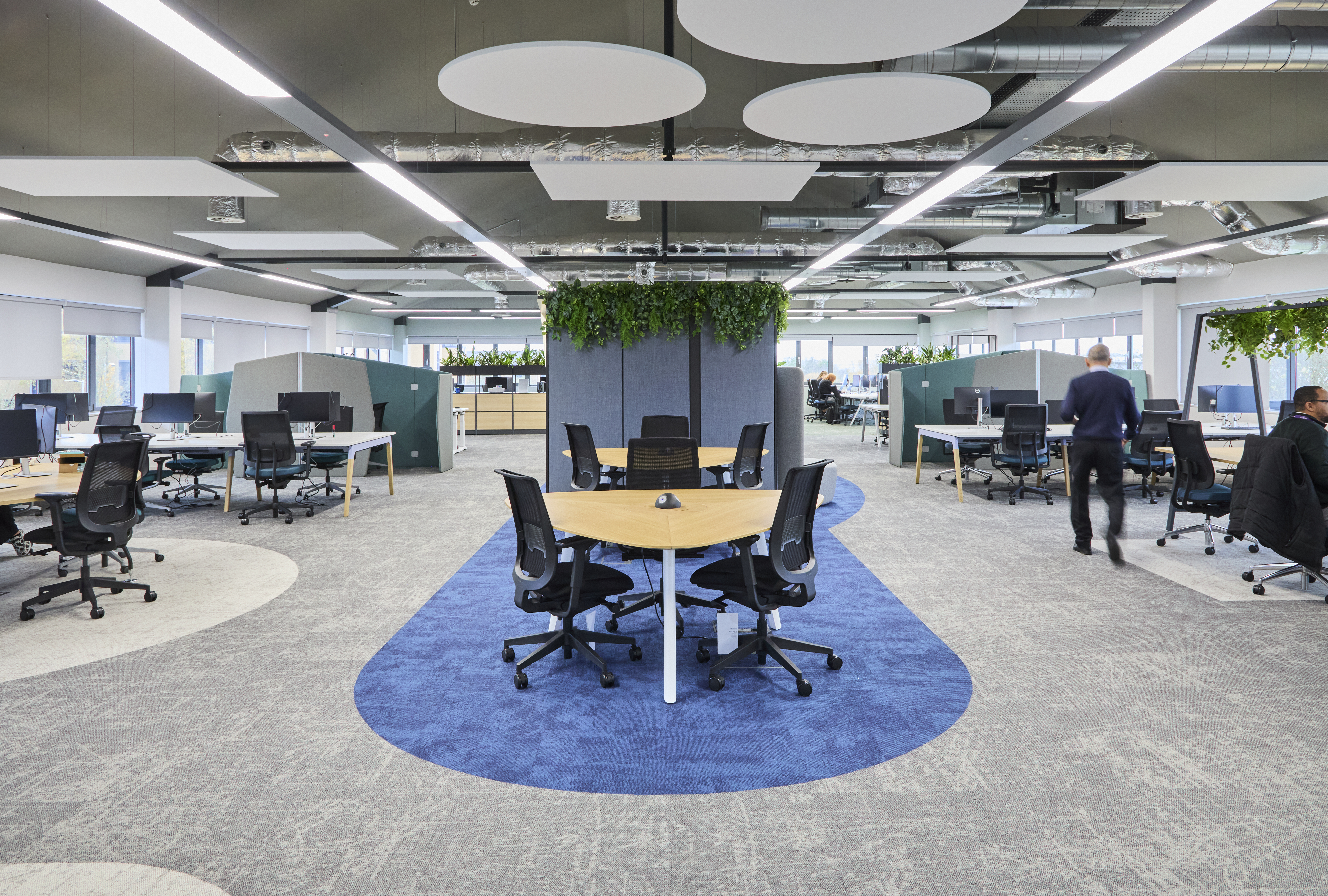
When healthcare services provider Inizio relocated to its 18,000 sq ft headquarters in Ashby-de-la-Zouch, the brief extended beyond a simple office fit-out. The ambition was to create a workplace that could reflect the company’s growth, support hybrid working and embed its sustainability values into the physical environment.
Working with Blueprint Interiors and flooring manufacturer Interface, the project developed into a carefully zoned interior where materiality plays a central role in defining how the space is used.
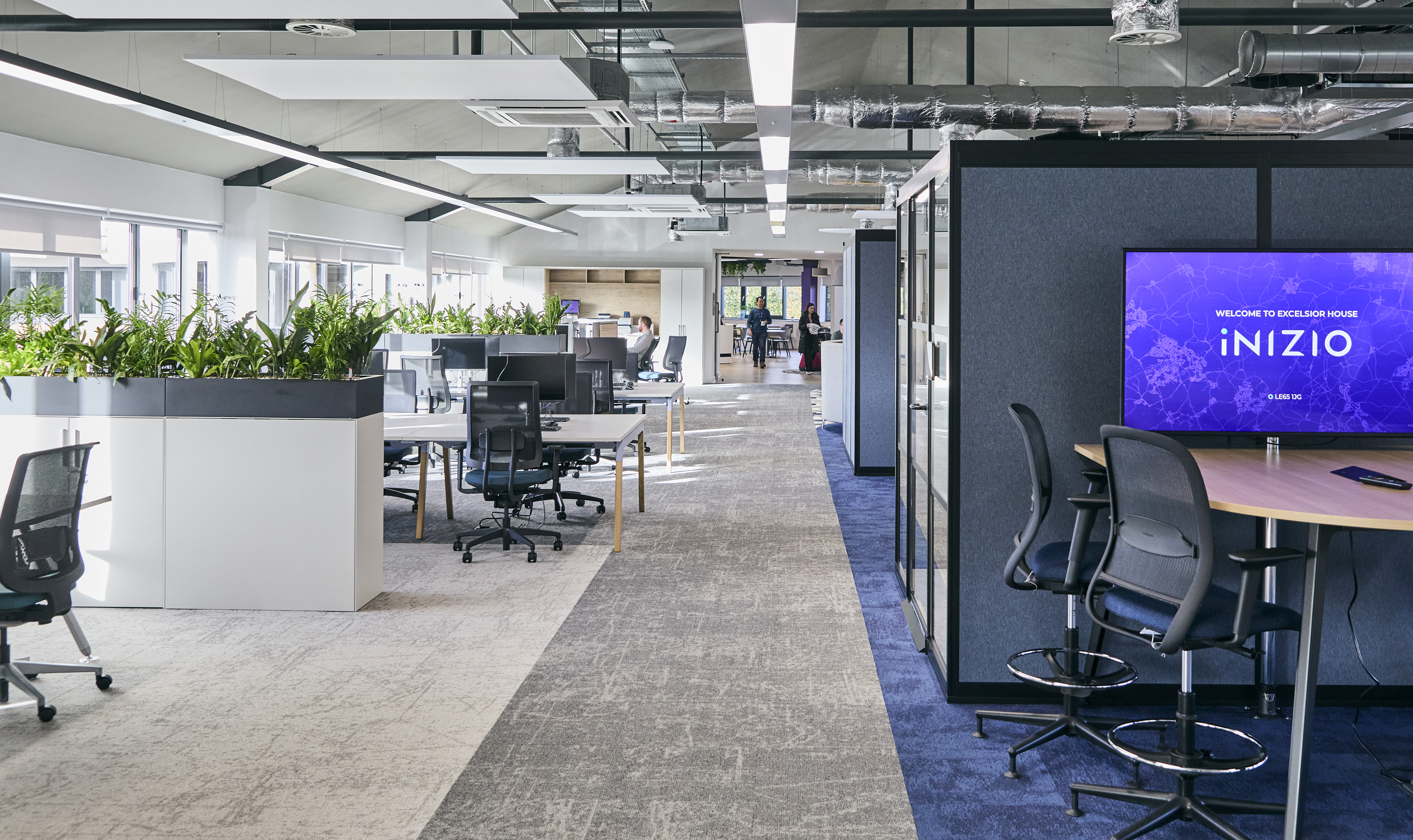
Sustainability underpinned the scheme from the outset. Existing furniture was retained where possible, energy-efficient lighting was introduced and workstations were arranged to maximise natural daylight. Alongside this, biophilic principles informed the palette, with natural textures, planting and muted tones used to create a connection to landscape and material.
Central to the design was the need to organise a large open-plan floorplate into a series of distinct but visually coherent zones. Rather than relying on partitions, the design team used surface changes to signal shifts in function, with flooring acting as both a spatial and sensory guide.
Interface’s Concept Design Team developed a layered approach using carpet tile collections with subtle references to natural materials. In larger, collaborative areas, the Icebreaker range introduces a soft, etched pattern that reads almost like sediment or lightly eroded stone, bringing texture without visual noise. A neutral base tone establishes continuity across the open plan, allowing other materials – timber finishes and planting – to sit comfortably alongside it.
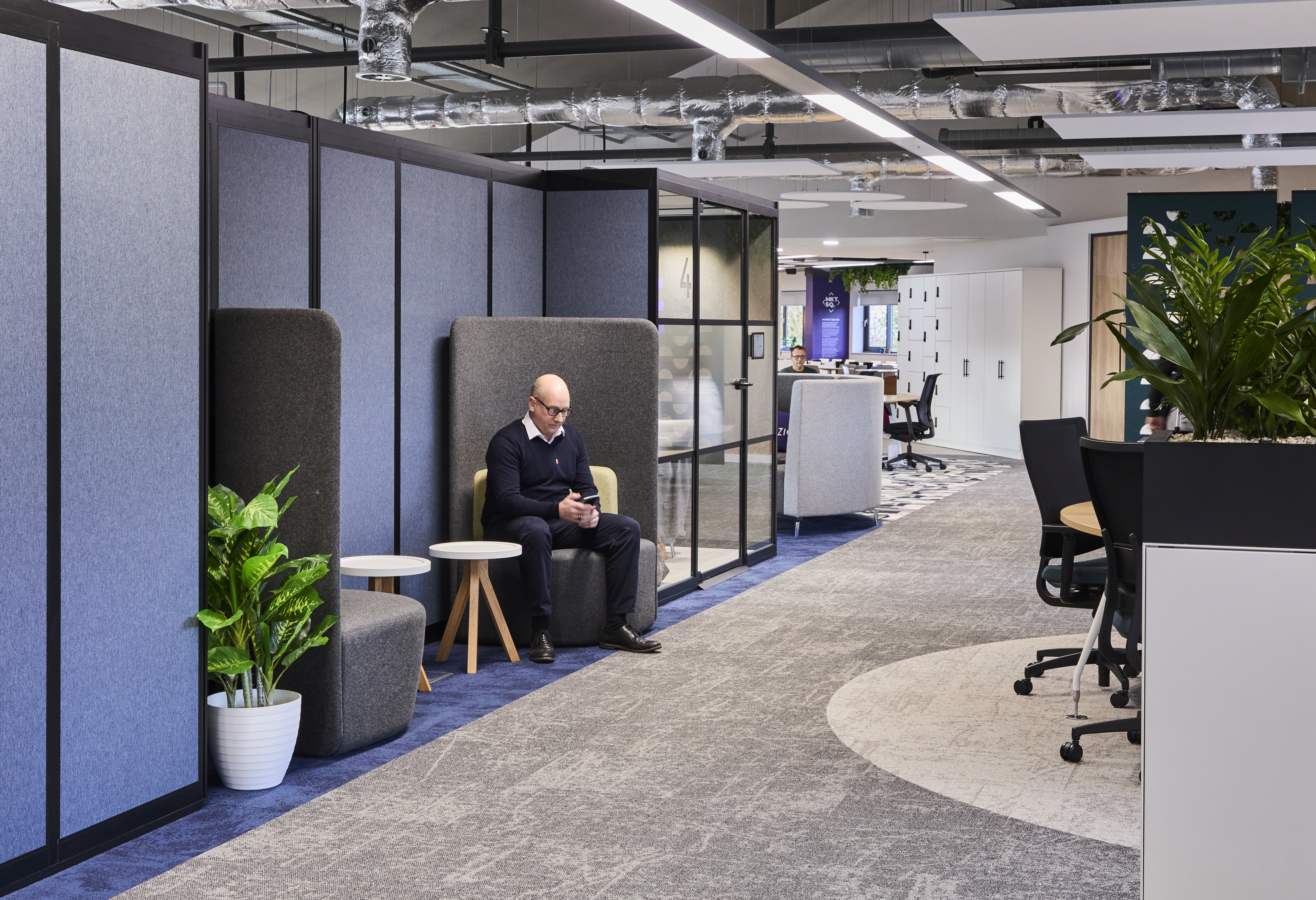
In contrast, quieter working zones are defined through deeper, more saturated tones from the same collection. These shifts are not abrupt but calibrated, creating a gradient of spaces that move from active to focused without breaking the overall visual language.
For primary desk areas, the Human Connections collection introduces a more explicit material reference. Inspired by the patterns of stone and rock, the surface carries a granular, layered quality that echoes geological formations. “The collection is inspired by the organic patterns of stone and rock and can really help to promote a sense of calm,” said Interface account manager Jack Maclennan. Here, material association becomes part of the spatial experience, reinforcing a sense of stability and quiet within work zones.
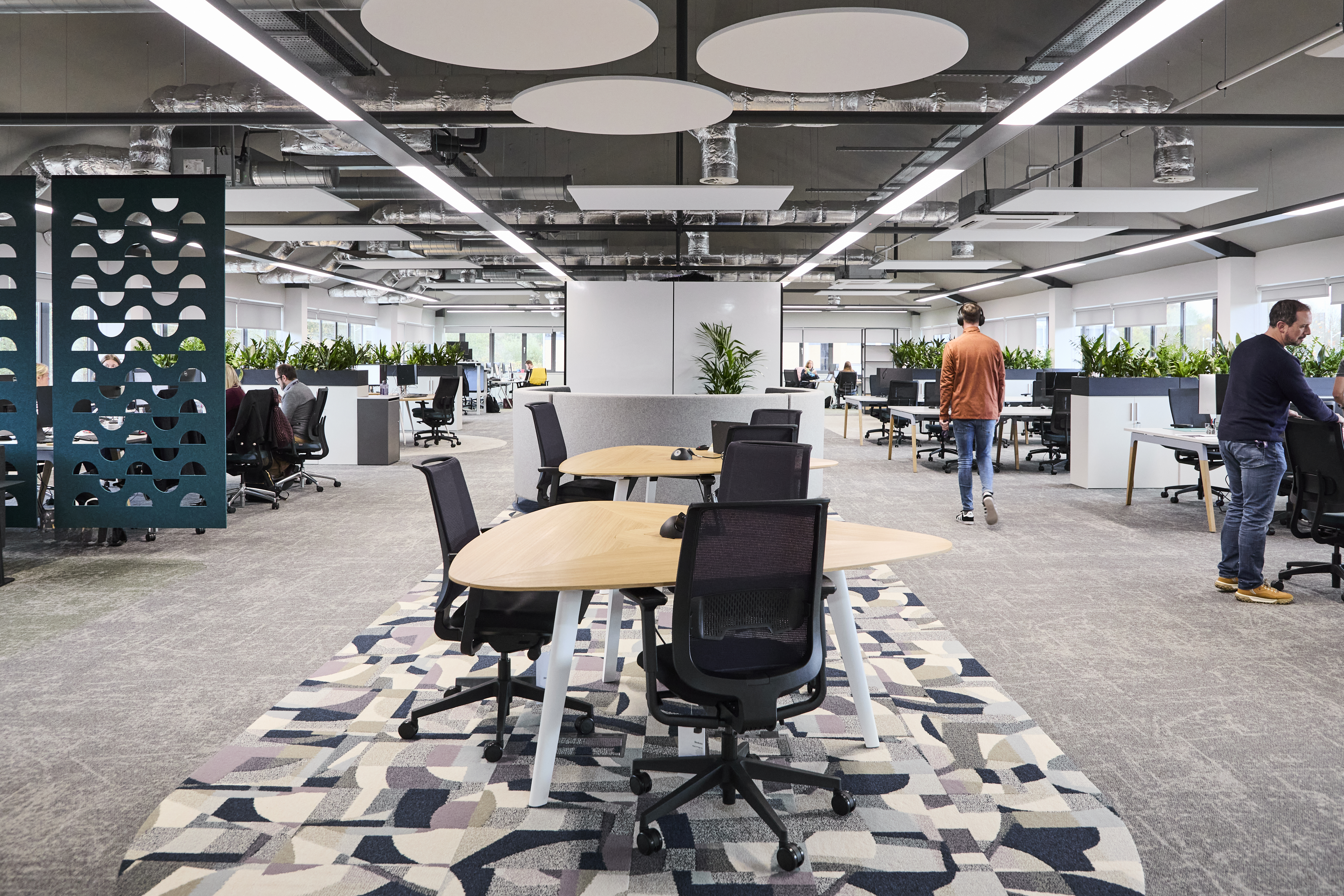
Material performance was equally critical. Both carpet tile ranges are manufactured using recycled yarn and backed with carbon-negative technology, aligning with the project’s wider environmental ambitions while offering durability suitable for daily use.
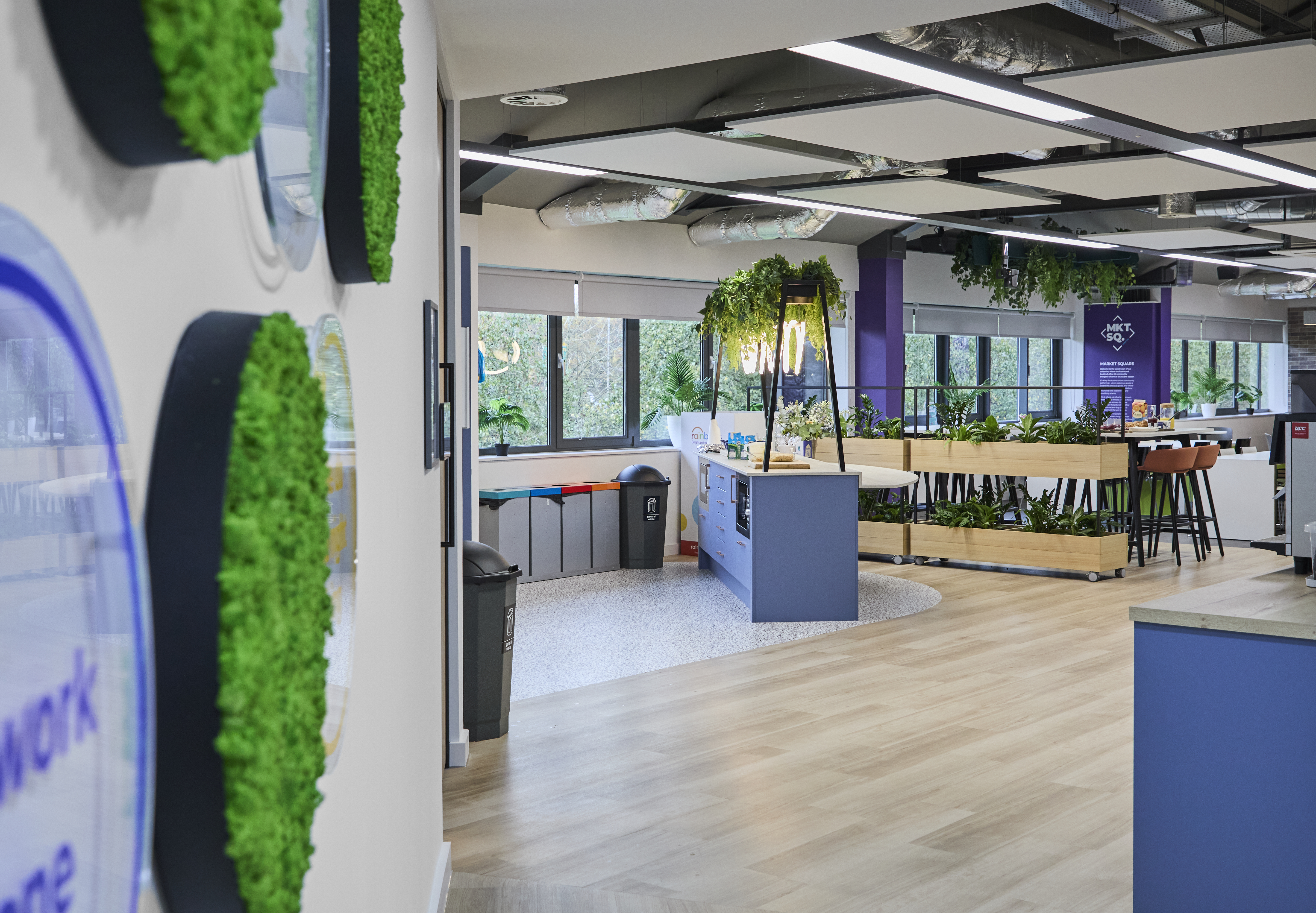
In high-traffic areas such as circulation routes, teapoints and reception, the palette shifts again. Luxury vinyl tiles from Interface’s Walk on By collection provide a more robust surface, engineered to withstand wear while maintaining visual clarity. A ceramic bead coating protects against scratching and scuffing, while acoustic backing helps reduce impact noise across the busy workspace.
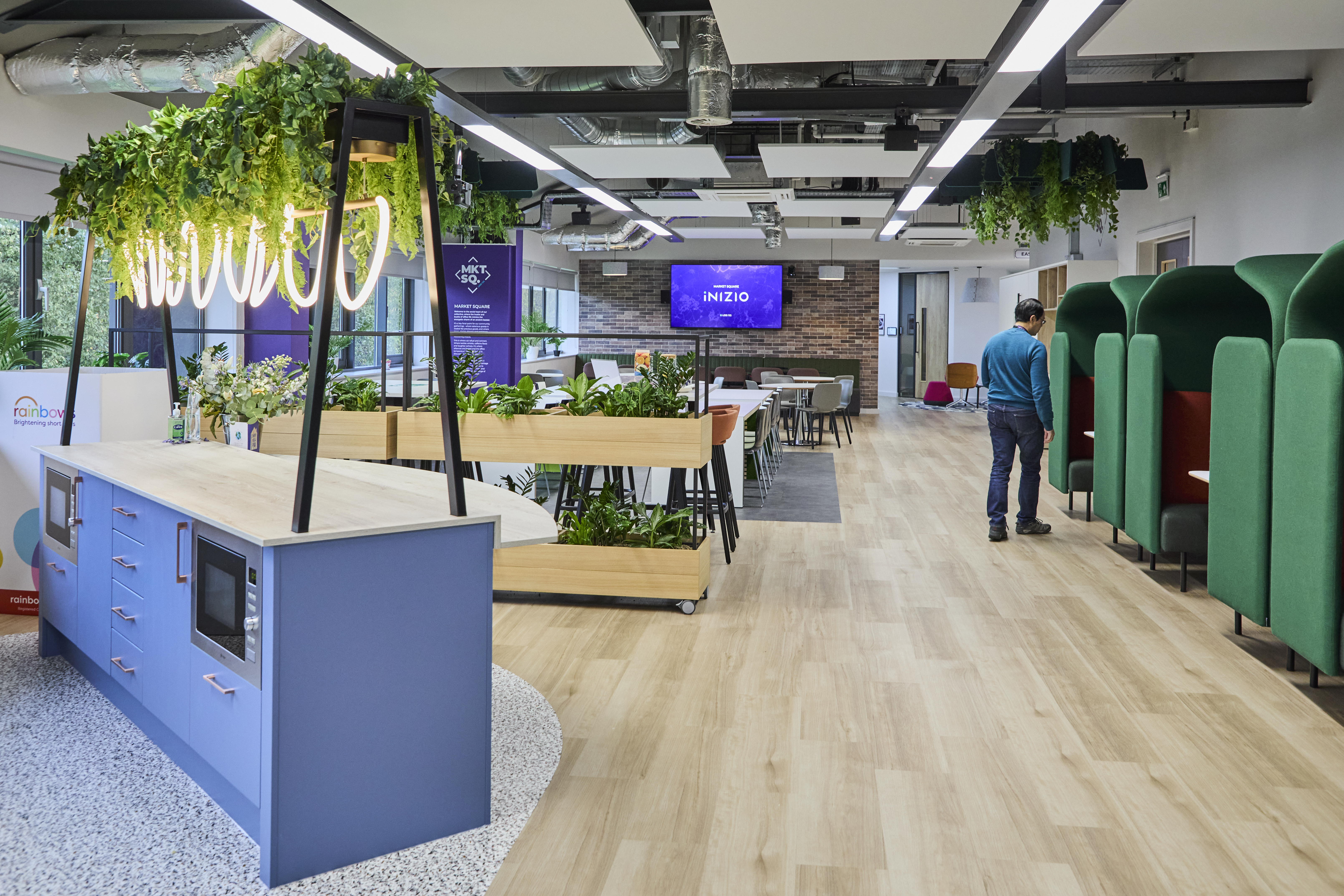
Here, the material language becomes more expressive. Pattern and colour are used more freely, particularly in social areas such as the workplace café, where the flooring introduces a more dynamic character. These moments of contrast help signal informal, communal spaces within the wider scheme, encouraging interaction and pause.
“The task was to create an environment that would help staff not only do their very best work but switch off when needed too – all whilst having as little impact on the planet as possible,” said Maclennan.
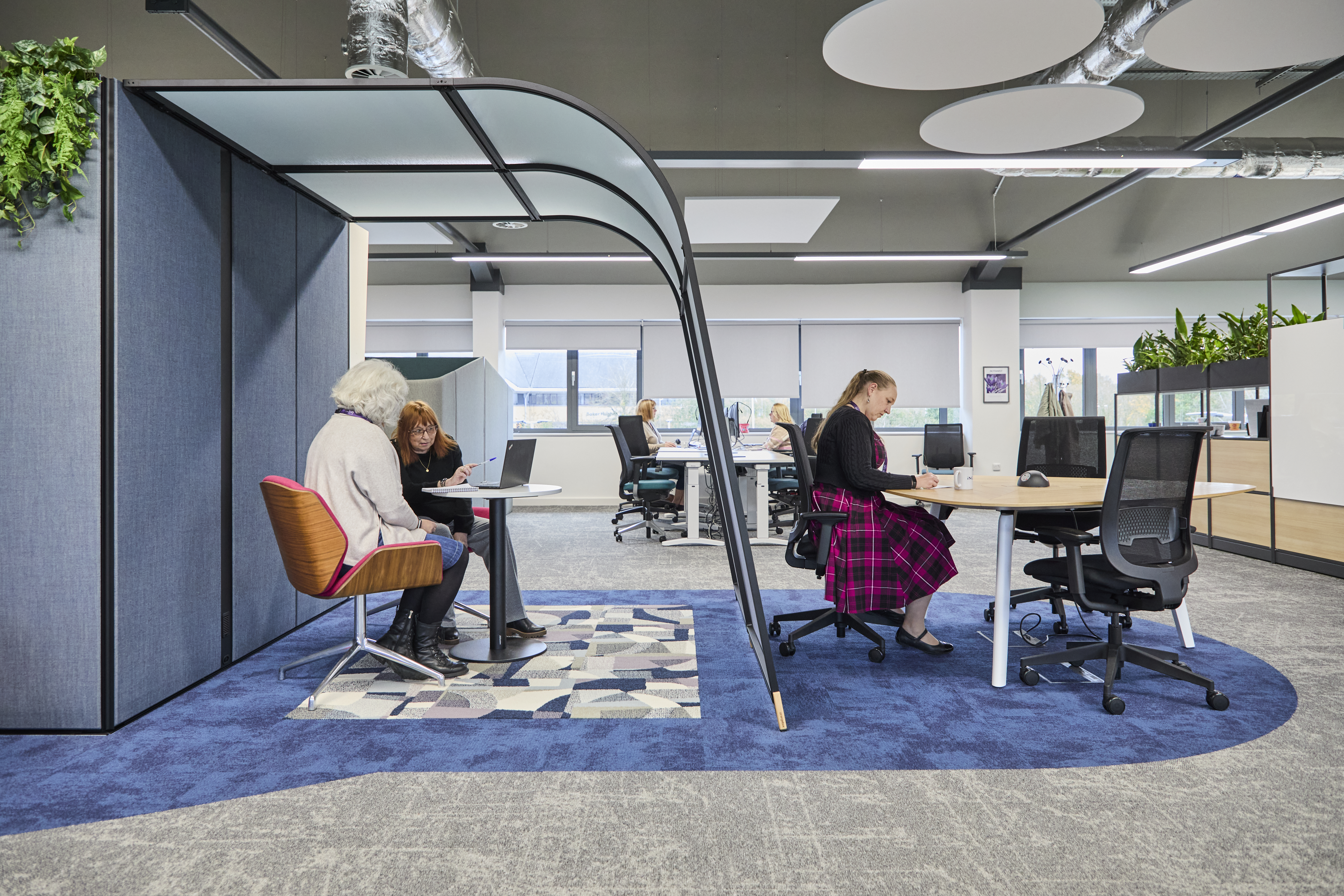
The completed workspace includes a mix of hot-desking areas, quiet rooms, a control room for hybrid events and a central social hub. Across each, flooring plays a consistent role in guiding movement and defining use, demonstrating how surface specification can operate at both a technical and spatial level.
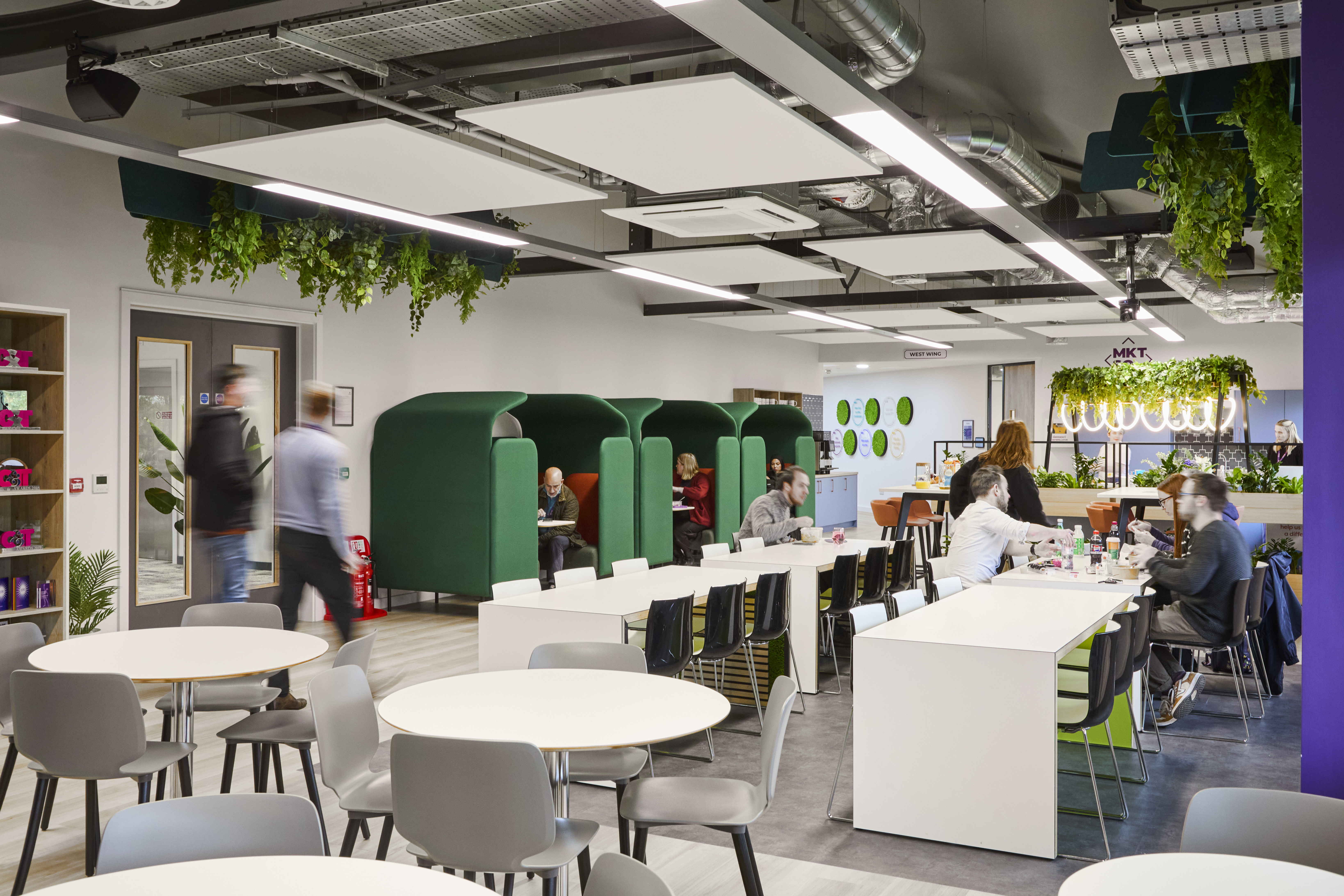
Reflecting on the project, Blueprint Interiors’ project designer Jed Salmon described the outcome as “meticulously curated to embody Inizio’s values of sustainability, wellbeing and innovation”.
In this context, material selection moves beyond finish to become an organising principle – structuring space, shaping experience and reinforcing the relationship between workplace, user and environment.