

Case Study: Vault Youth Zone, John Puttick Associates

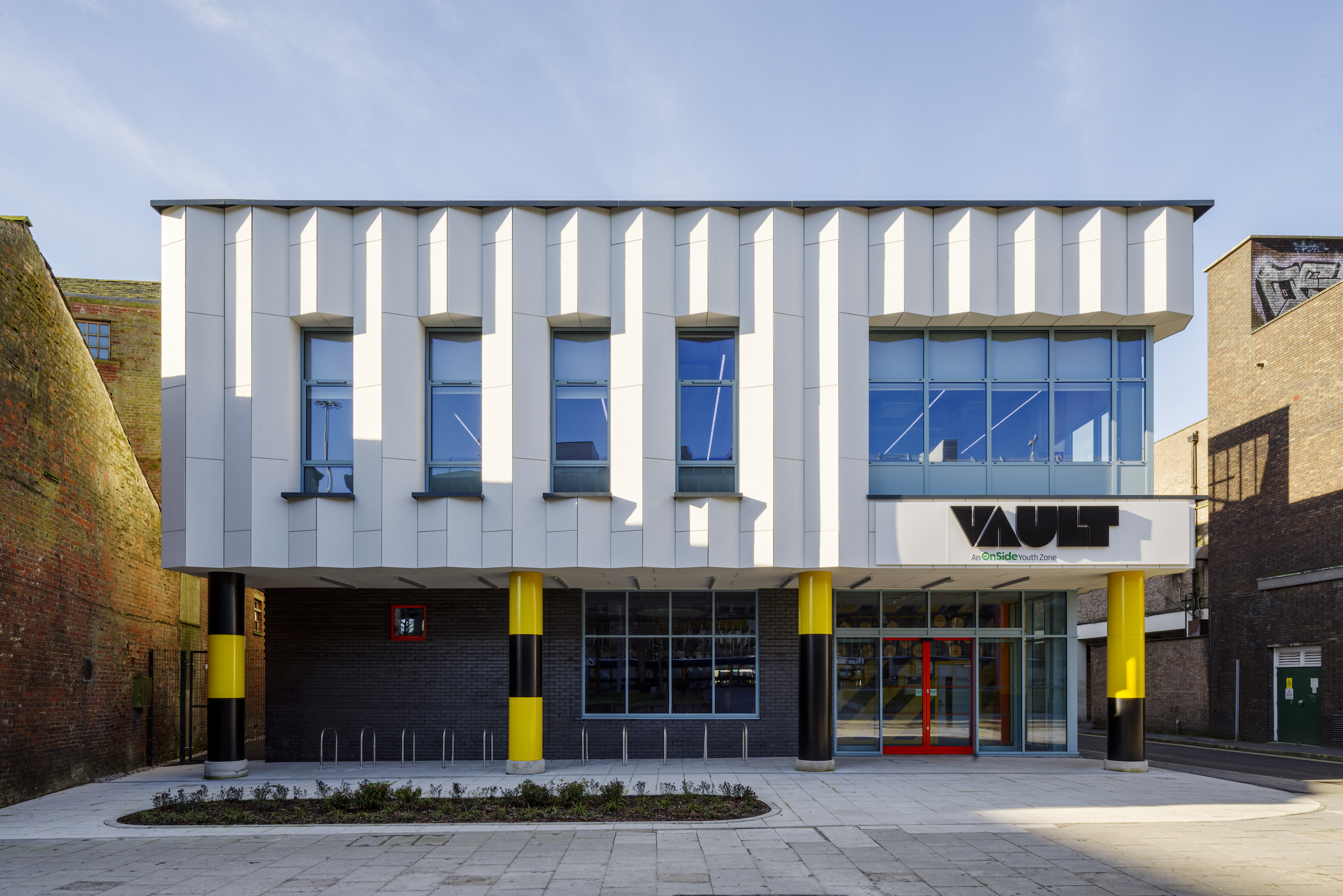
The completion of Vault Youth Zone marks the final phase of more than a decade of regeneration around Preston Bus Station, consolidating a programme that has redefined a key civic site in the Lancashire city. Designed by John Puttick Associates for youth charity OnSide, the 2,912m² building introduces a contemporary community facility directly facing the Grade II listed Brutalist landmark the practice previously restored.
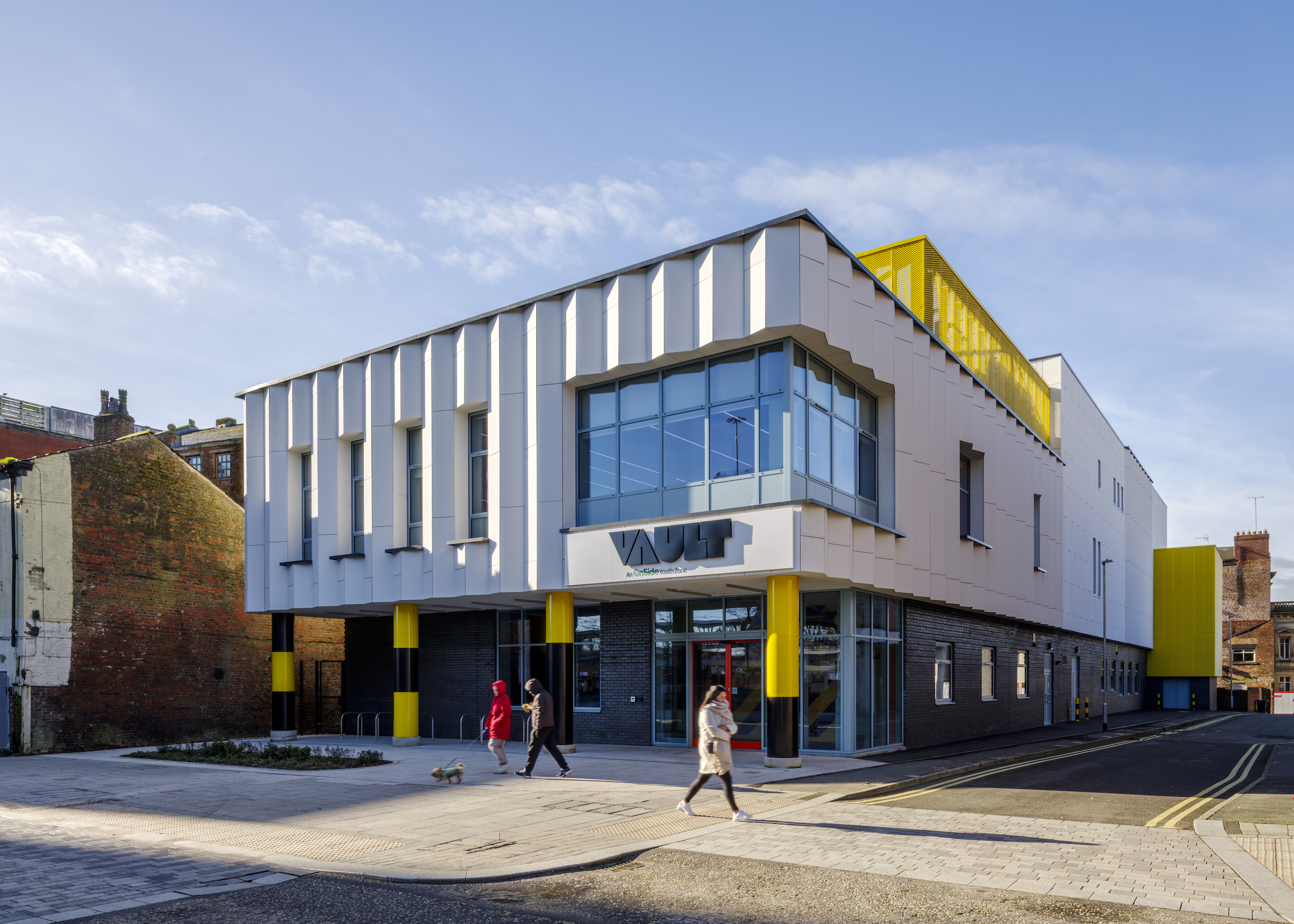
Located within Preston’s Harris Quarter, the Youth Zone occupies a tight urban plot between the bus station and a new public square. Its prominent position demanded a building with civic presence, while remaining responsive to the scale and material weight of its Modernist neighbour.
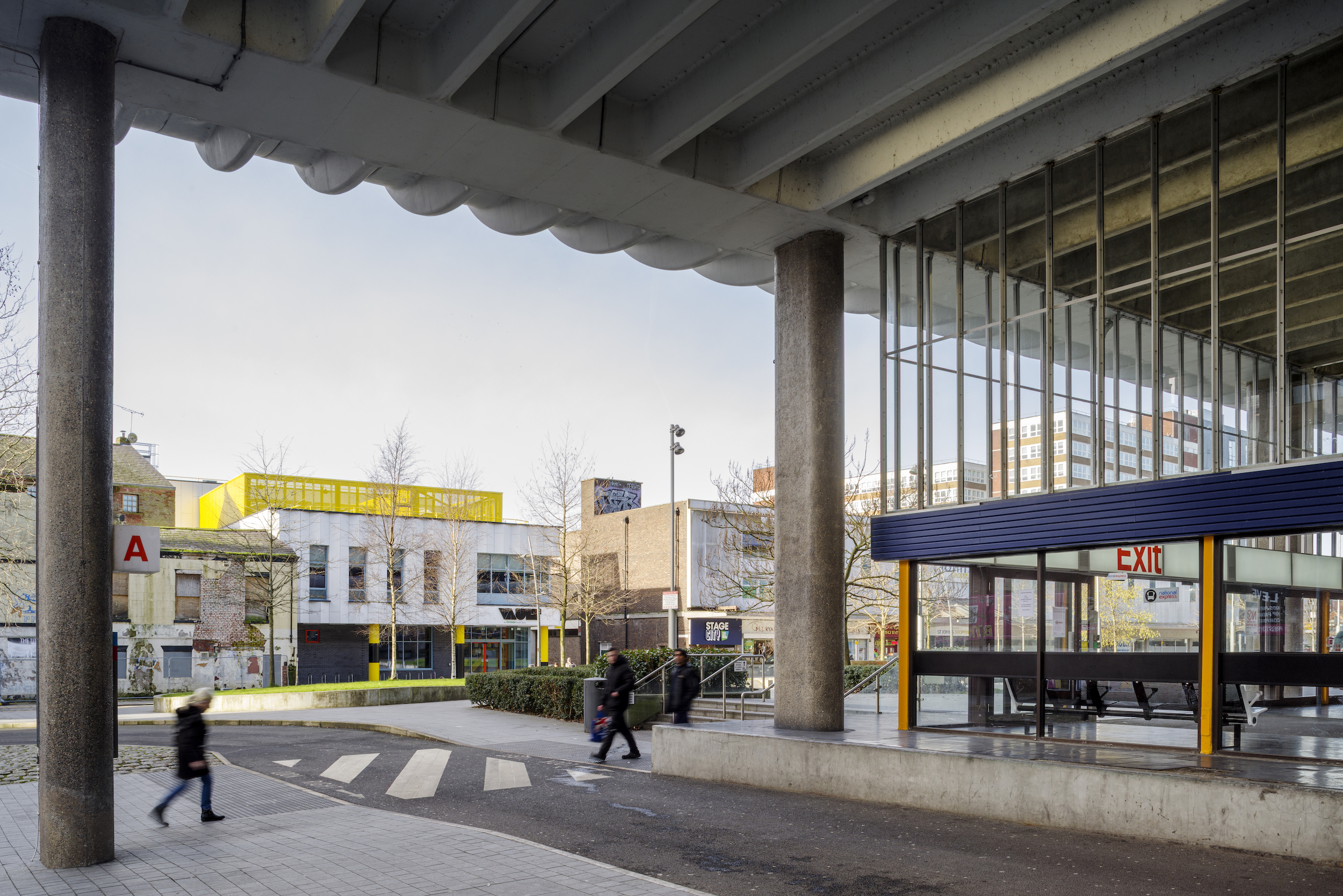
A yellow colonnade marks the entrance, projecting towards the square as a gathering point and establishing a direct visual dialogue with the bus station’s original yellow steelwork. The façade is clad in light grey fluted fibre cement panels, their vertical rhythm referencing the strong articulation of the bus station’s concrete soffits. Yellow-and-black columns and mesh balustrades reinforce the connection, giving the building a distinct identity while rooting it firmly in its setting.
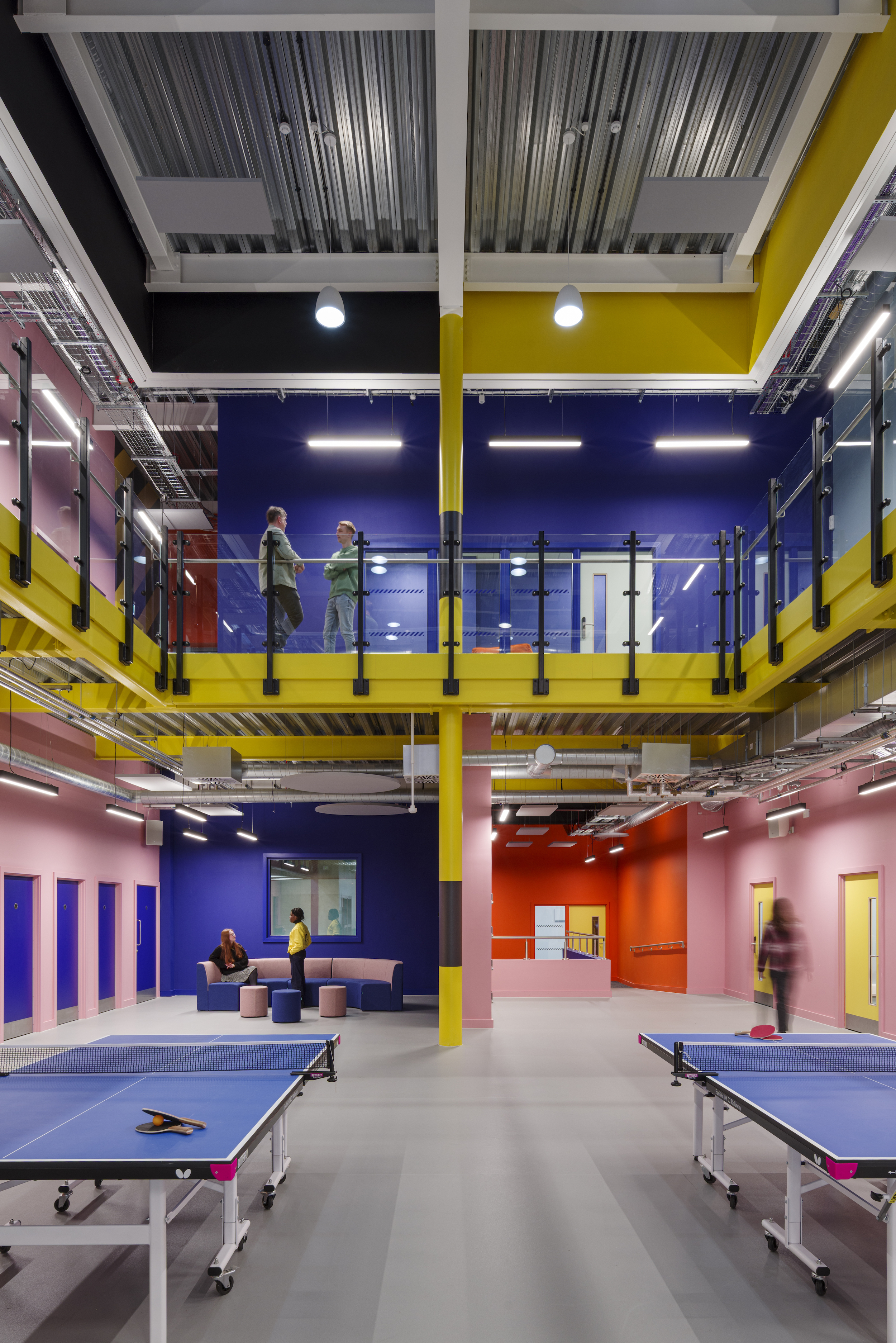
Internally, the building is organised around a double-height central void, with a climbing wall acting as both focal point and visual connector between floors. Large-volume spaces, including a full-size sports hall and indoor kick pitch, are stacked towards the most sheltered part of the site, allowing the building to rise away from the street frontage and reduce visual impact near an adjacent listed warehouse.
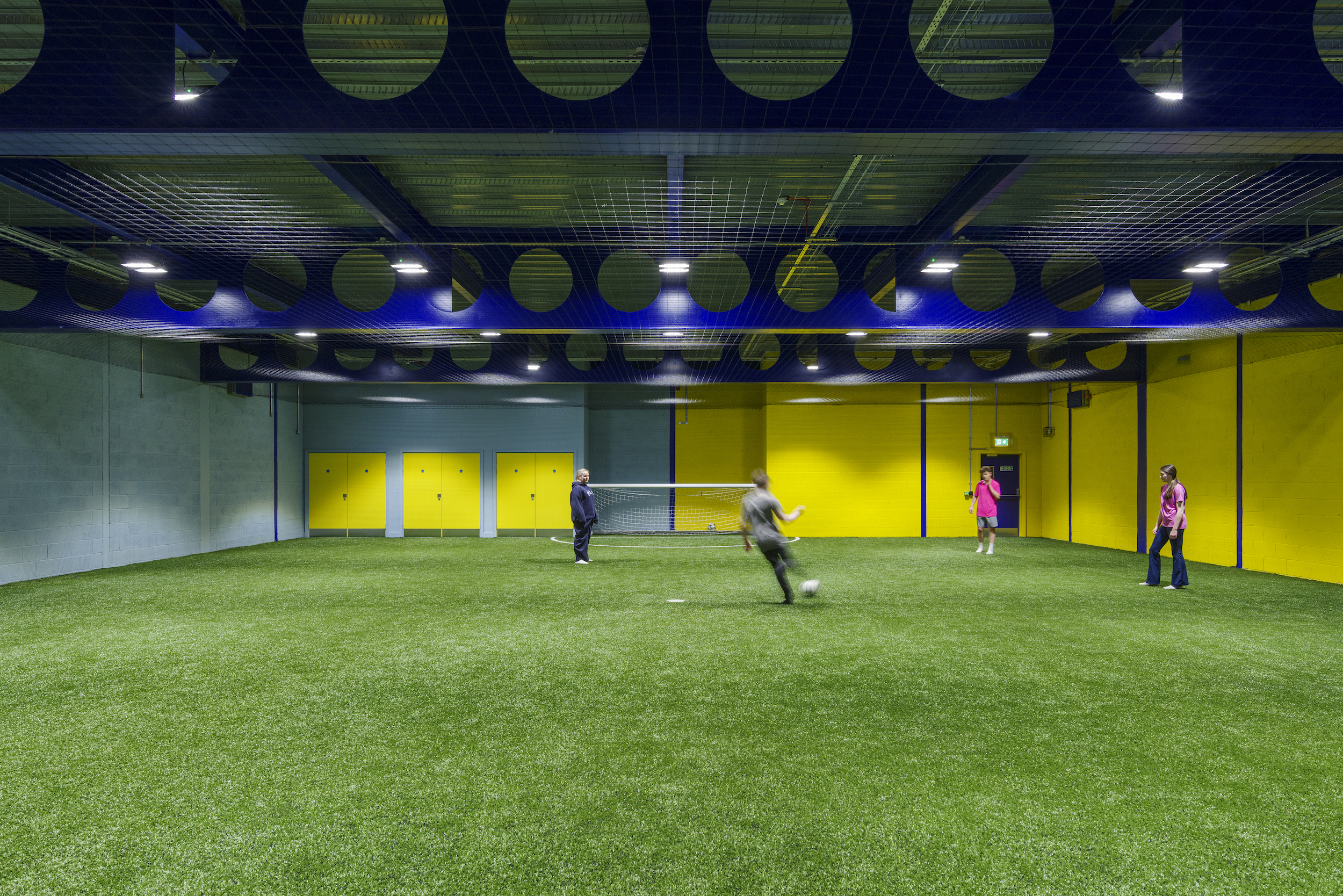
John Puttick describes the project as the culmination of a ten-year engagement with the site. “The refurbished bus station, public square and Youth Zone work together to provide an animated and community-focused area of the city,” he says, noting the significance of giving young people such a central and visible location.
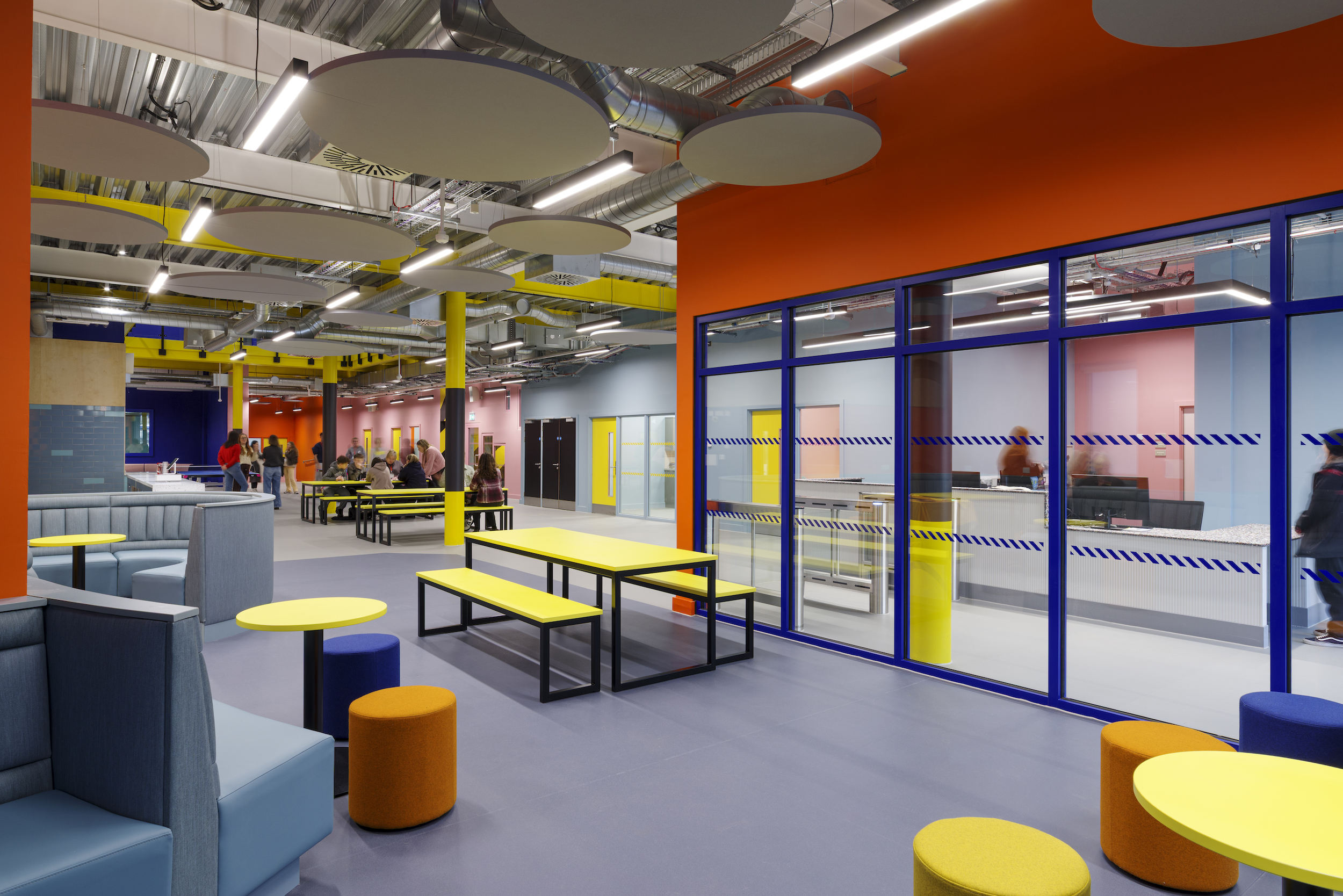
Interior design was developed with designer Ben Kelly, known for his work on Manchester’s Haçienda. As with the legendary club, bold colour blocking and robust finishes feature, and help to define zones and create distinct atmospheres without resorting to overtly institutional design, reflecting an ambition to treat young users as confident participants rather than passive occupants. Associate Martin Aberson explains that the aim was to create “a compact internal arrangement with clear access and views across a central social hub,” encouraging engagement while ensuring durability.
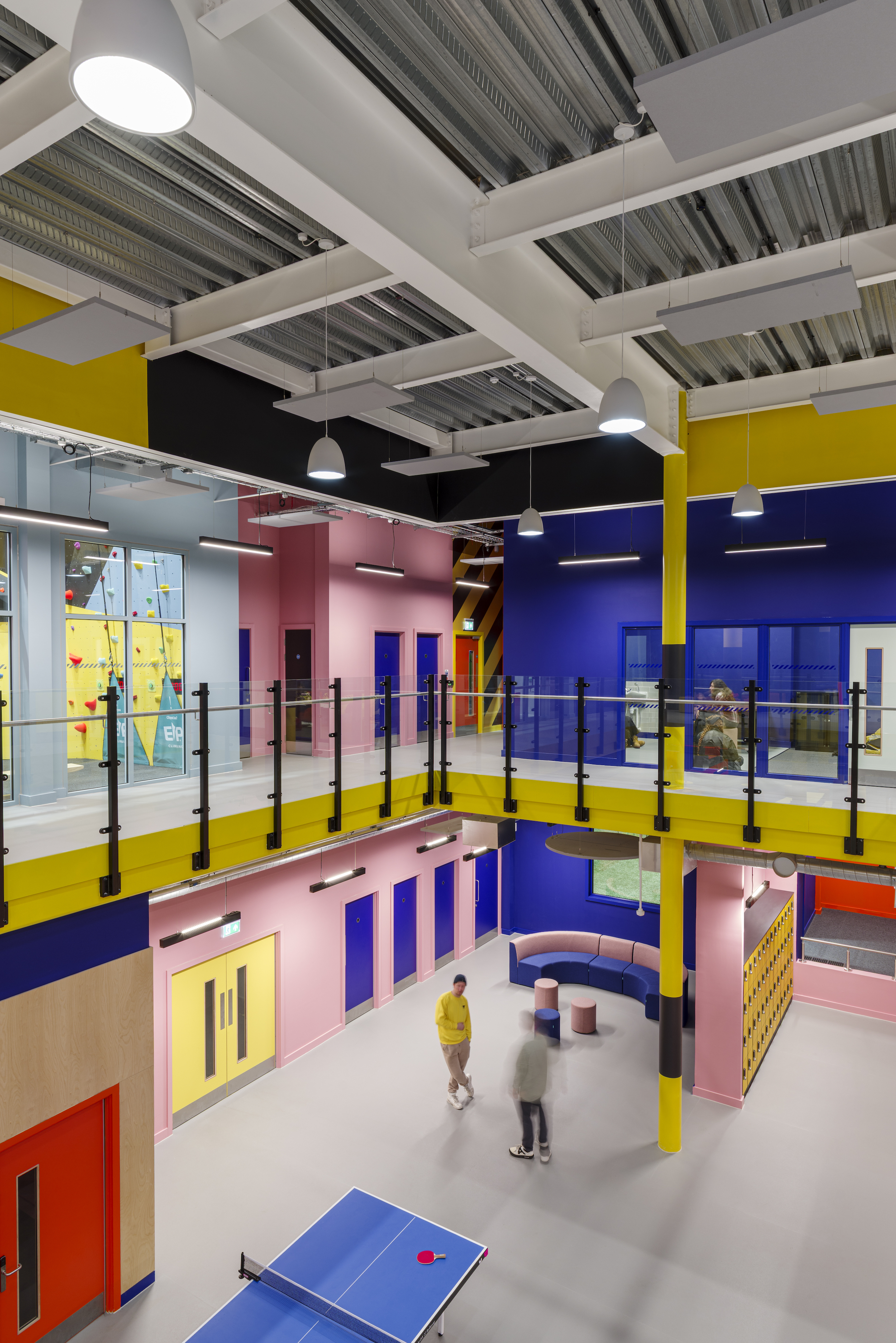
Due to the multi-functional and considered layout across multiple floors, users have already noted a tardis-like experience. The ground floor functions as a social hub, combining café, mentoring kitchen, arts spaces, gaming zones and sports facilities. Upper levels accommodate the sports hall, performing arts areas, music and recording studios, and quieter wellbeing rooms.

Sustainability measures include an optimised steel frame, highly insulated envelope, natural ventilation through windcatchers and photovoltaic panels contributing to on-site energy generation. Again, the material palette is built around durability, prioritising intensive daily use, and recognising longevity as essential to environmental performance.
Rather than occupying a peripheral site, Vault Youth Zone asserts youth provision as part of the city’s public core. In doing so, it demonstrates how regeneration projects can move beyond heritage repair to create new civic architecture that is contemporary, robust and socially ambitious, while remaining materially and formally responsive to place.