

Surface Spot: Blast Studio at the V&A

Along with work from the three artists who make up the 2025 Adobe Creative Residents programme, visitors to the current V&A exhibition are also in line for an in-the-flesh Surface Spot.
The exhibition design, which showcases the trio’s collective culmination of a year-long residency at the V&A South Kensington, includes plinths and display tables made from a material sourced and created from a ubiquitous local waste stream.
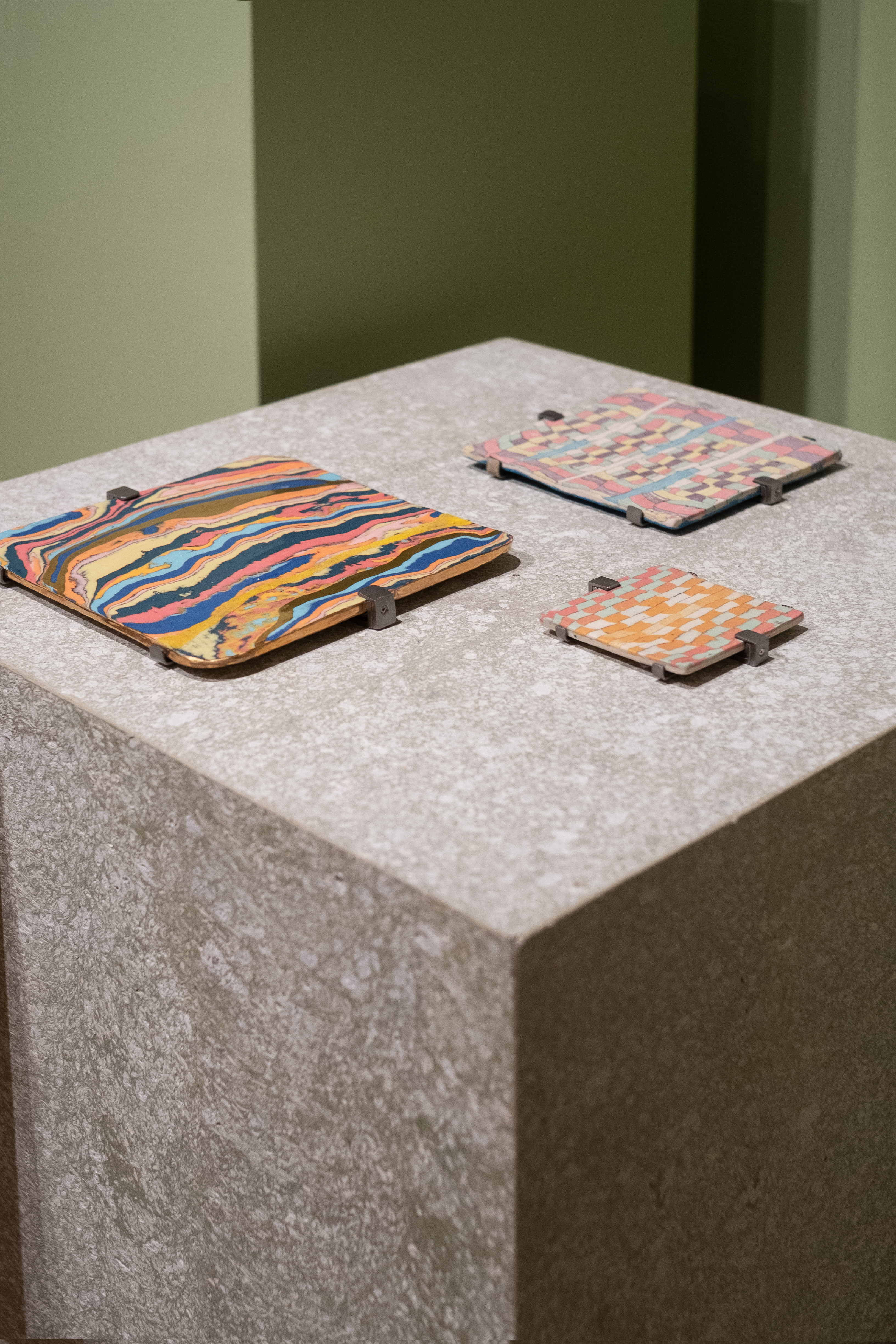
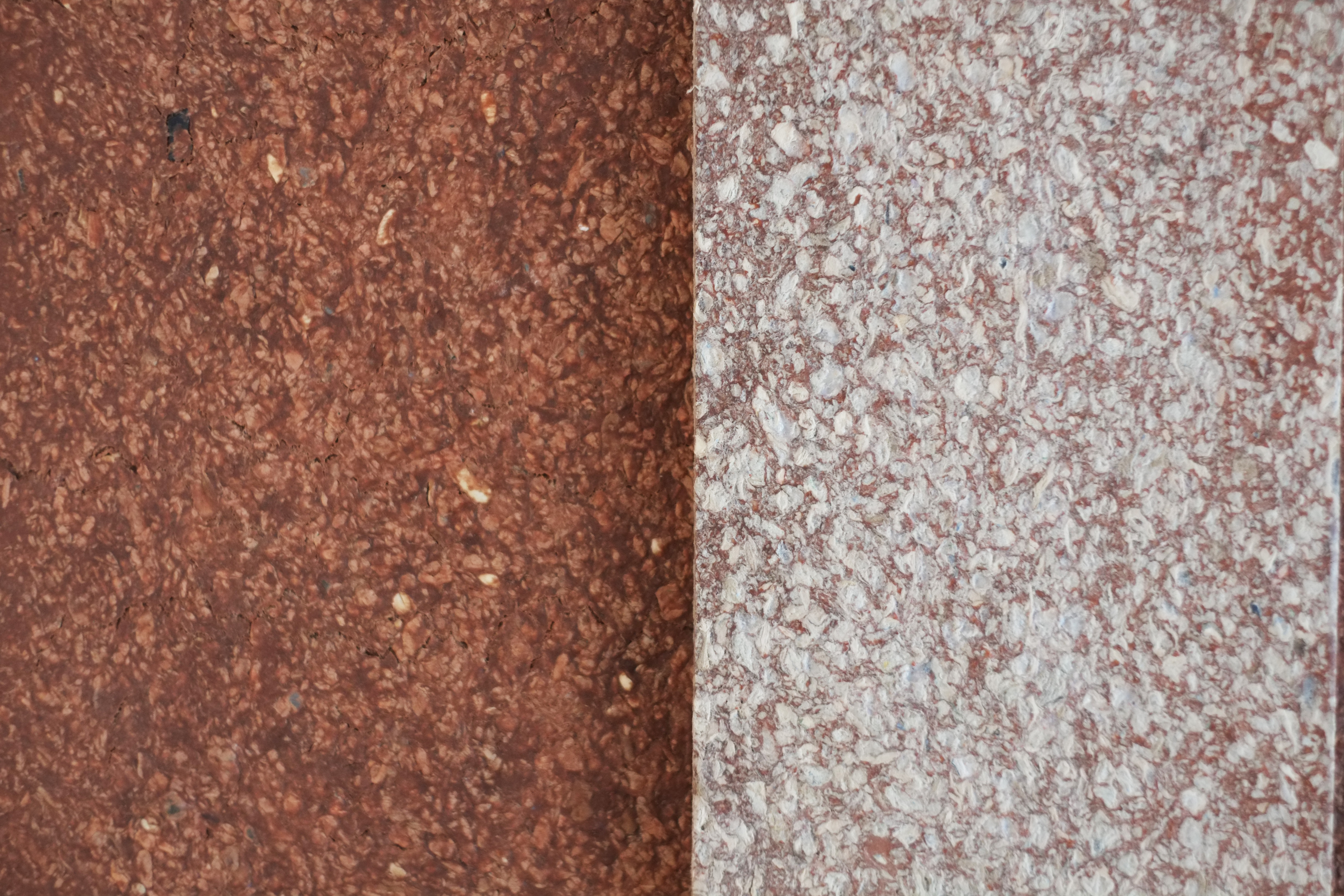
Developed by Blast Studio, Cupsan is a material made from discarded takeaway coffee cups and paper packaging collected across London. While made of seemingly recyclable paper, these one-use vessels are, in fact, difficult to reconstitute due to their layered composition.
Working as a micro-factory, Blast Studio collects, processes and manufactures Cupsan within a tightly controlled loop. The team sources waste from nearby cafés and offices before transforming it into dense, machinable boards. Discarded cups are shredded into pulp and combined with a plastic-free, bio-based binder to form solid panels. The result is a high-density board with a performance comparable to conventional sheet materials, yet with a distinct origin and aesthetic appeal.
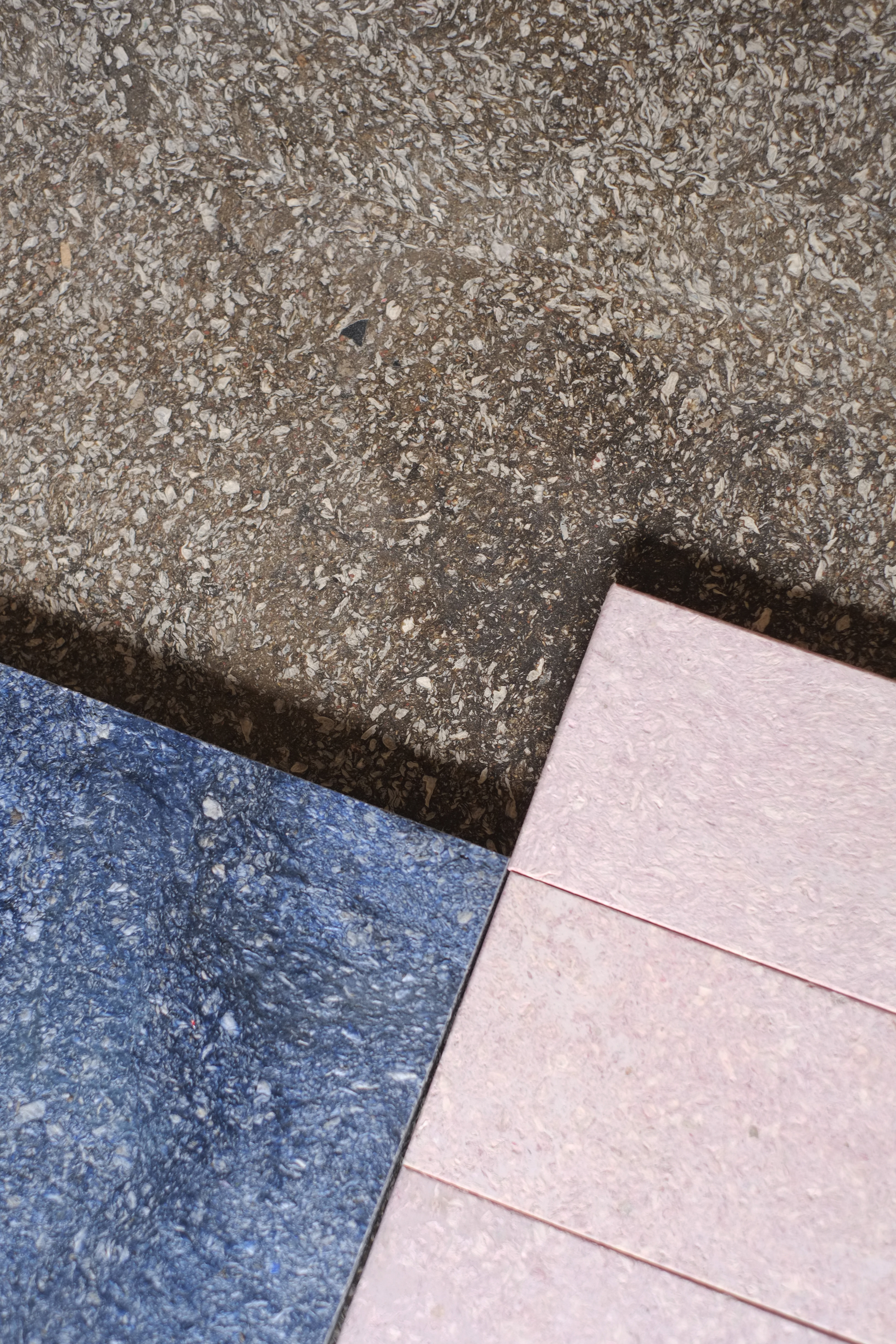
While essentially a paper composite, Cupsan occupies an interesting position between timber-based boards and mineral surfaces. It can be cut, CNC-machined, sanded and assembled using standard woodworking tools, allowing it to integrate easily into established fabrication processes. At the same time, its surface character diverges from the uniformity of MDF or laminate. Depending on the finish, it can read as softly fibrous or take on a more terrazzo-like quality, with fragments of its former life subtly embedded within the surface.

Designed for interior use, Cupsan is applied across furniture, joinery and architectural elements, from wall panelling and countertops to retail fit-outs and, as in this recent case, exhibition design. Its modular production system allows smaller planks to be assembled into larger panels, enabling flexibility in scale while maintaining material consistency. What’s more, protective finishes can be applied to improve durability and resistance, extending its use into more demanding environments.
By working with hyper-local waste streams, the material reduces transport, retains value within the city, and offers an alternative to resource-intensive production models. Each square metre incorporates hundreds of discarded cups, underscoring the scale at which everyday waste can be redirected into the built environment.