

Surface Spot: Denimolite - Reworking Denim Waste

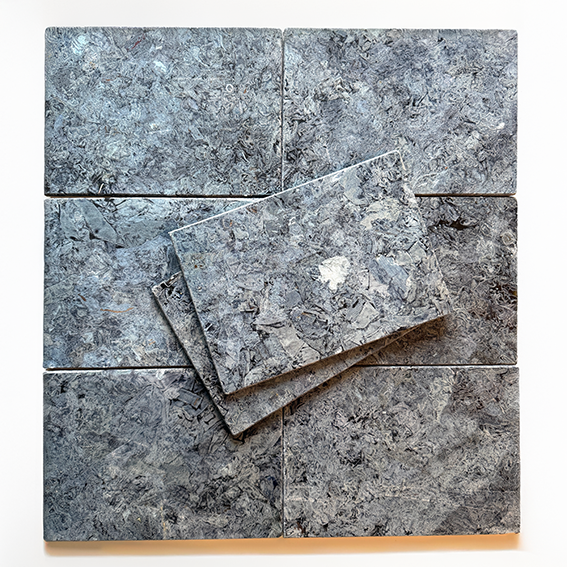
As interest in circular materials gathers pace across architecture and interiors, young designers are increasingly looking beyond conventional mineral and polymer systems to rethink waste as surface. Denimolite, developed by Josh Myers, is one such proposition: a composite material made using discarded denim, reworked into a solid, tactile and machinable surface.

Myers, a member of Barbara Chandler’s Green Grads, is part of a wider generation using sustainability not as an afterthought, but as a material driver. Denimolite grew out of a questioning of whether common textile waste can be elevated into a structural and sensory surface material. Denim, with its robust weave and deep cultural associations, provided the answer. By harnessing discarded denim from manufacturing and post-consumer streams and combining it with a low-impact binding system, Myers has created a material that is both physically substantial and conceptually intriguing. What’s more, he’s discovered a process that allows all types of such waste - including notoriously difficult to recycle stretch denim - to be thrown into the mix.
Rather than disguising its origins, Denimolite makes them visible. The surface reveals layers of shredded and reconstituted denim, creating tonal variation and a fibrous depth that shifts subtly with light. In this sense, it shares an affinity with natural materials such as stone or terrazzo, where pattern, inconsistency and grain are intrinsic to the material’s appeal. The familiar indigo blues of denim are softened into a mottled, mineral-like field, giving the material a visual weight that belies its origins in cloth.
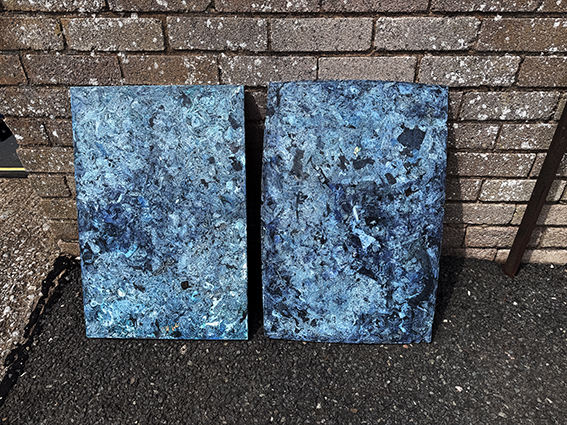
Tactility is central to the material’s character. Denimolite has a warmth and density that sets it apart from smoother, more synthetic composites, making it well-suited to furniture, interior surfaces and feature applications where touch and material presence matter. Its manufacture also allows for variation in colour and texture depending on the source material, reinforcing its link to circular design principles and adaptive reuse.
In an industry still heavily reliant on virgin mineral and petrochemical inputs, materials like Denimolite that close the loop on waste while balancing functionality with aesthetic presence are a breath of fresh air.