

Case Study: CAN Anchor a Residence With Stone

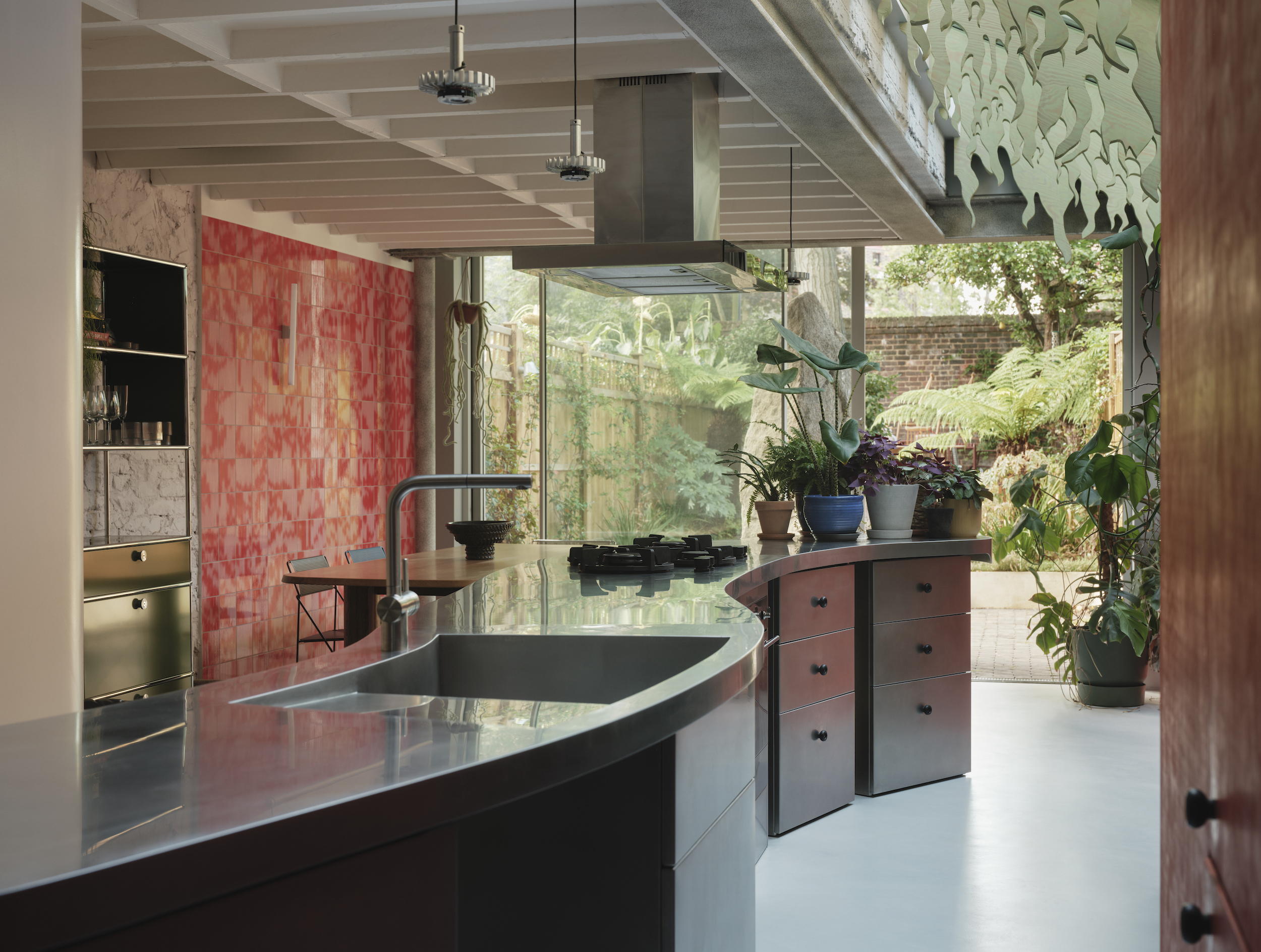
Druid Grove is a modest London terrace that has been quietly but radically reimagined. Set on a residential street in East Dulwich, the three-bedroom house has been extended and refurbished by CAN for a visual artist client, transforming a familiar typology into something closer to a spatial artwork. The project demonstrates how material choices, construction processes and architectural narrative can work together to create a domestic environment that feels both experimental and deeply grounded, with a direct connection to nature.
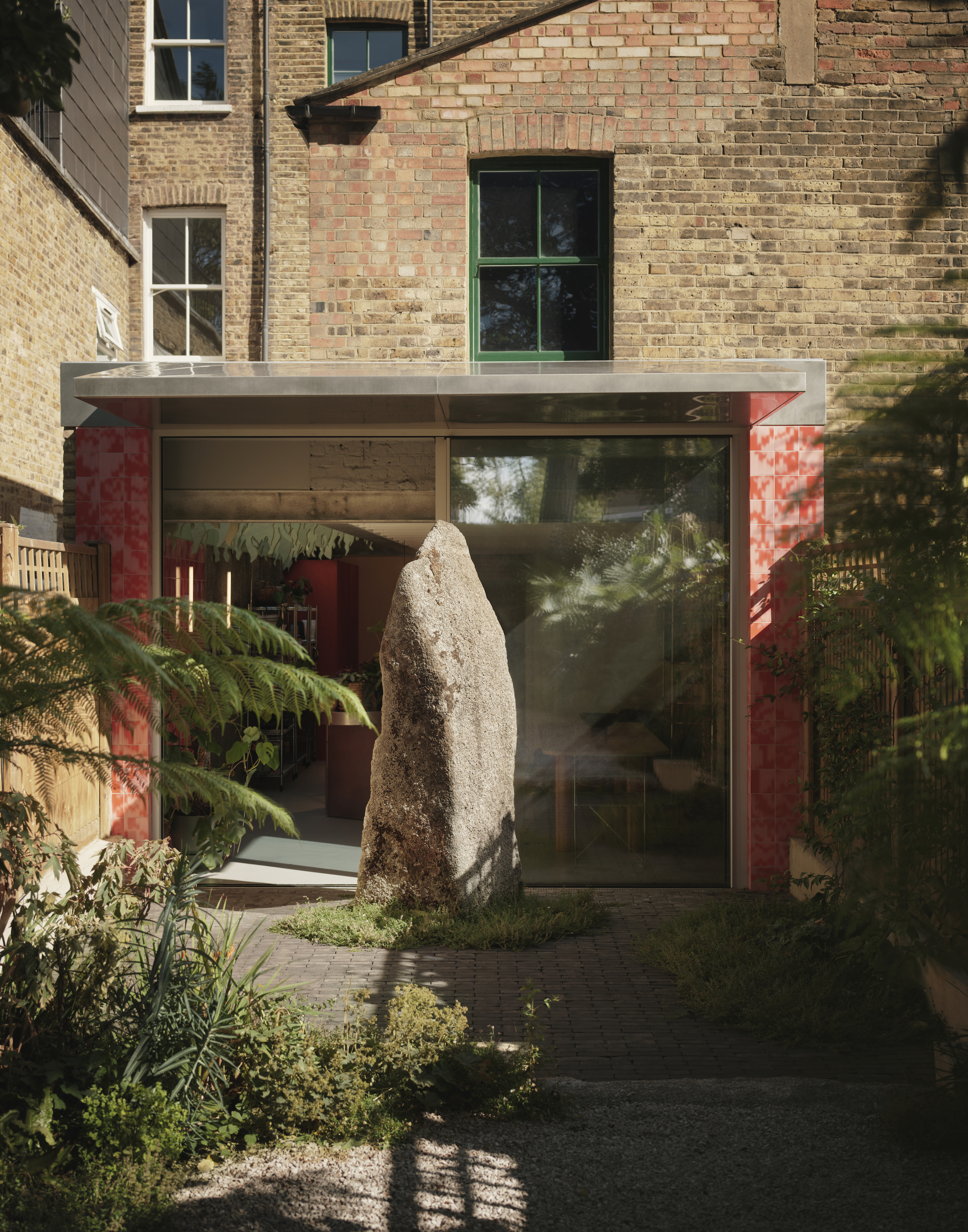
Image Credit: Felix Speller
The most literal connection to nature sits just beyond the rear extension. In the garden stands a single upright stone, or menhir, acting as a privacy screen and symbolic anchor. Selected by the client and architect from a stone farm in Cornwall, the rock was craned delicately over the house into position. Geological history is embedded in the project here: the stone was last moved by glacial action some 15,000 years ago. Its presence introduces weight, age and a sense of protection, contrasting sharply with the lightweight steel canopy that shelters the patio.
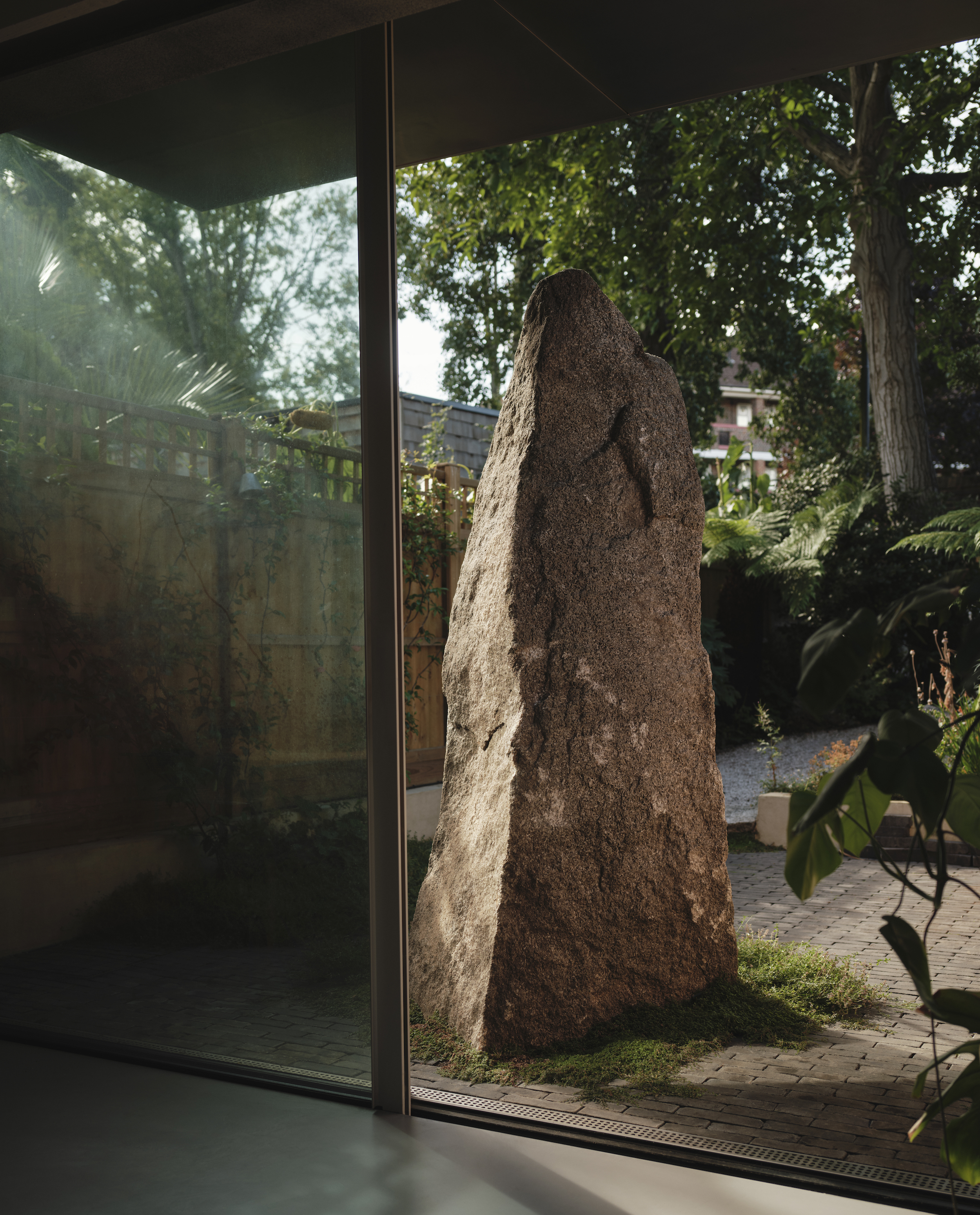
Image Credit: Felix Speller
The existing house was typical of its kind: compartmentalised, low on natural light and constrained by a narrow rear outrigger. CAN’s intervention has been relatively restrained in plan but ambitious in intent. A half-metre rear extension and the removal of a central loadbearing wall allowed the ground floor to be opened up and reorganised, creating a sequence of spaces that unfold gradually rather than reading as one continuous room. This spatial choreography became a framework for an intense exploration of materiality, texture and atmosphere.
The client’s brief was unconventional. Rather than precedent images of buildings or interiors, they shared references drawn from hyper-real natural scenes, industrial steel structures and florid, almost theatrical arrangements of flowers. For CAN, whose work often sits between architecture, art and cultural research, this provided fertile ground. Director and lead architect Mat Barnes describes the process as one of translating moods and mythologies into physical form, prioritising how spaces feel as much as how they function.
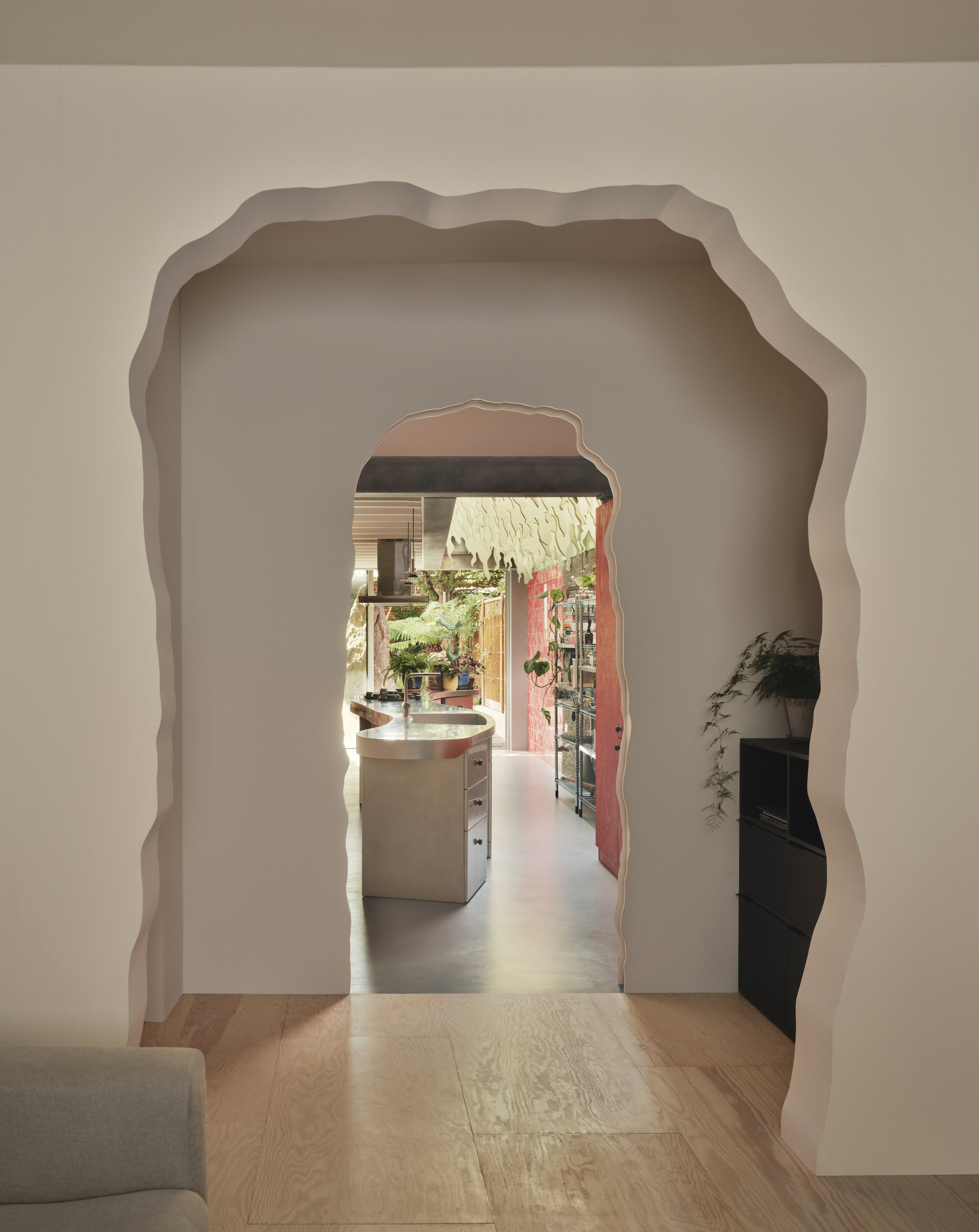
Image Credit: Felix Speller
At the heart of the ground floor is an antechamber that was once a dark, underused dining area. Now it acts as a threshold space, anchoring the plan and introducing the project’s material language. A small bar is set into the room, while a pair of cave-like openings lead through to the living spaces on either side. These apertures are deliberately sculptural, concealing sliding pocket doors within their thickness and setting up a contrast between smooth painted surfaces and rougher textures beyond.
The front living room is deliberately restrained in palette. Walls and ceilings are finished in a creamy white that emphasises the geometry of the openings and allows light to move softly across the surfaces. Underfoot, Douglas fir plywood panels are oiled rather than lacquered, bringing out the grain and warmth of the timber and establishing a tactile, almost workshop-like quality that recurs throughout the house.
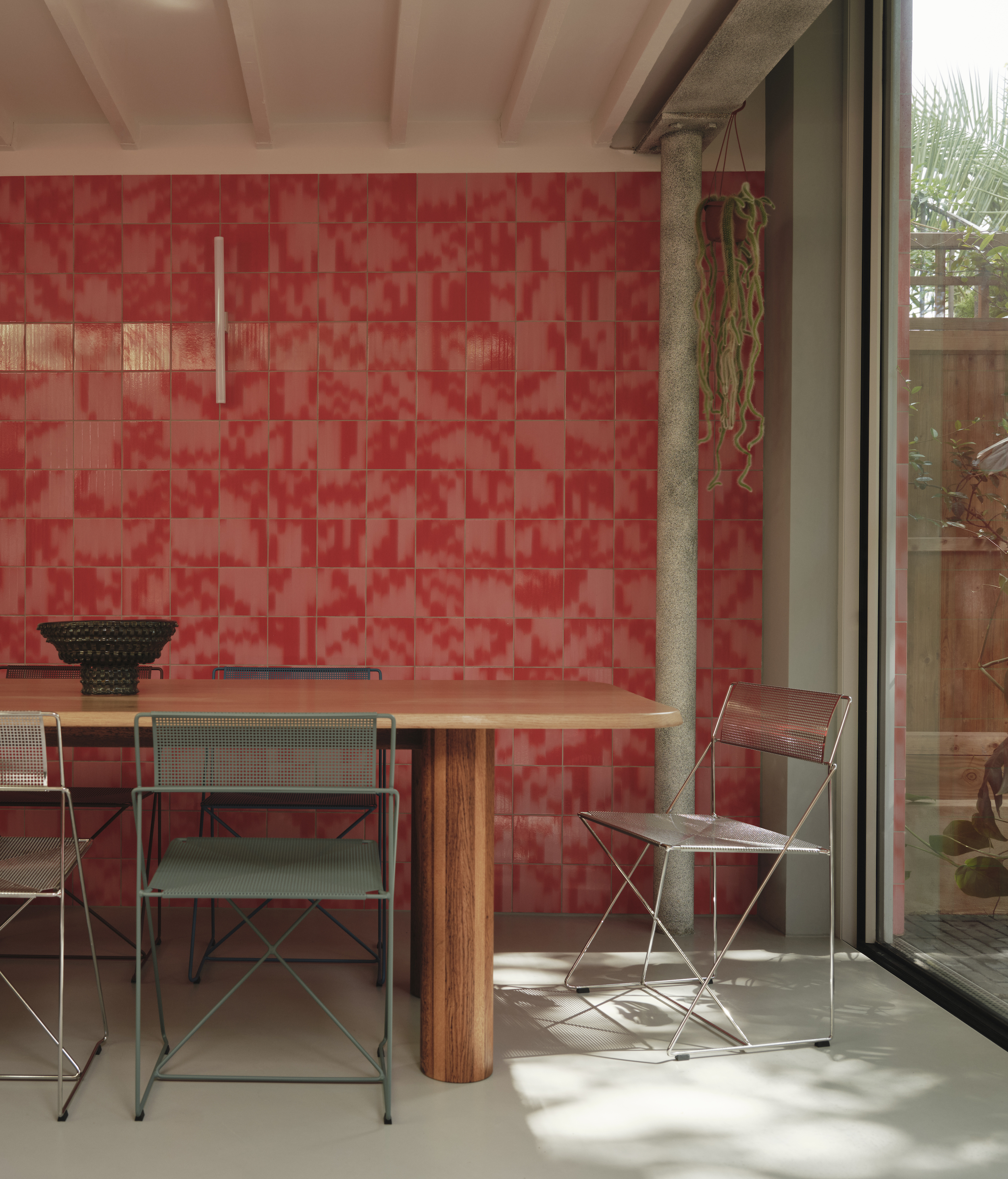
Image Credit: Felix Speller
The kitchen and dining area is arguably where the project’s material experimentation becomes most pronounced. The space is organised around a four-metre-long stainless steel island that gently meanders through the room. Fabricated in two sections and craned in through the front window, the island incorporates integrated hobs and a fully welded sink, giving it the appearance of a single, monolithic object. Its reflective surface catches light and colour from the surrounding finishes, acting as both functional workspace and sculptural centrepiece.
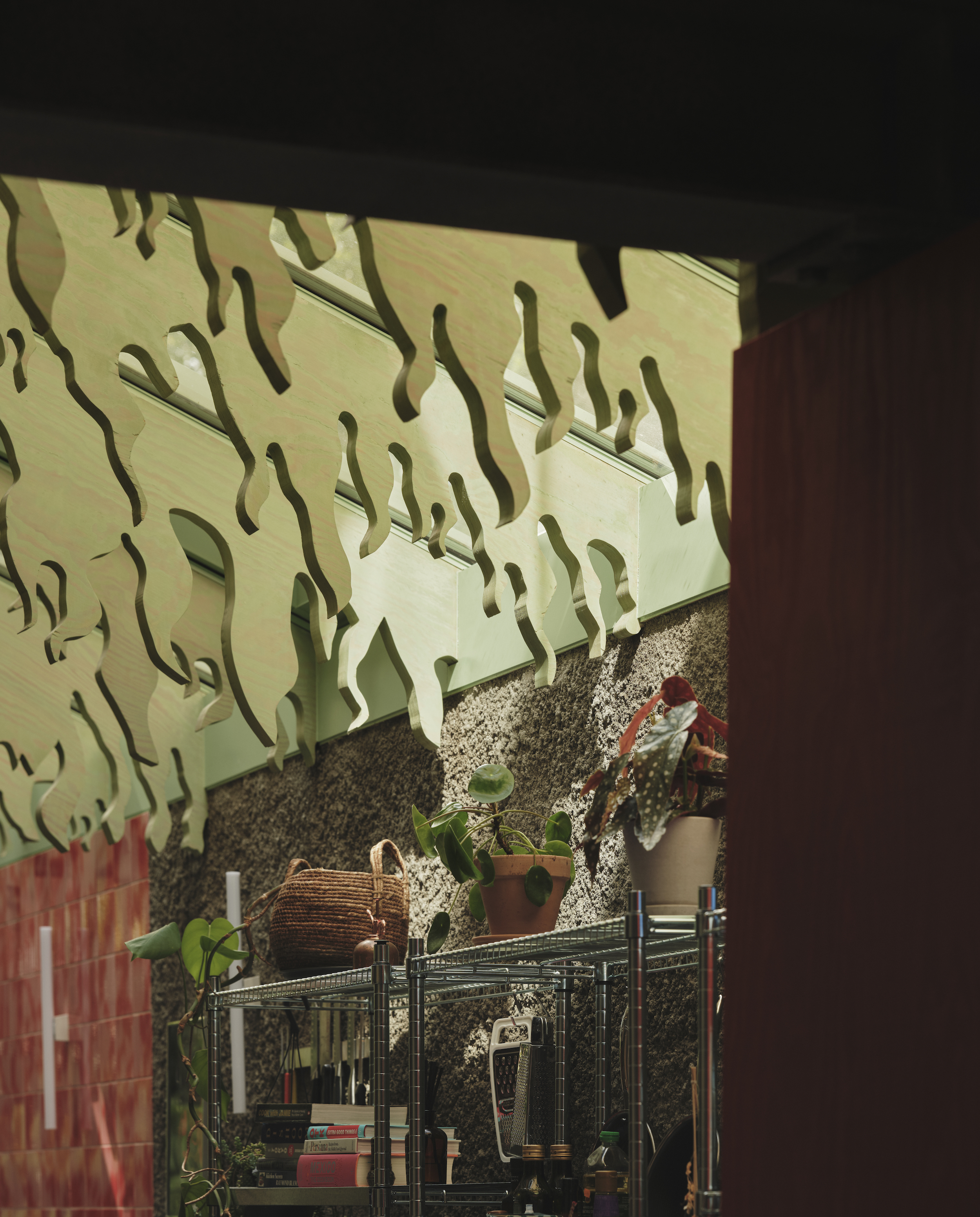
Image Credit: Felix Speller
Around this, CAN has combined bespoke elements with off-the-shelf systems. A tall pantry unit uses standard IKEA carcasses, but these are wrapped in Douglas fir plywood and finished with a burnt orange linseed oil stain. Above, timber trusses span the space, but are transformed into vegetal tendrils. Walls in the kitchen are finished in a grey rough-cast render, against which a panel of glazed Palet tiles in pink and orange tones provides a moment of colour and gloss. A high-sheen pale pink-cream paint elsewhere helps bounce daylight deep into the plan, reinforcing the sense that light itself is a material being actively shaped.
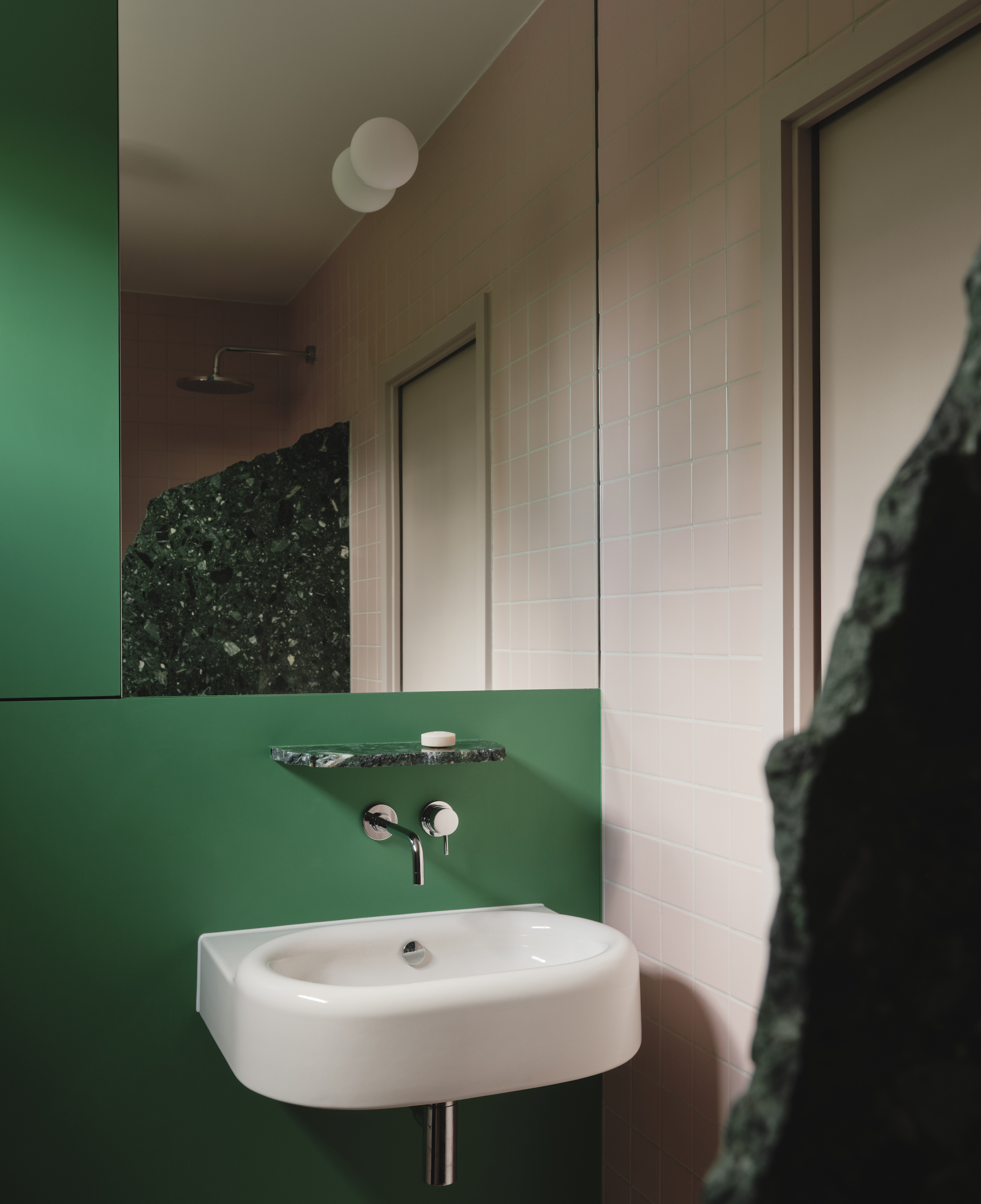
Image Credit: Felix Speller
Throughout Druid Grove, CAN’s approach is consistent: materials are allowed to express themselves, construction processes are made visible, and domestic spaces are treated as sites of creative potential. Barnes notes that the challenge was to make the client’s futuristic and natural references “physical in a way that could be lived-in and grounded”. Stainless steel, ancient stone, timber, terrazzo and colour are brought together not for effect alone, but to create a home that feels protective, personal and wonderfully idiosyncratic.
The result is a house that resists easy categorisation. It is neither a neutral backdrop nor an overtly theatrical set. But for CAN, Druid Grove continues an ongoing exploration of how architecture can translate individual narratives into built form.