

Case Study: Komorebi, ConForm Architects

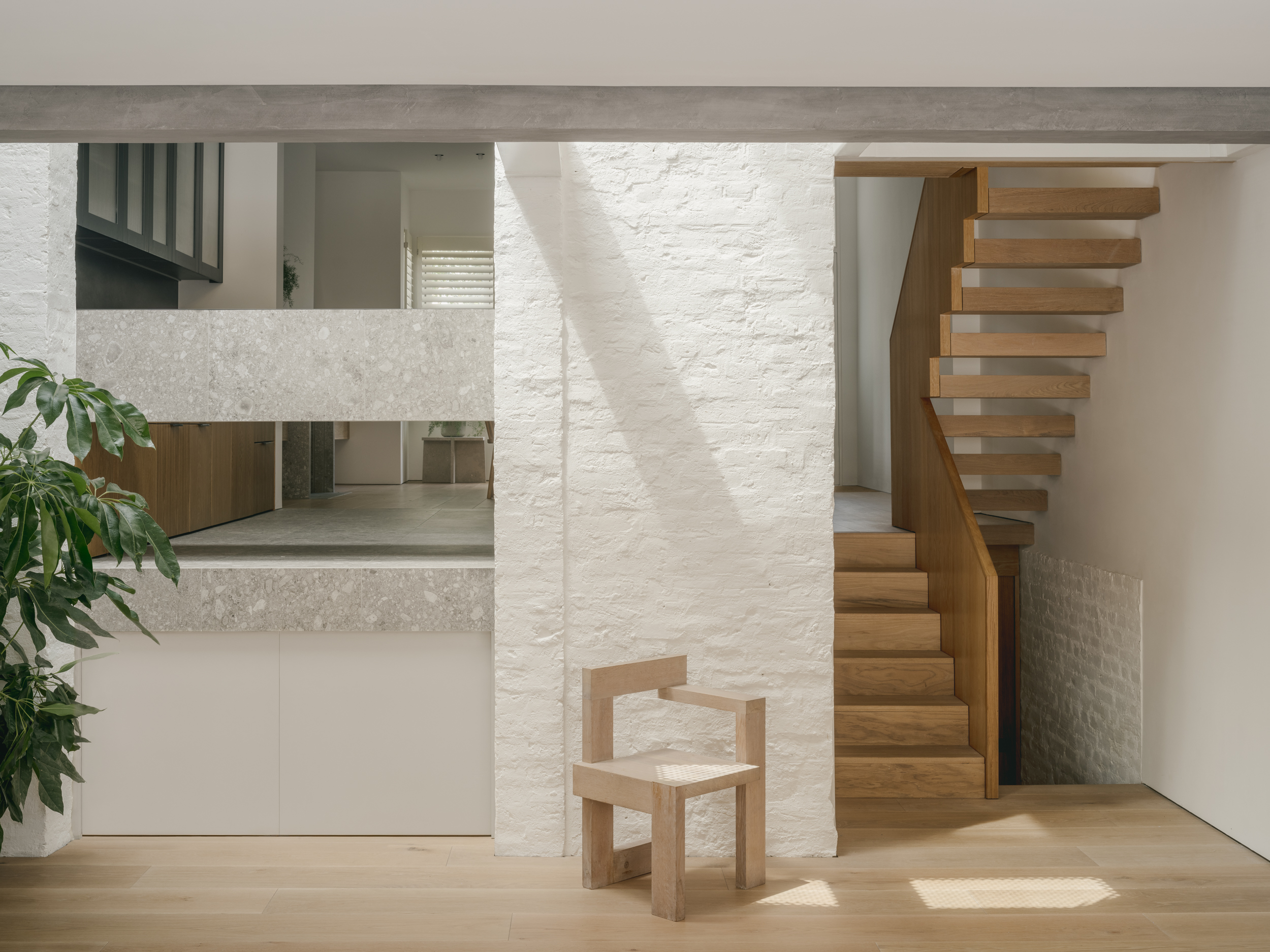
Set within the familiar rhythm of brick-fronted terraces in Dulwich, Komorebi is a layered, light-filled family home that reinterprets the existing structure through a carefully orchestrated sequence of voids, surfaces and material contrasts. Designed by London-based architecture and interiors practice ConForm for a father and his two sons, the project is defined by spatial connection, filtered daylight and a restrained palette in which stone plays a quietly anchoring role.
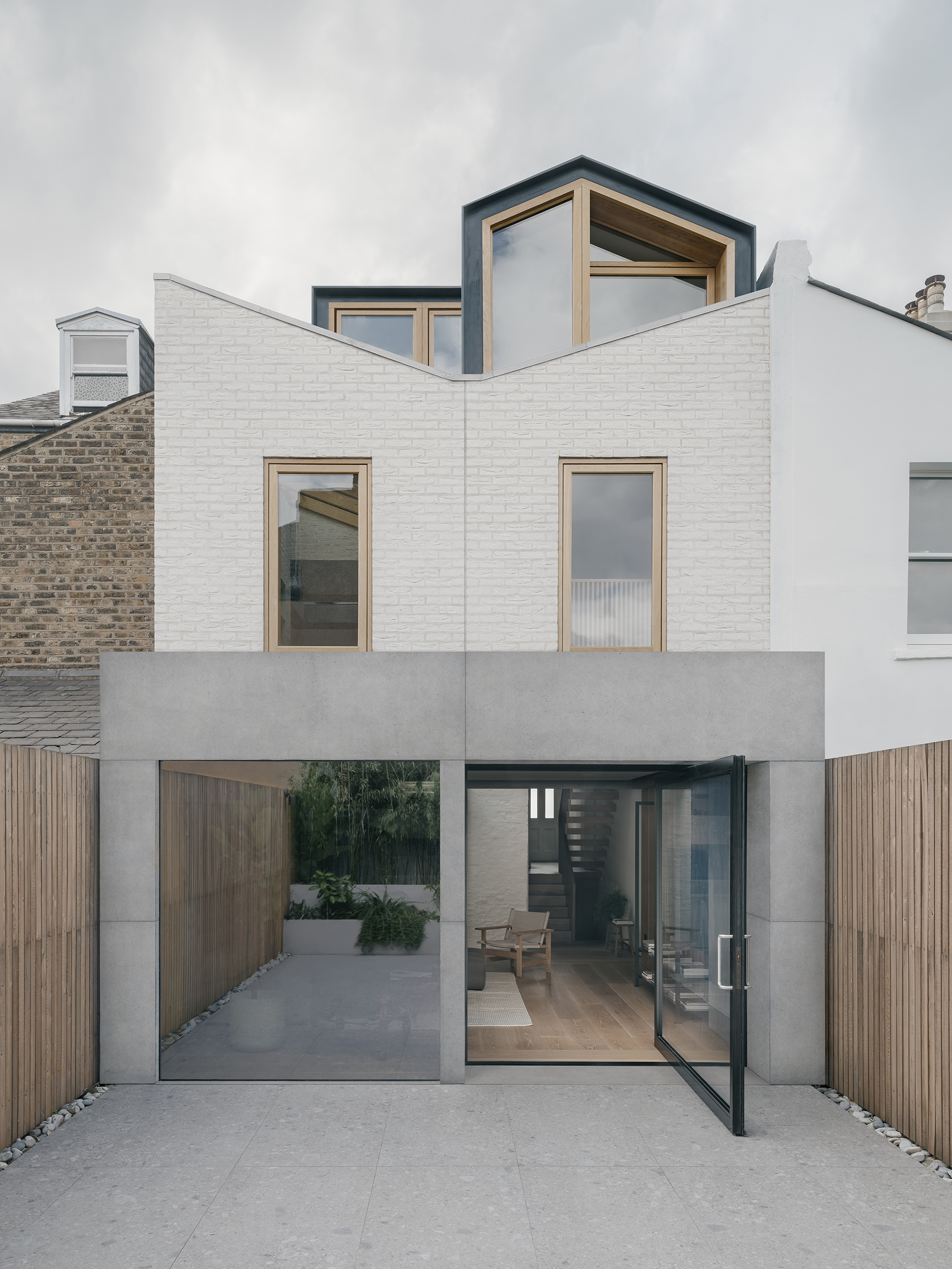
While the front elevation retains its original character, the rear of the house has been entirely reworked, allowing the interior to unfold as a series of interlinked levels bound together by light. At the heart of the scheme is an existing central rooflight, an unusual feature for a London terrace, which the architects expanded into a multi-storey void. Rather than infilling above, the volume is extended vertically, forming the project’s architectural core and allowing daylight to penetrate deep into the plan.
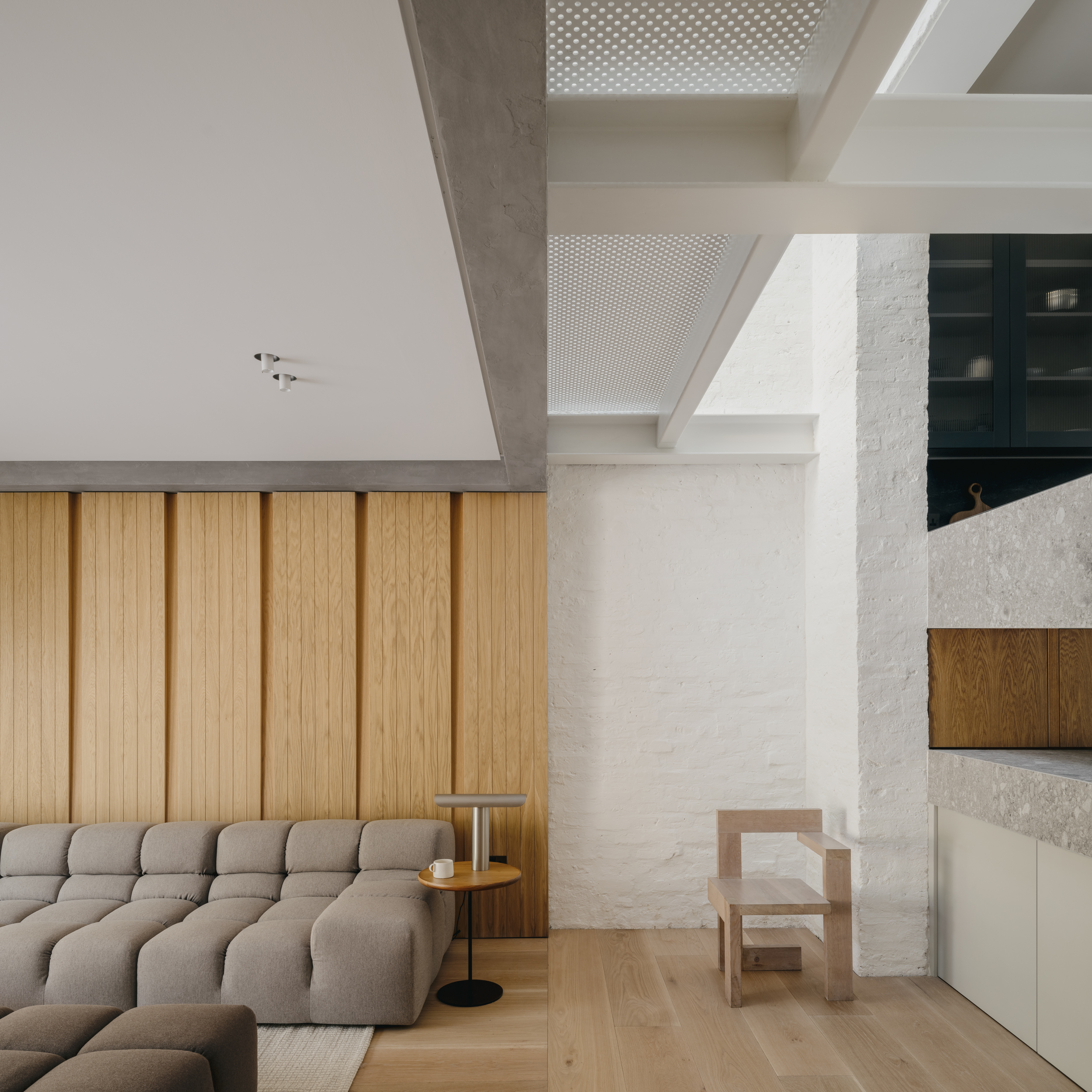
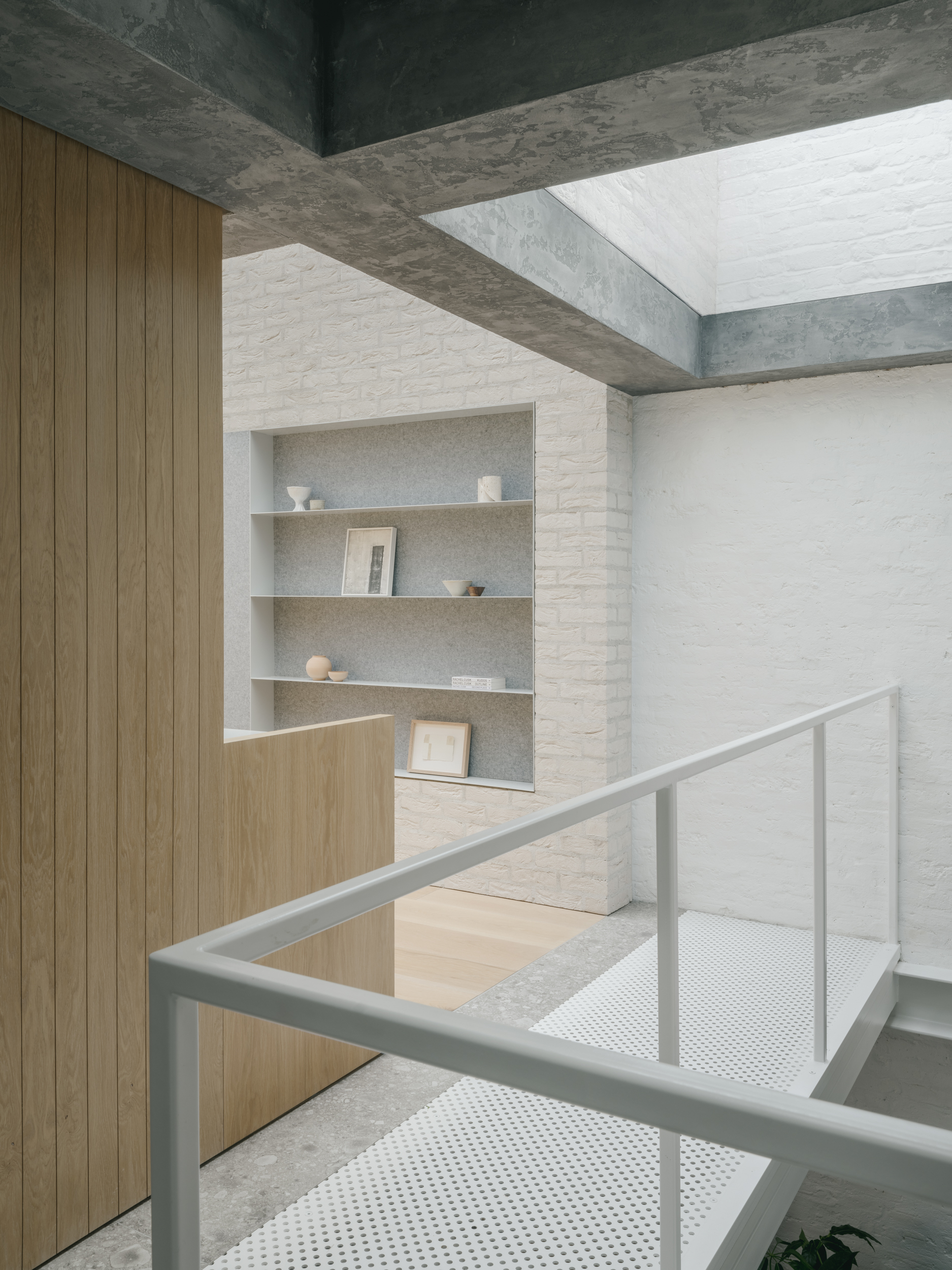
This central space is defined by open stair treads, perforated steel floorplates and carefully aligned openings that allow light, air and sound to filter between levels. Whitewashed brickwork lines the void, its softened surface reflecting light while retaining the texture of the original masonry. Together, these elements create a dynamic interior landscape in which shifting daylight becomes a constant presence throughout the day.
The plan is arranged vertically to reflect patterns of family life, with shared spaces cascading downwards from the central void. At ground level, kitchen, dining and living areas are unified through a continuous counter, encouraging fluid movement and visual connection. Upper floors accommodate more private spaces, including a heavily glazed study housed within a first-floor infill extension and a second-floor pod room offering the teenage sons a retreat.
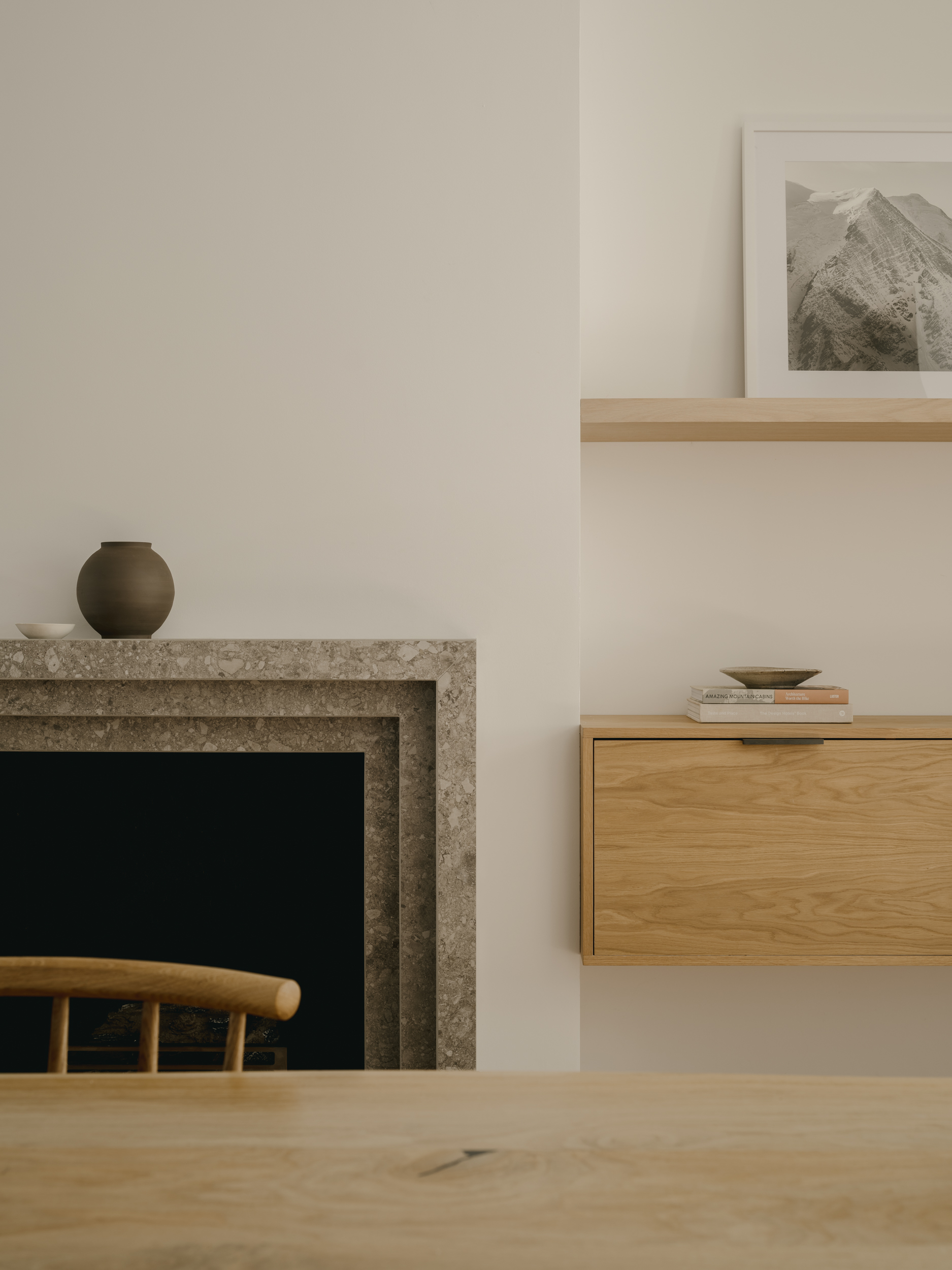
Material continuity underpins this spatial organisation. Oak joinery, perforated steel, whitewashed brick, concrete downstands and lime mortar establish a cohesive backdrop, while ceppo di gre stone introduces moments of density and tactility. Used for internal flooring and threshold elements, the stone’s mottled texture and mineral depth provide visual weight within the otherwise light-filled composition, anchoring the interior and tempering the openness of the vertical arrangement.
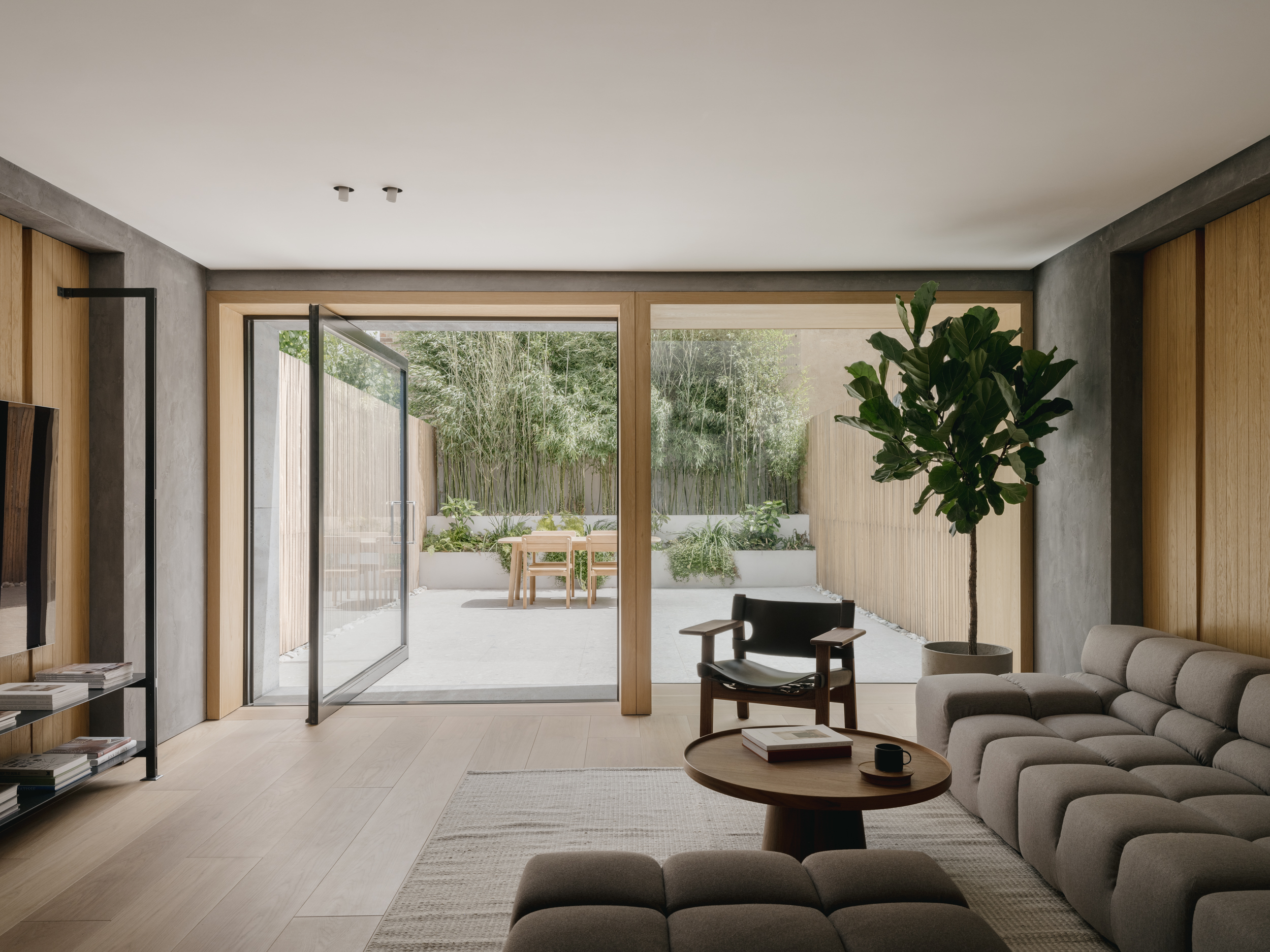
Externally, the rear extensions draw on the varied roof forms and angled outriggers characteristic of the surrounding streetscape, while their concrete-framed construction and carefully detailed glazing establish a contemporary identity. At the lowest level, a pivoting glazed door opens directly onto a sheltered terrace, where stone paving continues the internal material language into the garden, blurring the boundary between inside and out.
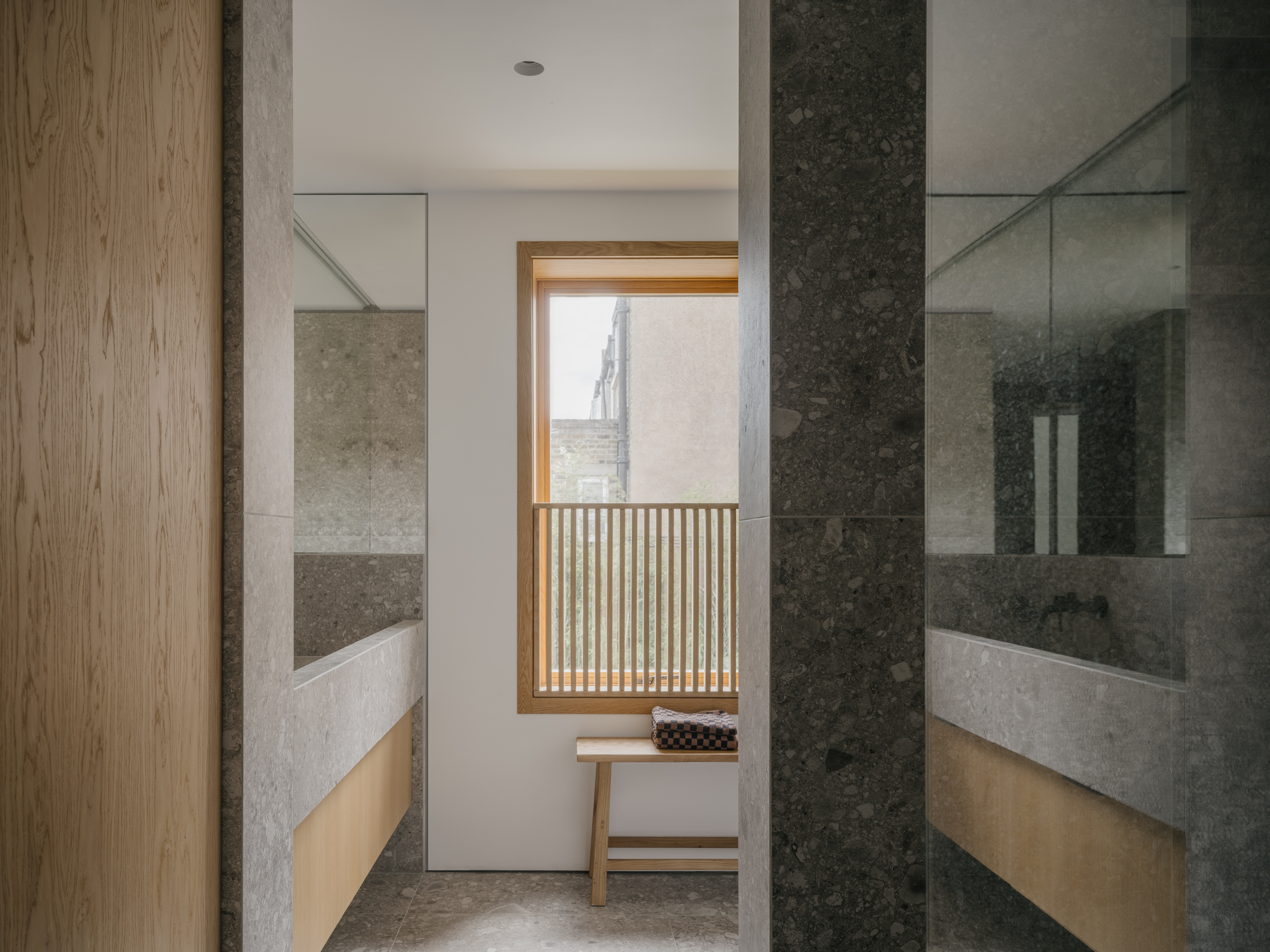
Throughout the house, bespoke joinery is integrated into the architecture, with timber-framed windows, concealed lighting and sharply defined stair balustrades guiding movement and sightlines. These elements work in concert with the stone, brick and concrete surfaces to create a restrained material palette that supports both functional living and spatial clarity.
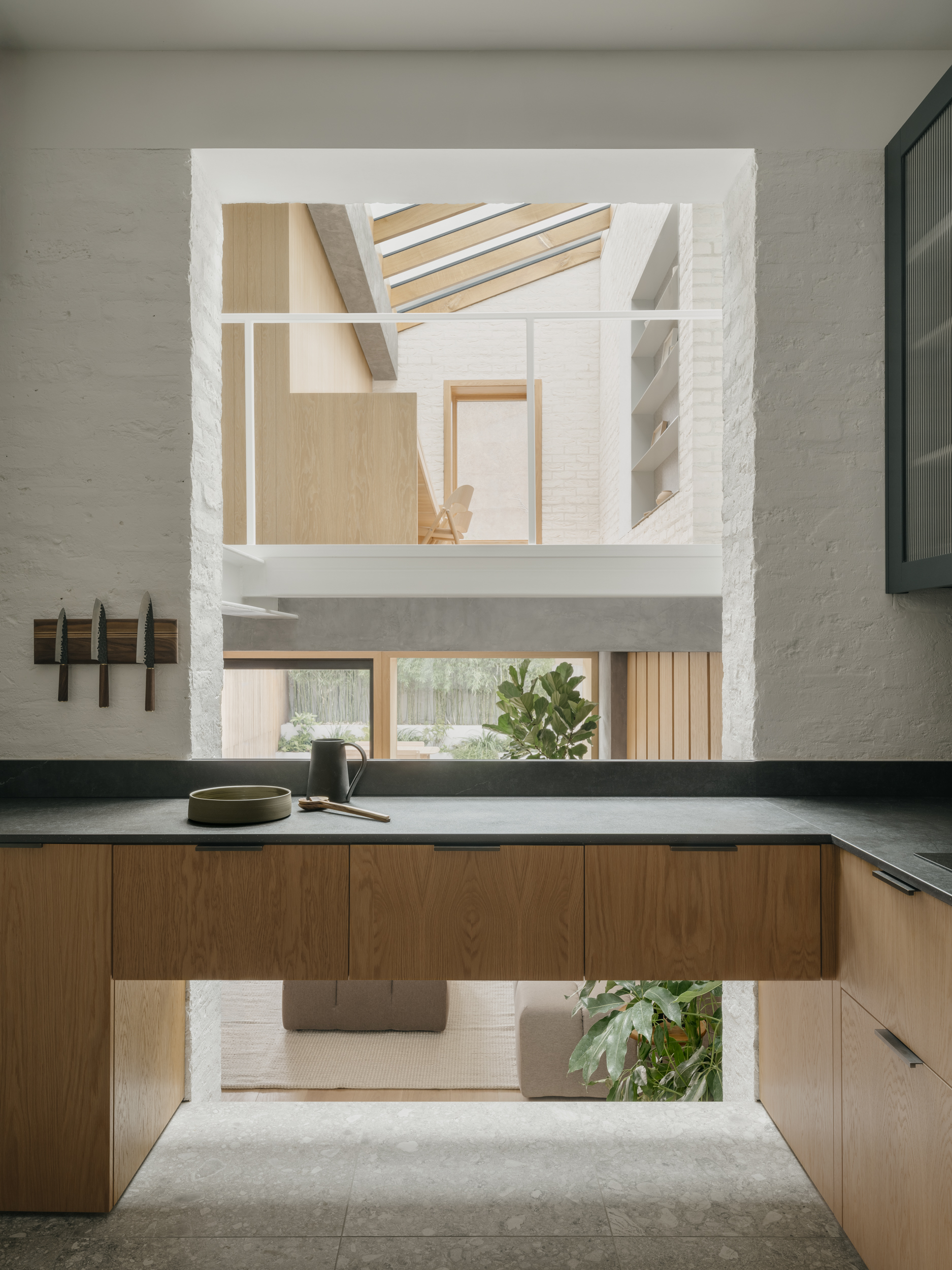
Rather than maximising floor area, the project focuses on extracting generosity from the existing volume, using sectional complexity, carefully positioned openings and material consistency to create a sense of connection and openness. In doing so, Komorebi demonstrates how strategic architectural interventions, anchored by thoughtful material selection, can transform a modest urban terrace into a richly layered family home.
All images courtesy of James Retief