

Case Study: Maida Hill Public Toilets, Studio Weave

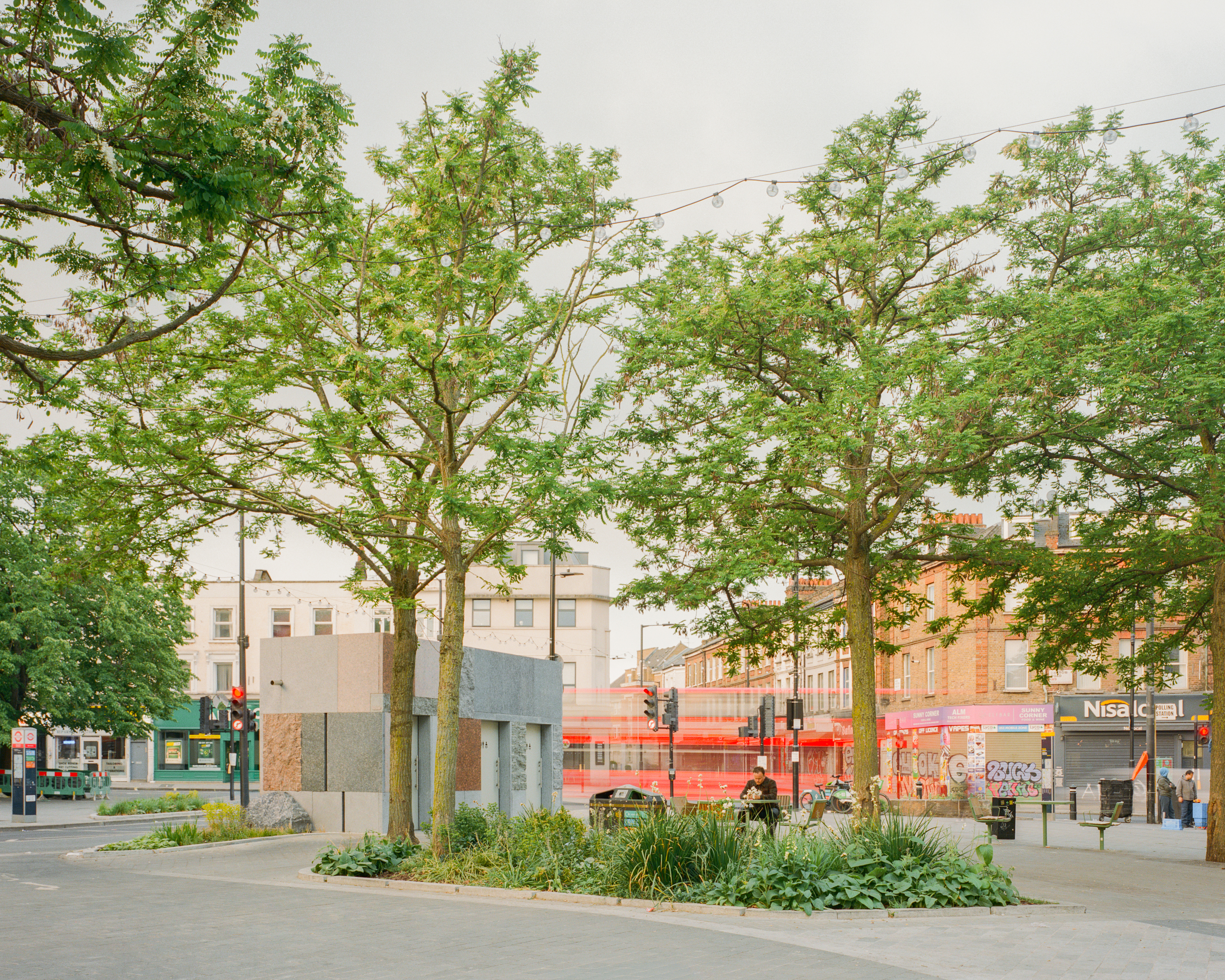
A new public toilet pavilion in Maida Hill, west London, has been officially opened, and demonstrates how reclaimed dimensional stone can be reused as primary structure rather than decorative cladding, giving a second life to material recovered from a commercial office building in the City of London.
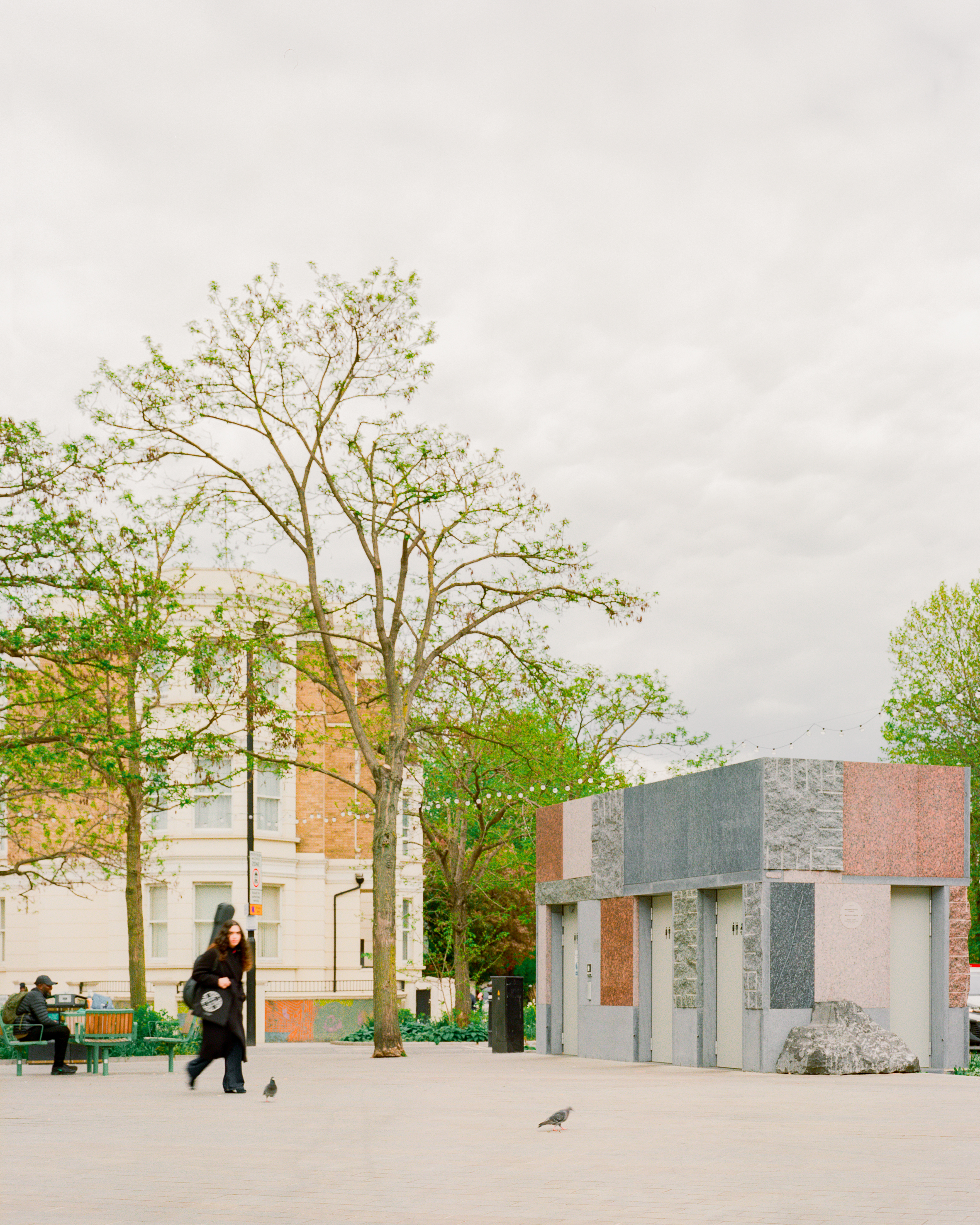
Designed by Studio Weave for Westminster City Council as part of the wider revitalisation of Maida Hill Market, the project replaces former underground facilities with a fully accessible ground-level building containing three public toilets, including a wheelchair-accessible unit. While modest in scale, the scheme provides a built example of what the project team describes as "deep reuse", retaining not only the material itself but much of its original form, finish and embodied value.
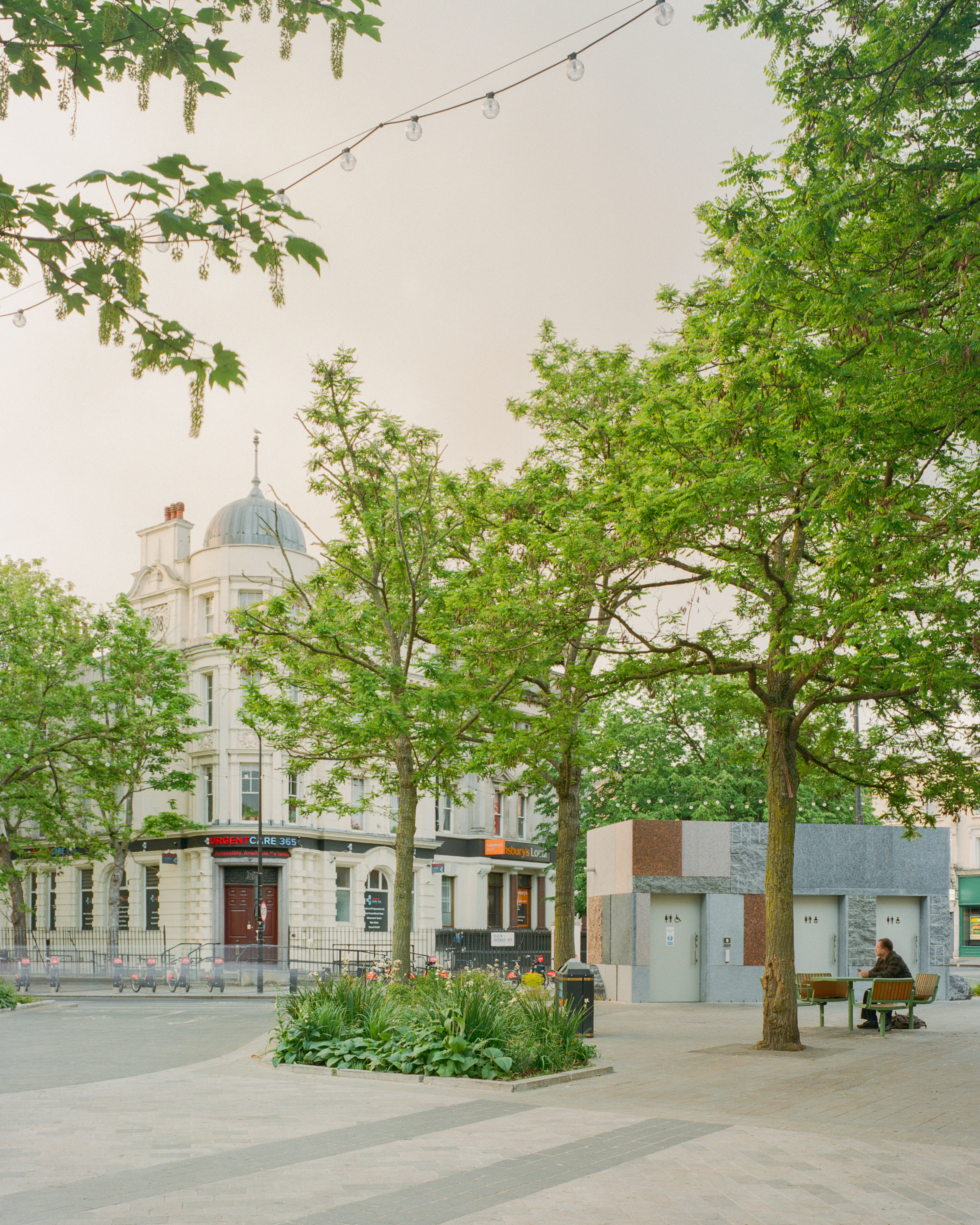
The pavilion is constructed from reclaimed pink Finnish granite and Norwegian larvikite salvaged from a demolished Broadgate office building near Liverpool Street. Rather than being crushed or downcycled into aggregate, the stone has been recut and reassembled to form the external walls of the new structure.
The approach was developed through collaboration between Studio Weave, structural engineers Webb Yates and fabricator Stone Masonry Company (SMC). Crucially, the stone has been processed as little as possible. Large-format panels have been retained, preserving both the original polished surfaces and the split faces exposed during reworking.
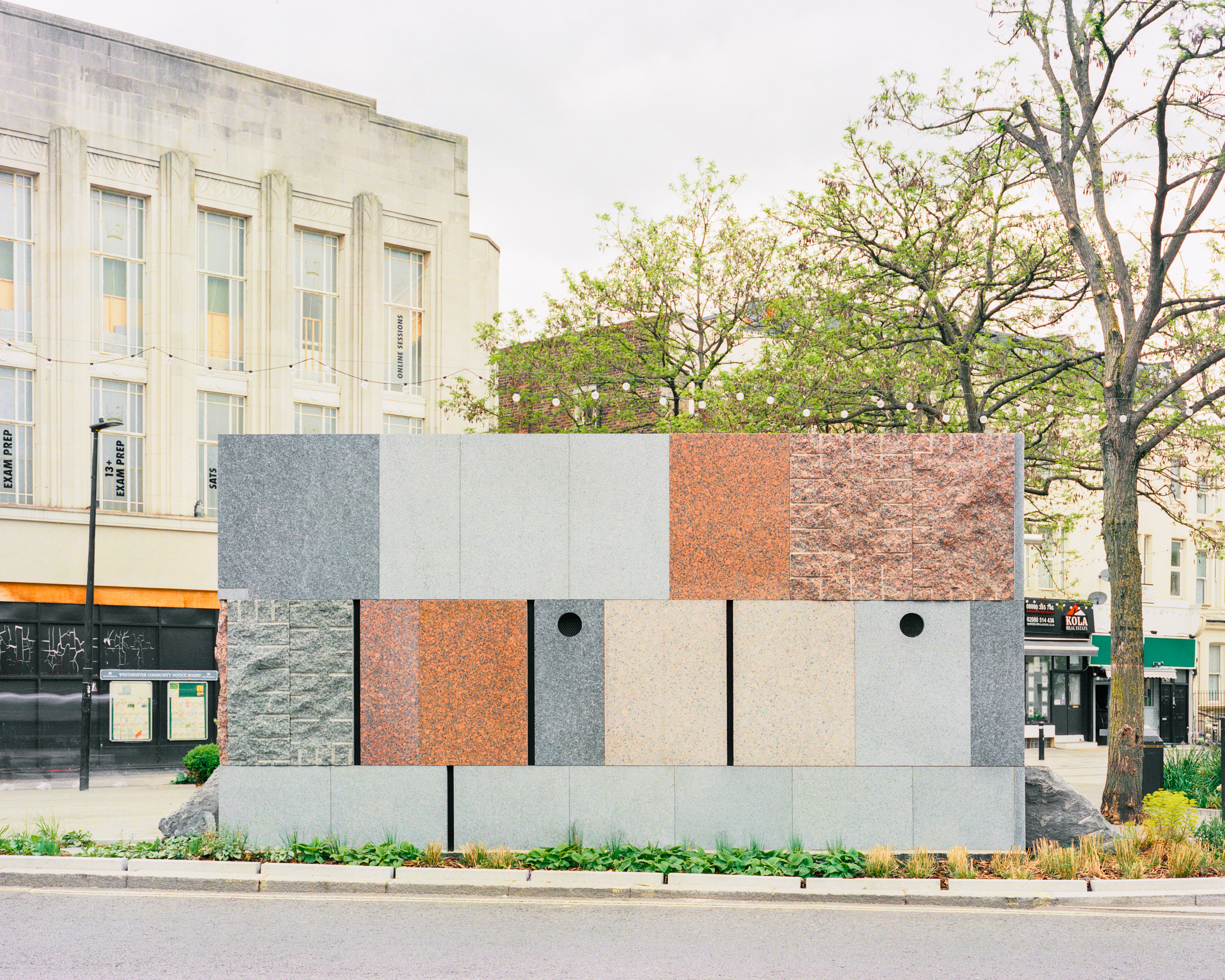
What previously functioned as a rainscreen façade now serves as self-supporting structure. The resulting enclosure is formed from substantial stone elements whose previous life remains legible through surface finish, scale and detailing.
The project aligns with a growing interest in the concept of the "urban quarry", where existing buildings are treated as reservoirs of reusable material. In this case, stone originally installed as part of a corporate headquarters has been relocated across London and repurposed for civic infrastructure.
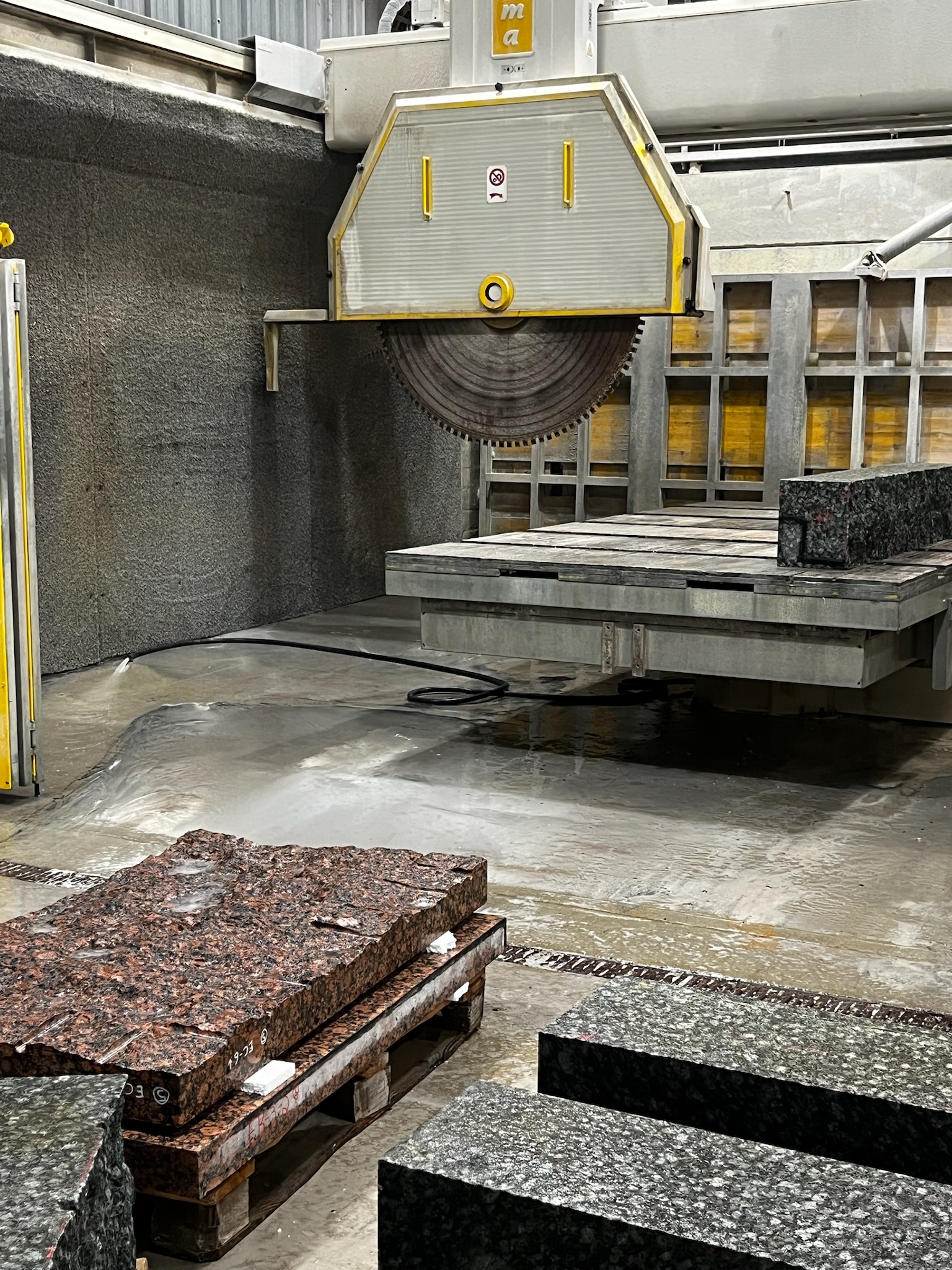
SMC sees the project as an example of how the stone sector can reduce embodied carbon through direct reuse. The company said: "Using the ‘lost and found' stones that are already in our cities and towns means the lowest possible embodied carbon. By using large-format blocks originally, the 1970s builders handed over a material that we can use again and again. It is by default the mission of the SMC to make the most of the extracted material."
The stone enclosure has also been designed with future disassembly in mind too. The external structure stands independently from the automated toilet unit housed within it, allowing internal equipment to be replaced or upgraded without affecting the stone shell. Individual stone components can similarly be removed and reused in future projects, extending the material's lifespan beyond its current application.
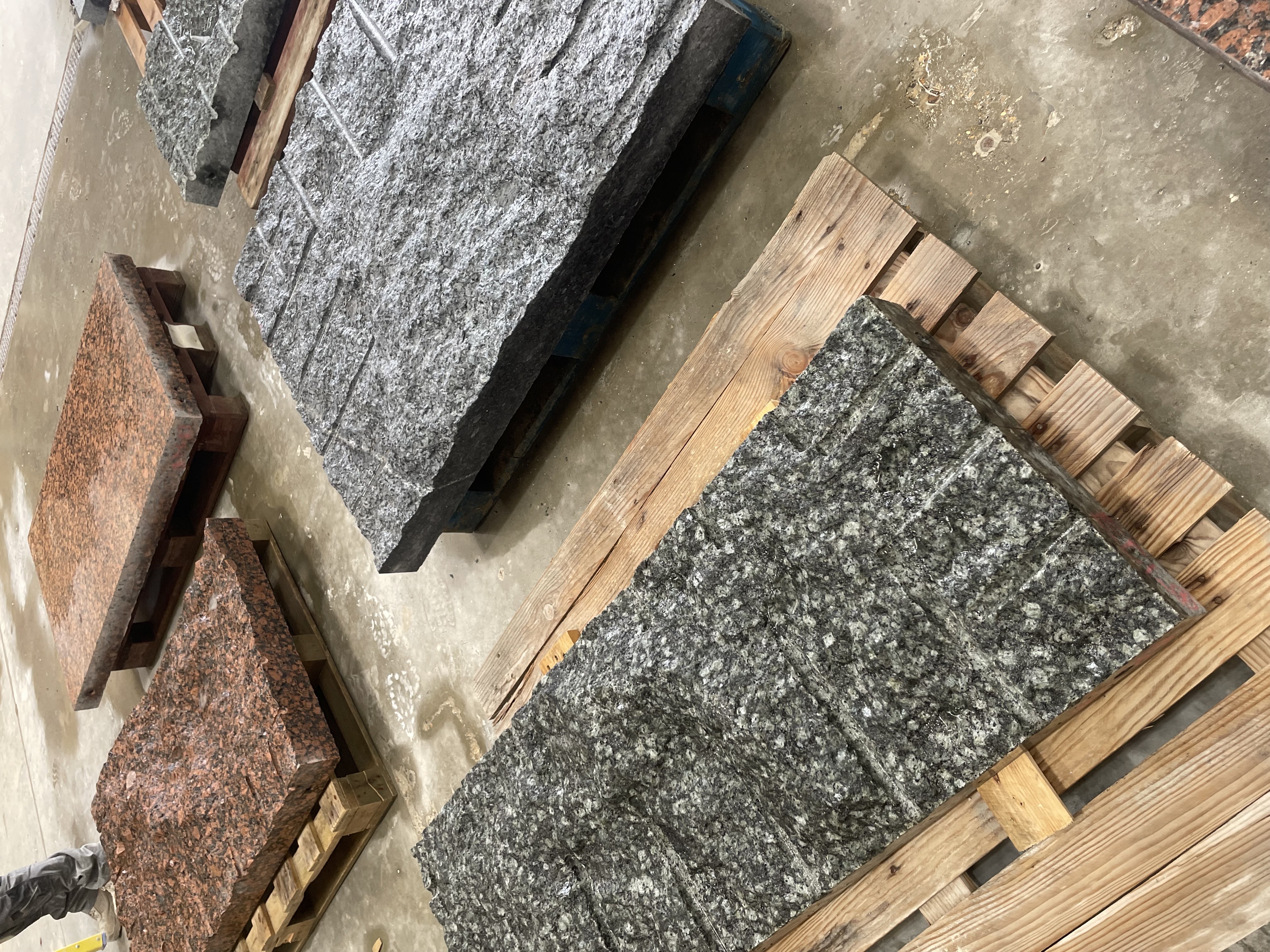
Architecturally, the project deliberately exposes the process of reuse. Cut edges, split surfaces and variations in finish remain visible, avoiding any attempt to disguise the stone's previous life. The material becomes both the building's structure and its defining architectural expression.
The pavilion sits within a broader public realm scheme delivered alongside landscape architects Tom Massey Studio. Native planting has been integrated into crevices around the stone structure, while granite boulders provide informal seating and strengthen the connection between the building and its setting.
For Studio Weave, the project demonstrates that material reuse can be applied to everyday civic infrastructure rather than being confined to showcase developments. As director Eddie Blake explains: "We design public toilets no differently to how we design all of our public architecture, with rigour and care. At Maida Hill we have been lucky to be working with a client that believes in investing in civic infrastructure."
Although conceived as a practical public amenity, the pavilion offers a compelling demonstration of how reclaimed stone can move beyond façade reuse and become the basis for a new generation of low-carbon, demountable civic architecture.