

Surface Spot: Rocks of Desire

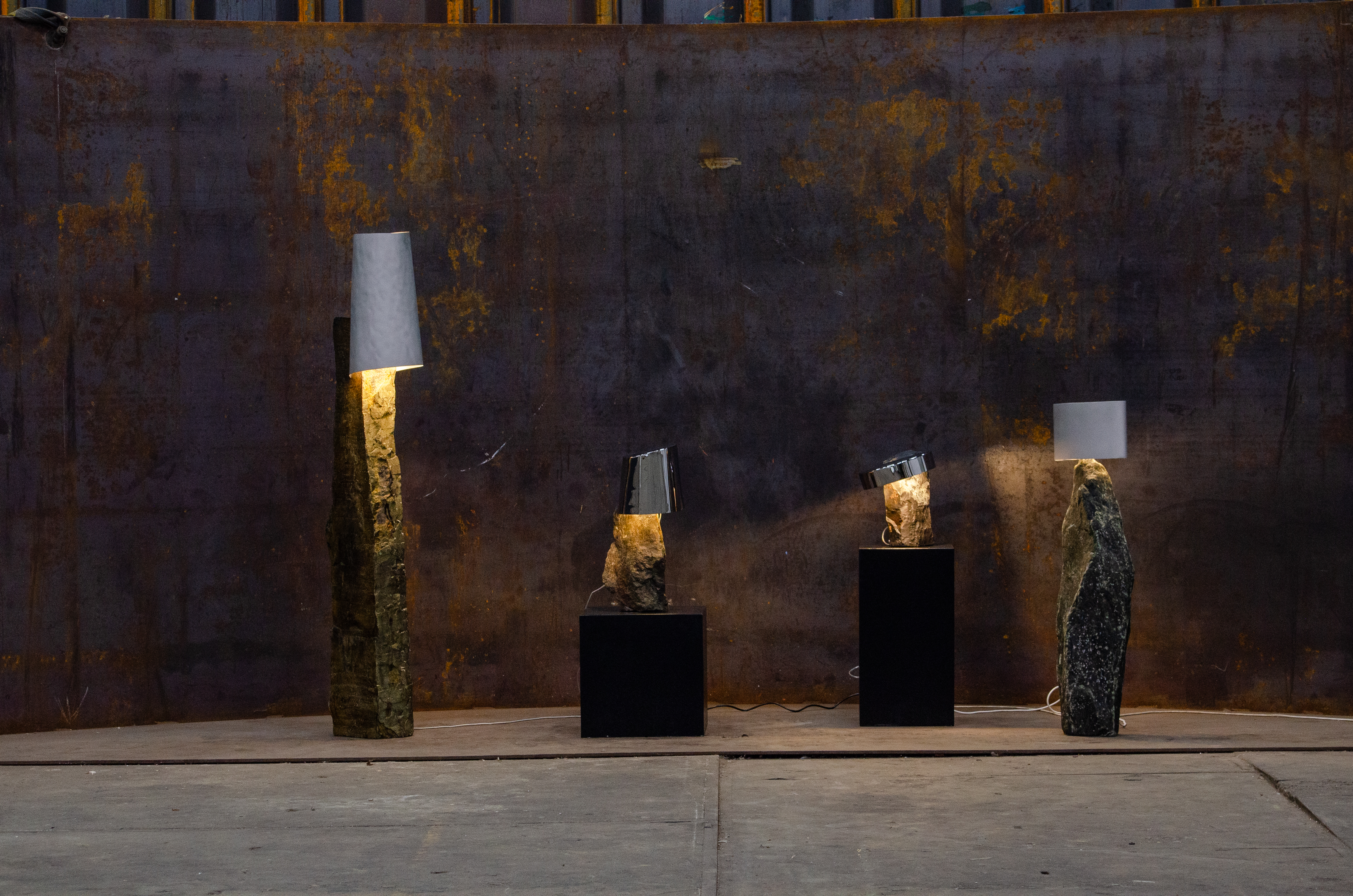
Although rich in uses, finishes and applications, stone and metal are primordially from the same source: the earth. Rocks of Desire, by designer Pepe Valenti, brings together natural stone and metal in a series of lighting pieces inspired by the rocky coastline of the Costa Brava. The collection uses the contrasting properties of the two materials to explore ideas of permanence, movement and transformation.
Stone provides the starting point for each piece, retaining its natural irregularity, weight and texture. Around it, metal lampheads are formed to follow the contours of the rock, creating a relationship that recalls the movement of water around stones along the coast. Rather than regularising the stone, the metal responds to its individual form.
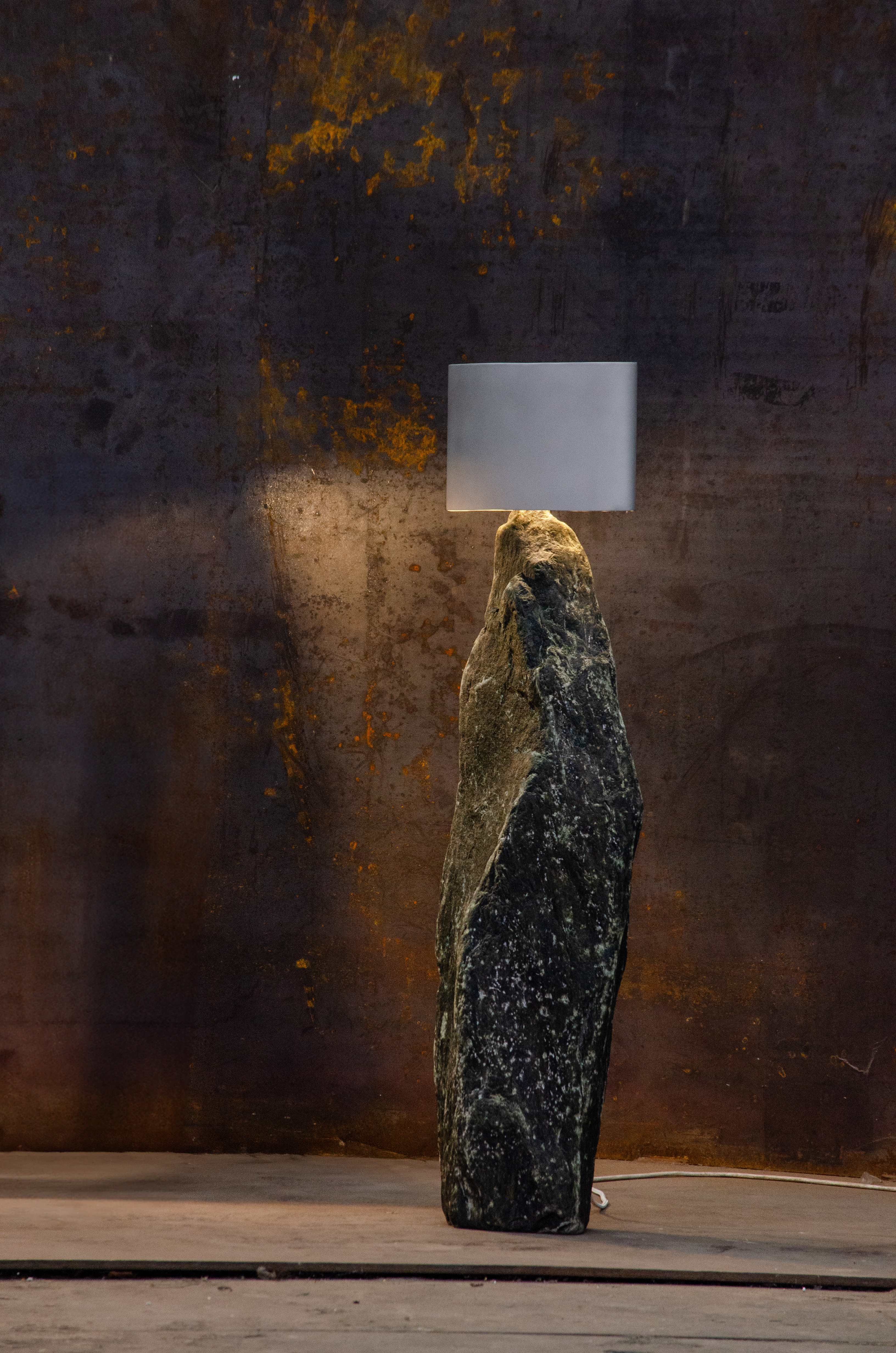
The process was developed intuitively, with the same tools used across both metal and stone. This gives the collection a degree of material continuity while allowing the characteristics of each medium to remain visible. The stone is solid and tactile, while the metal introduces a lighter, more adaptable element that appears to bend and gather around it.
The resulting forms sit between lighting and material studies. Their construction is relatively simple, placing emphasis on the meeting of the two materials and on the way light interacts with the surface of the rock. Illumination draws attention to the stone while reinforcing the contrast between its mass and the finer metal components.
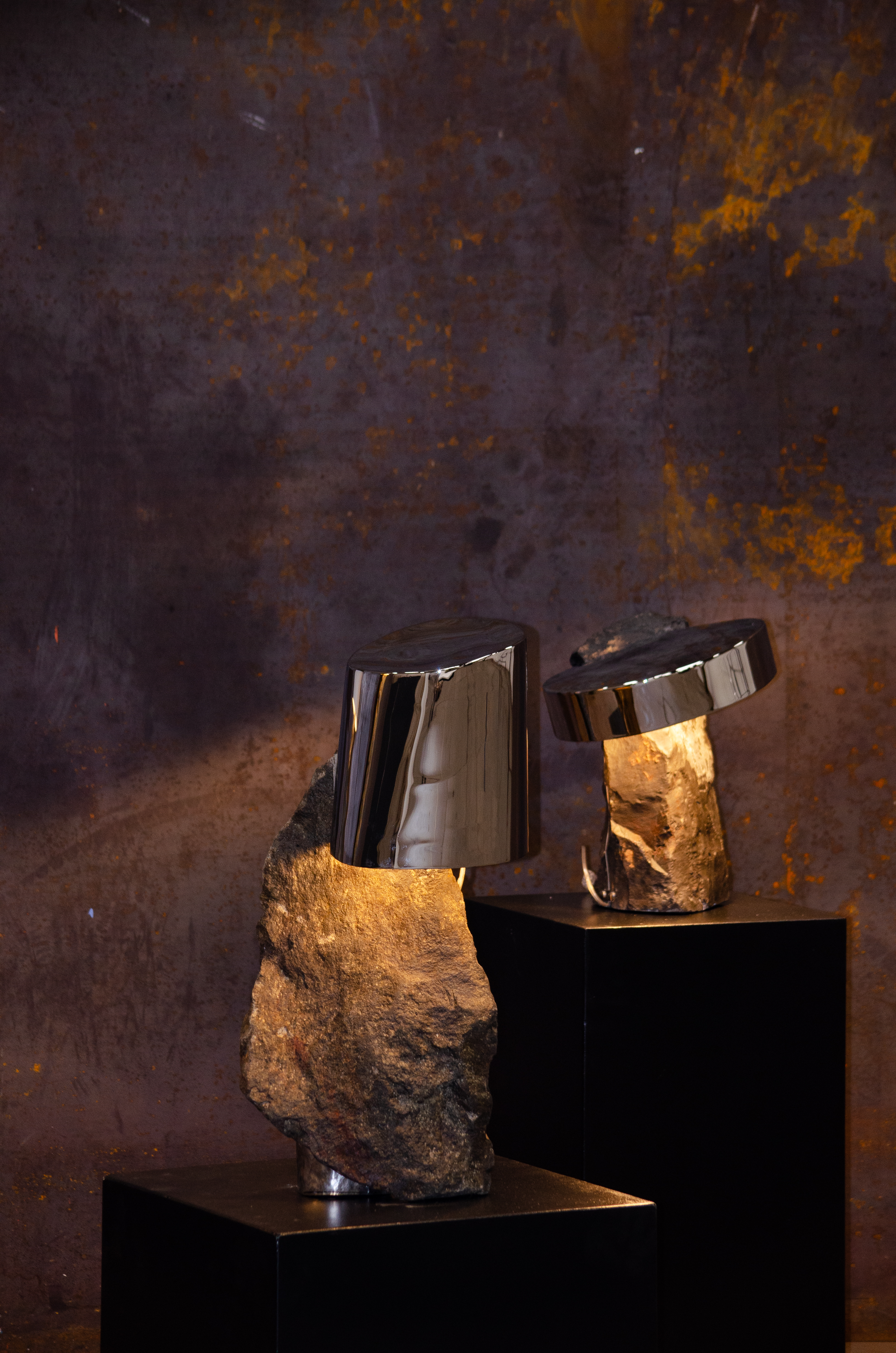
The Costa Brava is an important reference for the collection. Its rough coastline and the continual action of the sea provide a natural example of how apparently permanent materials can be gradually transformed. Water wears away stone over time, while the rocks themselves shape the movement of the water around them. Valenti translates this reciprocal relationship into objects in which neither material is entirely dominant.
This emphasis on gradual change also informs the collection's broader approach. In contrast to the immediacy associated with much contemporary product design, Rocks of Desire considers time as part of the material process. The individual character of each stone means that variation is retained rather than concealed, making each object a record of the material from which it was made.
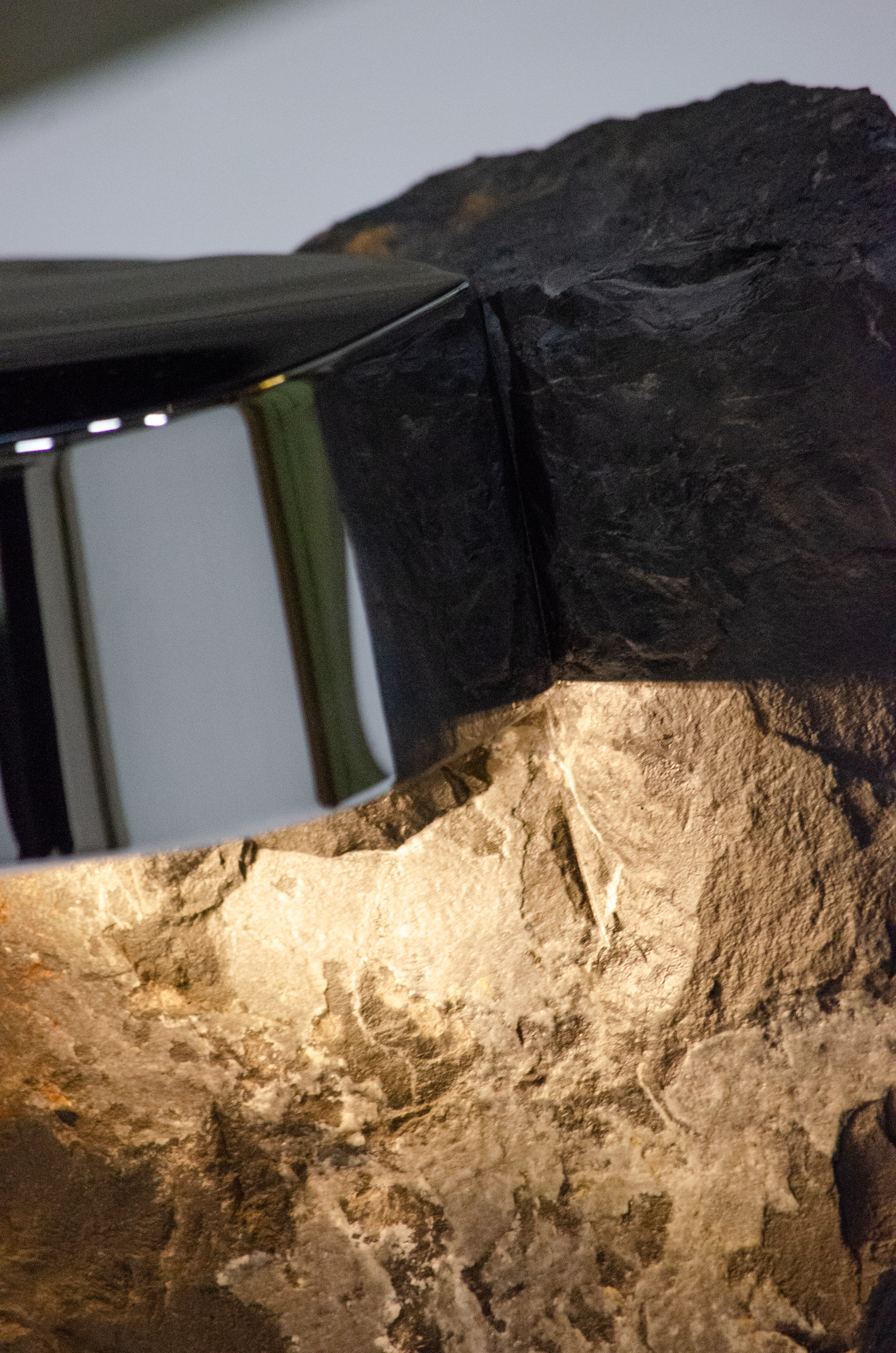
The result is a collection that uses stone not simply as a structural or decorative component, but as the defining element around which the lighting is developed. Metal, meanwhile, becomes a means of framing, responding to and illuminating the rock.
For Valenti, the pieces reflect the way natural forces can alter solid materials over time. In the finished objects, that process is compressed into a more immediate encounter: stone holds its ground while metal appears to move around it, creating a restrained dialogue between permanence and change.