

Case Study: Working on a National Treasure

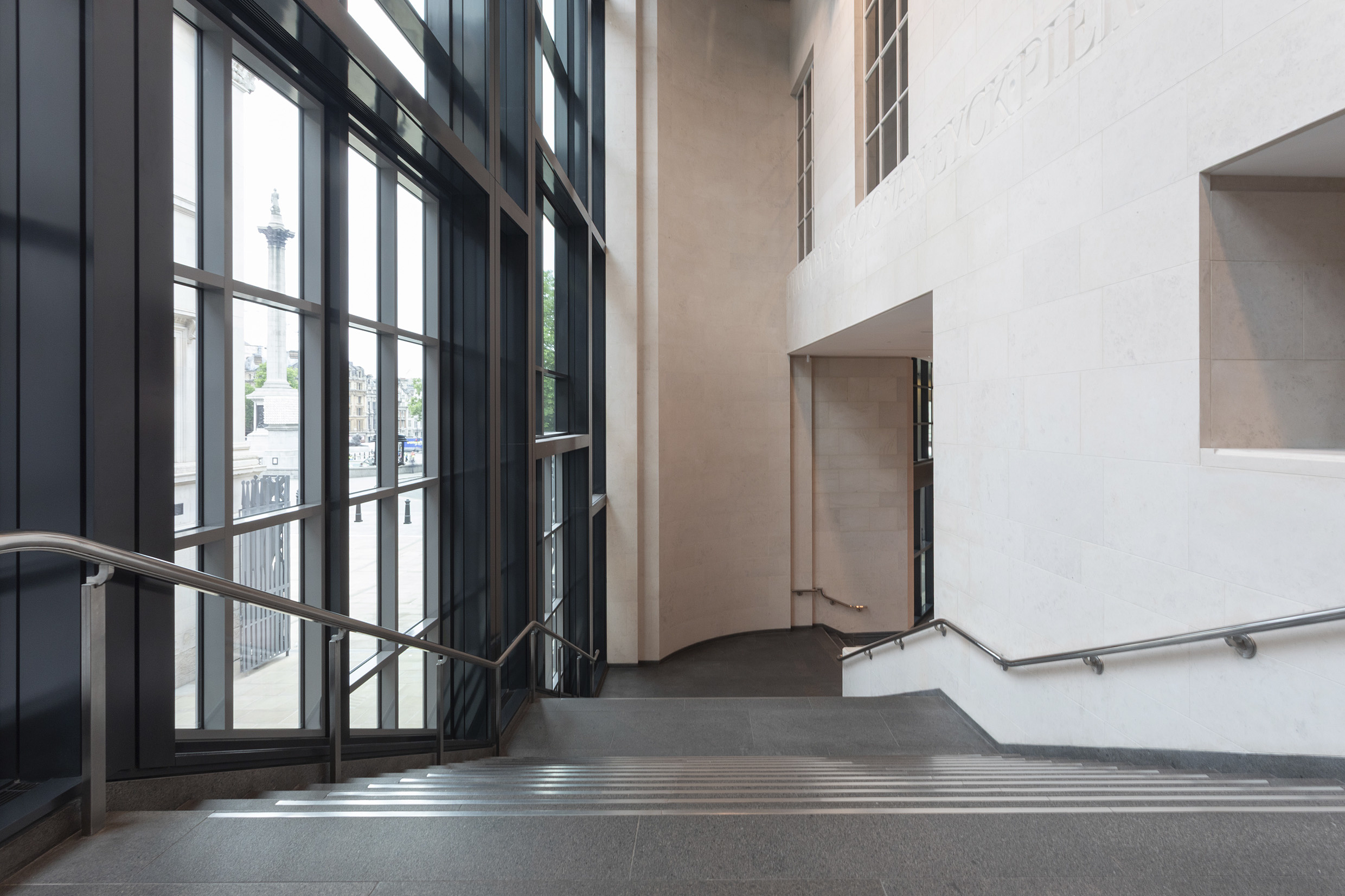
As the National Gallery celebrated its 200th anniversary in 2024, its NG200 programme set out not only to mark the milestone but to future-proof one of the world’s most visited cultural institutions. Central to the transformation were major interventions to the Grade I listed Wilkins Building and the Sainsbury Wing - works that brought Szerelmey back to Trafalgar Square for the first time since 1996, a return the company describes as “a privilege”.
The gallery’s story began in 1824 with John Julius Angerstein’s donation of 38 paintings. Since opening its Wilkins-designed home in 1838, the institution has grown into one of the world’s leading collections, housing more than 2,300 artworks. In May 2024, NG200 set out to improve both the visitor journey and the spaces that support it.
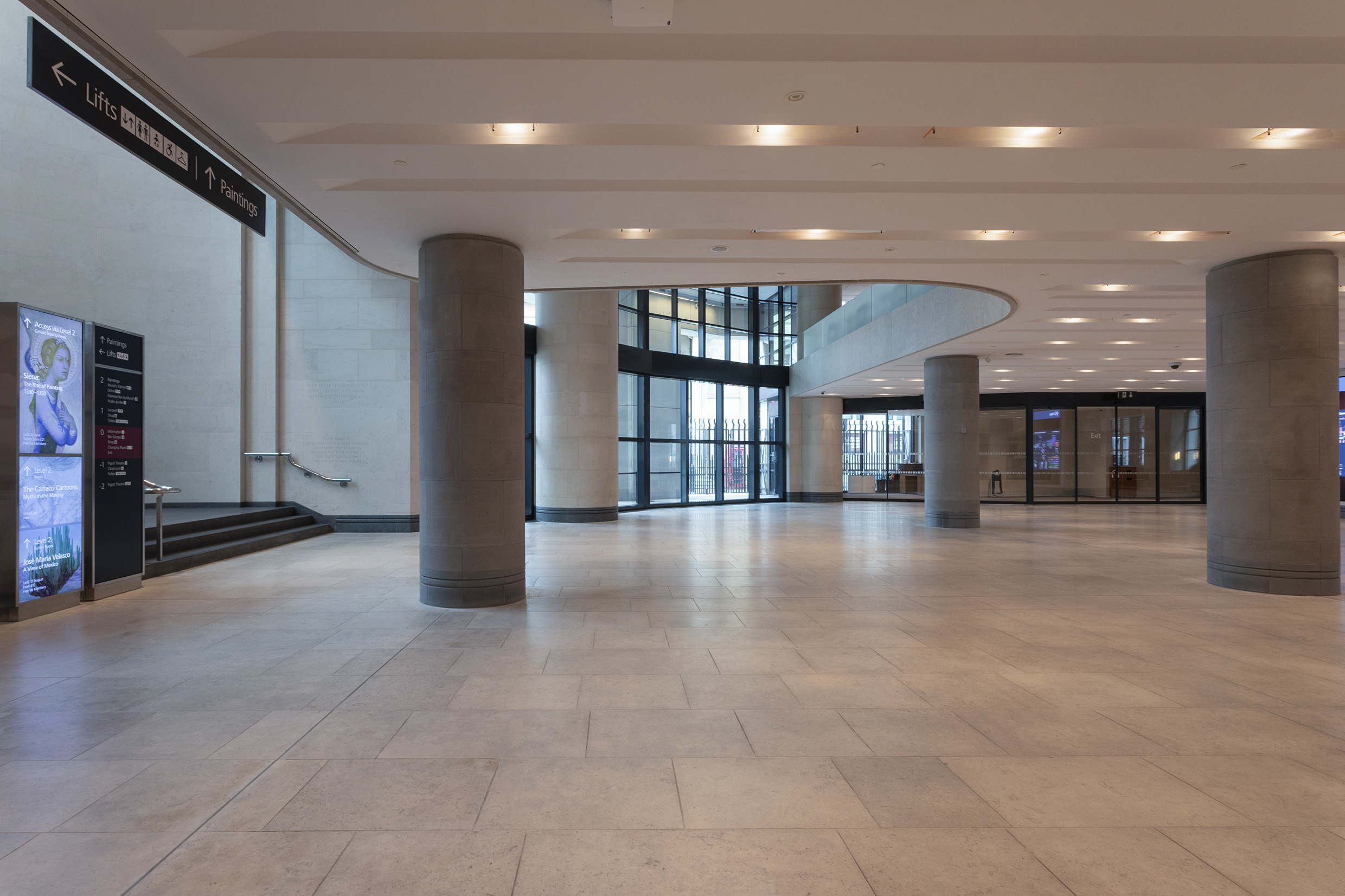
Much of Szerelmey’s contribution focused on reworking the Sainsbury Wing entrance. Their involvement began during demolition by others, providing enabling works and stone removal to allow new openings through the internals and basement link. One of the most technically demanding tasks was creating the new slab edge to the foyer in Gascoigne Blue limestone. The flamed finish, large curved units and extremely tight working conditions required mini floor cranes projecting over the edge to position each piece.

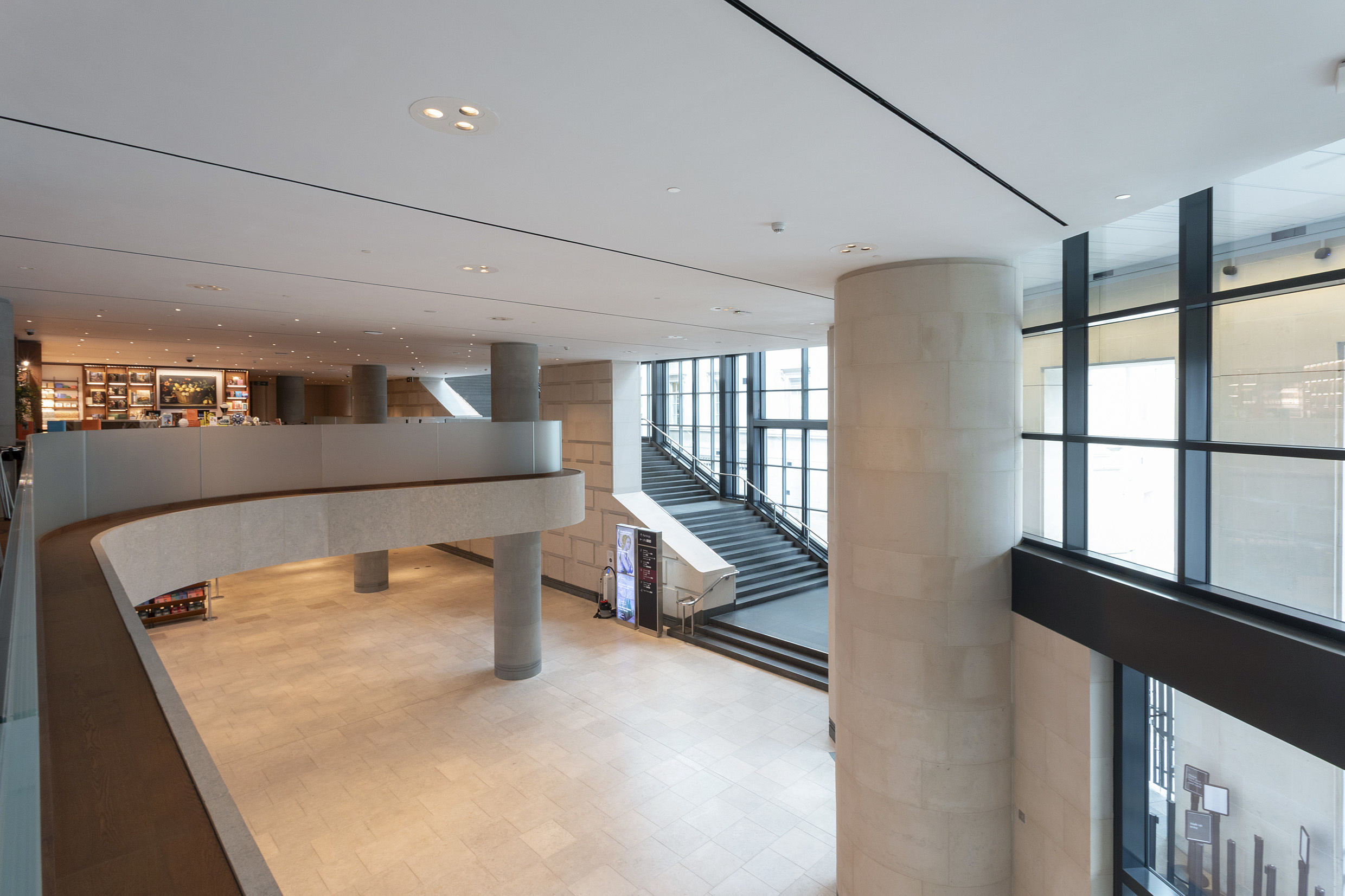
The existing column arrangement was also overhauled. Several columns were removed, cleaned, extended by a full storey and reinstated; a new double-height column in French Chamesson limestone was installed, supported by a full steel and Unistrut backing structure designed by Szerelmey. Twelve Pietra Serena single-height columns with a bush-hammered finish completed the revised rhythm across the ground floor, level 1 and basement.
Dismantling one of the original atrium columns revealed a surprise: a letter hidden inside by the late Lord Sainsbury. It noted that if discovered, it meant the “unnecessary” columns had finally been removed—much to his satisfaction. His son Mark later explained that the letter dated back to a disagreement between Lord Sainsbury and architects Robert Venturi and Denise Scott Brown, placed there “as a way of keeping the peace.”
With the new layout established, Szerelmey installed two storeys of Chamesson limestone cladding along the Whitcomb Street internal façade, complete with rusticated profiles matched to existing stonework. Historic walls and floors were cleaned, repaired and restored, while extensive new Gascoigne Blue limestone flooring was laid through the reception, basement and link. WC areas received hand-finished terrazzo with bespoke stainless-steel shadow gaps and moulded skirtings, along with complementary ceramic tiling.
The scheme also drove a new subterranean link beneath the Jubilee Walk, connecting the Sainsbury Wing basement with the Wilkins Building. Szerelmey supported the structural work with temporary stone removal and reinstatement, before installing Chamesson limestone cladding and a suspended stone soffit. The Jubilee Walk bottle balustrade was removed, refurbished and reinstated, while Sainsbury Wing signage was refreshed and rehomed on a new SFS background with newly carved entrance lettering.
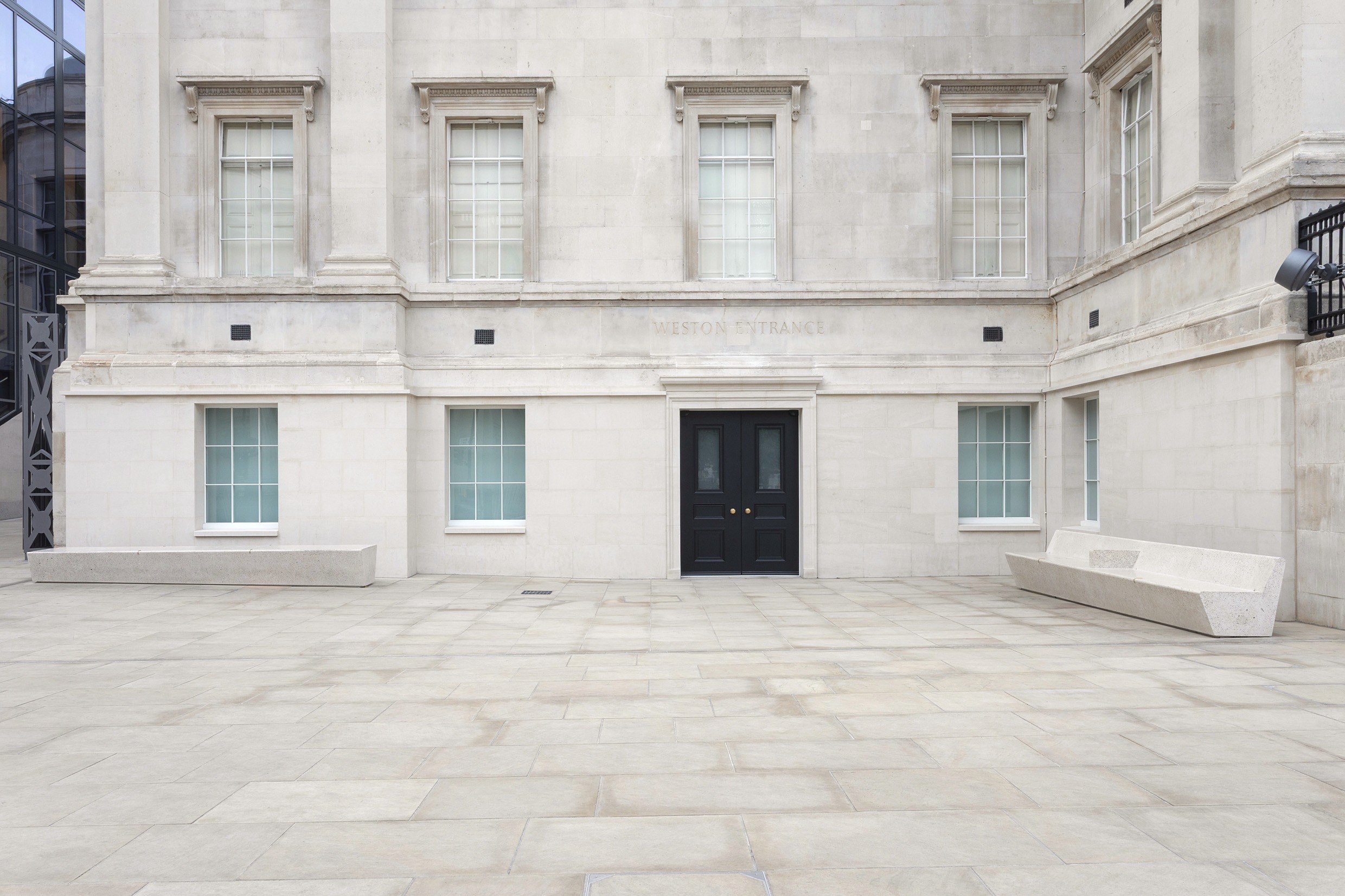
Outside, to the front of the Wilkins Building, Grizelda’s Garden, named after the long-serving Gallery assistant Grizelda Grimond, has been completely reshaped. The soft bank and lawn wall were replaced with a new curved wall built largely from salvaged stone, opening up views and access. Stonework around the façade was dismantled and reused to accommodate a new entrance formed in Jordans Basebed Portland stone, tied into the historic fabric with a decorative lintel and adapted spandrel. Steel supports for blast-proof glazing were added, and two 4-tonne precast benches in reclaimed Portland stone now anchor the newly paved garden.
The result is a reimagined arrival sequence for visitors and a sensitive update to one of London’s most iconic public institutions—delivered through a blend of new stone, reclaimed material and meticulous conservation craftsmanship.
All photographs courtesy of The National Gallery