

News: Nebbia Reveal Stone Seat With a View

The view across Lake Whakatipu is truly something to behold. The vast expanse of glacial turquoise water is set against a snag-toothed-topped wall of almost sheer mountain face known as The Remarkables. For those lucky enough to ever visit, the thought that you should linger a little longer to take in the magnificent sight is never far away.
Fittingly, London-based architecture and design studio Nebbia has completed its first commission in New Zealand with the installation of a sculptural stone seating piece overlooking that very same view across Queenstown.
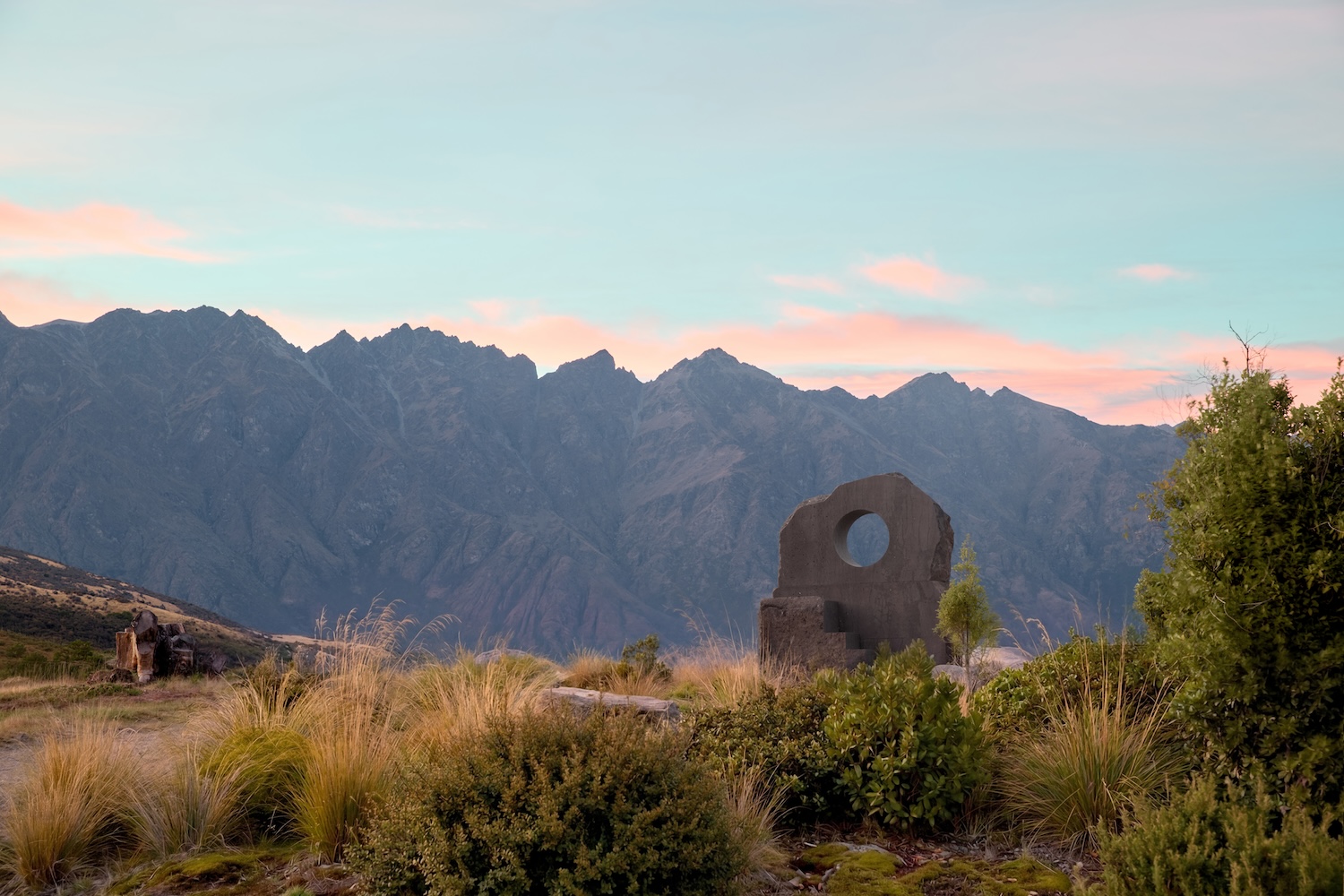
Known as Interlude, the work forms part of Paererewā, an ambitious national initiative that aims to create 1,000 public objects, seats and markers across Aotearoa New Zealand, designed to endure for the next millennium.
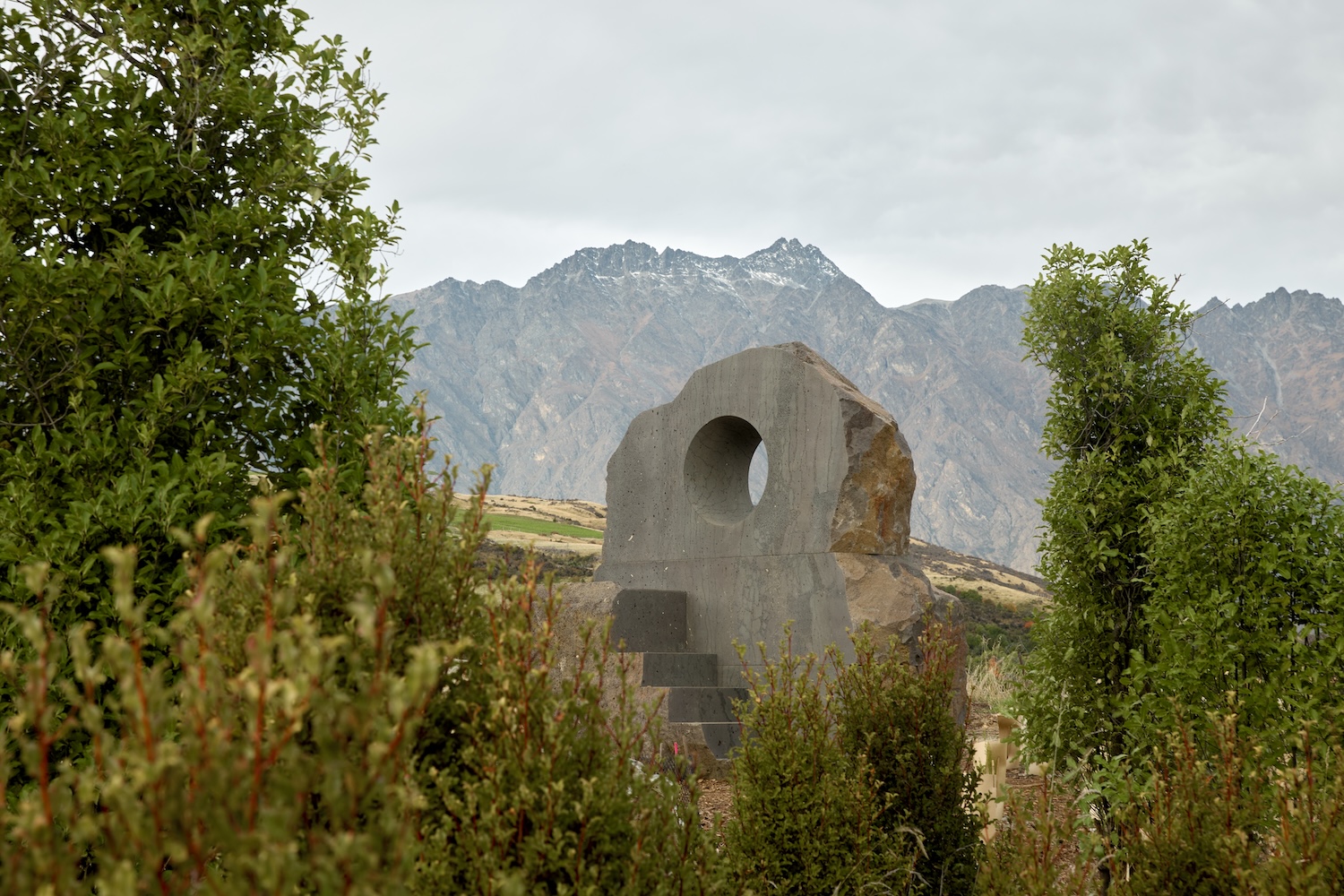
Situated on a cliff-edge site within Jardine Park on the Kelvin Peninsula, the installation consists of five pieces of locally quarried South Island bluestone, a dense basalt selected for its longevity. The composition takes the form of a stone reinterpretation of the traditional tête-à-tête chair, with two elevated seats facing one another across a circular opening. The aperture frames views of Lake Whakatipu and The Remarkables mountain range, and depending on one's perspective, the outline of the piece even merges with the iconic silhouette beyond.
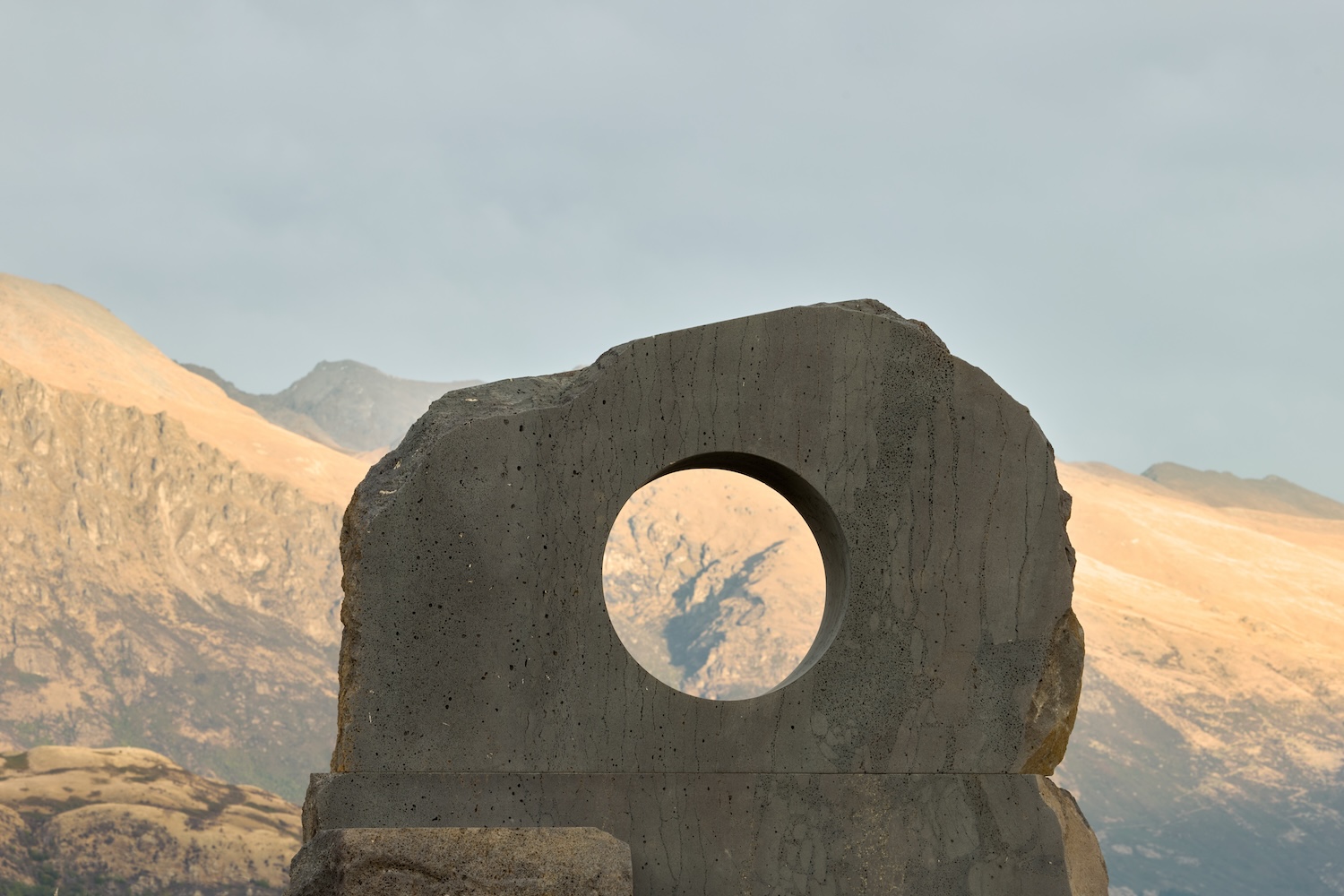
Indeed, the form and function add depth to the work, with Nebbia directors Madhav Kidao and Brando Posocco describing the project as "a place to inhabit, converse, rest and reflect" rather than a monument intended solely for observation (regardless of how stunning those views are).
But the project is laced with subtle contrasts, including the combination of digital fabrication techniques with traditional stonemasonry. Photogrammetry was used to create detailed three-dimensional models of the selected stone blocks, informing the design, cutting strategy and assembly of the five-piece structure. The fabrication was then carried out in collaboration with local stone specialists, with significant portions of the shaping completed by hand.
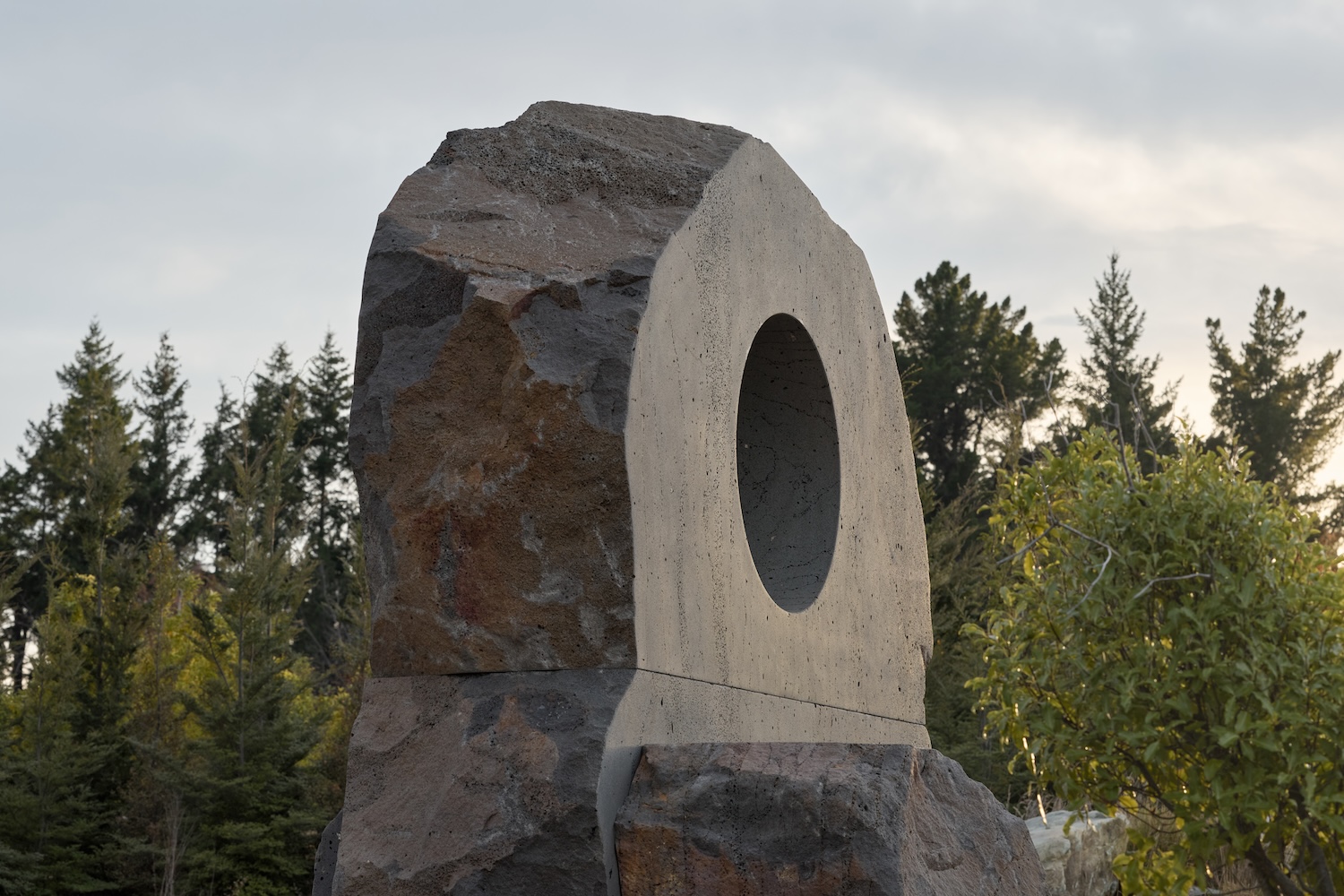
The resulting piece deliberately retains evidence of both natural geology and human intervention. Areas of raw basalt remain exposed alongside milled and honed surfaces, while split finishes provide a transition between the two conditions. As such, the contrasting treatments reveal the fabrication process while allowing the material's natural character to remain legible.
Designed with a projected lifespan of 1,000 years, the work anticipates change rather than resisting it. Weathering, wear from use and gradual softening of the carved surfaces are intended to become part of the piece's ongoing story.
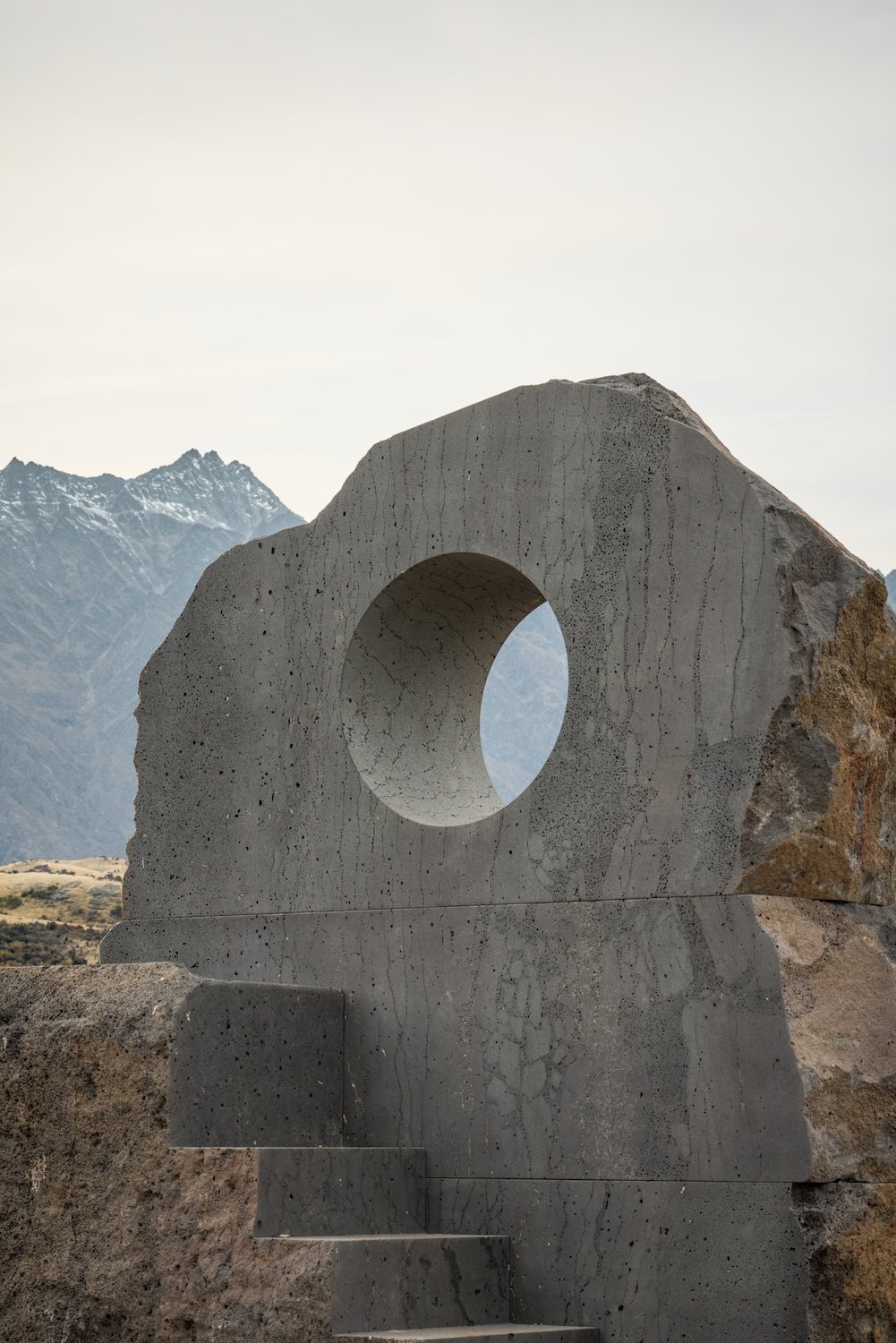
Interlude is the fourth completed commission within the Paererewā programme, which is managed by STILL, a New Zealand-based organisation established to create long-term places of reflection in significant landscapes and communities. Approximately half of the planned installations are reserved for tangata whenua (people of the land), local authorities and sites of cultural importance.
The Queenstown site was developed through engagement with local community groups, neighbouring organisations and iwi, with the final design incorporating accessible seating and landscape improvements intended to support use by visitors of different ages and abilities.
The location itself carries significant cultural and historical associations. Lake Whakatipu is regarded as a place of deep importance within Māori tradition and has long served as a route for travel, settlement and food gathering. The Kelvin Peninsula is also associated with Hakitekura, remembered as the first person to swim the lake, while archaeological evidence records earlier Māori occupation across the area.
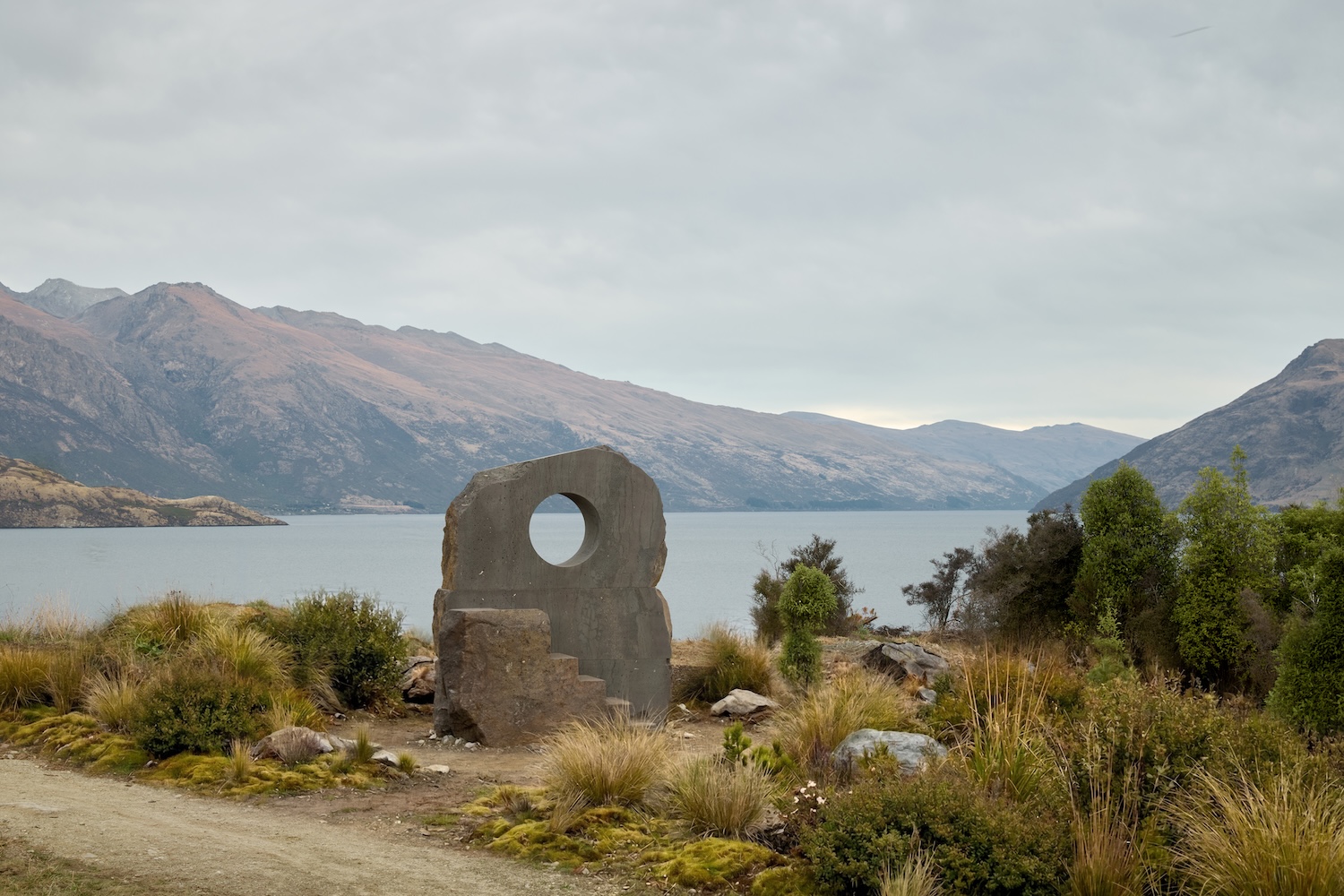
Nebbia was introduced to the commission through the British Council New Zealand and the Pacific, which supported the project alongside the Edgar family. The installation also serves as a memorial to New Zealand philanthropist Sir Eion Edgar, whose well-known greeting, "Another day in paradise", is commemorated on a bronze plaque adjacent to the work.
And whether seated alone or with a companion, it’s hard to argue with that sentiment when engaging with a work and landscape such as this.
All images © Mickey Ross