

News: The New Stone Age at Rotterdam Biennale

The New Stone Age, the research initiative exploring the potential of structural stone in contemporary construction, has taken its work to the International Architecture Biennale Rotterdam (IABR), where a collaborative installation examines how natural stone could reduce reliance on concrete and steel.
As we’ve previously reported, the collective aims to restore knowledge of load-bearing stone to architectural practice, making the case for a material more commonly specified as cladding or a decorative finish. Its latest presentation, The New Stone Age x The Netherlands, builds on research undertaken by Groupwork and Studio Anna Zan to collect and translate information about structural stone for Dutch architects. Supported by a grant from the Creative Industries Fund NL, the research led to an invitation from the Biennale to develop the installation.
The project is part of IABR 2026, titled Systems of Support, which runs from 18 September to 29 November at Piekfabriek, on Rotterdam’s former Hunter Douglas site. The 12th edition of the Biennale considers how architecture and design can respond to pressures on the systems supporting everyday life, from water, energy and raw materials to housing and infrastructure. The New Stone Age contributes to that discussion by examining the resources and construction methods underpinning the built environment.
Bringing together LMNL office for architecture and landscape, Studio Anna Zan, Groupwork, Bamberger Natursteinwerk, Webb Yates Engineers, WYSWYG / ARCHITECTURE, The Stonemasonry Company and StudioSpass, the installation presents stone as a structural material with potential for contemporary, lower-carbon construction.
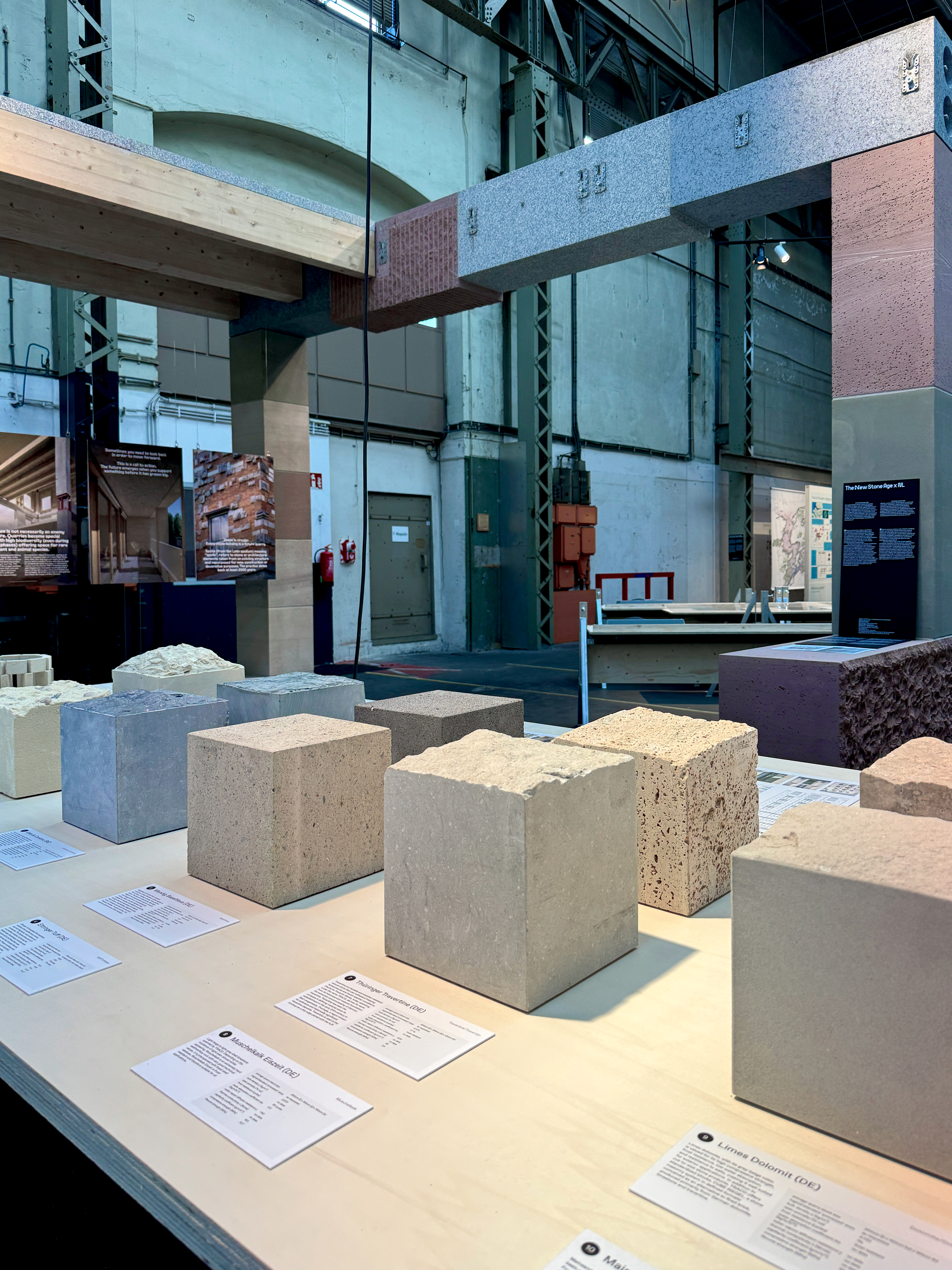
At its centre are a series of components and full-scale mock-ups demonstrating how engineering can extend stone’s capabilities. Augmented Structural Stone, developed by Bamberger Natursteinwerk, Groupwork and Webb Yates, uses inserted tendons to prestress stone elements, increasing their capacity to resist bending and allowing more slender columns, beams, façades and floor components. A timber-stone composite floorplate takes a complementary approach, combining stone in compression with timber in tension. Mechanically connected and designed for dry assembly, the system is intended to be load-bearing, demountable and reusable.
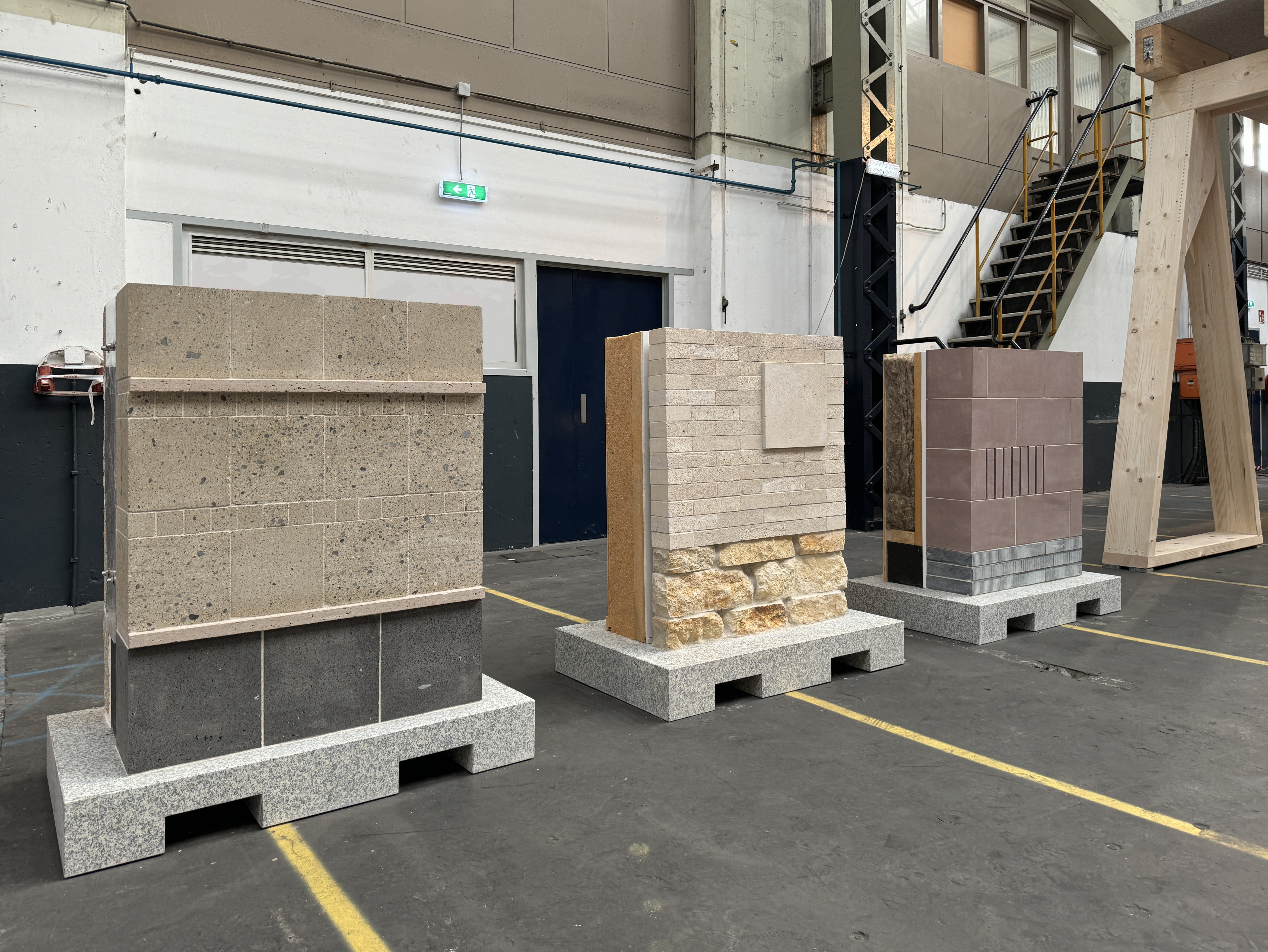
Full-scale wall assemblies developed by LMNL office and Studio Anna Zan explore combinations of stone with wood-fibre insulation, hemp-lime and sheep’s wool. The research considers how different stone types, dimensions and wall compositions might support low-carbon, vapour-permeable construction.
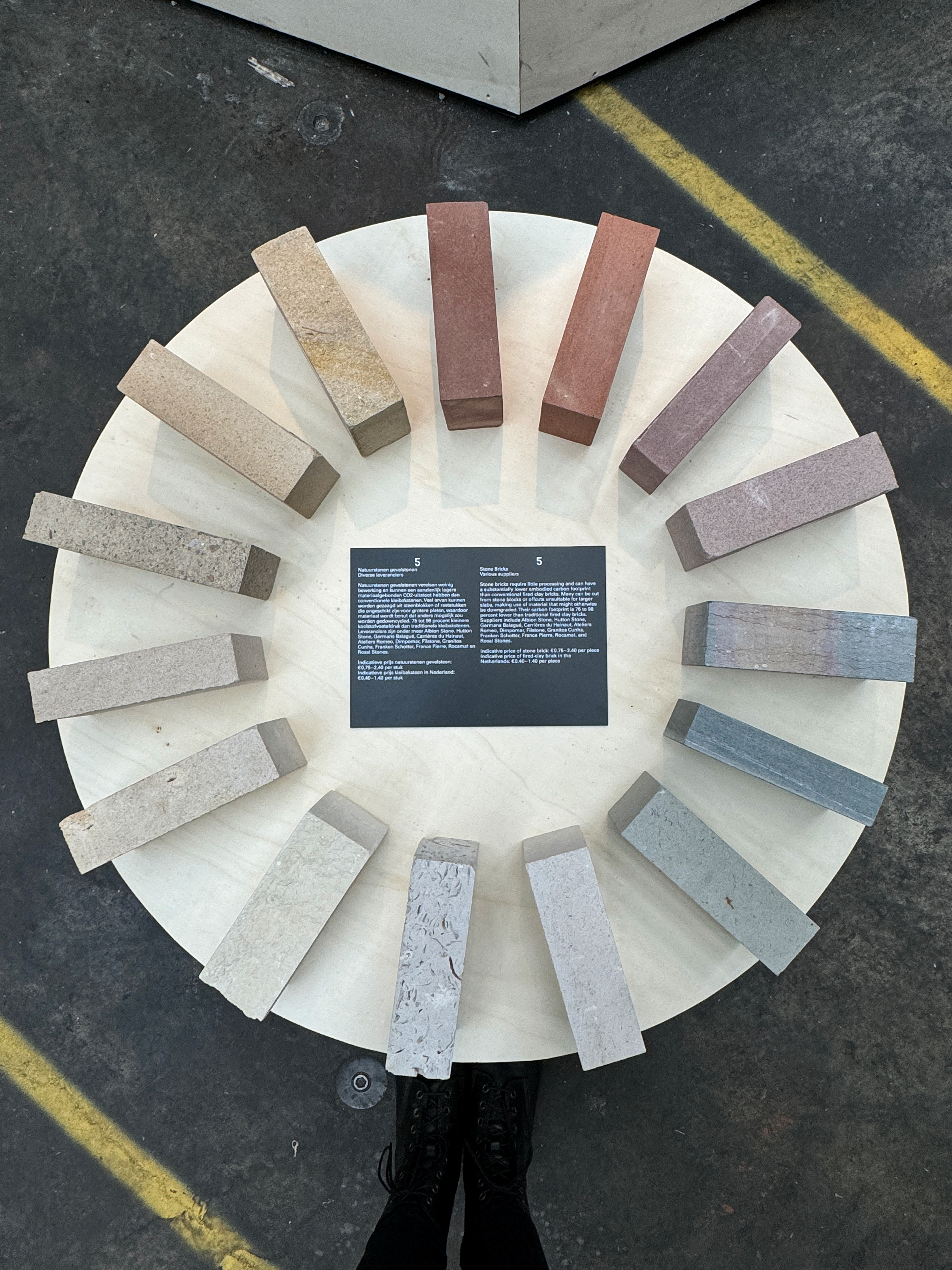
The material displays extend beyond engineered components too, with twenty stones sourced within 600km of Rotterdam illustrating the potential of regional supply to reduce transport impacts. The 20x20cm cubes include Dutch Kunrader limestone, Belgian blue limestone, German basalt lava, Portland limestone from the UK and Norwegian Larvikite. Stone bricks from a range of suppliers also demonstrate how smaller units can be cut from blocks and offcuts unsuitable for larger slabs. Indeed, the collective states that stone bricks can have a carbon footprint 75-98% lower than conventional fired-clay bricks.
Historical context is also woven in via a sandstone tympanum dating to 1717, originally part of Rotterdam’s former Plague House. On loan from Museum Rotterdam, the carved piece depicts the coats of arms of seven city councillors, flanked by reclining river gods and surrounded by foliage and other motifs. Its presence connects the contemporary structural research with the city’s longstanding use of stone. Following the exhibition, the tympanum is intended to be incorporated into the Piekfabriek development.
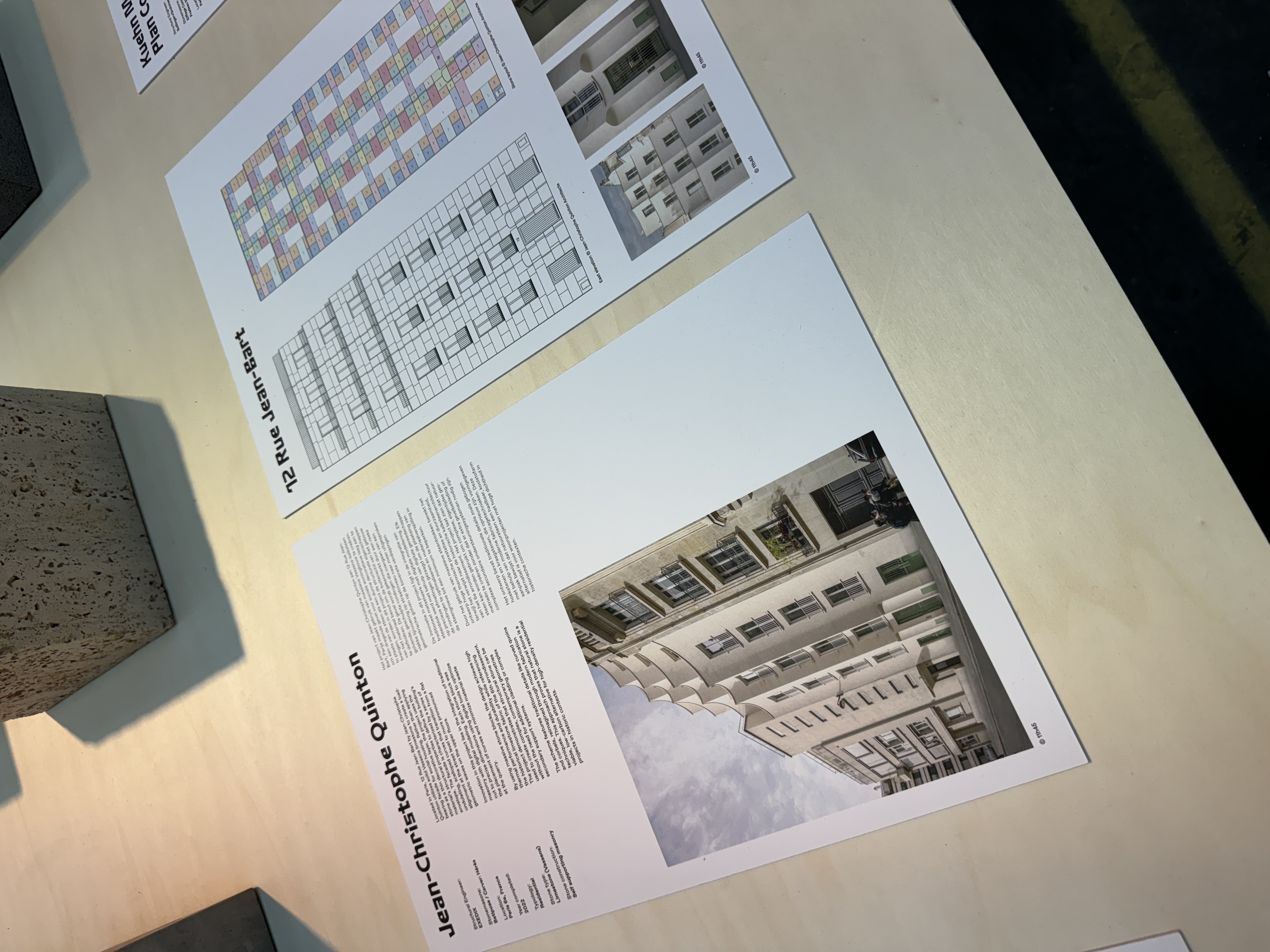
Research publications and Dariya Cheremisina & Giulliana Giorgi’s film Unlocking UK Stone help to trace the UK stone supply chain, while Hutton Stone building blocks that visitors can stack and rearrange complete the installation. Together, the exhibits make the case for reconsidering stone not simply as a finish, but as a reusable structural resource whose performance depends on engineering, sourcing and the skills needed to work it.