

News: SapienStone extends porcelain veining through the slab


The treatment of exposed edges is becoming an increasingly important consideration in kitchen design, as islands, waterfall ends and shaped worktop profiles give surfaces a more sculptural role. SapienStone’s 4D Ceramics collection, available through Cullifords, addresses this with a technology that carries decorative patterns through the thickness of the porcelain slab.
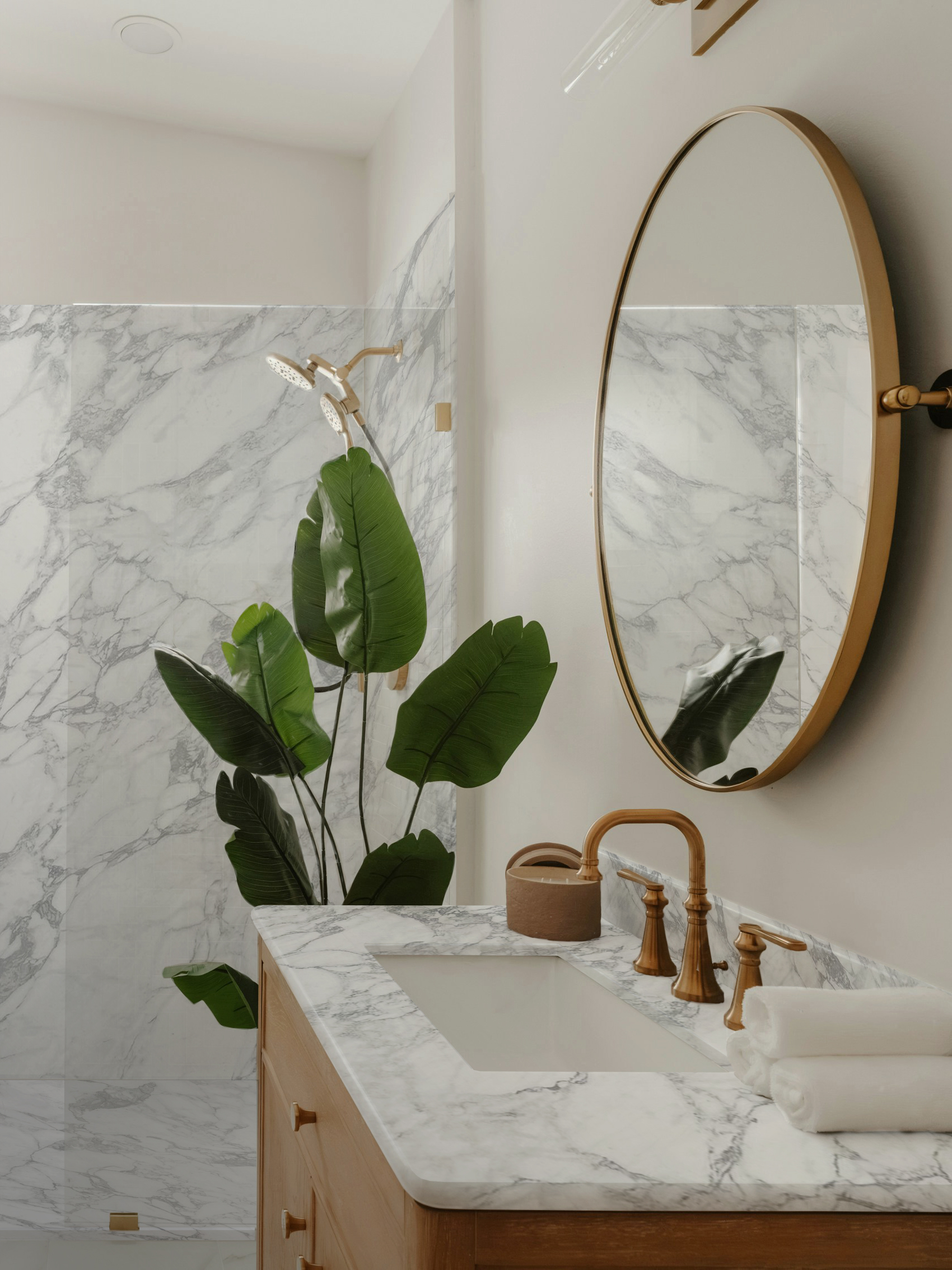
Developed by Iris Ceramica Group, the full-body technology integrates decoration into the material rather than limiting it to the visible face. This allows the pattern to continue across cut edges and shaped profiles, creating greater visual consistency when a surface moves between horizontal and vertical planes.
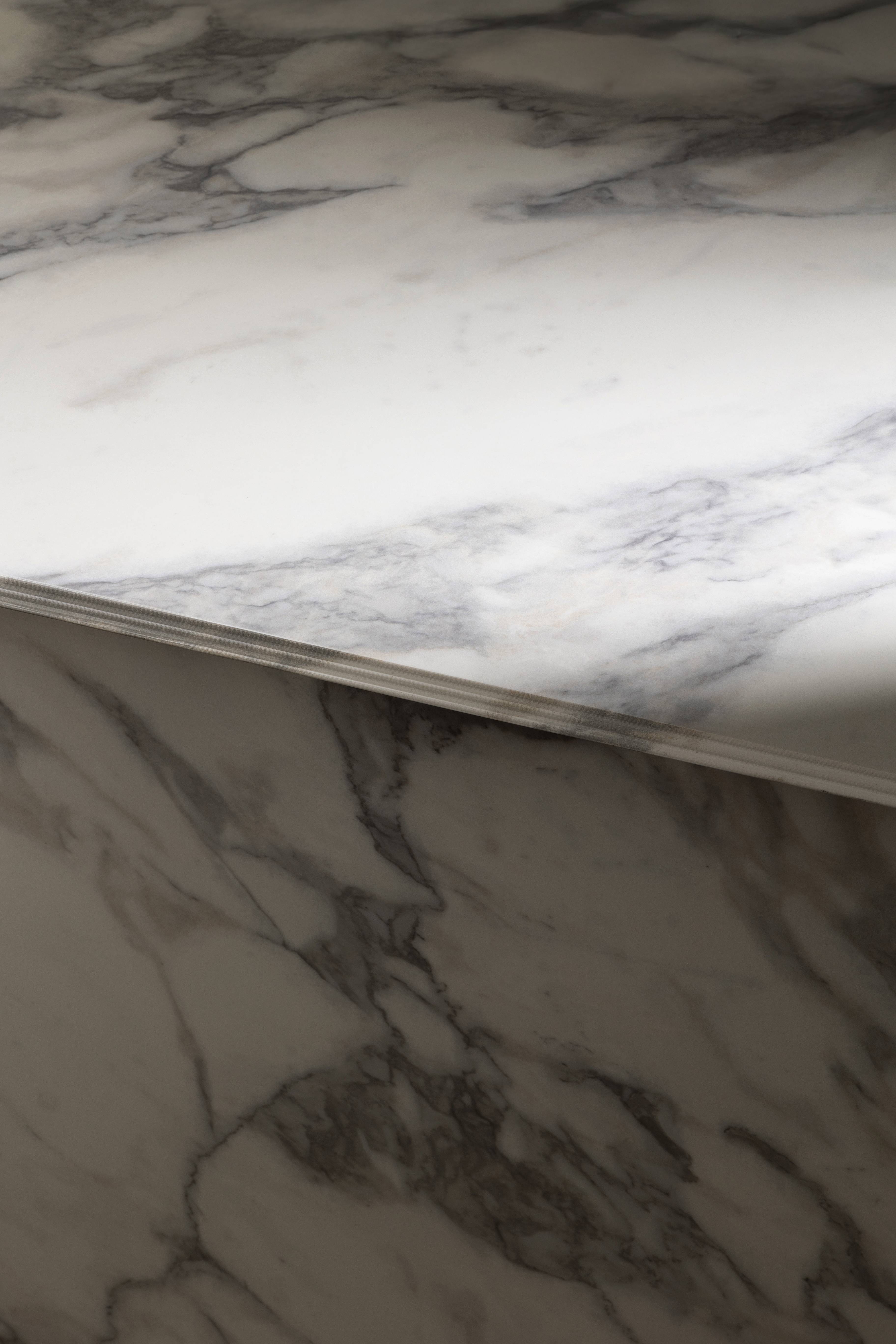
Conventional printed porcelain can reproduce the colour variation and veining of natural stone across its surface, but the appearance at a cut edge may differ from the face. With 4D Ceramics, the through-body decoration is intended to reduce this visual break, giving fabricators and designers more freedom to shape the material without losing the continuity of its pattern.
The distinction is particularly relevant to kitchen islands, where a worktop can extend down the sides to form a waterfall end. It also opens up possibilities for vanity units, wall cladding and statement furniture, where exposed edges and changes in plane are integral to the design.
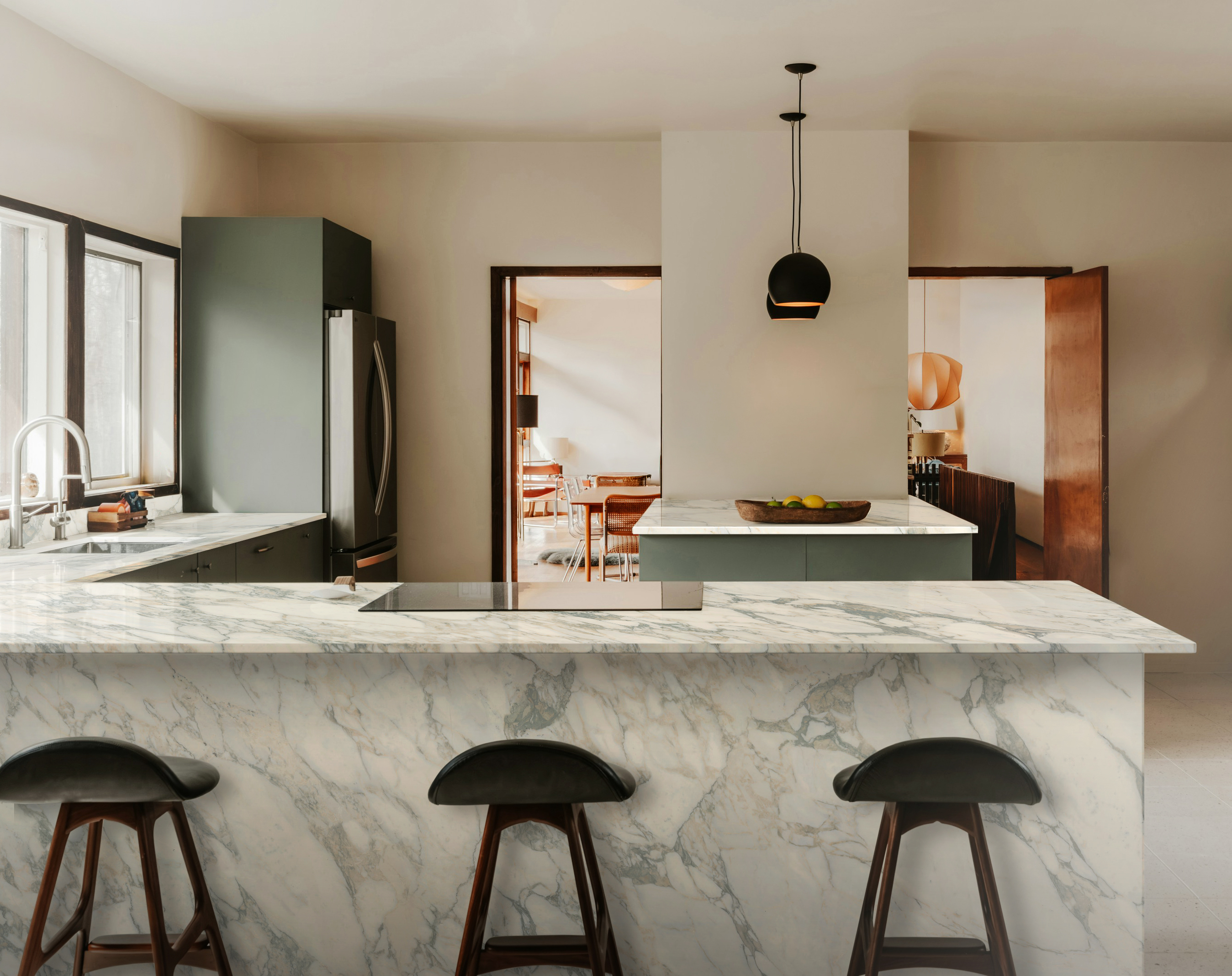
One of the collection’s more expressive options is Fior Di Viola 4D. An ivory ground is crossed by burgundy, plum and charcoal veining, drawing on the visual character of marble. The pronounced pattern lends itself to applications where the surface is intended to act as a focal point, whether across a kitchen island, a deep worktop edge or a splashback behind more restrained cabinetry.
The development reflects a wider interest in treating surface materials as three-dimensional elements rather than simply finishes applied to a plane. As shaped edges, deep profiles and transitions between surfaces become more prominent in interior architecture, the way a material behaves when cut and fabricated is increasingly relevant to specification.

Natural stone has long offered variation through its depth, although the appearance of a cut edge depends on the stone itself and the direction of the cut. SapienStone’s approach seeks to bring a similar visual continuity to porcelain, while retaining the design control associated with an engineered surface.
For fabricators, the technology provides another consideration when selecting porcelain for projects in which the edge is as visible as the face. For designers, it extends the scope for using marble-inspired patterns across more complex forms, allowing the surface to read as a continuous material rather than a printed image confined to the top.