

Surface Spot: From discarded roses to solid surfaces

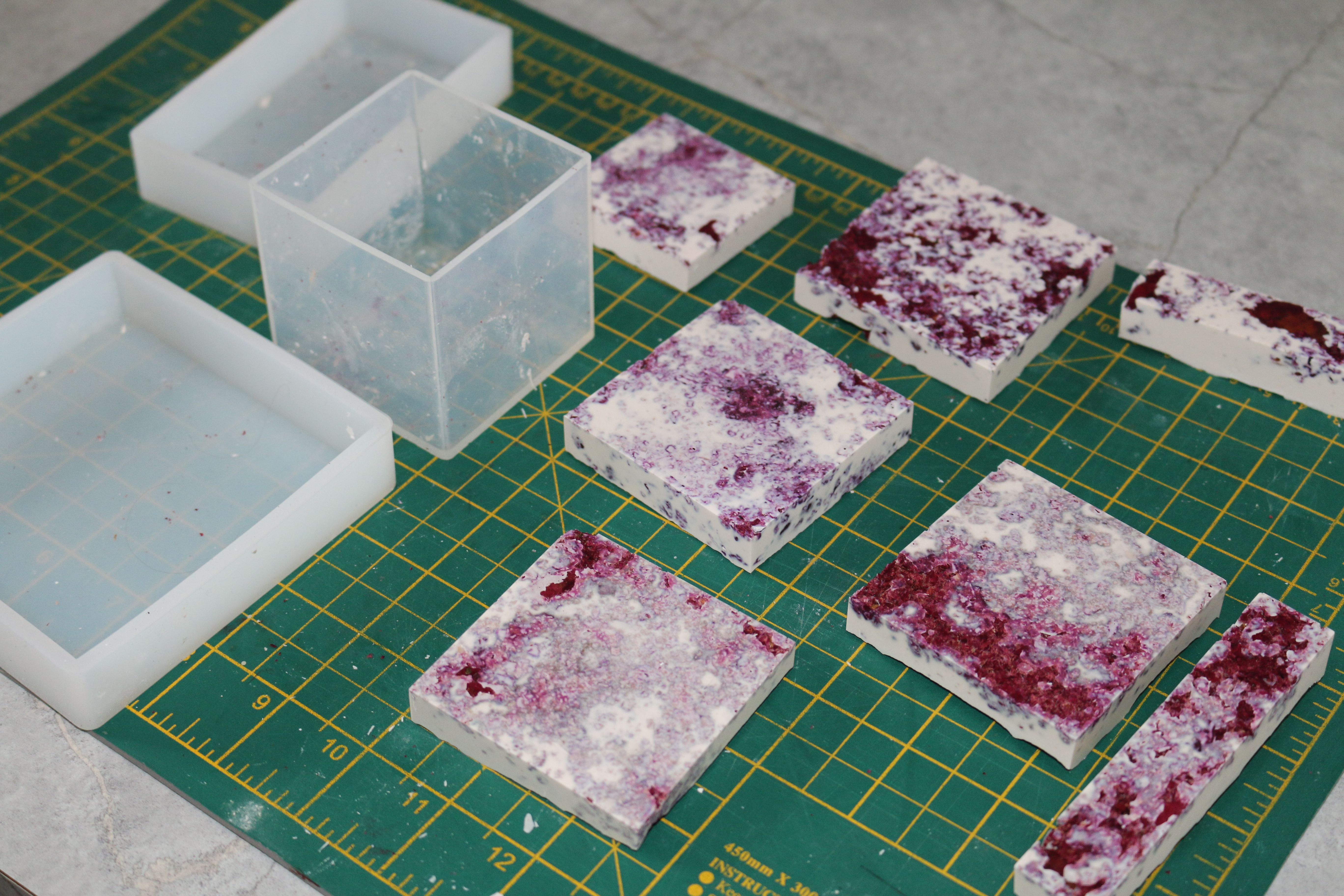
Flowers are often purchased to mark an occasion, and while the sentiment attached to them might endure, their physical presence is invariably short-lived. But what if the material qualities of flowers could be preserved in a more permanent form? For designer Olivia Webb, discarded flowers provide the raw ingredients for a series of solid surface materials that bring some of the colour, texture and associations of the natural world into architectural interiors.
Rather than treating floral waste as a single resource, Olivia's practice takes what she describes as a ‘nose-to-tail’ approach to the flower. Her research considers the individual qualities of petals, leaves, stems and even thorns, exploring how each might be put to use in the development of materials and objects.
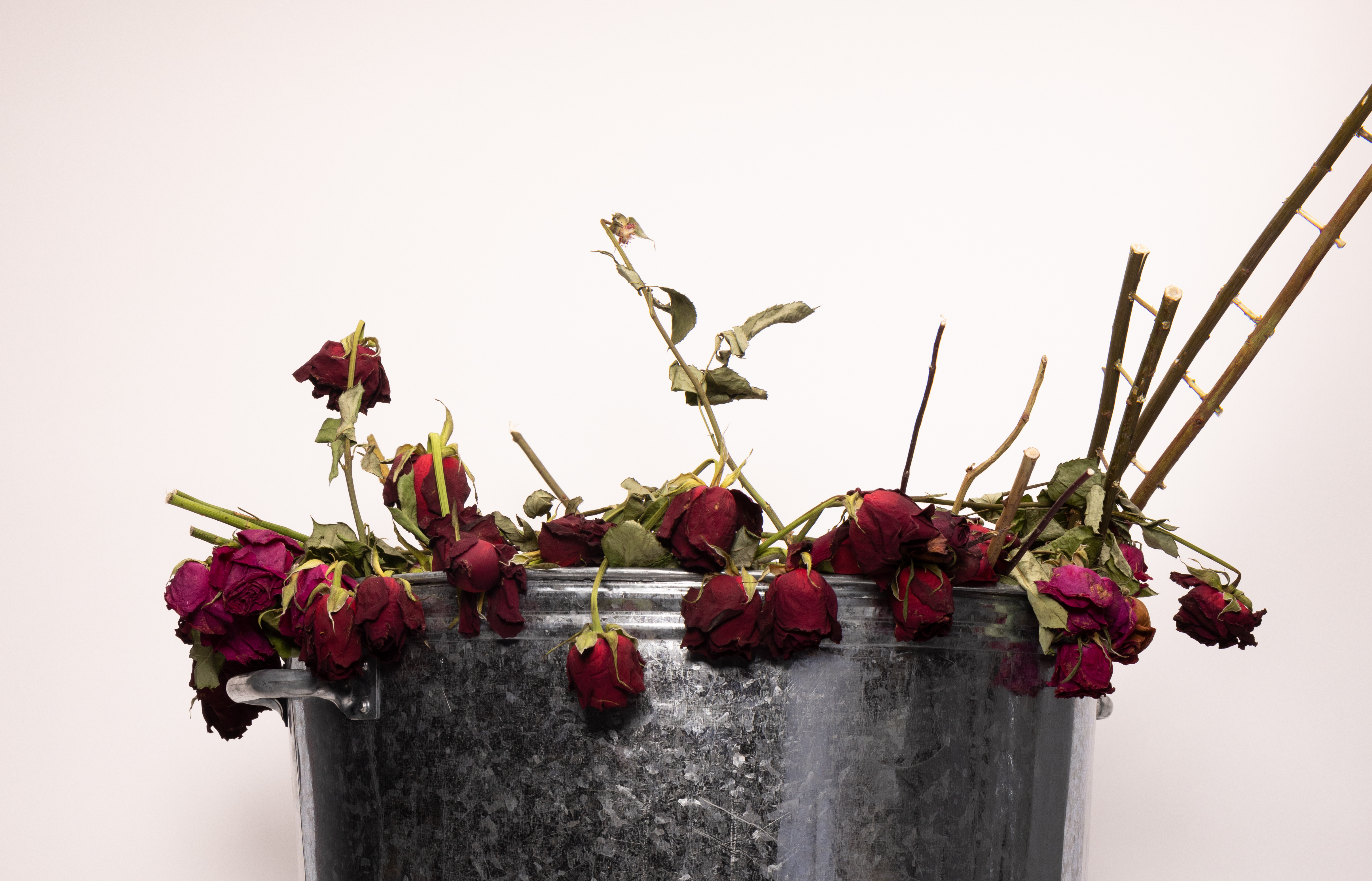
Her Rose Series, a collection of handmade architectural tiles, is one manifestation of this ongoing material investigation. Over the course of a year, Olivia collected more than 1,000 roses from across London, sourcing discarded flowers from florists, public gardens and events. As she rather beautifully positions the creative drive behind the project: “Imagine every rose you've ever been given forming the walls around you.”
To create the tiles, dried rose petals are incorporated into a mineral binder, forming a solid composite in which the floral matter remains visible. What's particularly interesting about her approach is that the decorative qualities of the surfaces are derived directly from the constituent materials. Rather than introducing manufactured pigments or applying a printed pattern to the surface, she makes use of the inherent variations in the petals themselves.
There are parallels here with more familiar composite surfaces, not least terrazzo, where the selection and distribution of aggregates have a significant bearing on the visual character of the finished material. In these tiles, however, mineral fragments make way for organic matter, with the changing colours, shapes and textures of the petals lending each piece an individual aesthetic.
And of course, there's also something rather nice about a material that retains a hint of its previous life. While much of the research into incorporating waste streams into solid surfaces centres on resource efficiency, Webb's work brings a more emotive dimension to the process. The flowers are not simply a substitute for virgin material ingredients; they are integral to both the appearance and narrative of the resulting surfaces.
Produced in 60 x 60mm, 100 x 60mm and 100 x 100mm formats, the tiles are intended for decorative interior wall applications and can be made in small batches for bespoke residential and commercial projects. Working with relatively small modular units also affords a degree of flexibility, allowing individual tiles to be replaced or arrangements to be adapted over time.
Having exhibited the collection at Material Matters London, Olivia has also demonstrated its application within an interior setting, with the tiles forming a kitchen splashback at the Aram Gallery as part of the With Limitations exhibition.
The Rose Series represents just one avenue of Olivia's wider exploration of floral waste as a material resource. With furniture and homeware accessories also in development, she is looking beyond architectural finishes to consider how the solid materials she produces might find their way into other elements of the spaces we inhabit.