

News: When Architects Meet Quarries (Part 2)

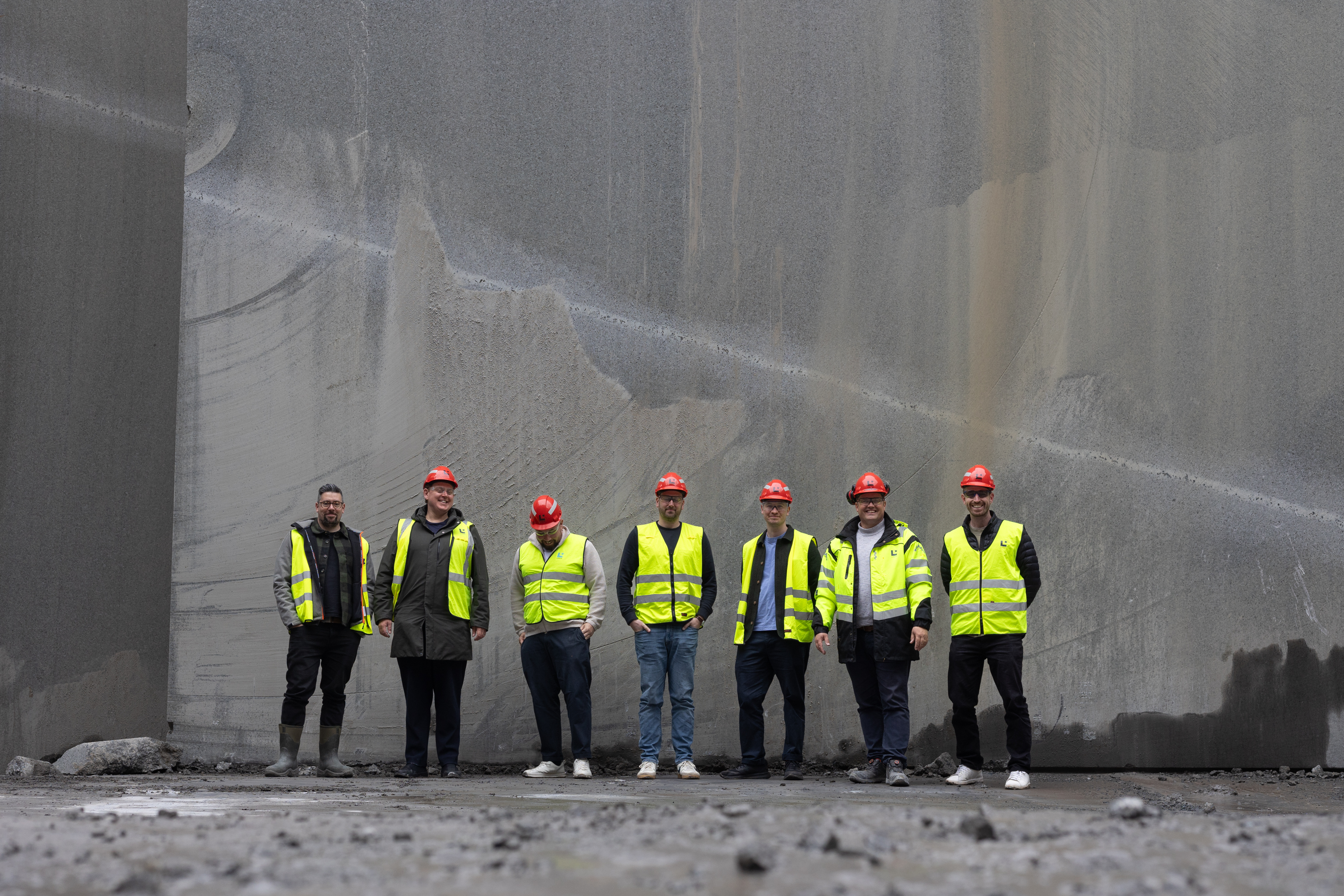
In the first of this two-part exchange, Studio Folk Architects directors Edward Powe and Patrick O'Keeffe reflected on their visit to the Lundhs quarries in Larvik, Norway, discussing how seeing stone extraction first-hand had challenged assumptions about material value, variation and specification. Their conversation explored why natural stone is increasingly becoming a default material within the practice and how a better understanding of quarrying could encourage more creative and sustainable design.
For the second instalment, the roles are reversed. Powe and O'Keeffe put their questions to Hege Elisabeth Lundh, Marketing and Business Development Manager at Lundhs, to gain a deeper understanding of the material itself and the realities of quarry operations. The discussion ranges from the distinctive optical qualities of Larvikite and the classification of stone blocks, to material traceability, biodiversity management and the ongoing challenge of finding productive uses for every part of the resource.
Together, the conversations offer a rare dialogue between architects and stone producers, revealing how greater understanding across the supply chain can help unlock new opportunities for natural stone in contemporary construction.
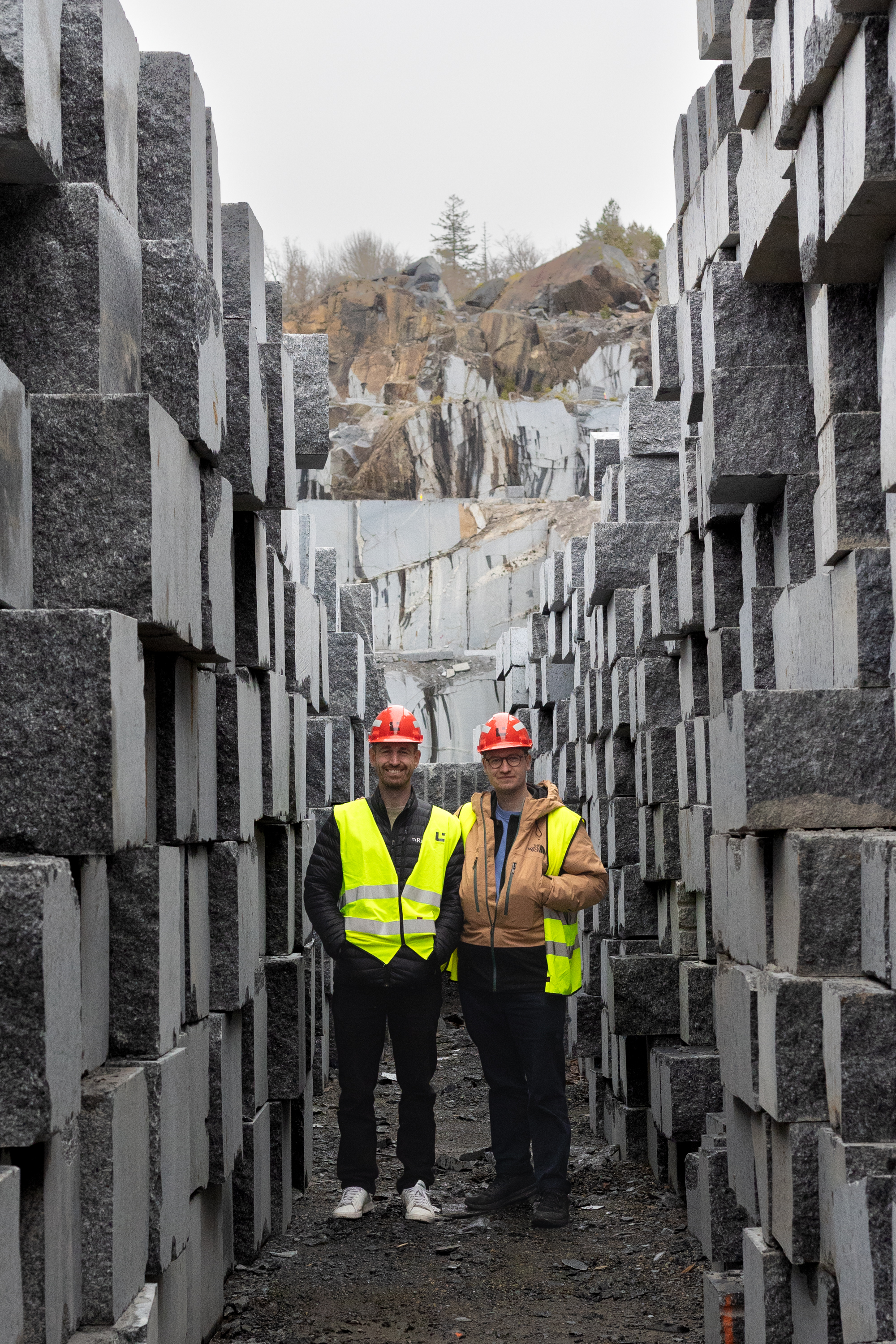
EP: Larvikite stone has a unique quality in that it reflects light only in certain directions. Could you explain a bit more about how what causes this, and what architects and designers should consider when specifying it?
HEL: Larvikite contains a lot of feldspar crystals. The feldspar mineral gives a very distinct appearance when you turn around the stone in the light.
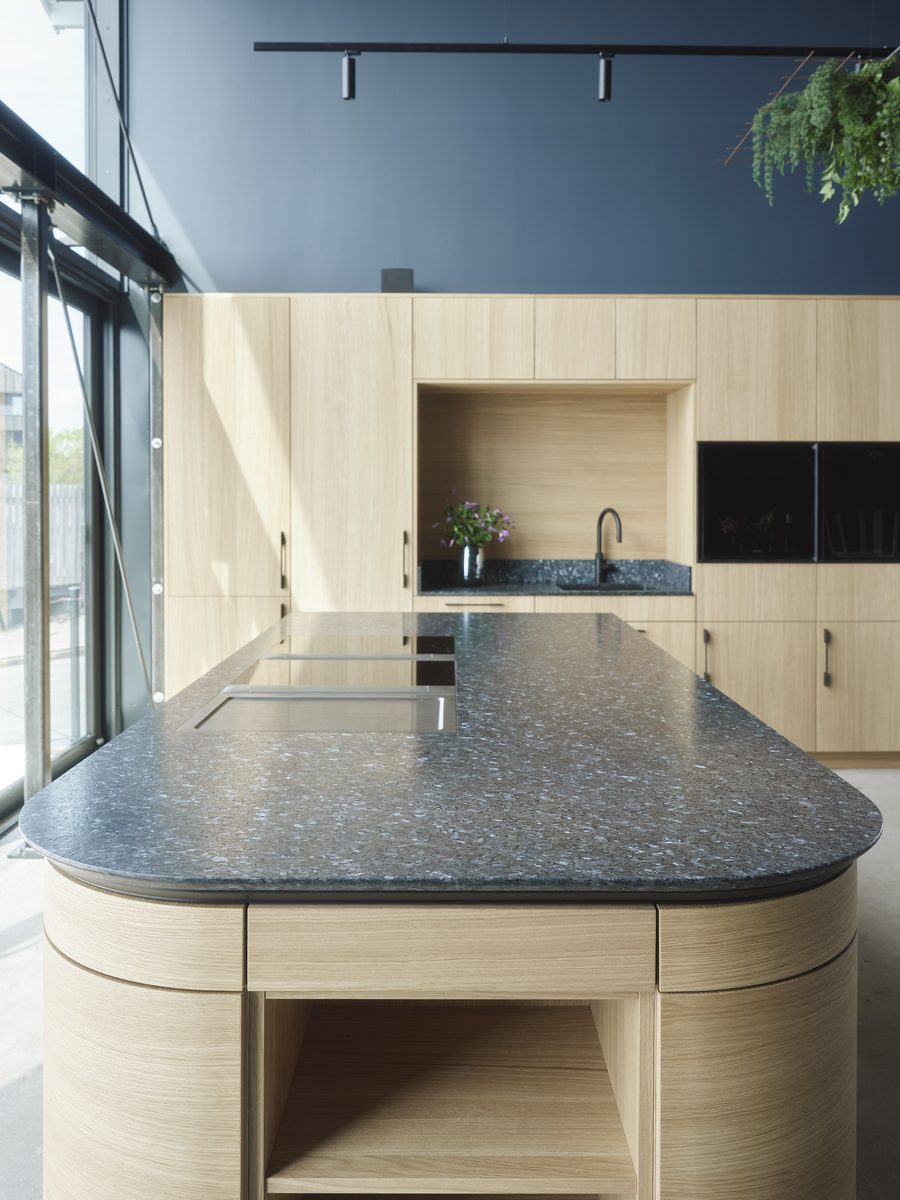
Labradorescence is a unique optical effect caused when light is refracted and reflected by microscopic layers in certain feldspar minerals. As light strikes the stone, it creates a metallic, shifting flash, usually in vivid blue and green. The effect is caused by thin, regular lamellae (microscopic layers) of varying chemical composition inside the stone. When light reflects from these layers, certain colors are intensified.
The colors appear to shift and move across the surface as the stone is turned in the light. Often called the Schiller effect, this phenomenon gives Larvikite its distinctive and recognizable appearance.
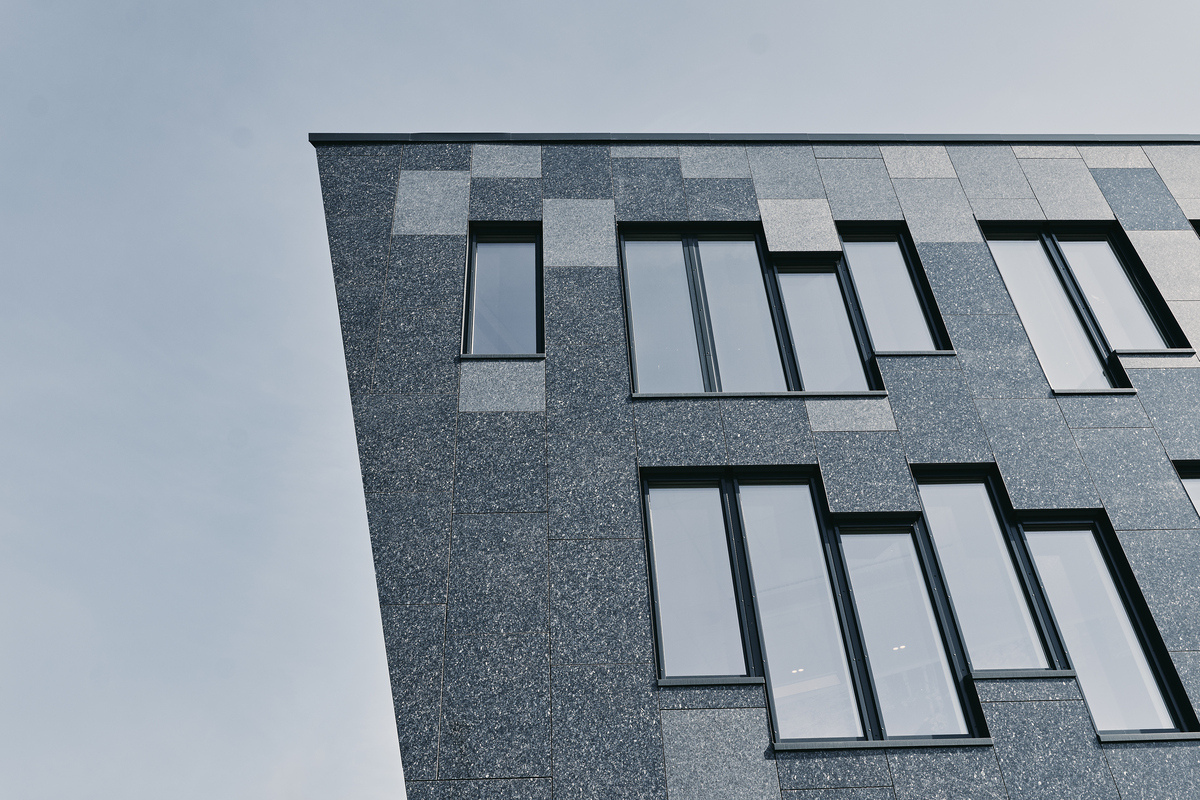
The direction of installation of tiles or panels will also be important when you work with Larvikite. Seen from one side, the crystals will be more visible; seen from the opposite side, the crystals will appear more subdued. The surface finish will also be vital for the final appearance. A high-gloss polished surface will highlight the crystals, and a more matte or structured surface will make them more subtle.
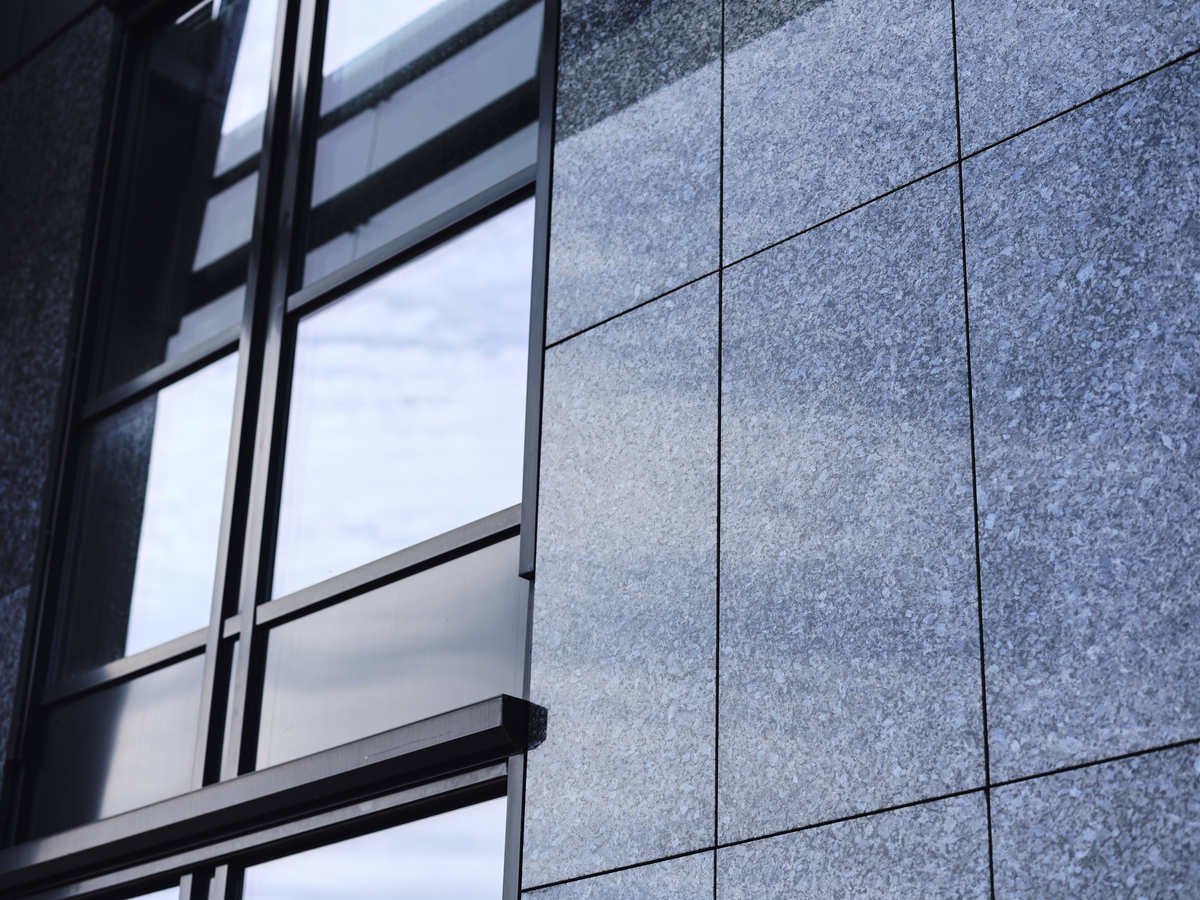
POK: What format of stone does Lundhs export? Is this the case for all grades of material?
HEL: In our quarries, we extract raw blocks in different formats. Each block of stone will be classified as to size, quality and color. The different sizes and qualities will be used for different application areas. An A-grade large block will often be used for slabs/panels, while B-grade blocks will often be used for outdoor applications.
Selecting the appropriate combination of color, quality, and size is crucial to ensure the stone is well-suited for its intended application, resulting in a beautiful and durable final product. Could you tell us a bit more about your classification process, and how you decide on the grade of each stone block?
When we extract the stone, several steps and processes are needed to decide the final quality. When the large “flakes” or “sheets” of stone are taken down, the first step of identifying the quality starts. Then the extracted stone will be cut into blocks according to the first evaluation. The second evaluation will be done when the blocks are formatted. Here the unique block number stating size, quality and color will be entered into our system, giving full traceability throughout the value chain.
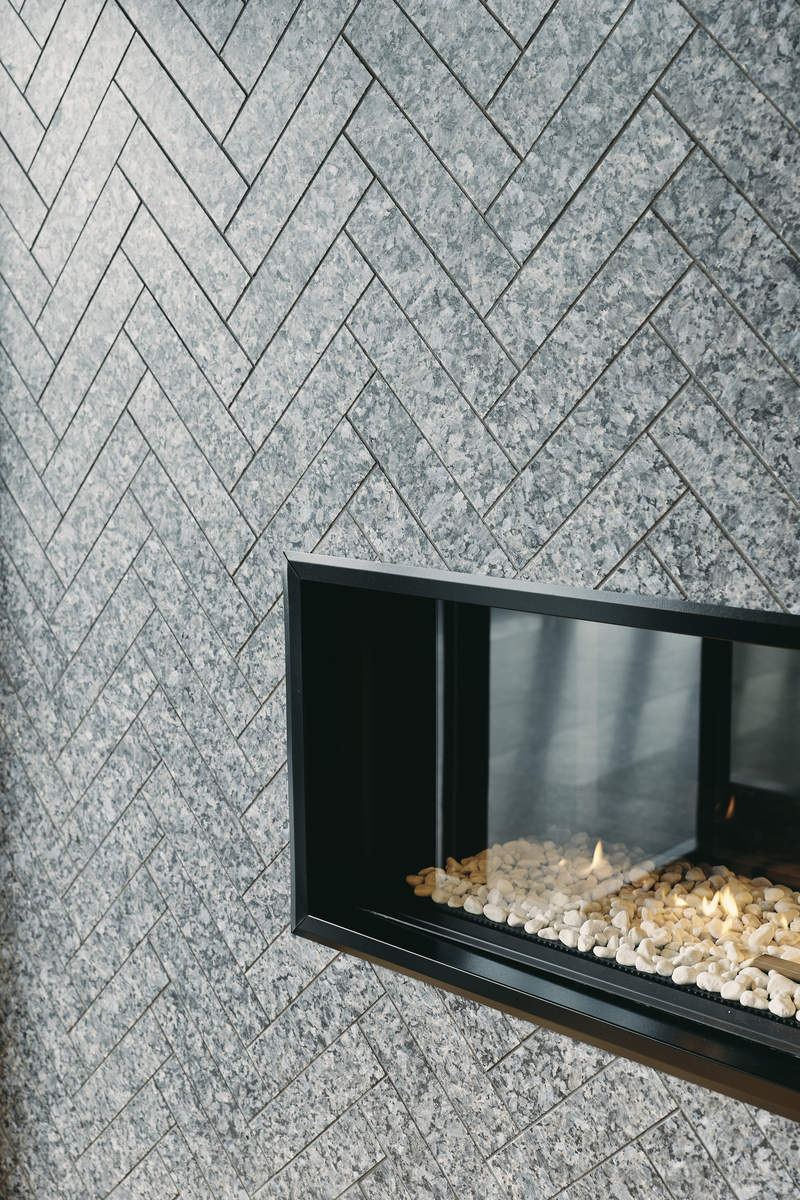
EP: What are some of the barriers and opportunities for quarries to make more use of off-cuts and leftover material?
HEL: Some years ago there were much more cut-offs and surplus material than we have today. At this stage, we have developed several areas of use for different qualities and sizes of stone, like building blocks, coastal protection and also aggregates, in addition to the A and B-grade blocks. Even the stone dust from sawing will be used as a soil fertilizer.
Still, we have not reached our ultimate goal to utilize 100% of the resource in all our quarries. This will require even more use of stone as a building material, for instance, instead of concrete – the “old” way of building. By developing new areas of use and promoting the possibilities towards the architect community, we see that we are making progress – but slowly. It is still hard to compete with the established materials like concrete.
POK: We were interested to see areas of the quarries now protected to encourage ecology and biodiversity. Can you tell us more about this process?
HEL: When we operate our quarries, we must protect the environment and biodiversity, both during production and when operations cease in certain areas. Once an area is closed, it must be restored using local soil to preserve native biodiversity. Flowers and trees that naturally belong in the area should be able to continue to grow and thrive, and no non-native species should be introduced.
Water use and treatment during production is another major focus area. The dust generated by the wire cutting of larvikite is not hazardous in any way, as it does not contain silica. Even so, we must ensure that the water released back into the environment is also visually clean. This is achieved through sedimentation pools, where the dust settles and the clean water flows through. Samples are taken every week and submitted to the authorities to ensure that all requirements are met.
When areas are planned and later designated for quarry operations, strict rules are put in place to ensure that the habitats of endangered animals, flowers, and trees are not harmed in any way. Respect for nature and our surroundings will always be a priority for us.
EP: One of the unique things about stone is that it can be traced back to a single source location, in a way that composite or processed materials cannot. Are you seeing any trends in relation to material traceability?
HEL: Absolutely! The traceability is something we see as important, both due to the need for documentation, but also related to the increased focus on ESG.
As a provider of a non-renewable resource, we need to be transparent regarding the impact our operations have on the world and our surroundings.