

Profile: Smile Materials

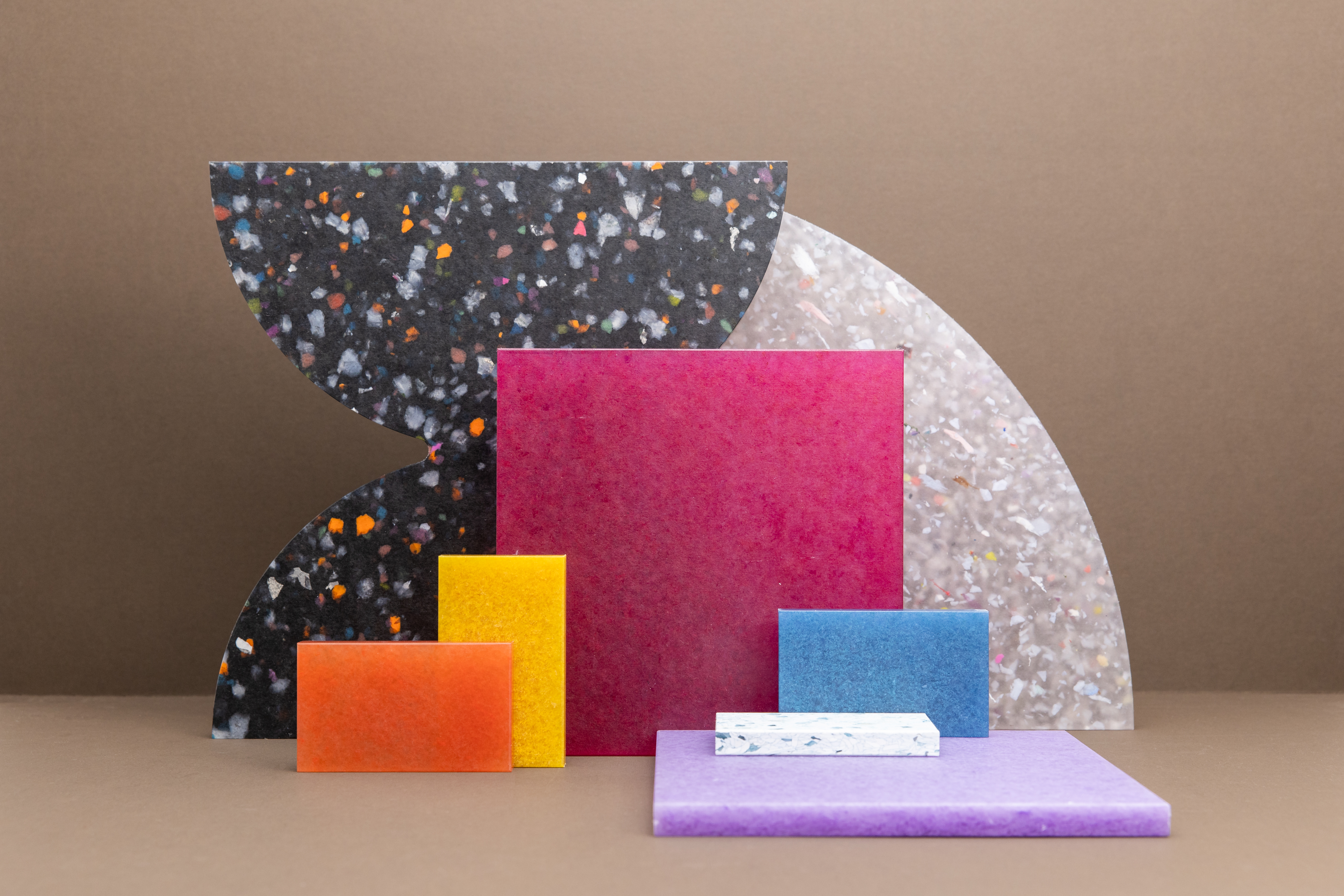
There are few in the A&D community who haven’t heard of Smile Plastics. You may even think you already know all there is to know about the company. But a recent change of the long-standing company name to Smile Materials is indicative of an ever-evolving brand, and its current product offering may be even more extensive and less recognisable than you think.
Smile has never followed the conventional path. At a time when more than 400 million tonnes of plastic are produced annually, and less than 10 percent ever find their way into the recycling stream, the Swansea-based manufacturer has made it its business to turn the industry’s problem into a design opportunity. What began as an early experiment in plastics recycling in the 1990s has evolved, after a 2015 revival, into one of the clearest working models of circular surface manufacturing.
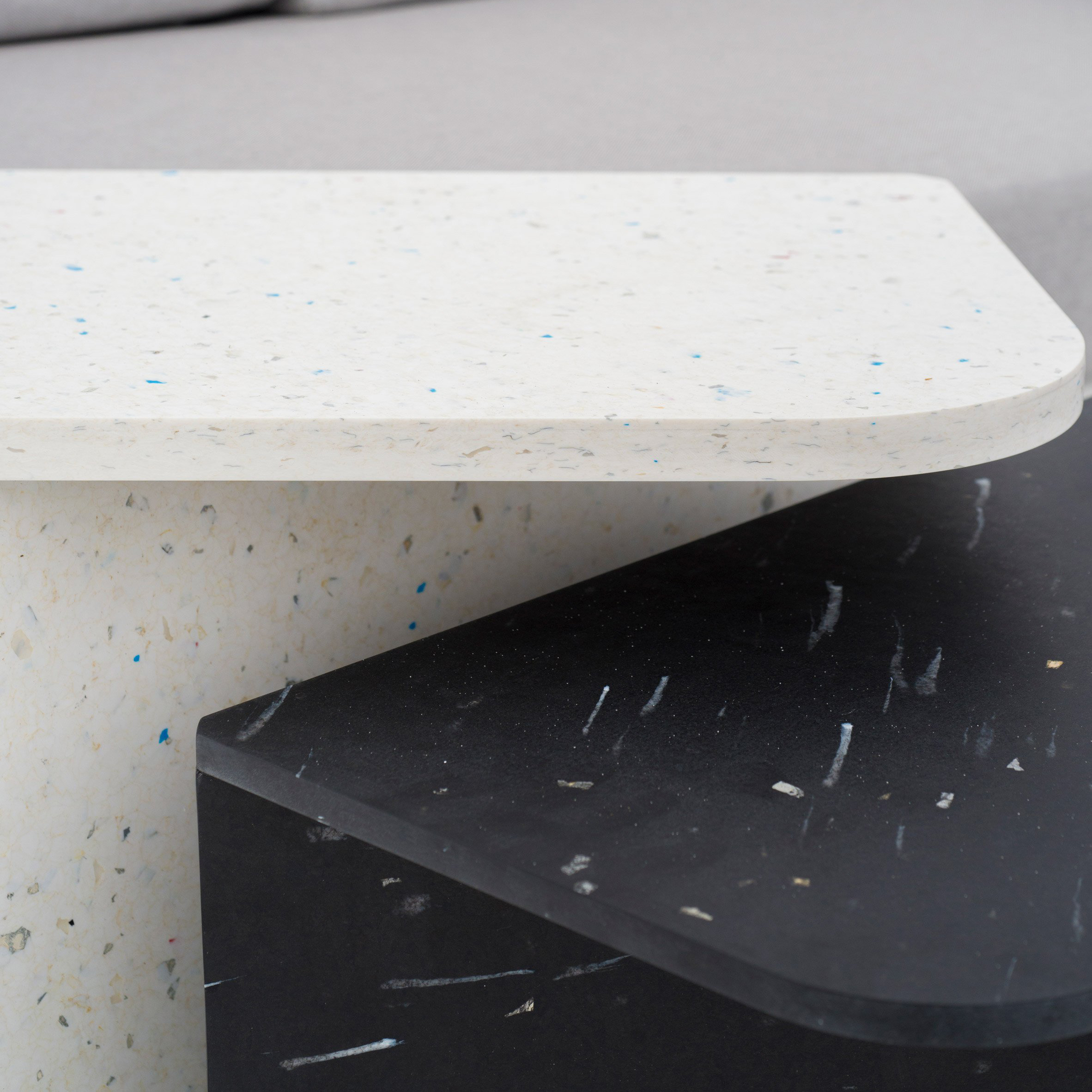
Image Credit: Nikolaj Thaning Rentzmann
Many of the panels are instantly recognisable with distinctive surface patterns that include high-contrast speckles and expressive, maximalist compositions, all made from carefully sorted post-consumer plastic waste. From yoghurt pots, white goods, food packaging, and medical plastics, what were once considered as valueless waste are instead saved from landfill and incineration.

Image Credit: Handover
The team intercepts such plastics, bringing in material from more than 60 local businesses, some further afield, and sorts every piece by polymer type, colour, grade and material characteristic. Much of the sorting and preparation is done by hand, not out of nostalgia, but because tactility and judgement matter when you are handling materials this varied. Once sorted, they’re shredded, heated and pressed, transforming into a sheet material that can be cut, jointed, drilled and thermoformed for interior applications, including, counters, shower walling, furniture and signage.
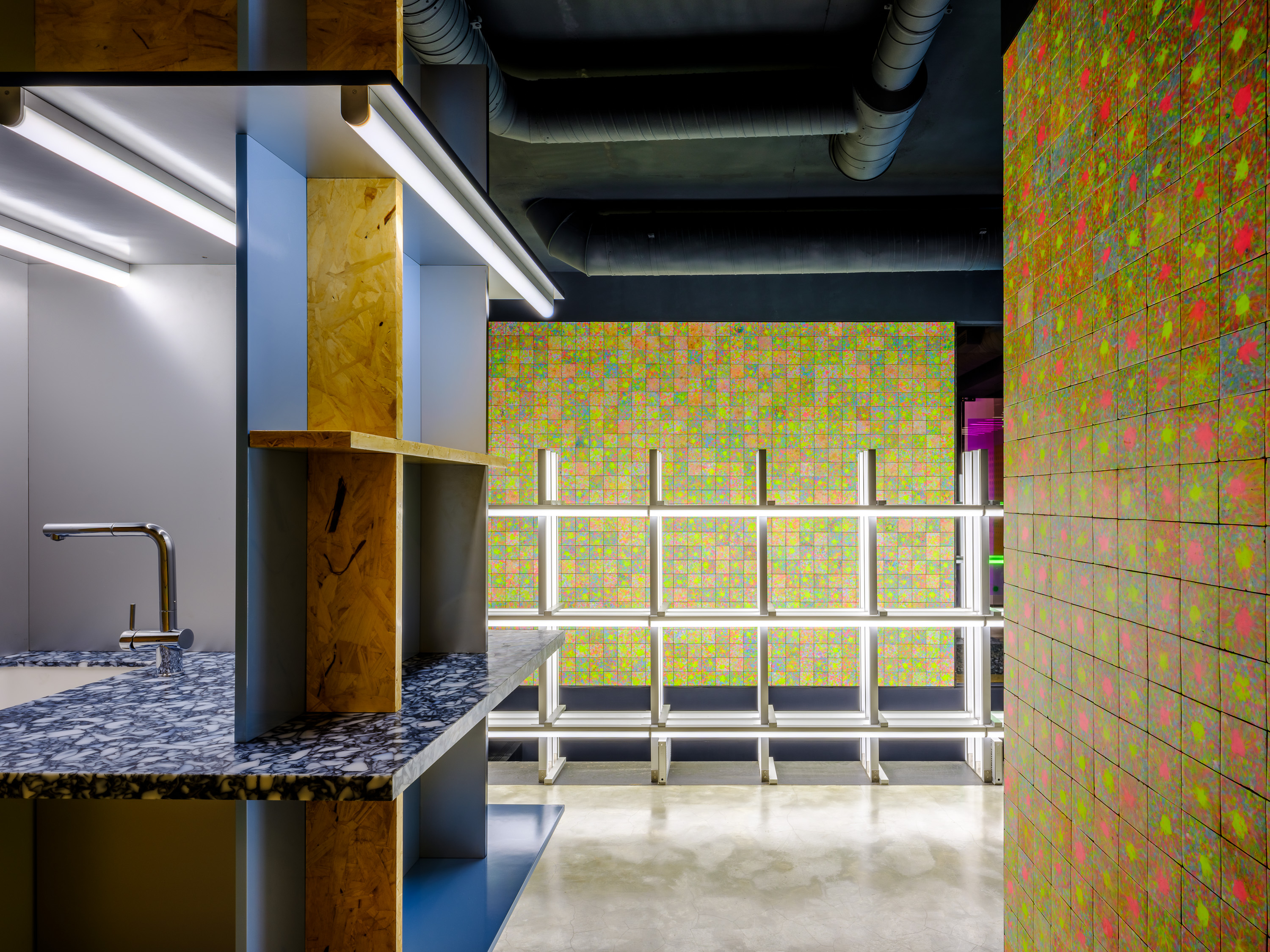
Image Credit: Paolo Carvalho
Design plays a big part in the company’s development, and as the team suggests, a surface that openly expresses its origins has the potential to change perception far more effectively than a datasheet ever could. And, their ambitions have clearly grown, with an abundance of new products in the offering that widens the spectrum of colours, patterns and thicknesses available to designers. But these developments haven’t appeared from thin air, and in fact, listening to their client base has played a vital role, as cofounder and creative director Rosalie McMillan explains:
“Our transition from Smile Plastics to Smile Materials reflects something simple: the industry asked for more from us, and we listened. Over the past year, we’ve moved beyond just offering recycled plastics to introduce recycled denim materials, and in the New Year we’ll be launching Smile Minerals – an entirely new category for us. These developments come directly from conversations with designers, manufacturers, and fabricators who told us they needed circular materials with broader applications, more personality, and more room for guided customisation.”
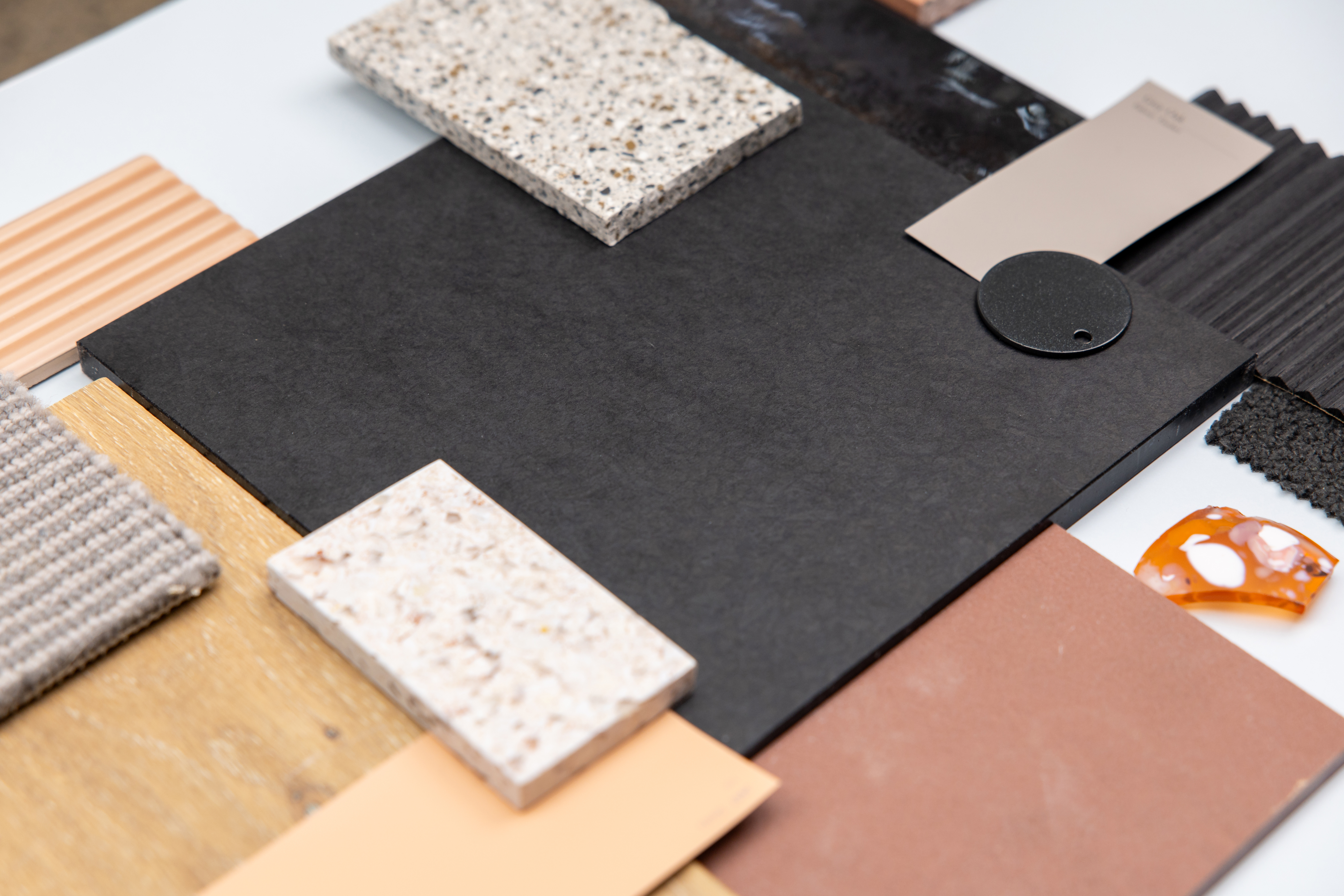
Moving forward their products will be split into three distinct material families: Smile Plastics, Smile Fibres and Smile Minerals. The original recycled-plastic panels remain at the heart of the operation, but Smile Fibres introduces a new language altogether. Made from textile and fibre waste, the launch collection begins with Blue Denim and Loom, two expressive, bioresin-bonded surfaces created in collaboration with a specialist manufacturing partner. Blue Denim repurposes post-consumer jeans, capitalising on the inherent durability and long lifespan of the original textile. Loom, made from shredded cotton offcuts and colourful trimmings, is light and speckled, reminiscent of paper pulp or confetti. The newest collection, Smile Minerals, is inspired by the natural world – more information will be revealed when this is launched in 2026.
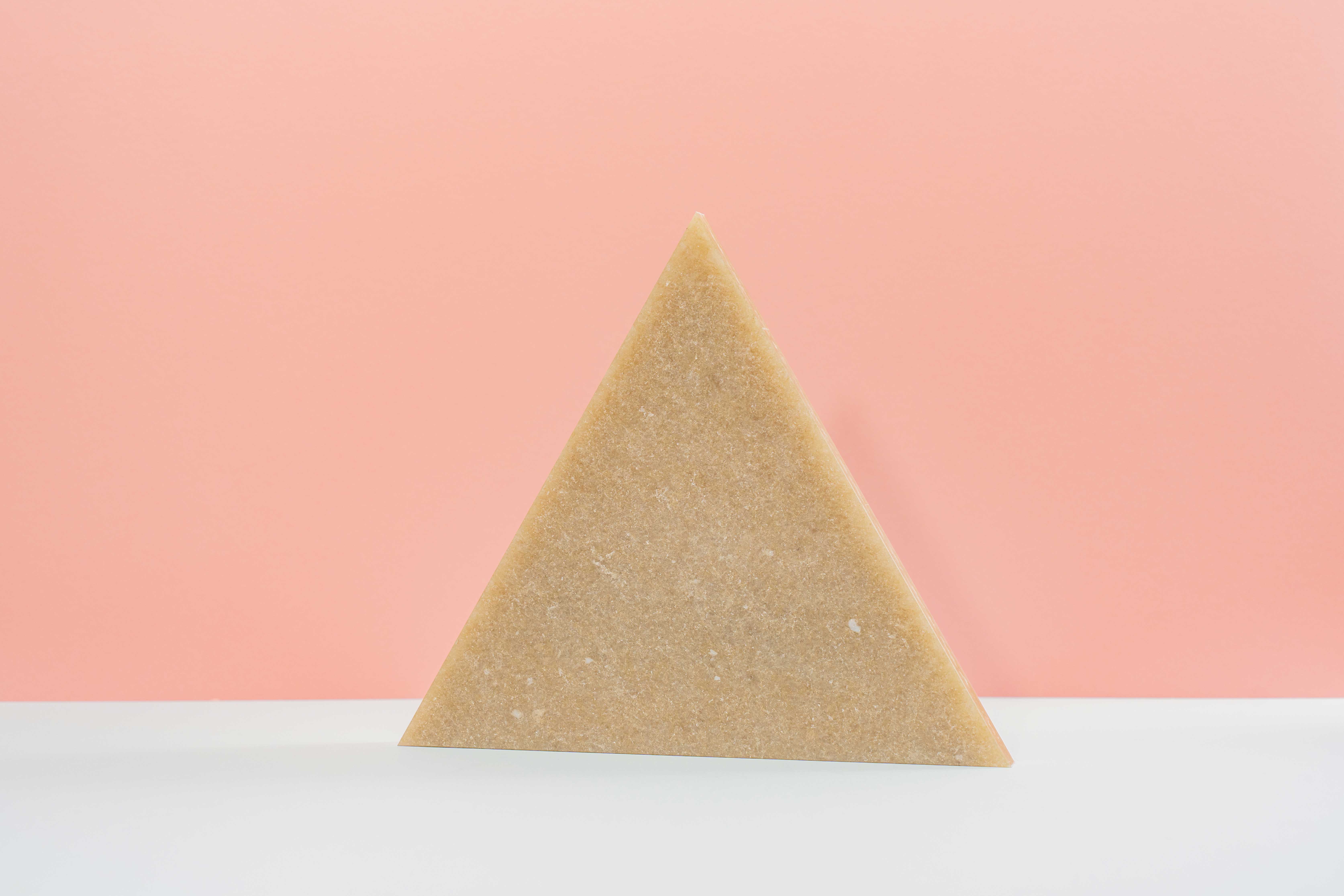
These new developments further underline that what continues to make Smile Material so compelling to specifiers is not only its character and workability, but its promise of genuine circularity. Rosalie emphasises this point, “As we grow our offering, we’re committed to keeping the same principles we began with: transparency, curiosity, and the belief that circular solutions should be both practical and inspiring. Our aim isn’t just to supply materials at scale; it’s to help shape where the sector goes next.”
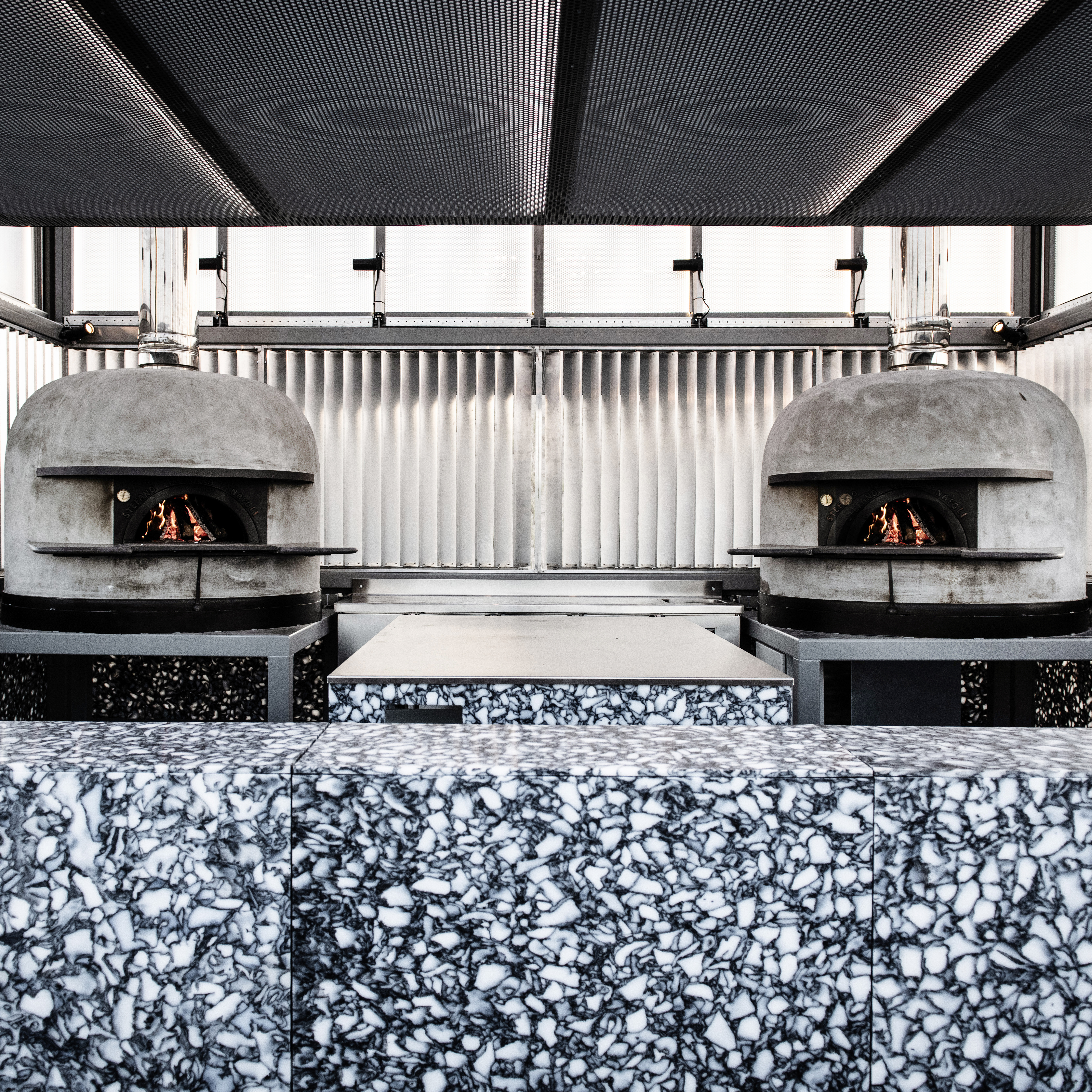
Image Credit: Jurgen Jacob Lodder
As true as ever, every Smile panel is made from recycled materials and designed with both aesthetics and durability in mind. What’s more, the factory operates with bespoke, low-energy equipment that uses only a fraction of the power associated with traditional plastics processing. Today, clients can even send end-of-life panels back to Swansea, cleaned of fixings and adhesives, for reprocessing through the company’s buy-back scheme.
And as the materials palette widens, the ambition remains the same: to challenge the idea of waste entirely and to build material systems designed not for a single life, but for infinite ones.
Solve the model and plastic becomes a resource, not a problem.