

Surface Perspectives: Tim Matthews, Reutilize

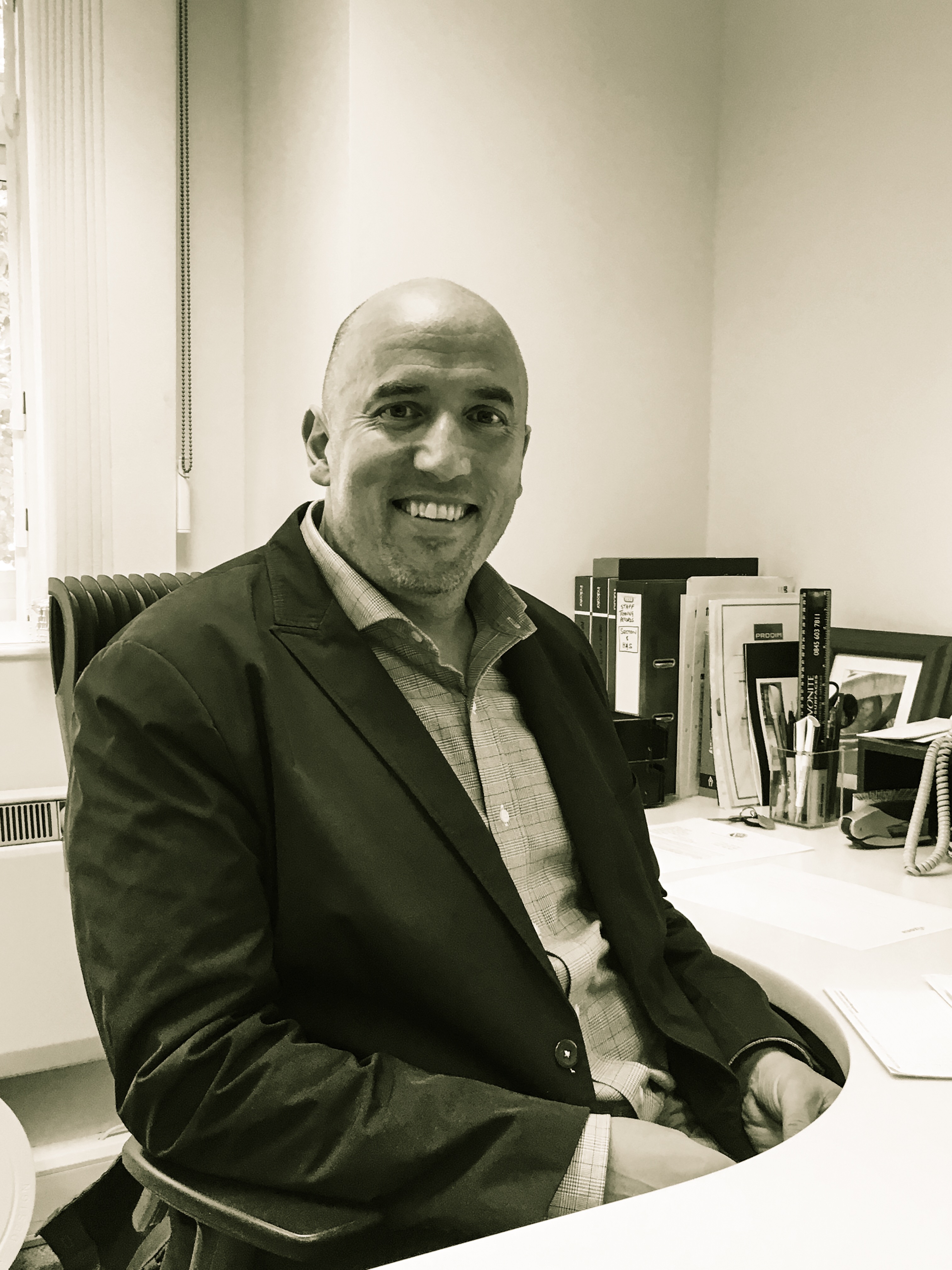
Tim Matthews works across two connected sides of the stone and surfaces industry. As founder of Reutilize, he has developed a platform designed to keep surplus materials in circulation by connecting businesses with usable offcuts, part sheets, samples and discontinued stock. As Managing Director of Counter Production, he is also involved directly in fabrication, where the practical realities of sourcing, processing and using material provide a different perspective on waste and resource efficiency. Together, the two businesses have given Matthews a close view of the material that moves through the industry, from the workshop floor to its potential second life. In this Surface Perspectives, he discusses how his background in technology and fabrication shaped the thinking behind Reutilize, why the industry needs to look differently at surplus material, and how longevity, skills, safety and practical reuse could influence the future of stone and surfaces.
What does a typical day look like for you?
No two days are exactly the same, because I split my time between Reutilize and my role as Managing Director of Counter Production.
With Reutilize, the day often begins by checking that customer orders have gone through smoothly, reviewing newly listed products and seeing whether any new businesses have registered and added their details to the platform. I am always looking at the quality and variety of material becoming available, and at how we can make it easier for companies to catalogue, list and sell resources that might otherwise sit unused.
I also spend time speaking to people through LinkedIn. It is a useful way of finding businesses, designers and architects who are thinking seriously about sustainability and material use. If there is a genuine fit, I will connect, start a conversation and explain what Reutilize is trying to achieve.
At Counter Production, my day starts with our production meeting. We review what was completed the day before, look at the work scheduled for the next few days and deal with the practical challenges of running a fabrication business. Being involved in production every day means I see firsthand both the value of good material and the amount that can be wasted if there is no practical route for it to be reused.
How integral are materials/surfaces to your day-to-day?
Materials and surfaces are central to almost everything I do. Reutilize exists to help companies keep valuable material in circulation, rather than allowing it to become a storage problem, an unnecessary cost or ultimately waste.
In the stone industry, even the most efficient suppliers and fabricators will have offcuts, discontinued ranges, part sheets, samples and occasionally imperfect material. Much of it remains perfectly usable, but it can be difficult to store and costly to manage. Once space becomes tight, crushing or disposal can feel like the only option.
A large part of my work is talking to potential sellers, understanding how their businesses operate and helping them identify material that can be listed properly. At the other end, I speak to designers and architects about the opportunity to start with what already exists. That is a different way of designing: not seeing reclaimed or surplus material as a compromise, but as a resource with its own character, availability and value.
What are the biggest lessons you have taken forward from your original training?
My degree was in Geographical Information Systems and Computer Science, so perhaps it was inevitable that I would eventually do something that brought data, mapping and digital connectivity together. I have been building websites for as long as I can remember, and I have always been interested in how technology can connect people, information and opportunities.
GIS is fundamentally about making information visible and useful. In a way, Reutilize applies that same principle to materials: showing people what is available, where it is and how it could be put to use.
But the more important education came from my family. I grew up in a household where nothing was wasted. We did not have a great deal of money, so things were repaired, clothes were passed down and, if I wanted to ride my bike, I learned how to fix it myself.
That mindset has stayed with me. I believe things should last, be looked after and, when their original purpose has ended, be given another use. My wife would probably confirm that I have a habit of keeping things that are “too good to throw away” until they find their next purpose. That is not a marketing line; it is genuinely how I live. It is also the thinking that led me to establish Reutilize.
Which project/s are you most proud of being involved with and why?
I am proud of a mixture of large and small wins, particularly the moments when a business or designer sees that reuse is not simply the environmentally responsible option, but also the sensible commercial one.
One example was working with a leading supplier to move its sample production to repurposed material. It was a straightforward change, but it made complete sense: samples do not always need to begin with brand-new material when perfectly usable surfaces already exist within the supply chain.
I am also encouraged whenever I speak to designers who had not realised that this resource was available to them. Once they see the range of material that exists, they can begin to design around it rather than specifying first and considering waste later.
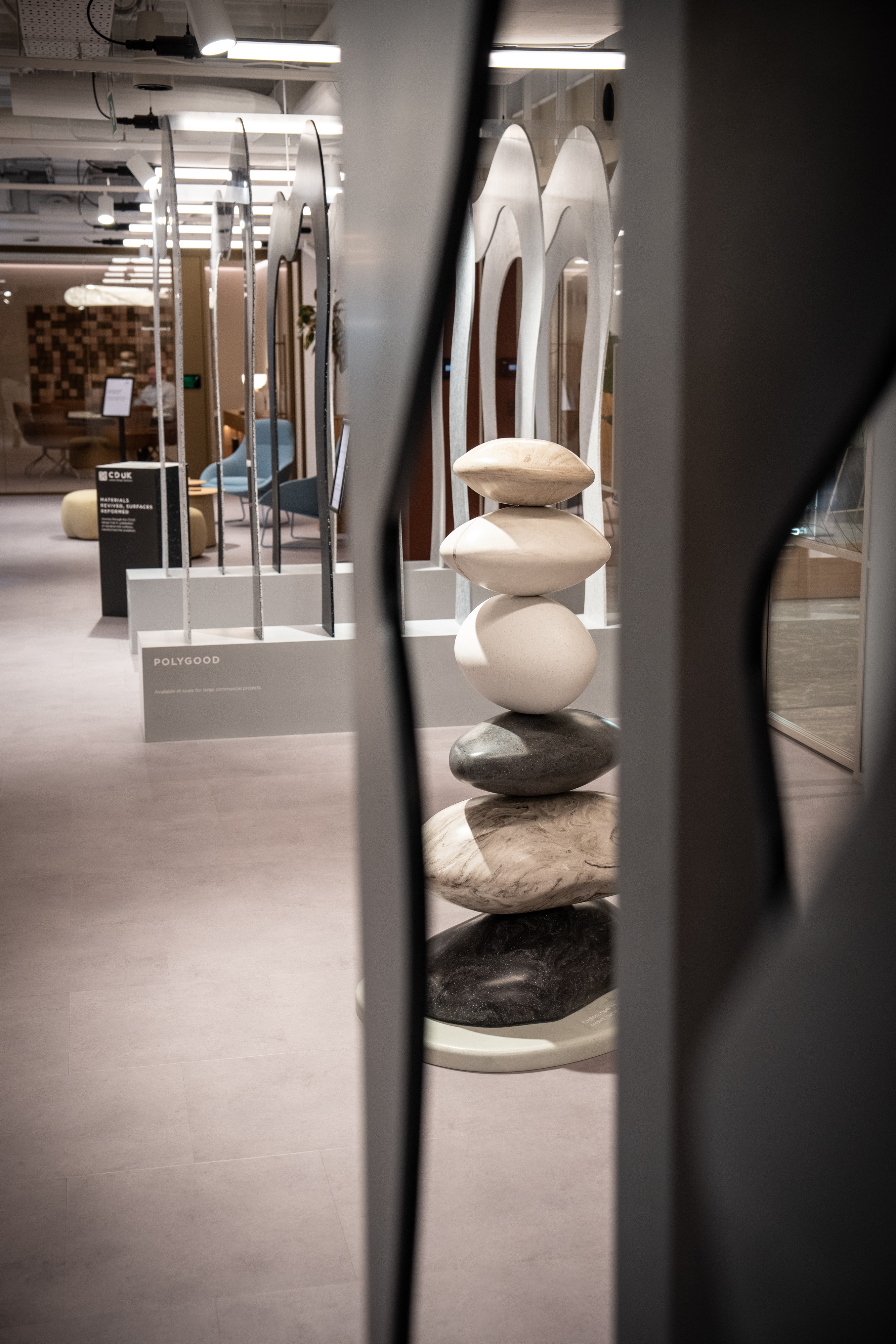
That has the potential to change the conversation around materials. We recently supported CDUK and their Vita Nova take-back initiative by producing a sculpture for London Design Week 2026. It highlighted the use of repurposed materials, where all the parts were made using material purchased from Reutilize and sourced from Vita Nova. Lots of designers saw the piece and were positive about the material source.
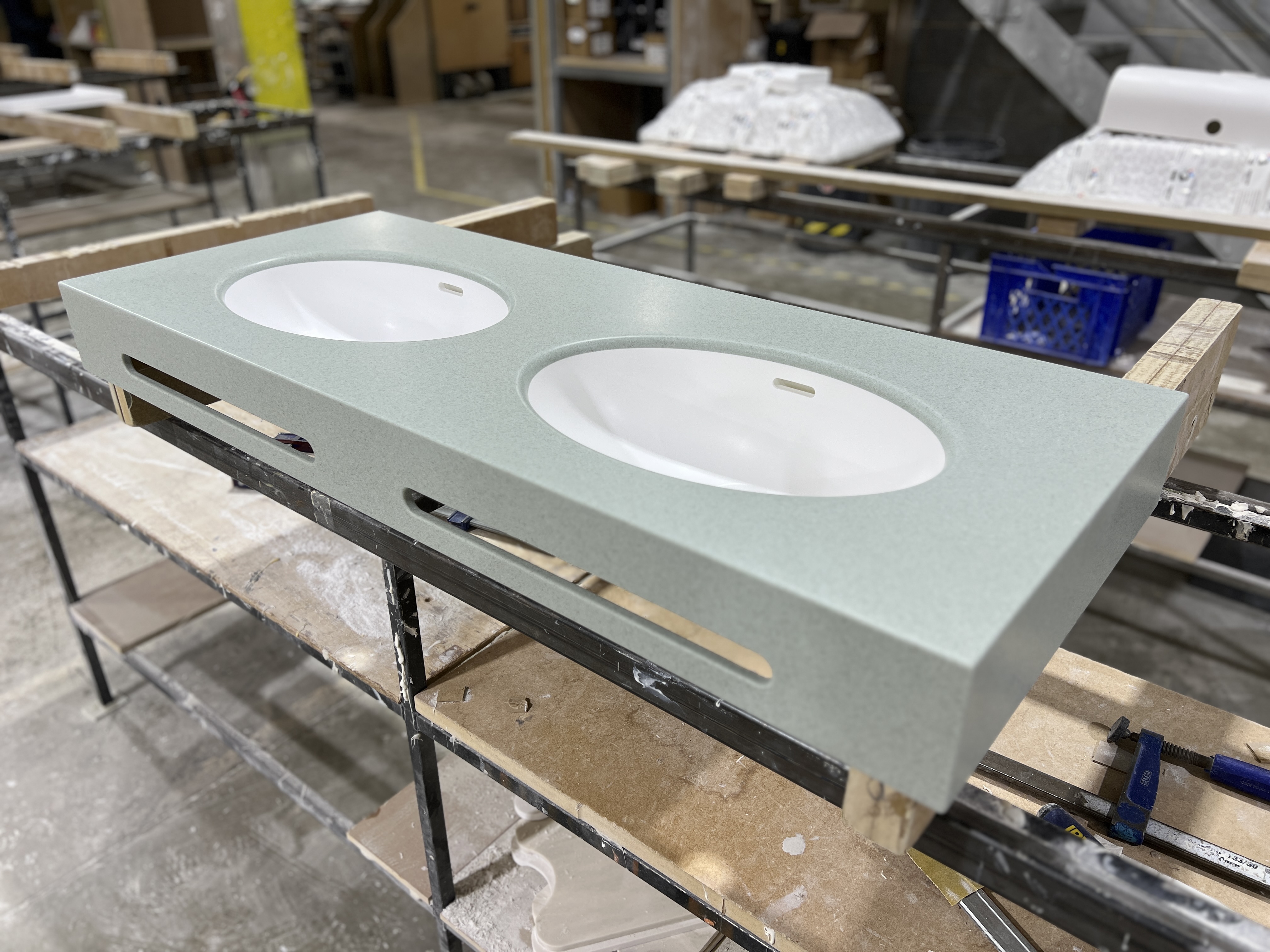
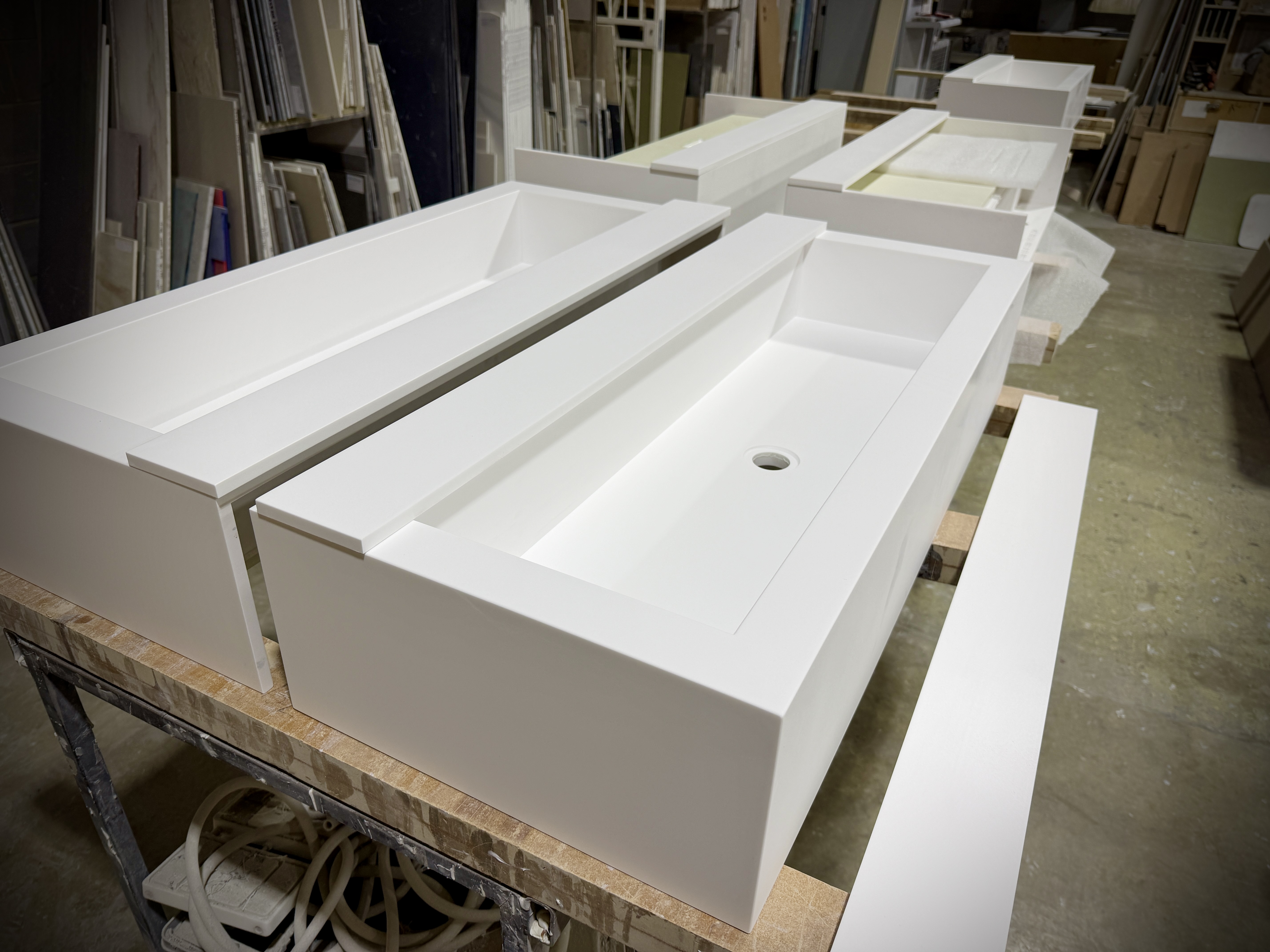
Another project I am particularly proud of is the production of repurposed wash troughs for McDonald’s restaurants across the UK. By combining technology with scale, Counter Production has been able to source material from a range of locations and manufacture products that, in most cases, contain 100% repurposed material. Material that may otherwise have been discarded is being put back into service in a durable, practical product. Reutilize gives us an additional route to find, recover and use that material.
What do you feel are the main challenges facing the stone and surfaces industry today?
The most pressing challenge is the shortage of new people entering the trade. Stone and surface fabrication, installation and finishing all rely on skilled people, but it is becoming increasingly difficult to attract and train the next generation.
That shortage affects quality, capacity and cost. There needs to be more work done to show young people that this is a skilled, technical and creative industry with meaningful career opportunities.
The industry also has an important responsibility to maintain high standards around health and safety, particularly in relation to respirable crystalline silica and silicosis. There is no room for poor practice. Fabricators, suppliers, trade bodies and training providers all need to work together to ensure that best practice is understood, adopted and enforced consistently.
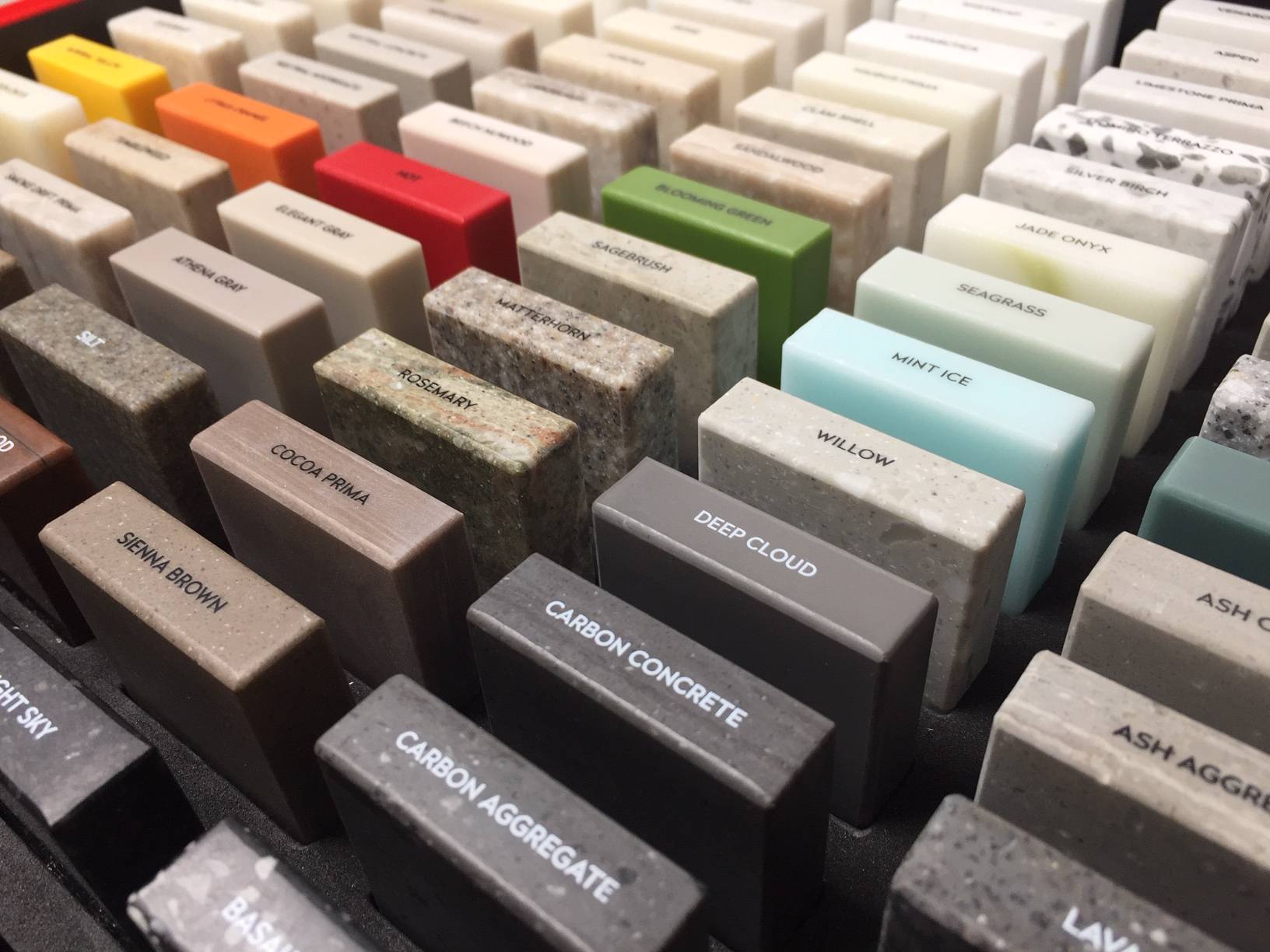
Alongside those challenges is the need to become more resource-efficient. We need better ways to keep usable stone, porcelain, solid surface and other materials in circulation, rather than treating them as waste simply because they no longer fit one particular job.
In your opinion, what are the positives of using stone in the built environment?
Stone has enormous strengths as a building material: it is durable, versatile and often capable of lasting for decades or centuries. If we are going to quarry, process, transport and fabricate it, then we should be designing for the longest and best possible life.
Longevity matters. A material that stays in service for generations can be a far better choice than one that needs regular replacement. In that respect, stone is the opposite of the “fast fashion” approach that has become so damaging in other sectors.
The opportunity is to extend that thinking beyond the first installation. Offcuts, surplus pieces, discontinued stock and materials removed from previous projects can all have a further life. The industry already holds a huge resource in the material it has produced; we need to become much better at seeing, managing and using it.
How does sustainability shape your thinking and decision-making, and how do materials fit into this?
Sustainability is not a separate part of my work; it is the basis on which I try to make decisions in business and in life. It means asking whether we genuinely need something new, whether an existing material can do the job, and whether the choices we make today will create unnecessary problems for future generations.
For me, the circular economy has to be practical. Businesses need solutions that are commercially viable, easy to adopt and capable of working at scale. That is why Reutilize is focused on creating a straightforward route for surplus materials to be found, bought and used again.
We need to move away from a culture of consumption and towards one of stewardship: using less where possible, choosing durable materials, looking after what we have and finding a new purpose for resources when their first use is over.