

Surface Perspectives: Zoe Wilson, Stone Carver

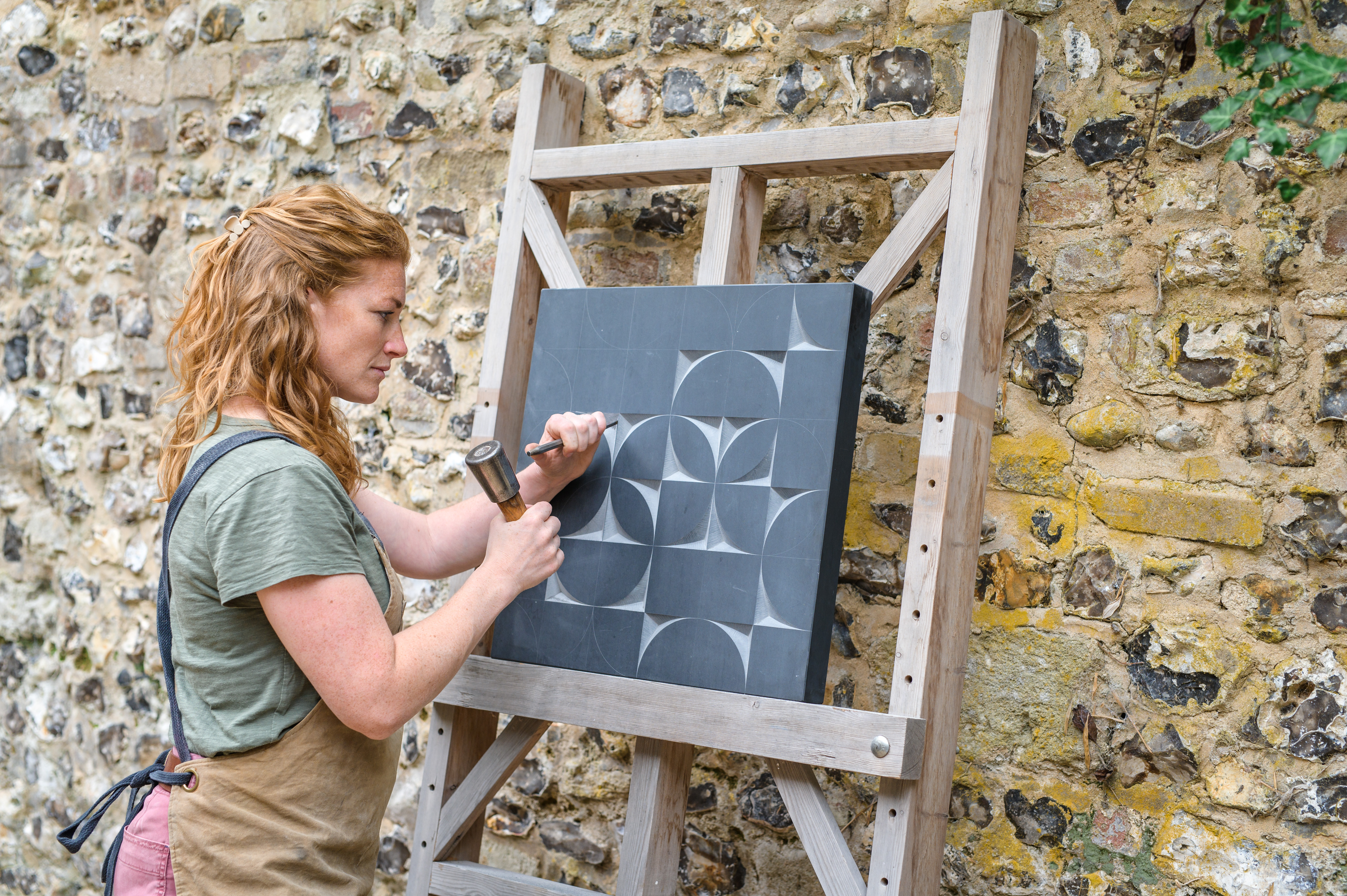
Few people understand the relationship between material, craft and time quite like a stone sculptor. In this Insights piece, Zoë Wilson draws on her experience as a sculptor and historic stone carver to reflect on the enduring qualities of British stone, the importance of traditional craftsmanship and why working slowly with natural materials continues to offer valuable lessons for both contemporary design and the wider built environment.
What does a typical day look like for you?
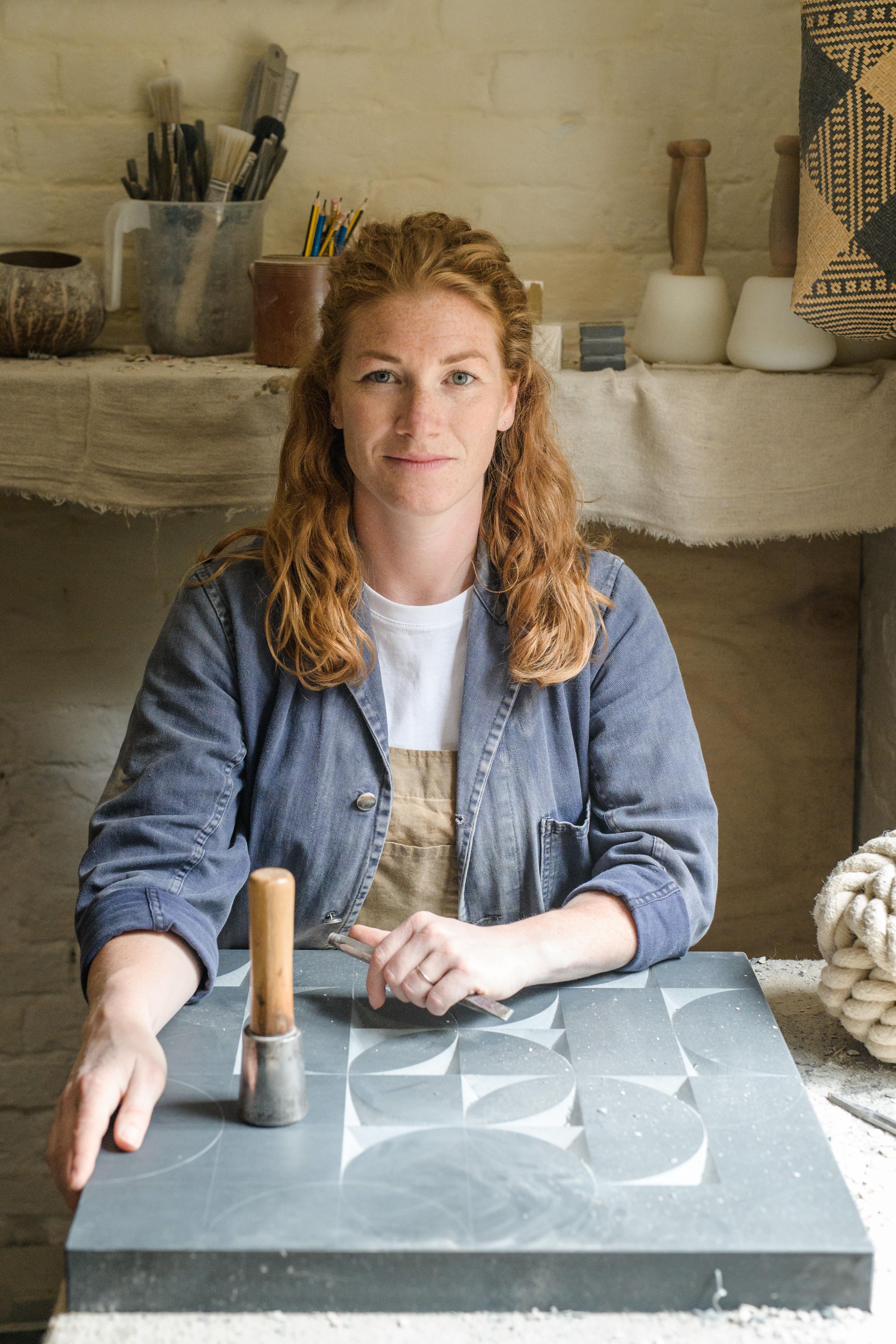
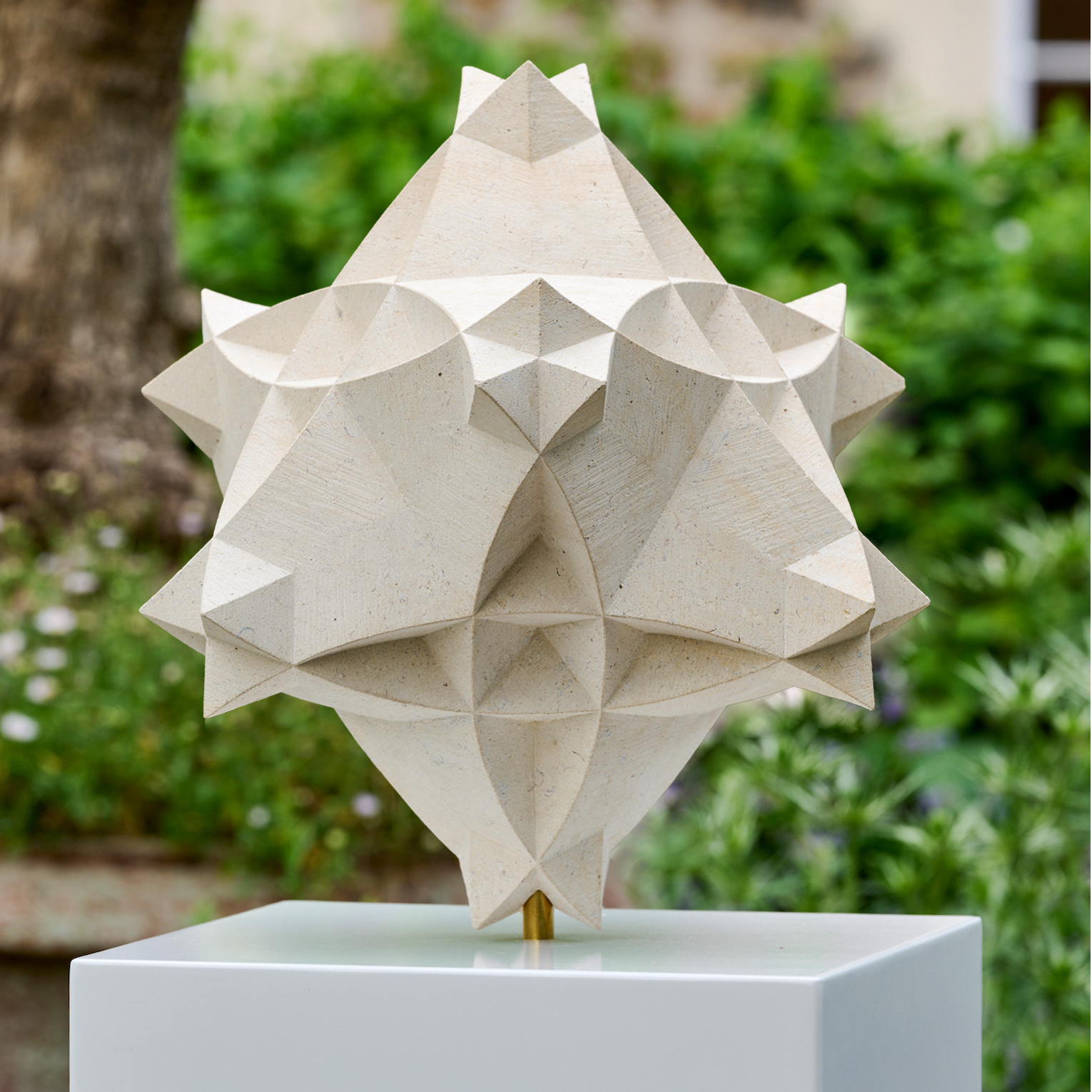
No two days are ever quite the same, which is one of the things I love about being a sculptor. If I’m in the studio, my day is usually spent carving by hand using a mallet and chisel. I work almost exclusively with British stone, and because each piece takes weeks or months to complete, much of my time is spent slowly developing intricate geometric patterns directly into the surface.
Alongside the making, there is the less visible side of running a creative business. I spend time drawing new designs, photographing work, talking to collectors, planning exhibitions, teaching stone carving workshops and sharing the process through social media. Research also plays a significant role in my practice. I am continually studying geometry, pattern and historic carving traditions to develop new ideas.
How integral are materials and surfaces to your day-to-day?
Materials are at the heart of everything I do. I spend most days handling stone, studying its character and responding to the individual qualities of each block before I begin carving.
Working with British stone holds a particular significance for me. There is something deeply meaningful about using materials that come from the landscapes I am part of. Each piece carries a sense of place, history and continuity, and I feel a strong connection to the generations of craftspeople who have worked with these same materials before me. It also allows me to support local quarries and celebrate the diversity of stone found across the UK.
Although my finished sculptures often appear highly precise, I never want the natural beauty of the stone to disappear. The geology, colour, fossil content and texture all influence the finished piece, and I often find that unexpected details emerge along the way, like lovely surprises that contribute to the final work without being planned.
I also spend a great deal of time talking about stone with collectors, architects, designers and students. I enjoy helping people understand that stone is far more than a construction material. It is a remarkable medium with an extraordinary history, permanence and beauty that can connect people to both landscape and craftsmanship.
What are the biggest lessons you have taken forward from your original training?
My route into sculpture has been quite varied. I originally studied Fine Art, specialising in painting, before training as a stonemason, then as a letter carver, and later completing a First Class Diploma in Historic Stone Carving at the City & Guilds of London Art School.
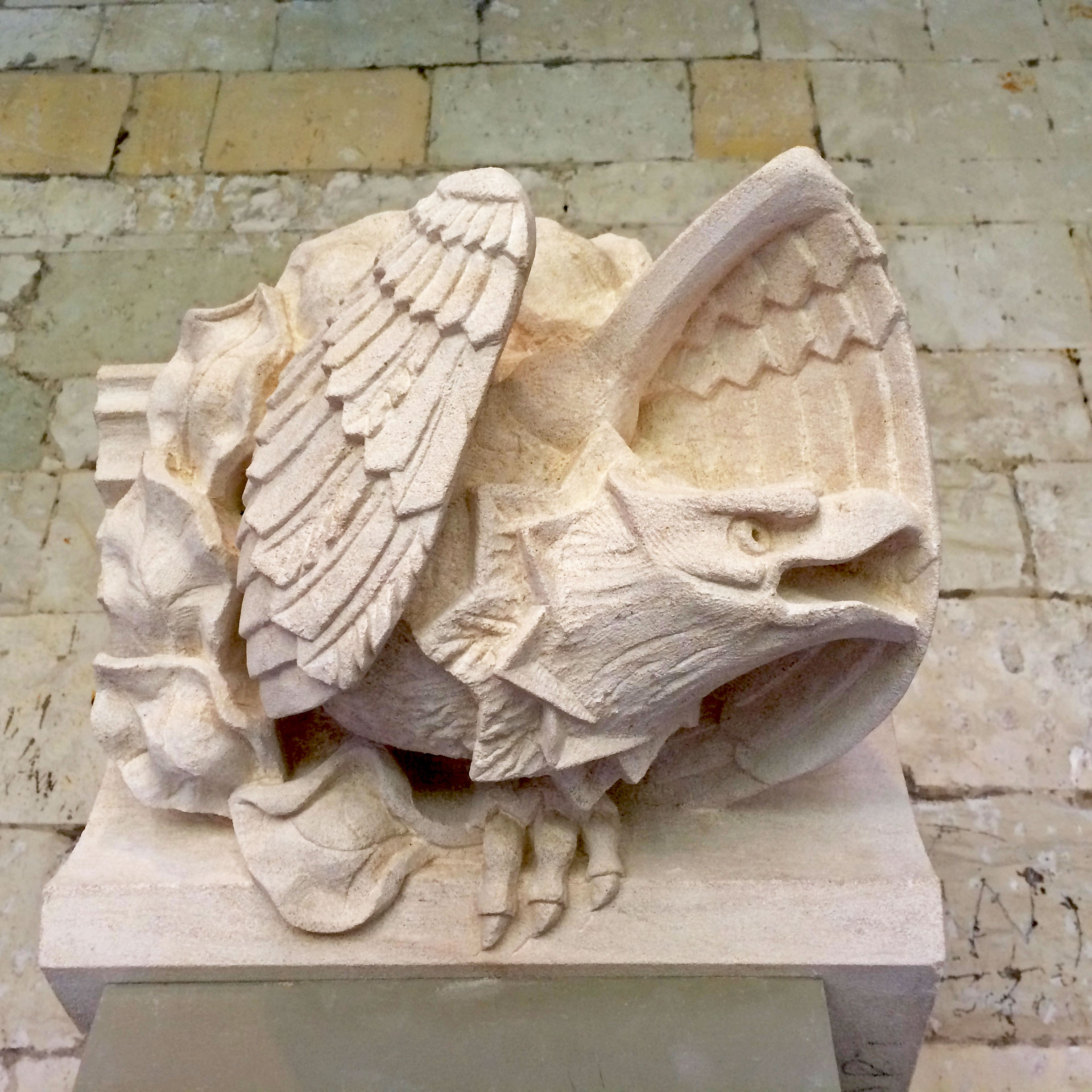
Each stage has shaped the way I work today. Fine Art taught me to think conceptually and to value composition, rhythm and visual balance. Stonemasonry gave me a deep respect for accuracy, materials and craftsmanship, lettercarving taught me chisel skills, while historic carving taught me patience and the importance of understanding traditional techniques before pushing them in new directions.
One of the greatest lessons was learning that precision and creativity are not opposites. Technical skill gives me the freedom to realise increasingly ambitious ideas.
Which projects are you most proud of being involved with and why?
There are several projects that have been particularly significant.
Working on the restoration of historic buildings, including the Houses of Parliament and St George’s Chapel, Windsor, gave me an enormous appreciation for the generations of craftspeople who have worked in stone before us. It was a privilege to contribute, even in a small way, to preserving that heritage.
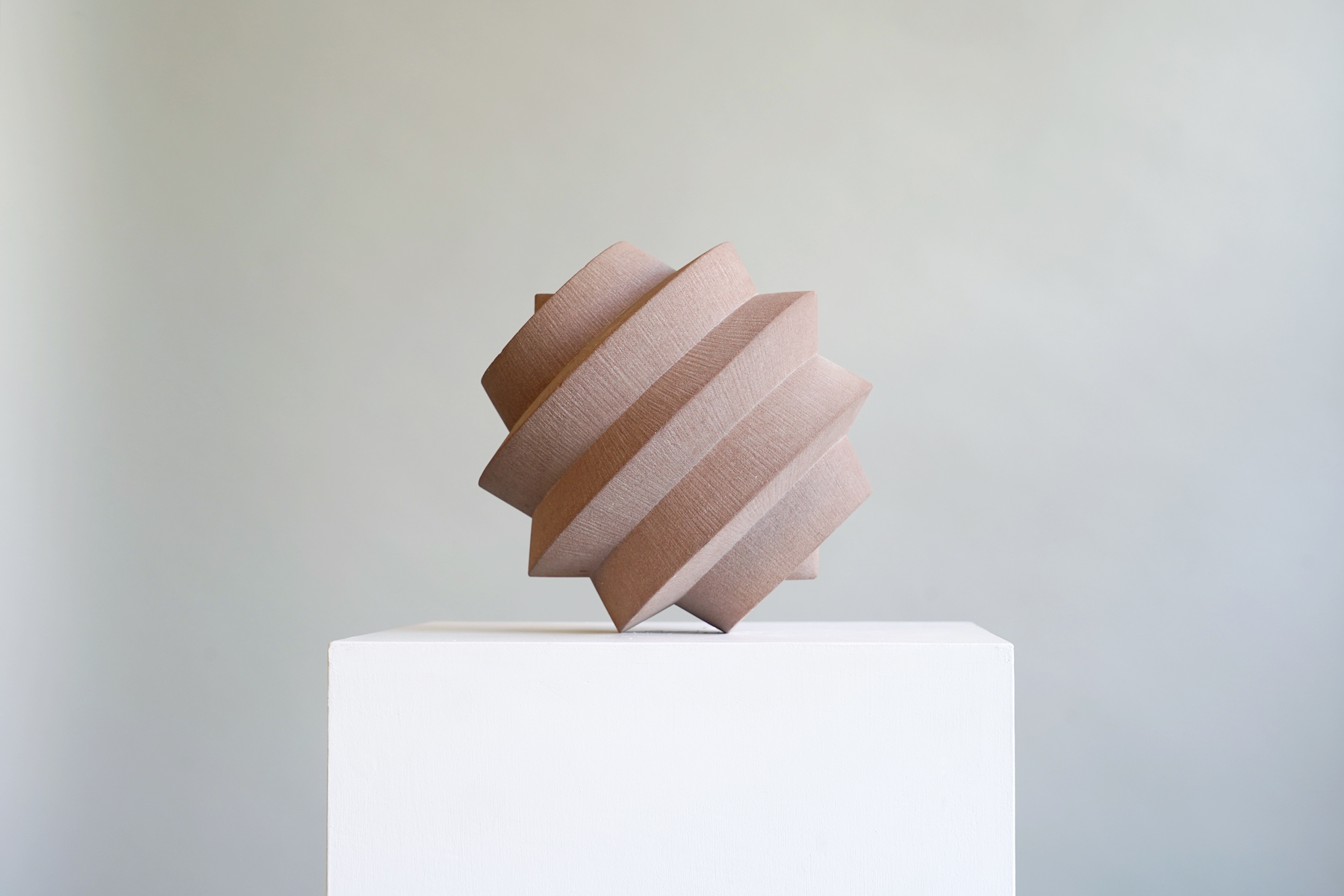
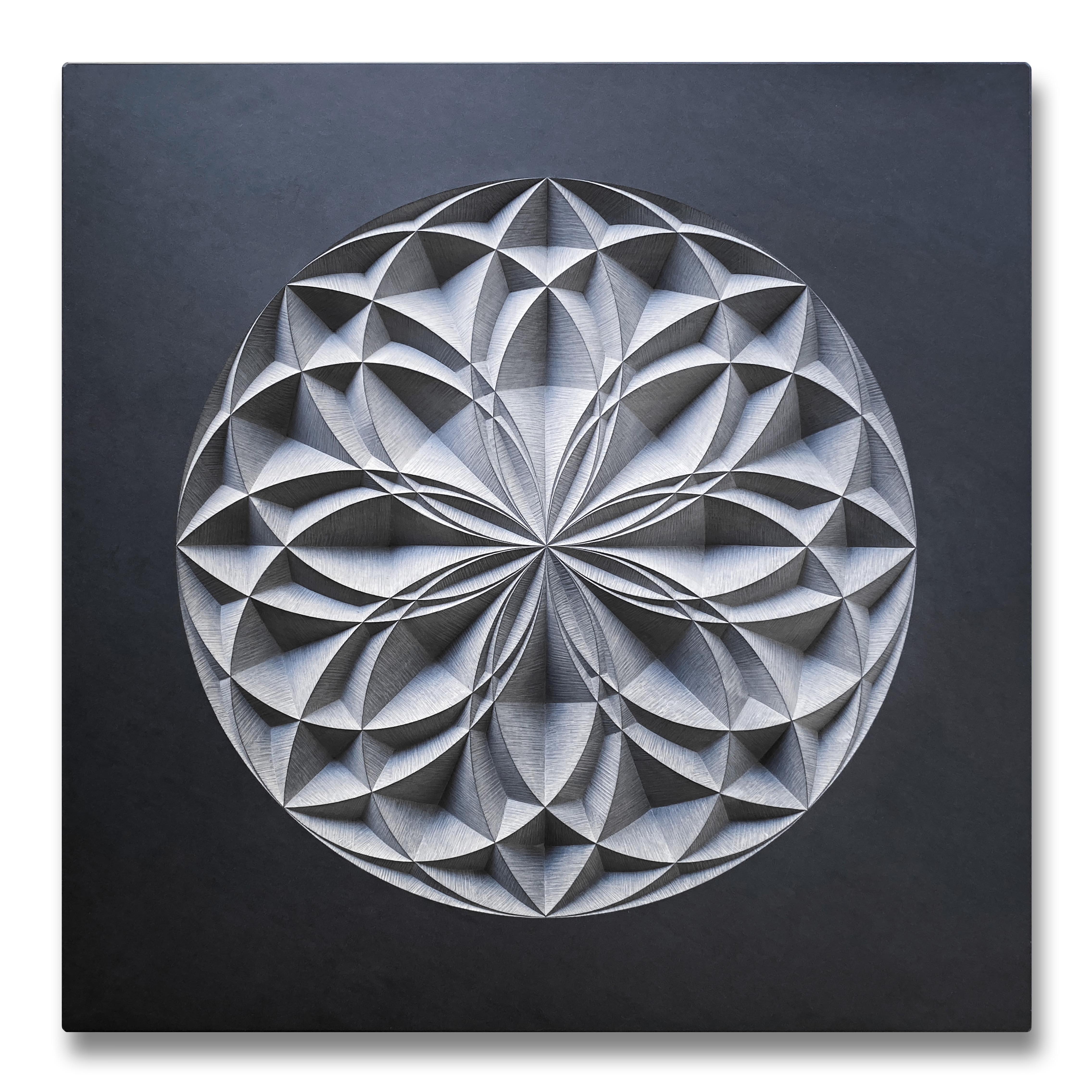
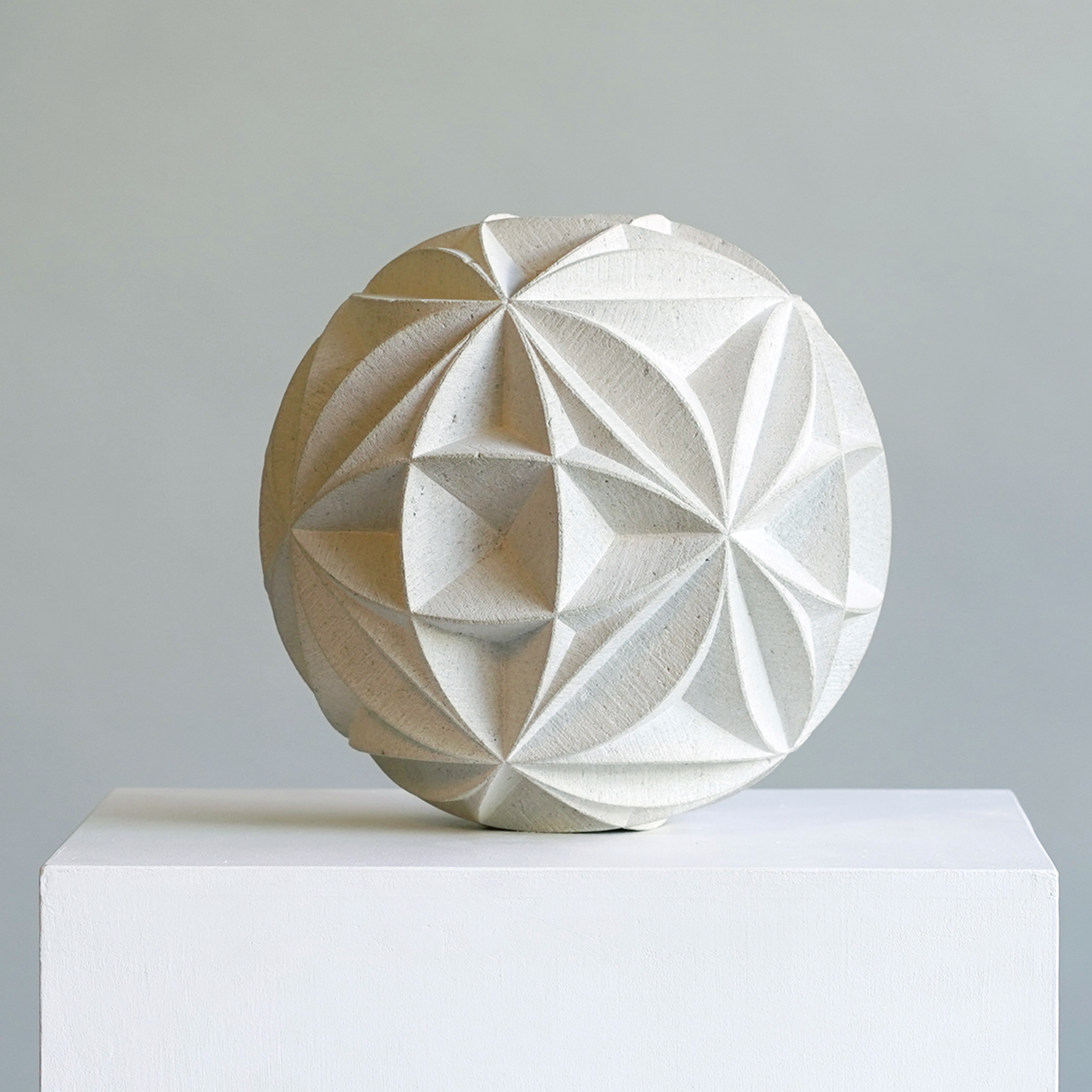
Within my own artistic practice, I am particularly proud of a sculpture called Orbis. It represents a significant step forward in my exploration of geometry, where the carved pattern and the form of the sculpture become inseparable. It feels like the culmination of many years of research while also opening the door to an entirely new direction for my work.
What do you feel are the main challenges facing the stone and surfaces industry today?
One of the biggest challenges is helping people recognise the long-term value of natural stone. Initial cost often dominates decision-making, yet stone can last for centuries with relatively little maintenance, making it one of the most enduring building materials available.
There is also an important conversation around skills. Traditional stone carving and stonemasonry require years of training, and it is vital that opportunities continue to exist for young craftspeople to enter the profession. Without investment in those skills, we risk losing knowledge that has been passed down over generations.
Finally, I think there is an opportunity to broaden people’s perception of what stone can be. Alongside architecture and construction, there is enormous potential for contemporary artists and designers to continue pushing the material in exciting new directions.
In your opinion, what are the positives of using stone in the built environment?
Stone offers something very few modern materials can match. It combines durability, longevity and timeless beauty while ageing with dignity.
It also creates a strong connection to place. Every type of stone reflects the geology and history of the landscape from which it came, giving buildings a sense of identity that manufactured materials often cannot achieve. It is sympathetic to its surrounding environment and feels completely natural within it.
From a sensory perspective, stone brings warmth, texture and permanence. It encourages people to slow down and engage with a building through touch as well as sight. In an increasingly fast-moving world, I think that sense of permanence has become even more valuable.
How does sustainability shape your thinking and decision-making, and how do materials fit into this?
Sustainability is central to my practice. Since 2019, I have worked exclusively with British stone, reducing transportation while supporting local quarries and celebrating the incredible range of materials available within the UK.
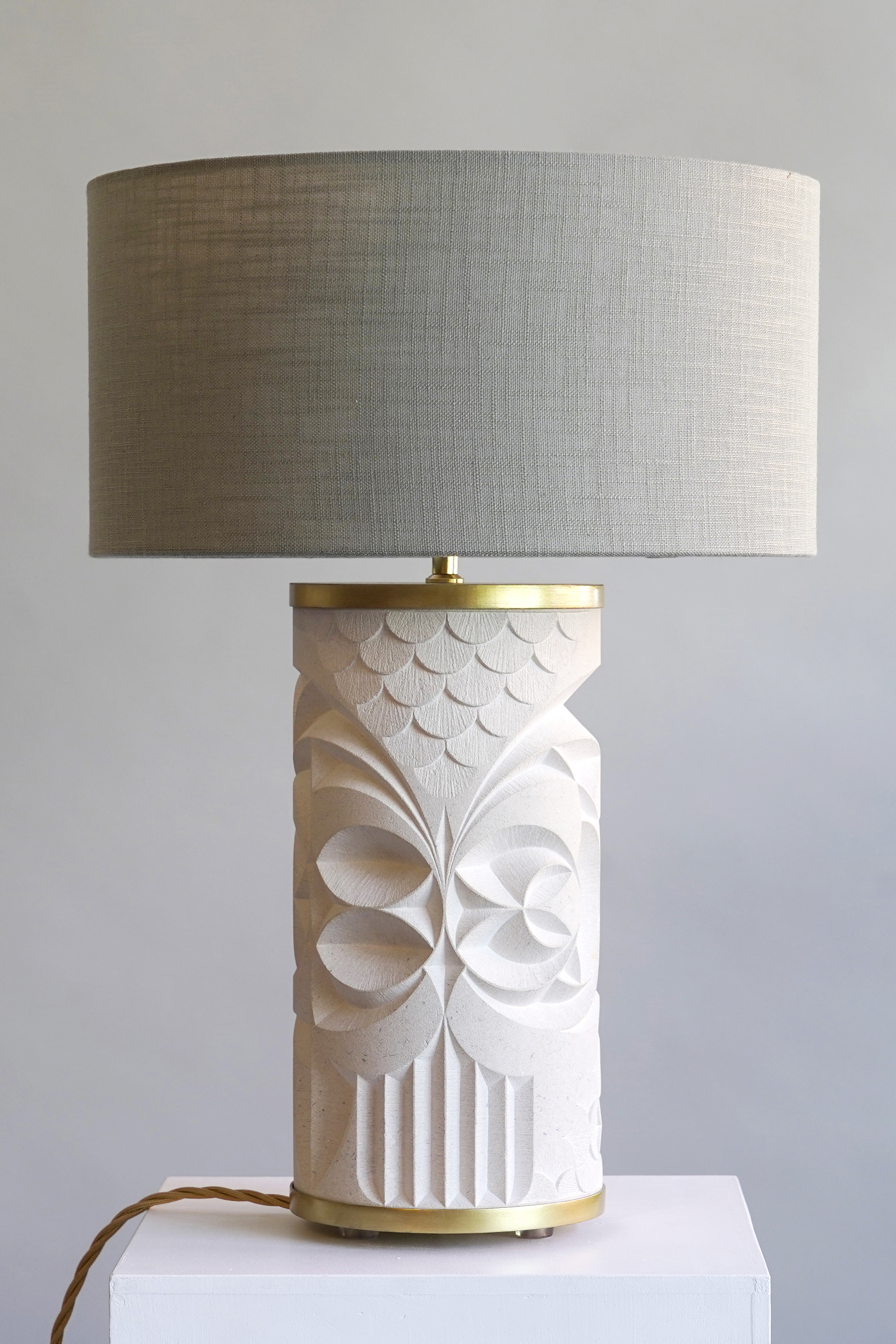
I also work almost entirely by hand, using only a mallet and chisel for my carving. This keeps energy consumption extremely low compared with many manufacturing processes and means each sculpture is created through time, skill and craftsmanship rather than heavy machinery. Working at this slower pace also means I spend a great deal of time on each individual piece of stone, rather than consuming large volumes of material, which naturally reduces waste and encourages a more considered use of resources.
Perhaps most importantly, I hope to make work that lasts. Stone has survived for thousands of years, and I like the idea that the sculptures I make today may still be appreciated by future generations. Creating objects with that longevity feels like one of the most sustainable approaches we can take.