

Surface Spot: Aluminium Petals Ripple Across Facade

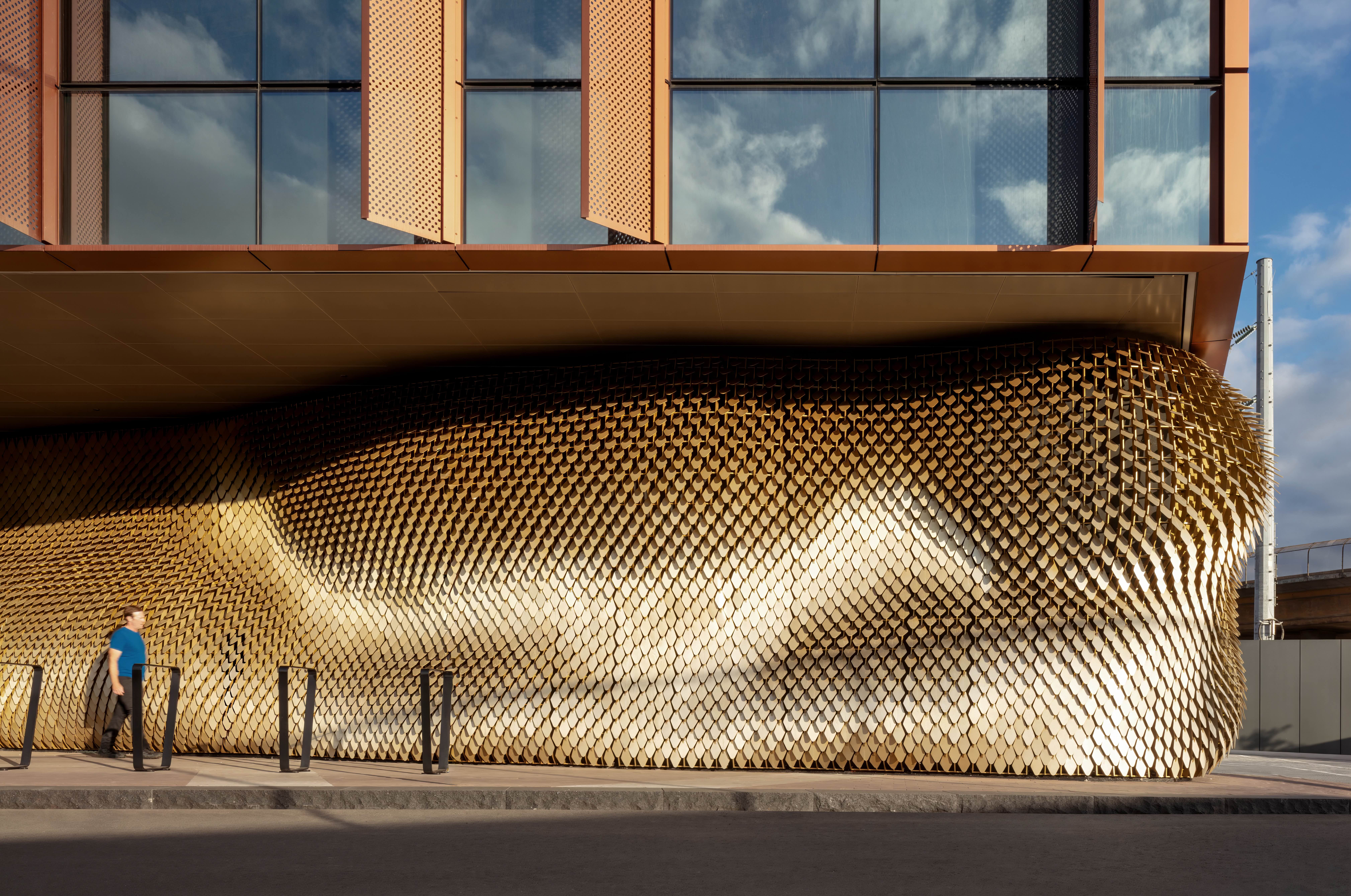
Giles Miller Studio has added a striking new layer of texture and movement to the streetscape of South San Francisco’s Spur innovation district with Fractalism, a large-scale aluminium installation wrapping the ground-floor corner of IQHQ’s 580 Dubuque development.
Stretching 17m long and rising 4.2m high, the work is composed of 4,634 individually formed aluminium “petals” mounted on a precisely engineered frame. Set against the clean, planar architecture of the 30,000m² life sciences building, the piece introduces a softer, more tactile counterpoint at street level.
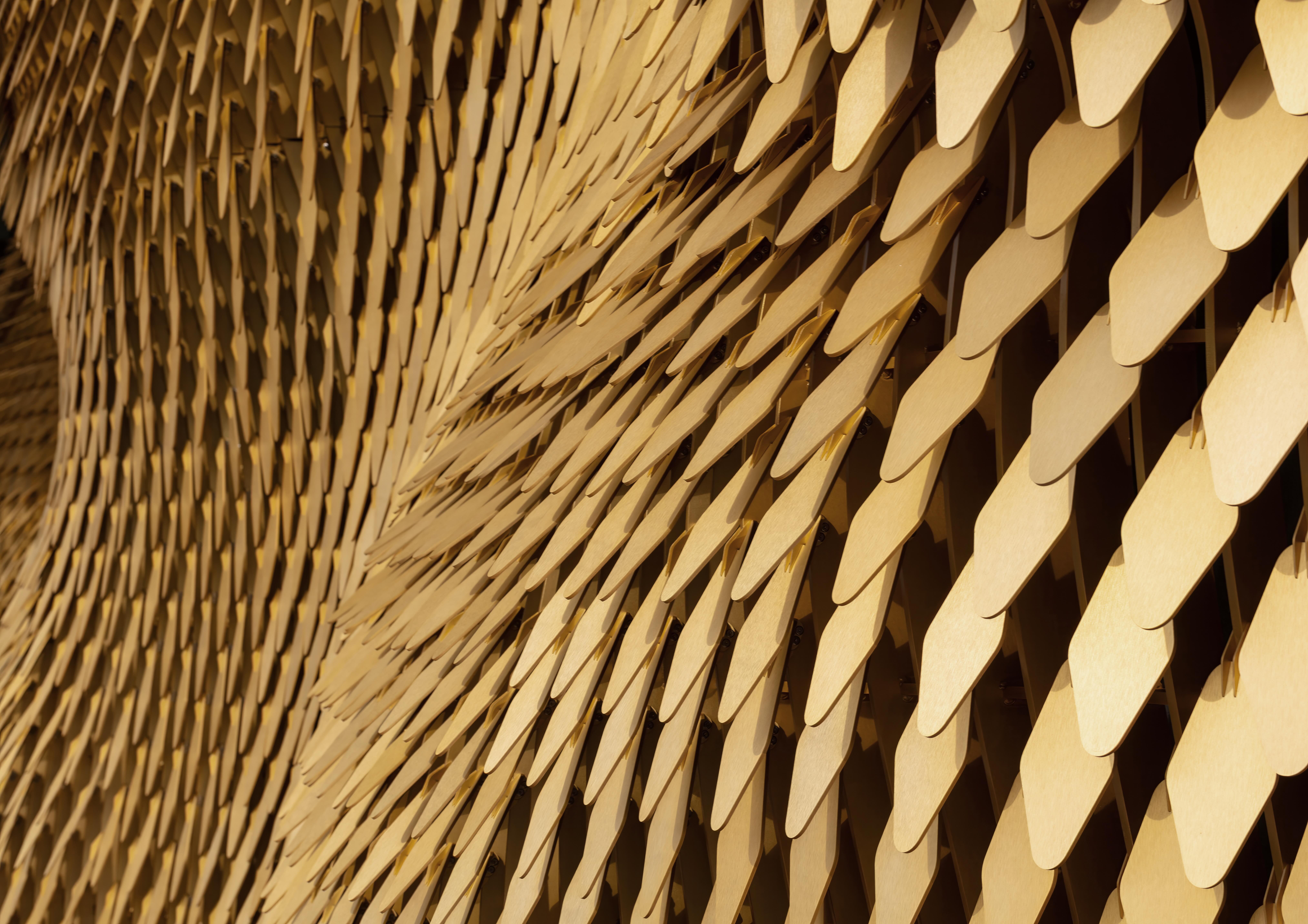
Rather than acting as a static façade feature, Fractalism is designed to respond to its busy urban setting. Giles Miller explains: “The piece is positioned next to a busy railway station, so the idea is that it responds to the movement of the commuters, offering a changing visual experience as the light shifts along its textured aluminium surface. The result is a type of undulating welcoming-in of visitors into this exciting new district.”
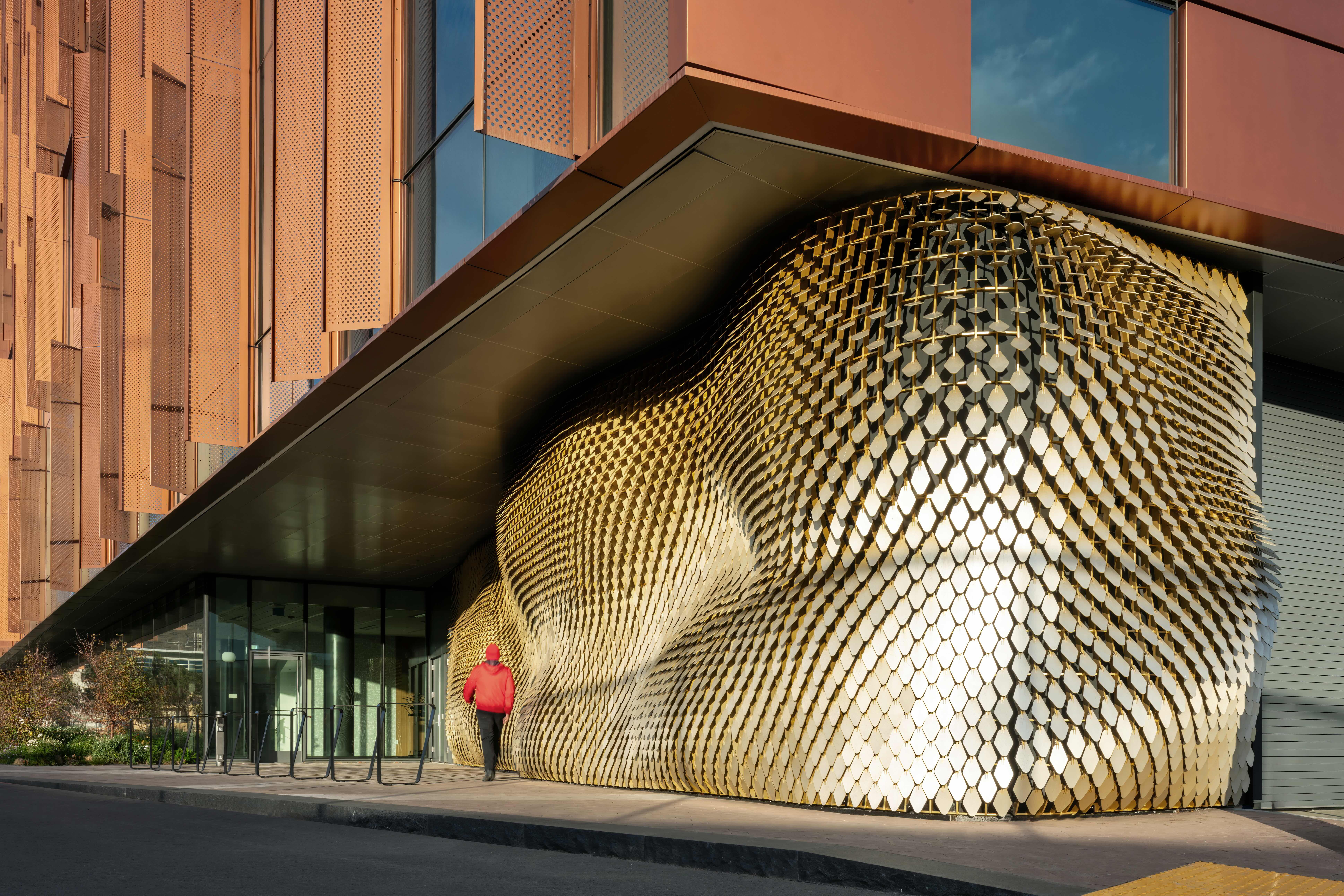
Materiality is central to that effect. Aluminium was selected for its combination of lightness and strength, its full recyclability, and its anodised finish, which subtly shifts tone as daylight moves across the surface. The petals’ gently varied geometries create a rippling, almost textile-like quality, giving the installation a sense of motion even when viewed from a standstill.
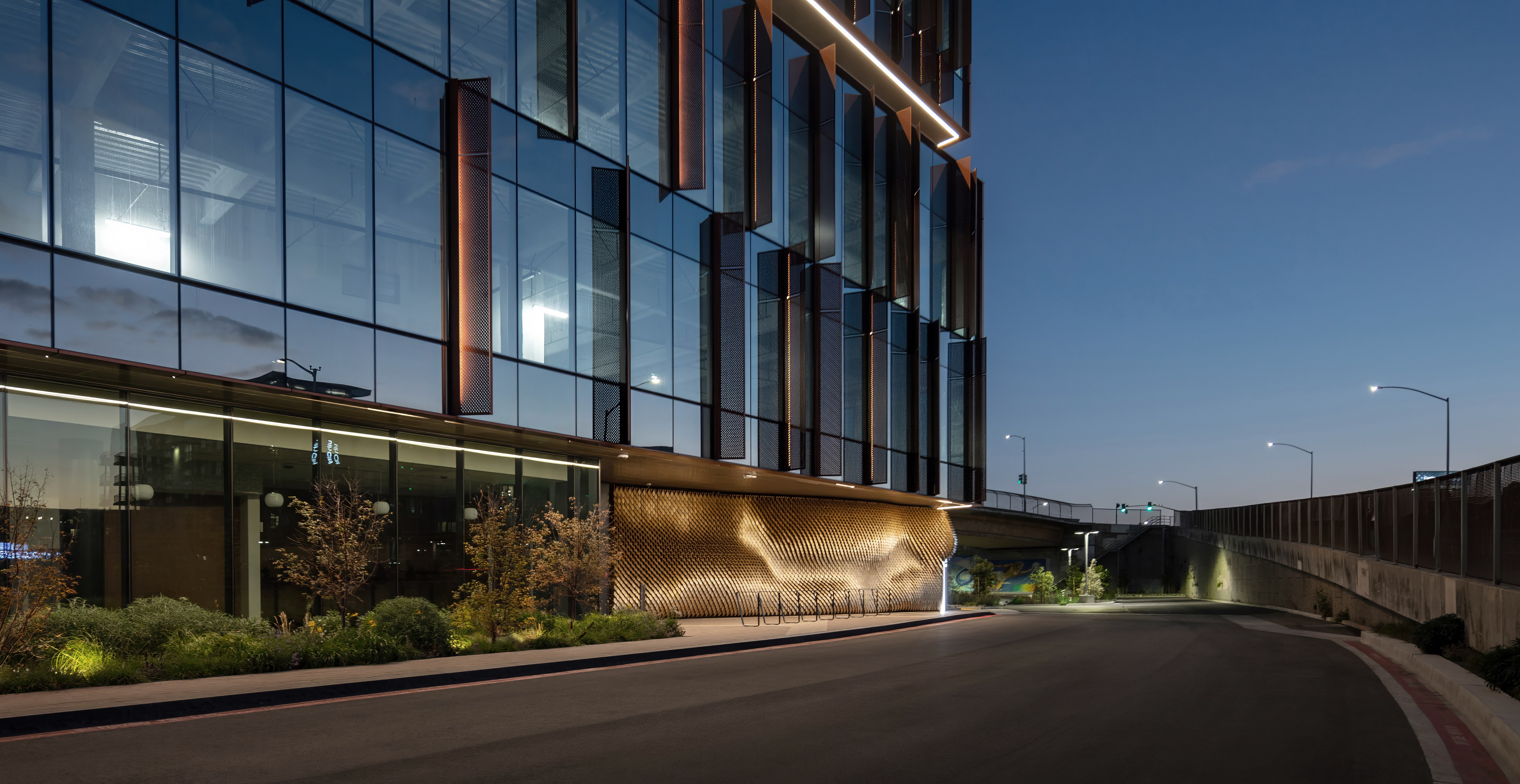
Behind the fluid appearance sits a carefully resolved technical structure. Each petal is individually positioned on an aluminium frame using laser-cut ribs to control orientation and alignment, ensuring a continuous flow across the full length of the mural. The studio worked with fabricator UAP to manufacture almost 5,000 elements, each reinforced with a discreet double cross-detail so they can withstand San Francisco’s coastal winds and the close proximity of daily foot traffic without losing their refined, lightweight character.
For Giles Miller Studio, known for blending digital design with craft-led fabrication, Fractalism continues a body of work that explores how light, form and material can reshape architectural edges into more expressive, people-focused spaces.