

Surface Spot: From Single Cell to Stone

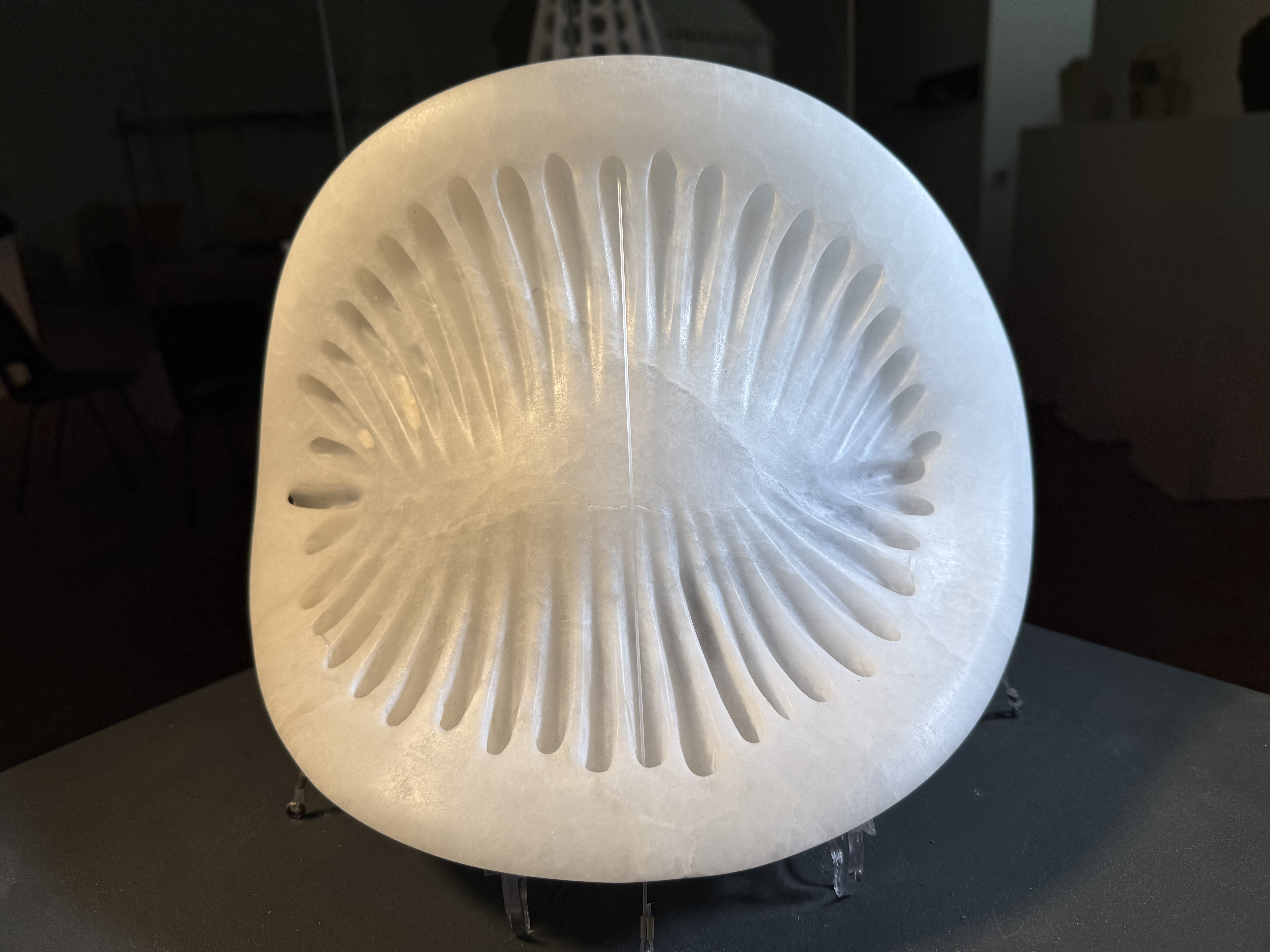
Stone mason Roger Stephens has turned a potential nemesis into his muse for a series of sculptures produced for the One Island, Many Visions exhibition at the Portland Sculpture & Quarry Trust in Dorset earlier this year.
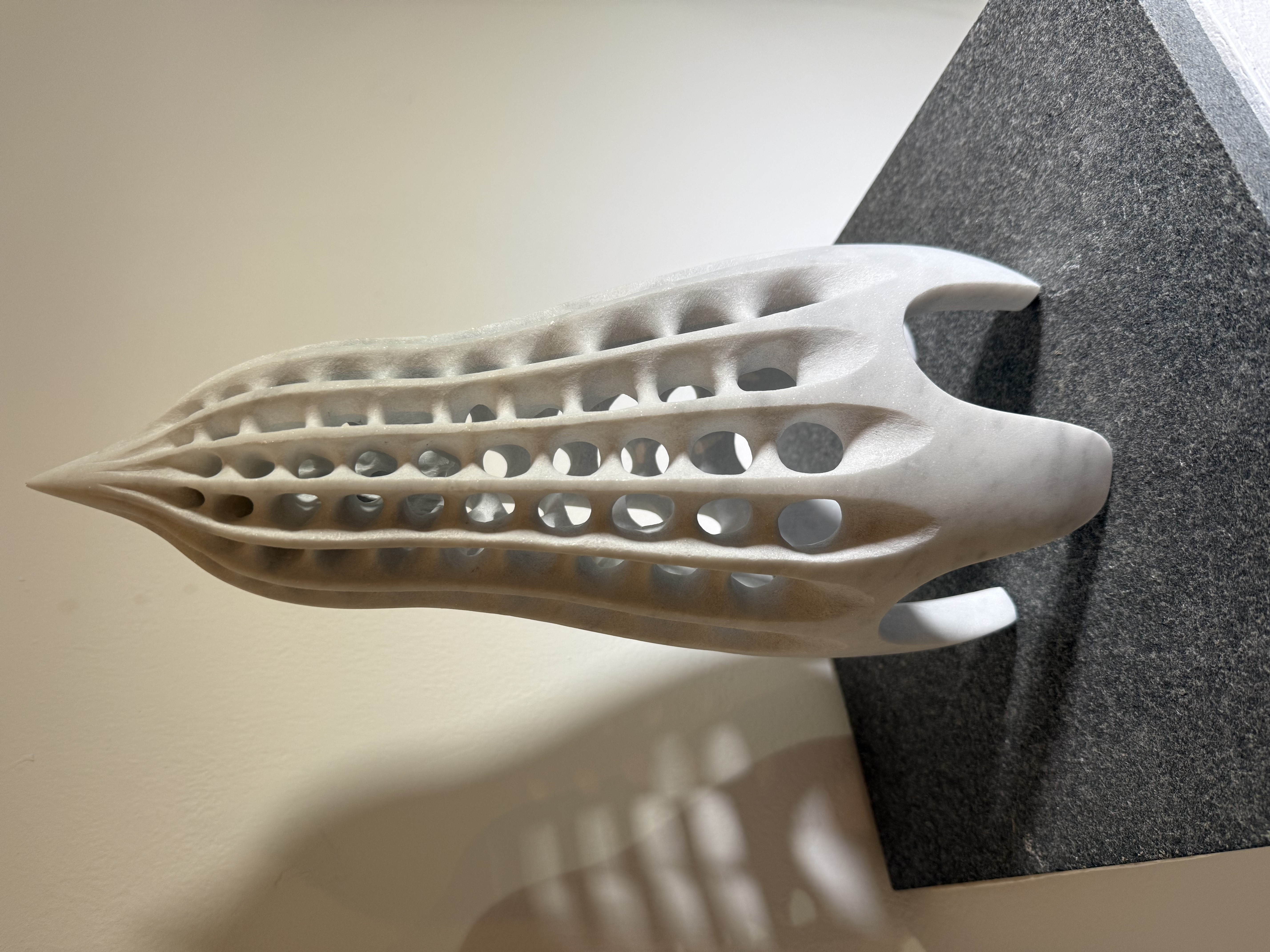
Lamprocyclas Maritalis
The milky white, marble structures, which have organic openings, are representations of Lamprocyclas Maritalis, a single-cell marine organism, with intricate silica skeletons. They are also the main constituent of “Chert”, a stone masons’ nightmare, which occur as individual nodules or beds in limestone. As Roger describes, “Chert consists of siliceous fossils that die, sink to the seabed and precipitate in between shell fragments, to become hard-bedded rock nodules. In rare cases, a Medieval stone mason would leave the chert nodule protruding from the surface of the worked stone. This was long before diamond saws and tungsten chisels.” In creating scaled-up versions of these once pesky forms, the sculptor excorises those demons with his application of such modern tools.
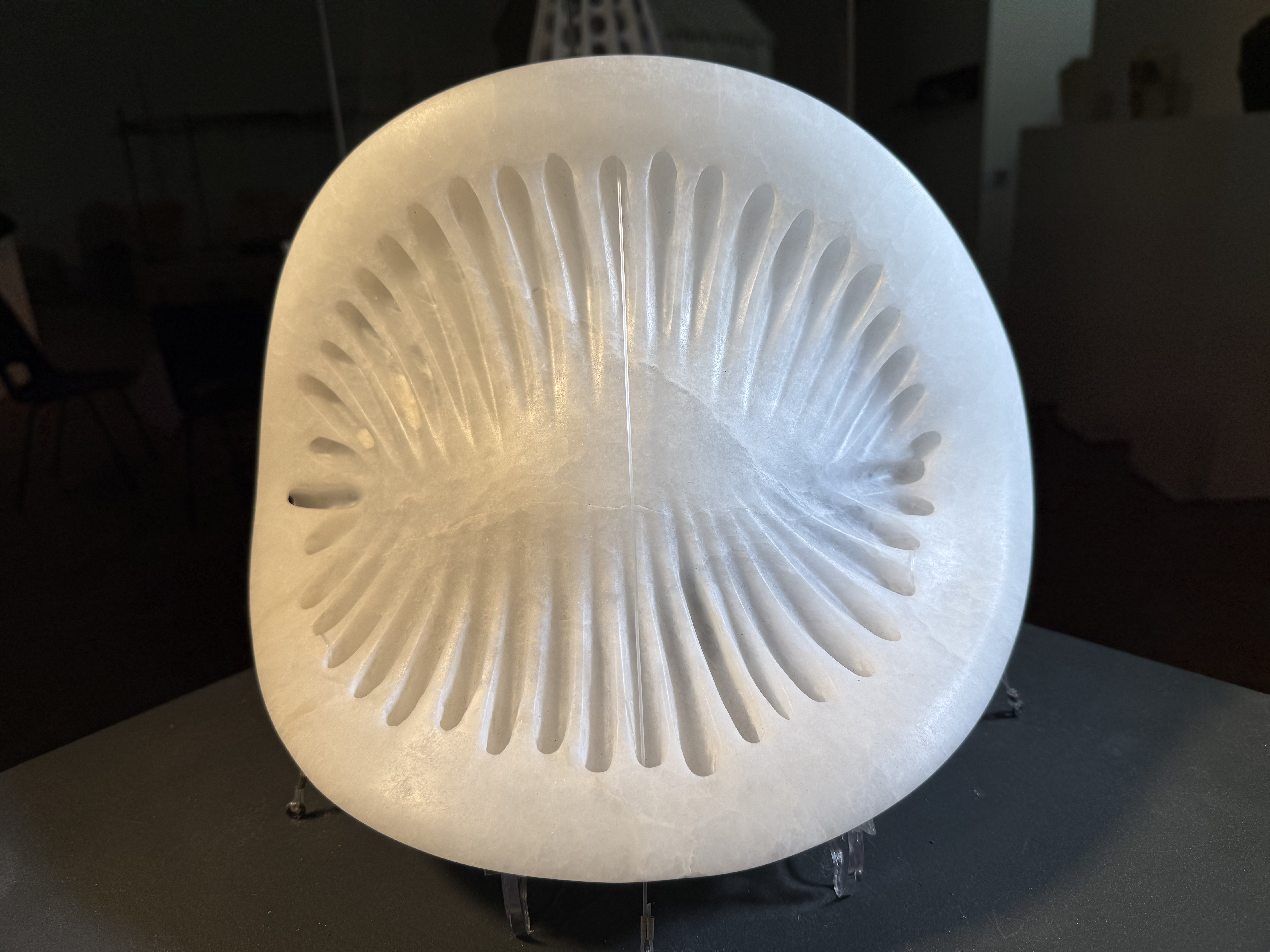
Campylodiscus Hibernicus
Roger produced another set of stone sculptures for the exhibition, this time in alabaster, and in celebration of the mini but mighty Diatom. A single-cell algae with a silica casing that occurs worldwide in salt and fresh water, and anywhere that is damp, Campylodiscus Hibernicus, is so numerous that it contributes 20-50% of the world’s oxygen and carbon capture. Here’s to more Diatoms!