

Case Study: Wishing Well, Fieldwork Architects

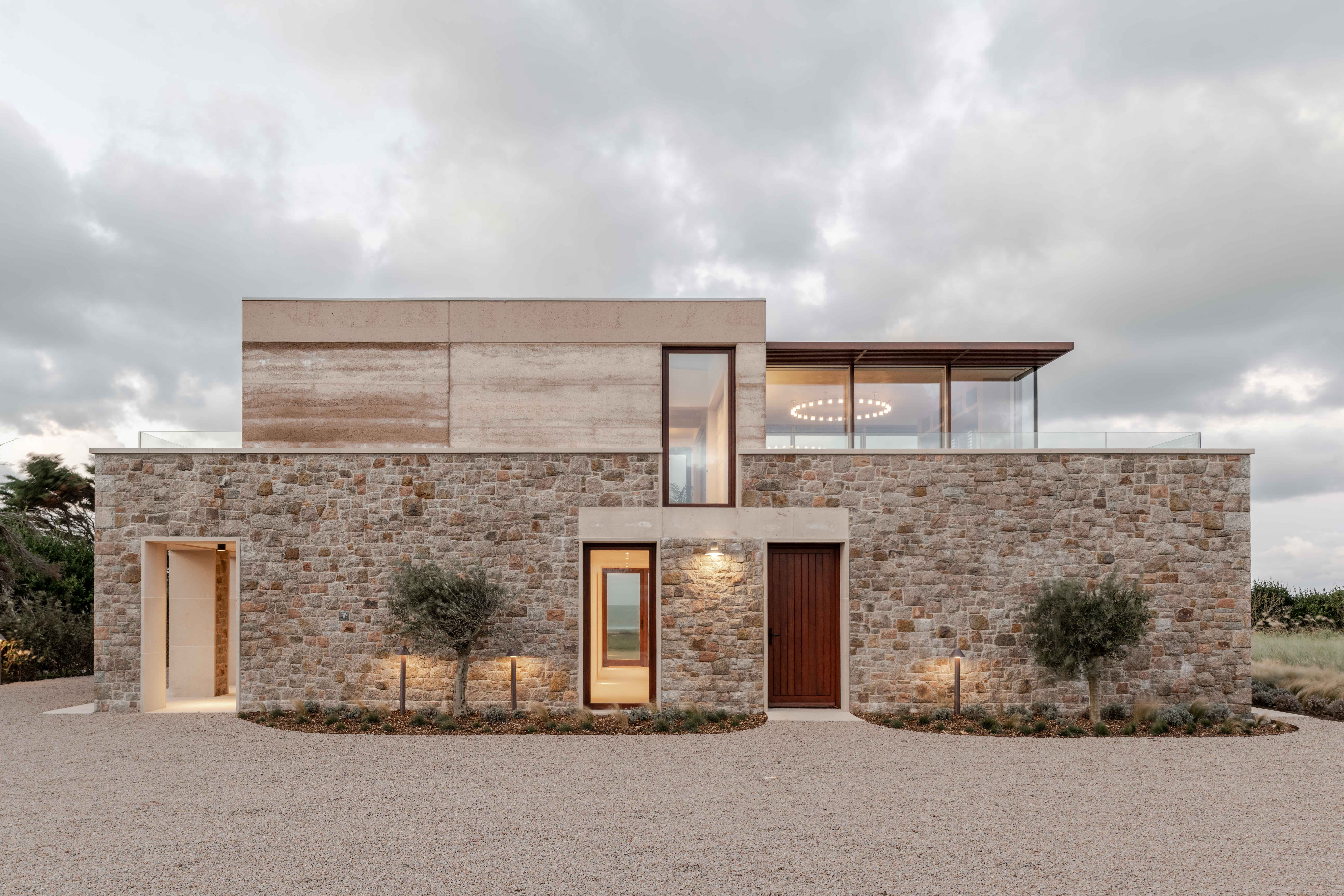
Perched along Jersey’s exposed western coastline, Wishing Well is a three-bedroom house shaped by the raw character of its setting and a deeply material-driven design approach. Designed by London-based Fieldwork Architects, the project transforms a dilapidated dormer bungalow into a contemporary coastal home anchored by locally quarried granite and stabilised rammed earth, materials selected both for their environmental resilience and their strong connection to place.
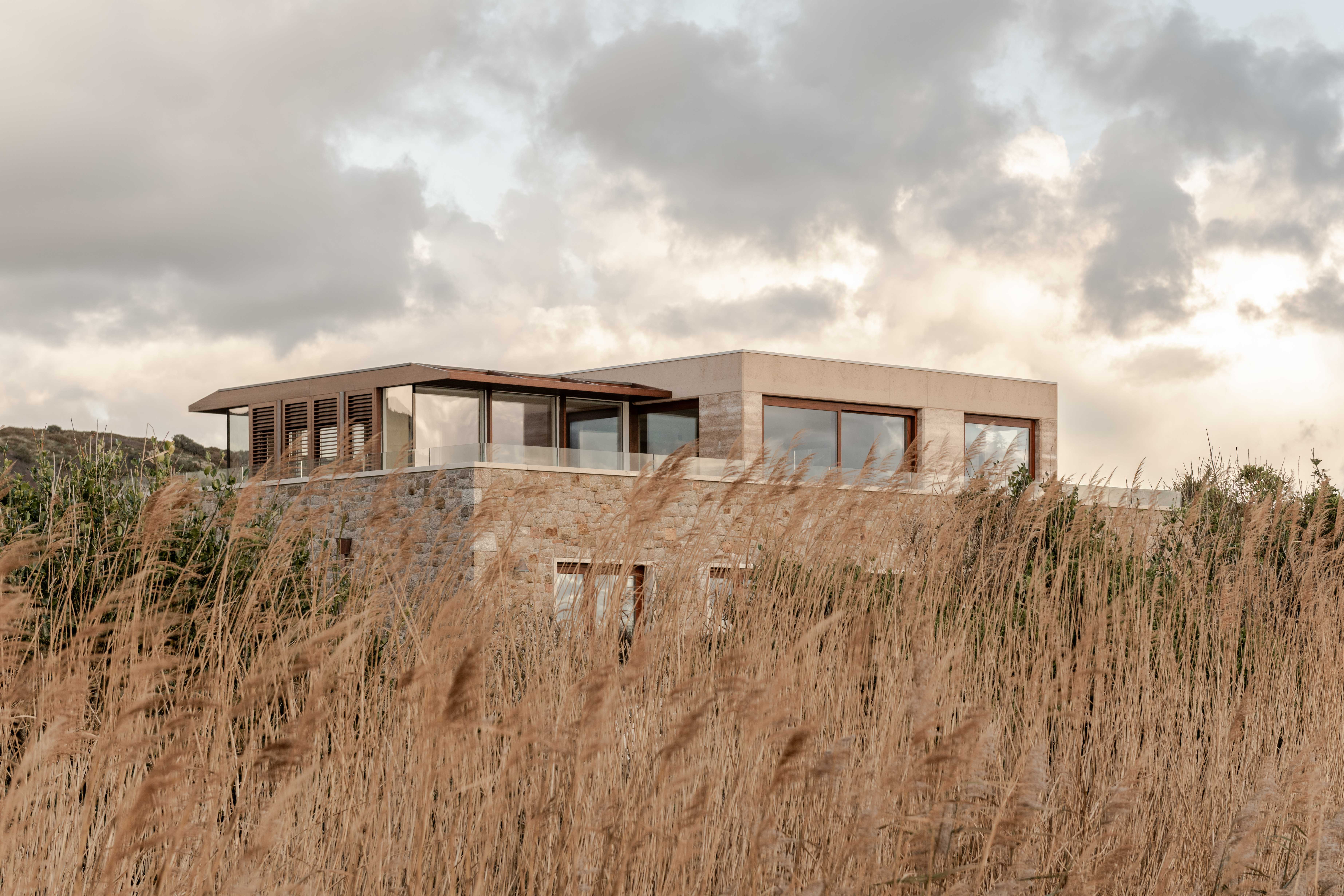
Designed for a client returning to the island after several years in London, the house deliberately departs from Jersey’s conventional domestic language. Instead, it embraces an elemental architectural expression, grounded in the textures, tones and geology of its surroundings. “We wanted the house to feel rooted in its environment,” says James Owen, director at Fieldwork Architects. “The arrangement connects closely with the land and sea, framing views and using natural materials throughout to create a sense of protection and belonging.”
The site occupies a dramatic position overlooking St Ouen’s Bay, where Atlantic swells meet long expanses of sandy beach, backed by the rising hills of Jersey’s National Park. Strict planning regulations required the architects to retain part of the original bungalow structure, submitting the proposal as an extension rather than a new build. This constraint became a defining conceptual driver. The new house was conceived around the footprint of the former building, its rectangular plan traced by a two-storey stabilised rammed earth wall that encases the remnants of the original structure.
The rammed earth core establishes both architectural character and environmental performance. Handcrafted and highly tactile, the walls draw directly on the island’s geology while offering significant thermal mass, moderating internal temperatures through Jersey’s variable coastal climate. “Wishing Well sits on Jersey’s most exposed coastline and gave us the opportunity to balance contemporary design with the rugged surroundings,” says Tim Gibbons, director at Fieldwork. “Working closely with the client, we were able to create a home that celebrates both the landscape and local craftsmanship.”
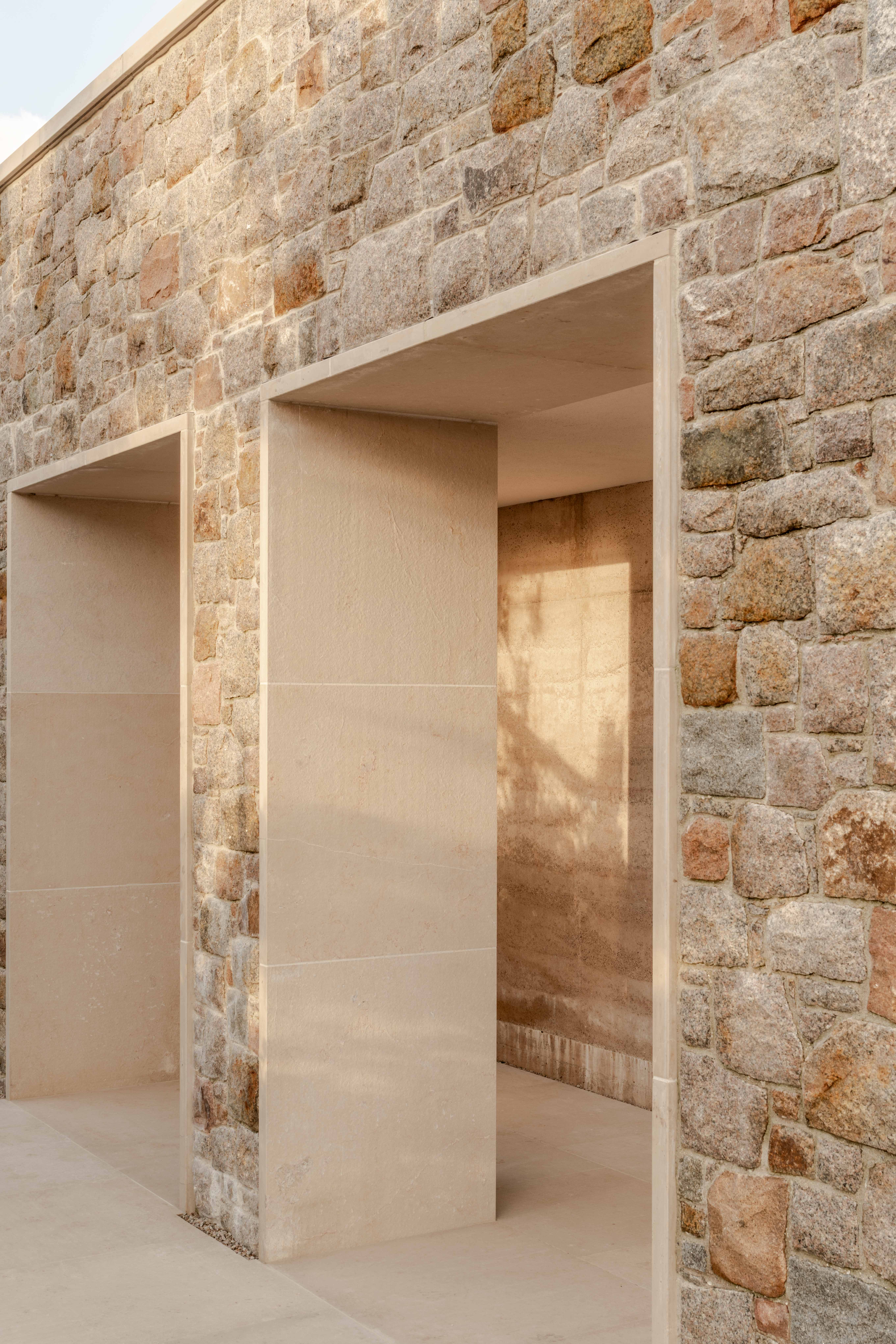
At ground level, the rammed earth is wrapped in an additional layer of locally quarried Jersey granite, forming a robust perimeter that shields the interior from prevailing winds and driving rain. A sheltered colonnade runs along two elevations, creating a covered terrace that mediates between inside and out while maintaining uninterrupted views across the landscape. The granite itself plays a dual role: structural, protective and expressive, its natural pink hues echoing the tones of the surrounding cliffs and coastal light.
In a further refinement of material integration, granite dust produced during stone processing was incorporated into the rammed earth aggregate, creating a bespoke stabilised earth mix developed specifically for the project. This process, undertaken in collaboration with Rammed Earth Structures and structural engineers Elliott Wood, involved extensive testing to achieve the desired texture, colour and performance. The result subtly embeds the stone into the fabric of the building, reinforcing the material continuity between structure and surface.
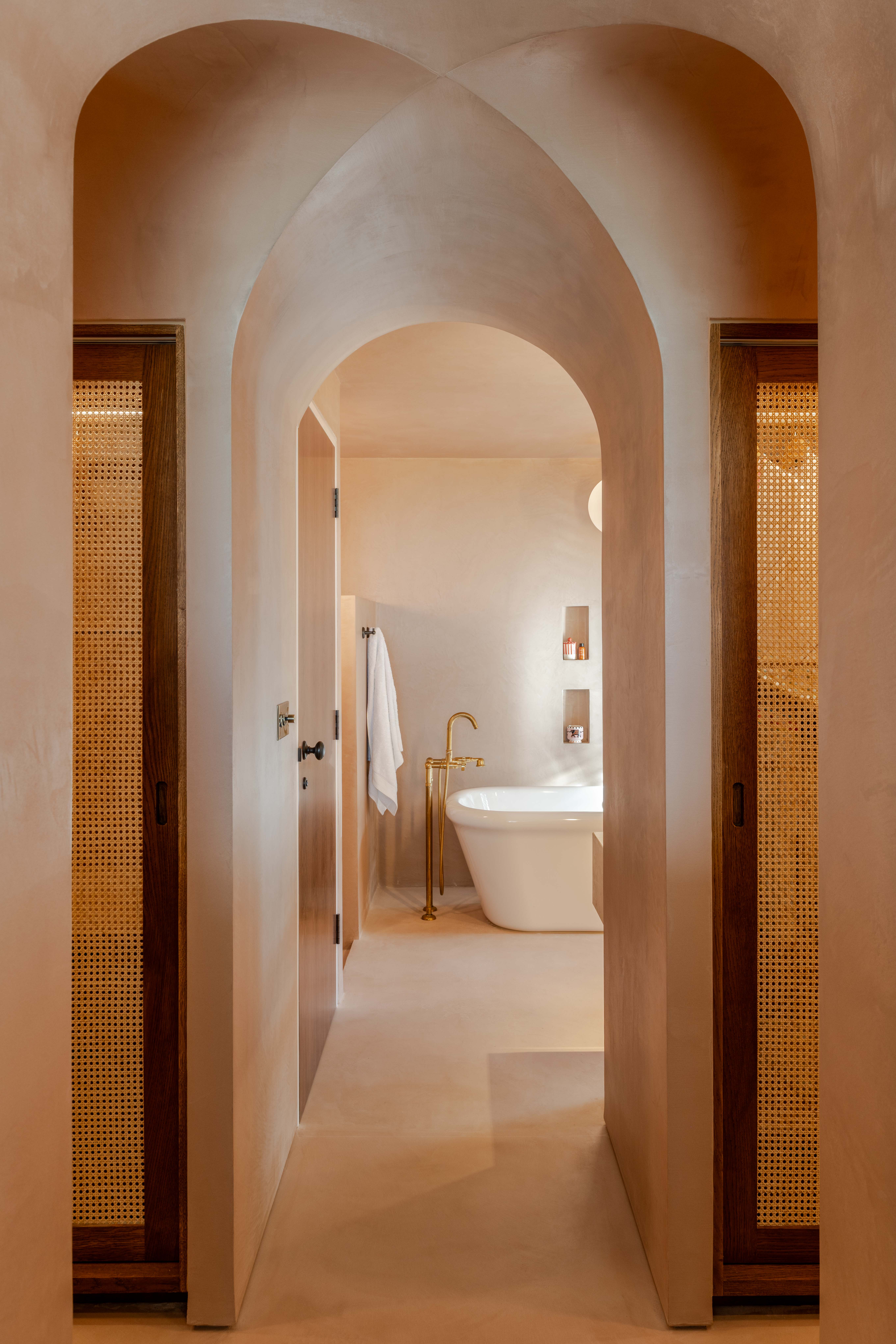
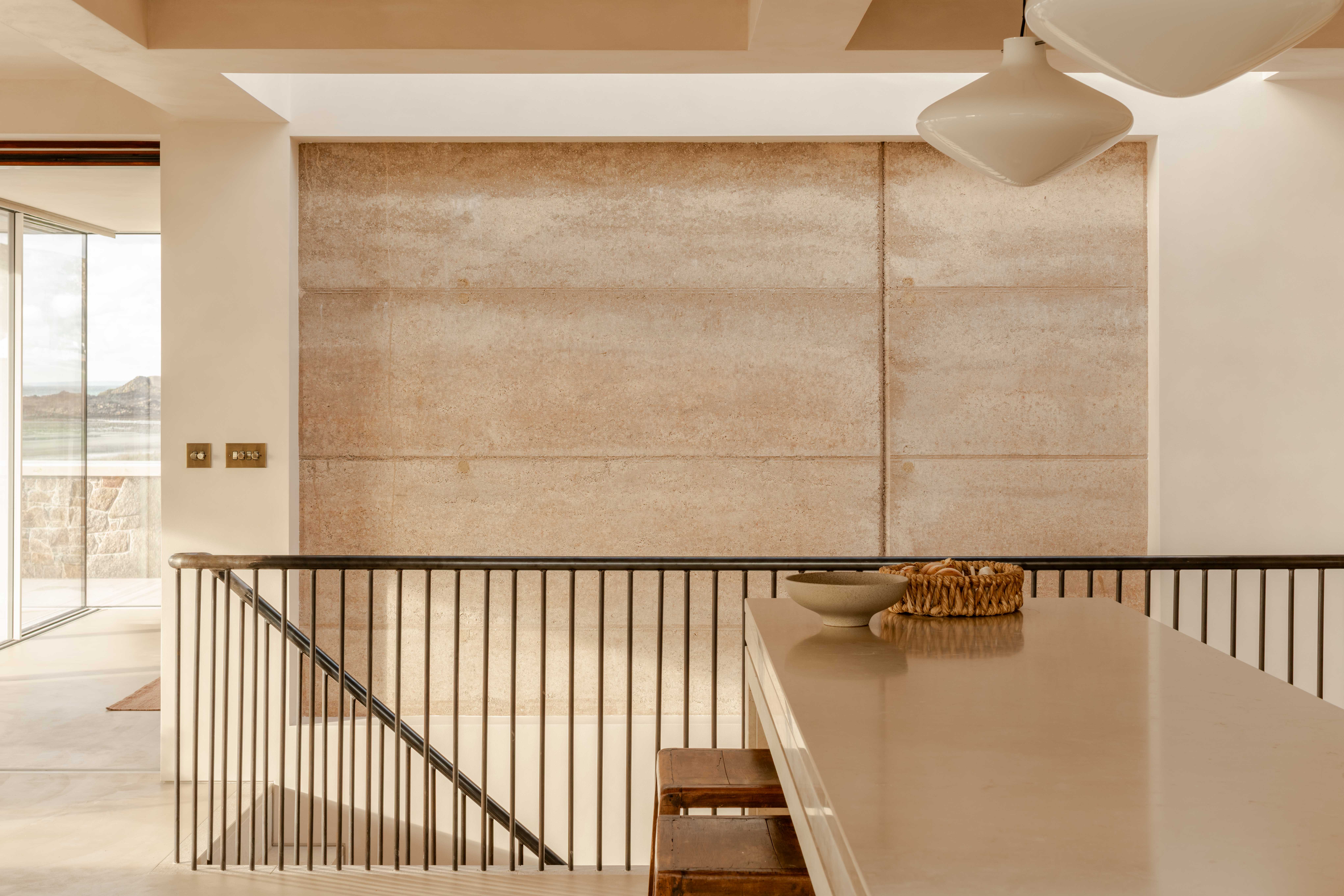
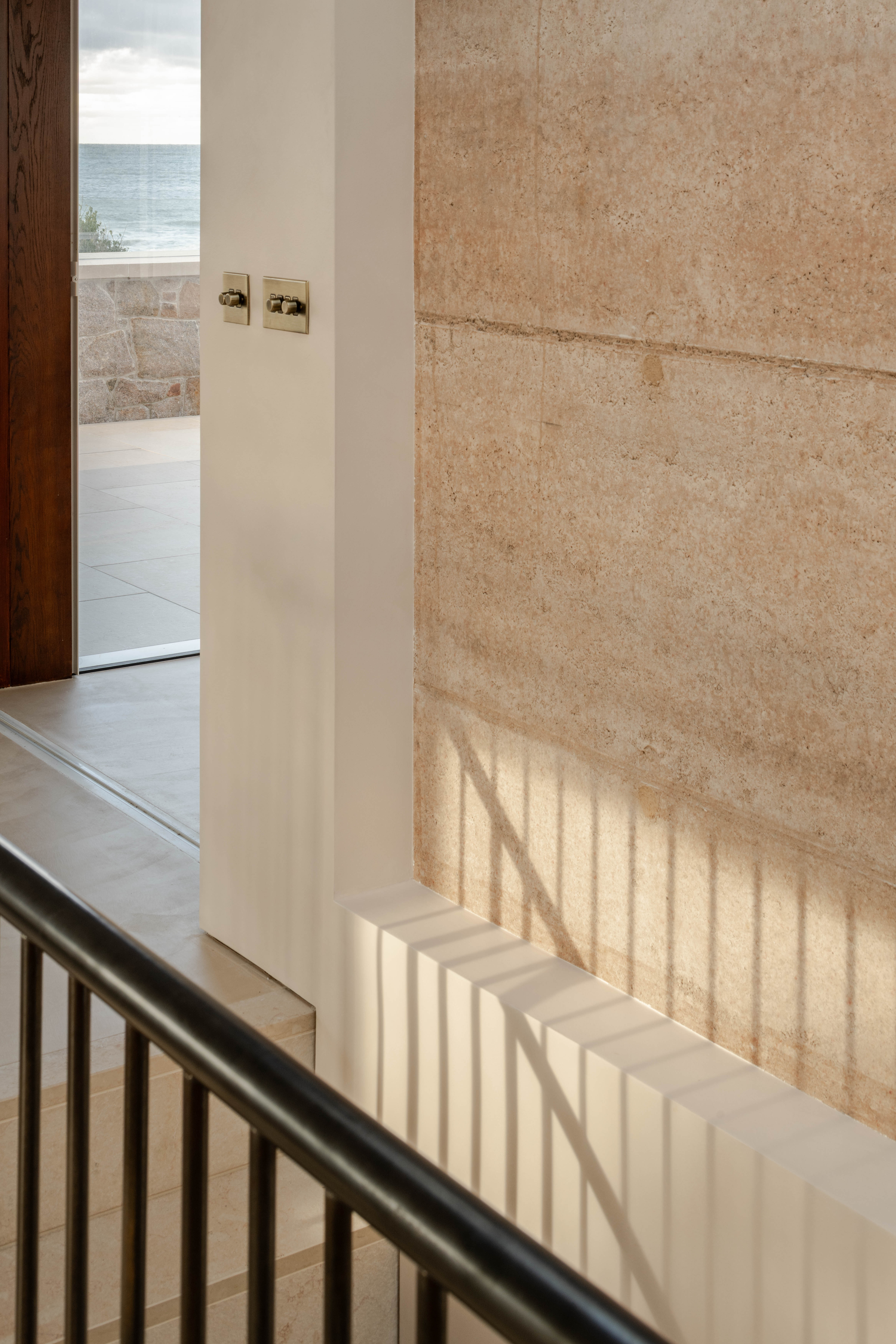
Internally, a section of the rammed earth core is left exposed, revealing the layered construction while establishing a sculptural focal point within the home. The layout is deliberately inverted, with private bedrooms positioned at ground level, cocooned within the thick granite walls, and living spaces elevated above. The primary suite faces the sea, its sheltered character softened by arched openings and a vaulted ceiling that appears carved from the building’s mass.
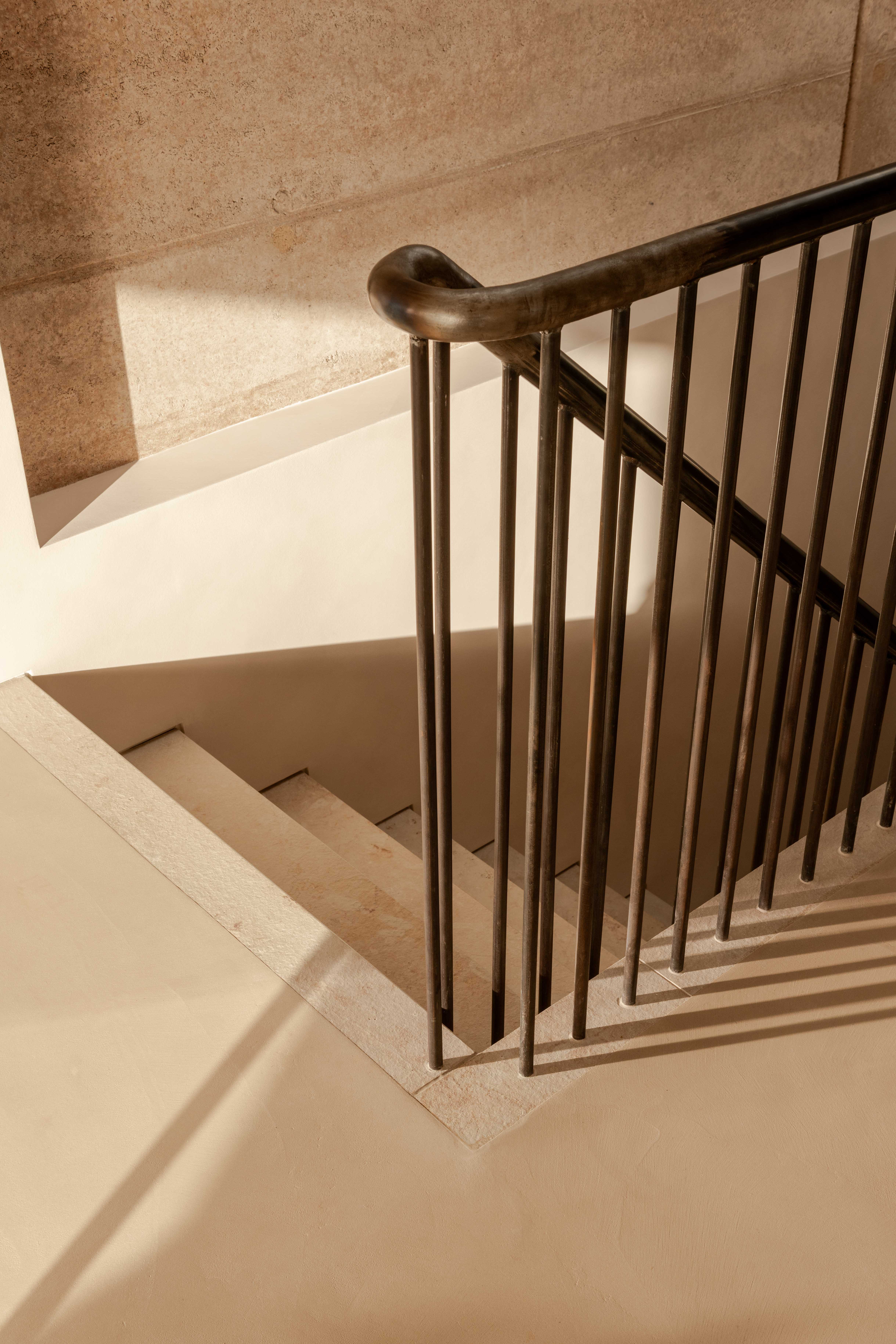
Entry is via a generous utility space, known as the “boardroom”, designed for life by the coast, complete with shower facilities, surfboard storage and direct access to the outdoors. A central stair forms the organisational spine of the house, rising alongside the exposed rammed earth wall and drawing daylight deep into the plan. Carefully positioned openings maintain constant visual connections with land and sea, shaping the experience of movement through the building.
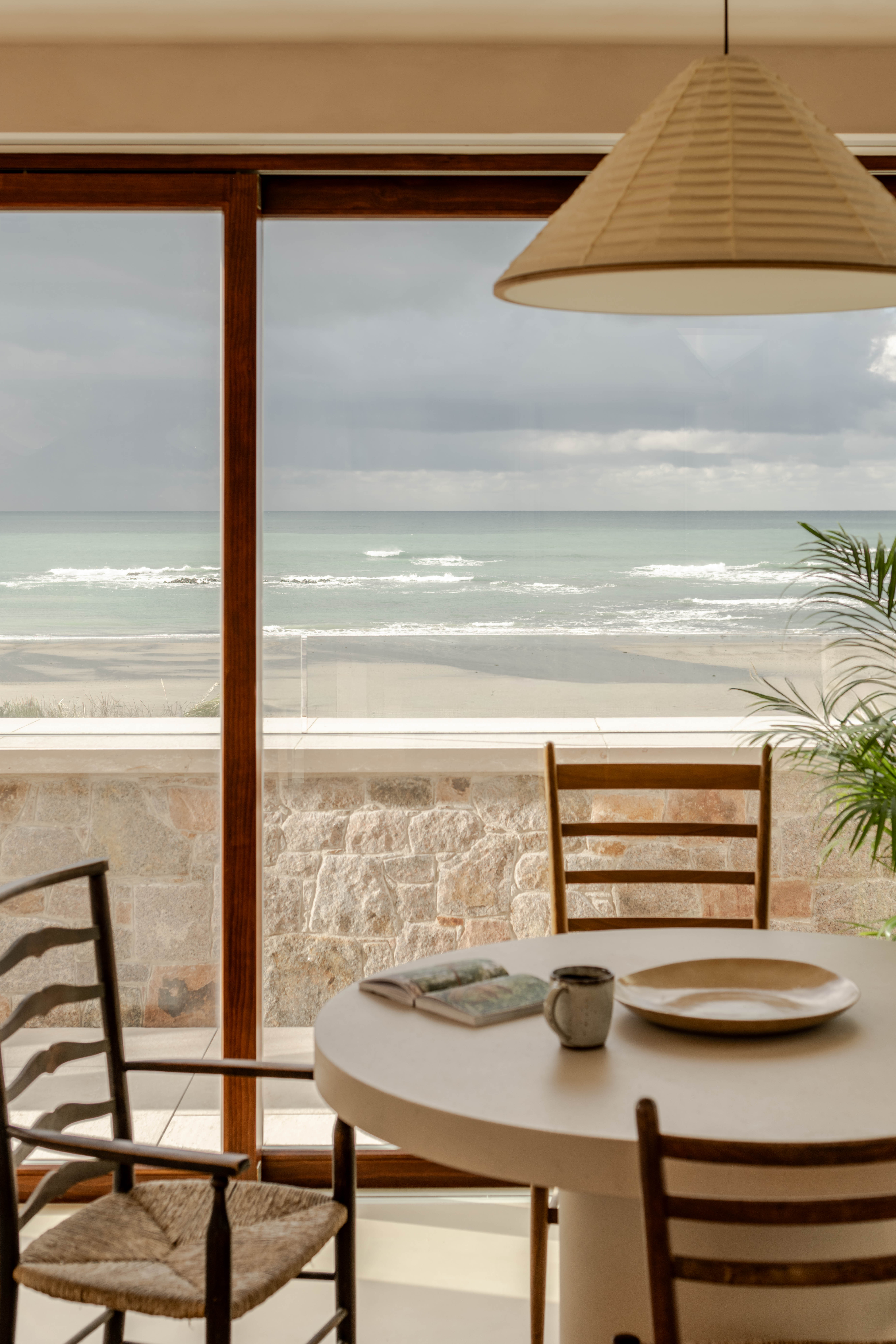
At first-floor level, the atmosphere shifts markedly. Beneath a large rooflight, the main living spaces open into a bright, expansive environment, with panoramic views framed by extensive glazing and east- and west-facing terraces. A timber-clad dining pavilion, introduced later in the design process, provides spatial balance while offering shading and a softer counterpoint to the mineral mass of the granite and earth walls.
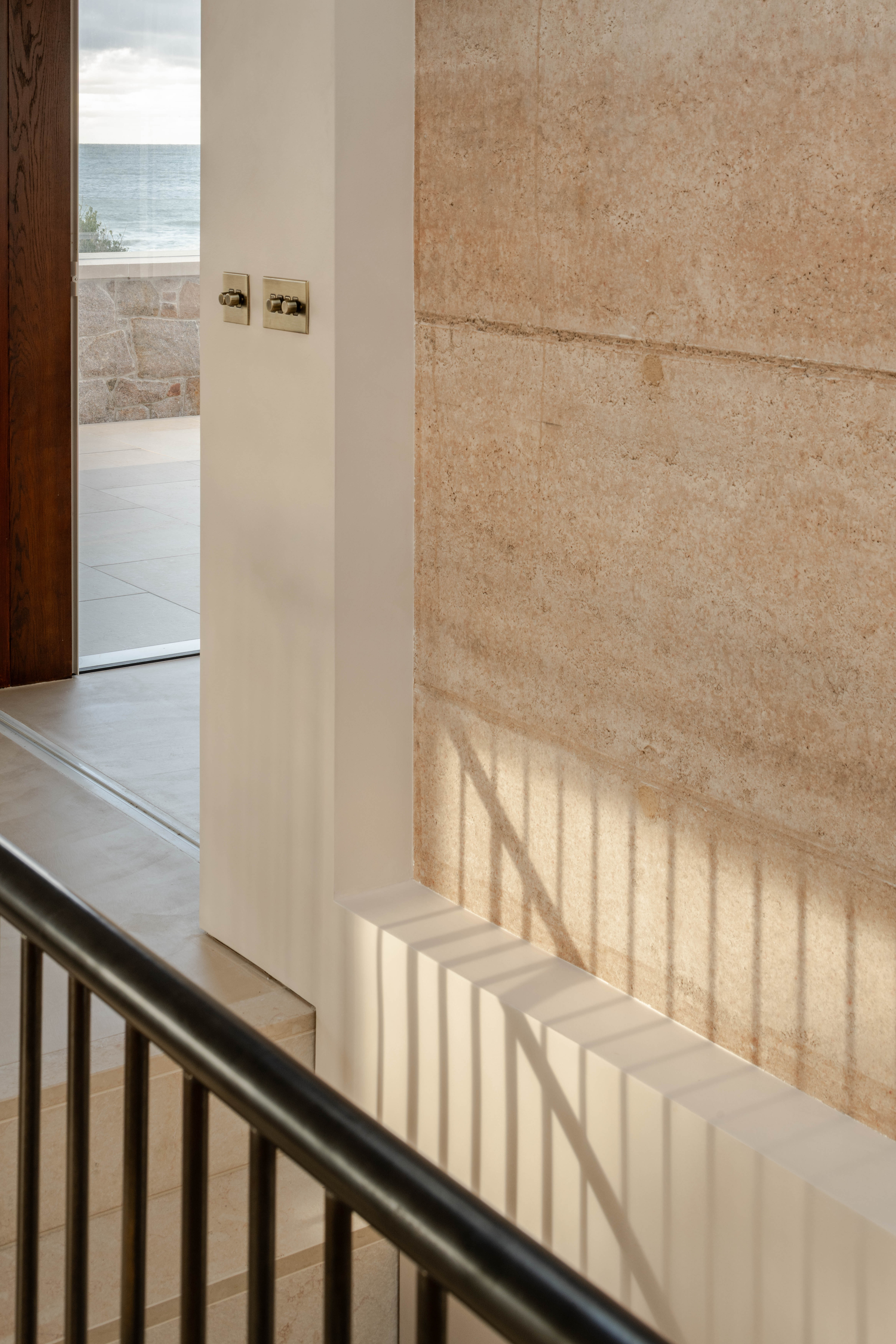
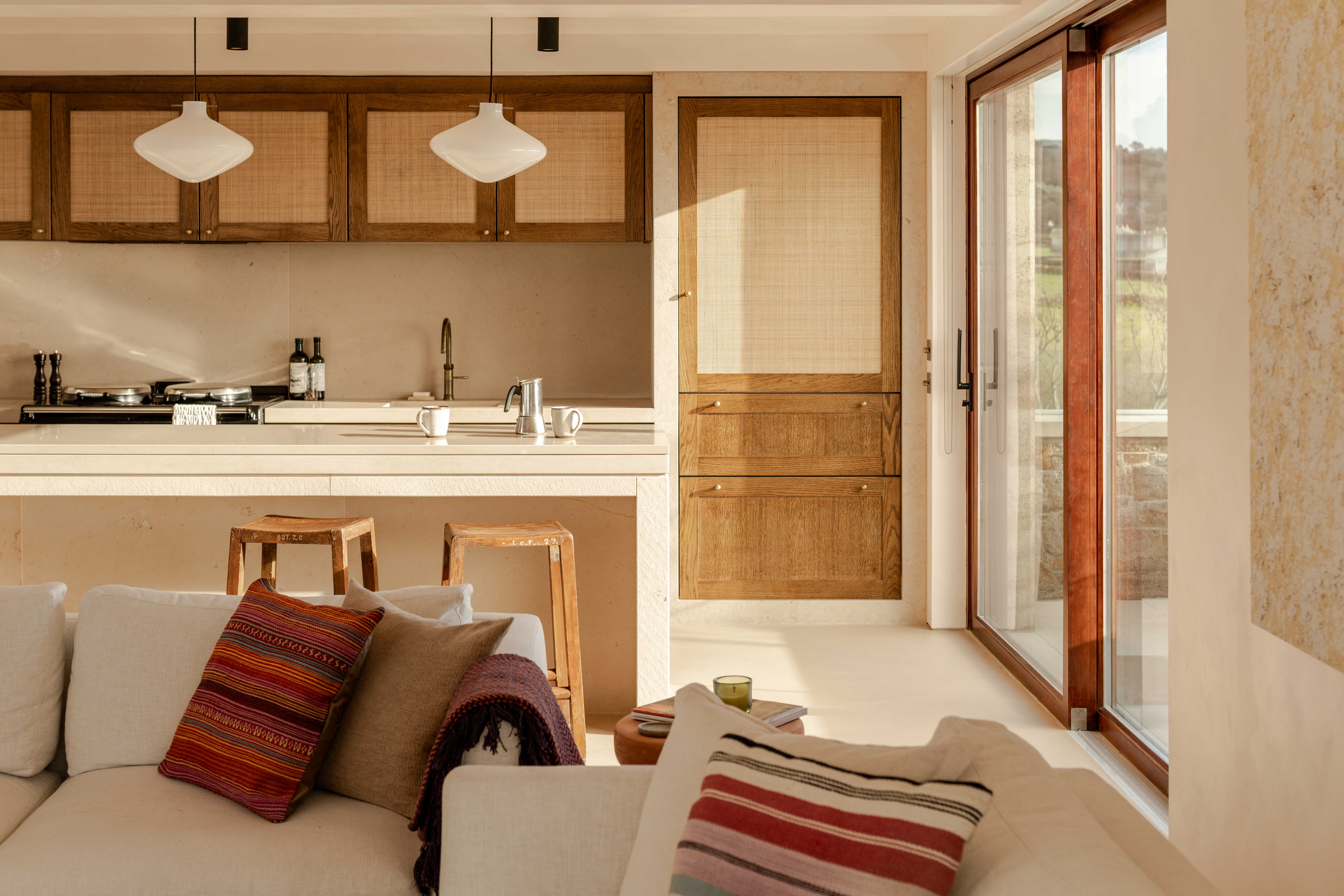
Material continuity between floors is reinforced through the use of cream-coloured limestone, employed for external window reveals before reappearing internally as a continuous band rising up the stair and flowing around the floor opening. It also forms the kitchen worktops and frames bespoke timber cabinetry designed by Fieldwork. The stone’s finish shifts according to use: flamed underfoot to reveal fossil textures, and polished smooth for working surfaces.
For the client, Amber Warner, the material choices were fundamental to shaping atmosphere and experience. “It was very important to frame as much of the view as possible from all parts of the house,” she says. “I wanted spaces that felt cosy during the dramatic winters but cool and open in summer. The granite reflects the pink tones of the sunsets, while the earthy textures inside mirror the sand and landscape outside.”
The project exemplifies Fieldwork’s collaborative design process, developed alongside Singh Studio and shaped through close engagement with engineers and specialist contractors. By integrating structural logic, material research and craft expertise, the team delivered a building in which architecture, surface and setting are inseparable.
Through its disciplined use of granite, rammed earth and limestone, Wishing Well presents a compelling case study in contemporary coastal architecture — a house rooted in its geology, climate and culture, and shaped as much by material performance as by spatial ambition.
All images courtesy of French + Tye