

News: Championing Stone Apprenticeships

Rather sadly, in contemporary culture, the term ‘Apprentice’ is more likely to conjure images of suited bafoonery and surly finger-pointing old men than young people learning an array of skills through hands-on training.
As underlined by a host of events last week, UK Apprenticeship Week is a national annual campaign that celebrates the true value of apprenticeships. Bringing together employers, educators and industry bodies it offers a showcase of how structured training and hands-on learning help people develop skilled careers while supporting businesses to grow and address skills shortages across the UK.
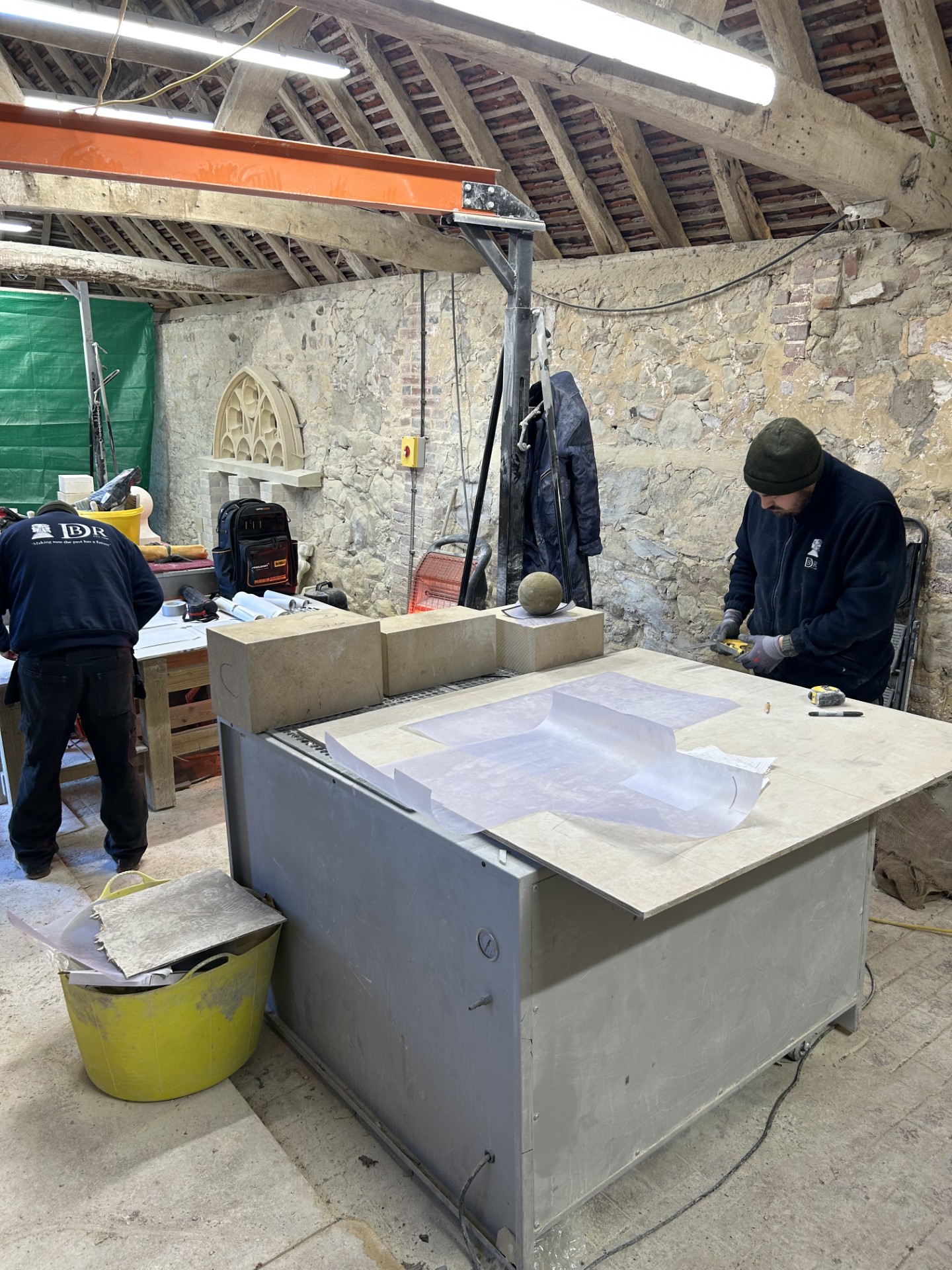
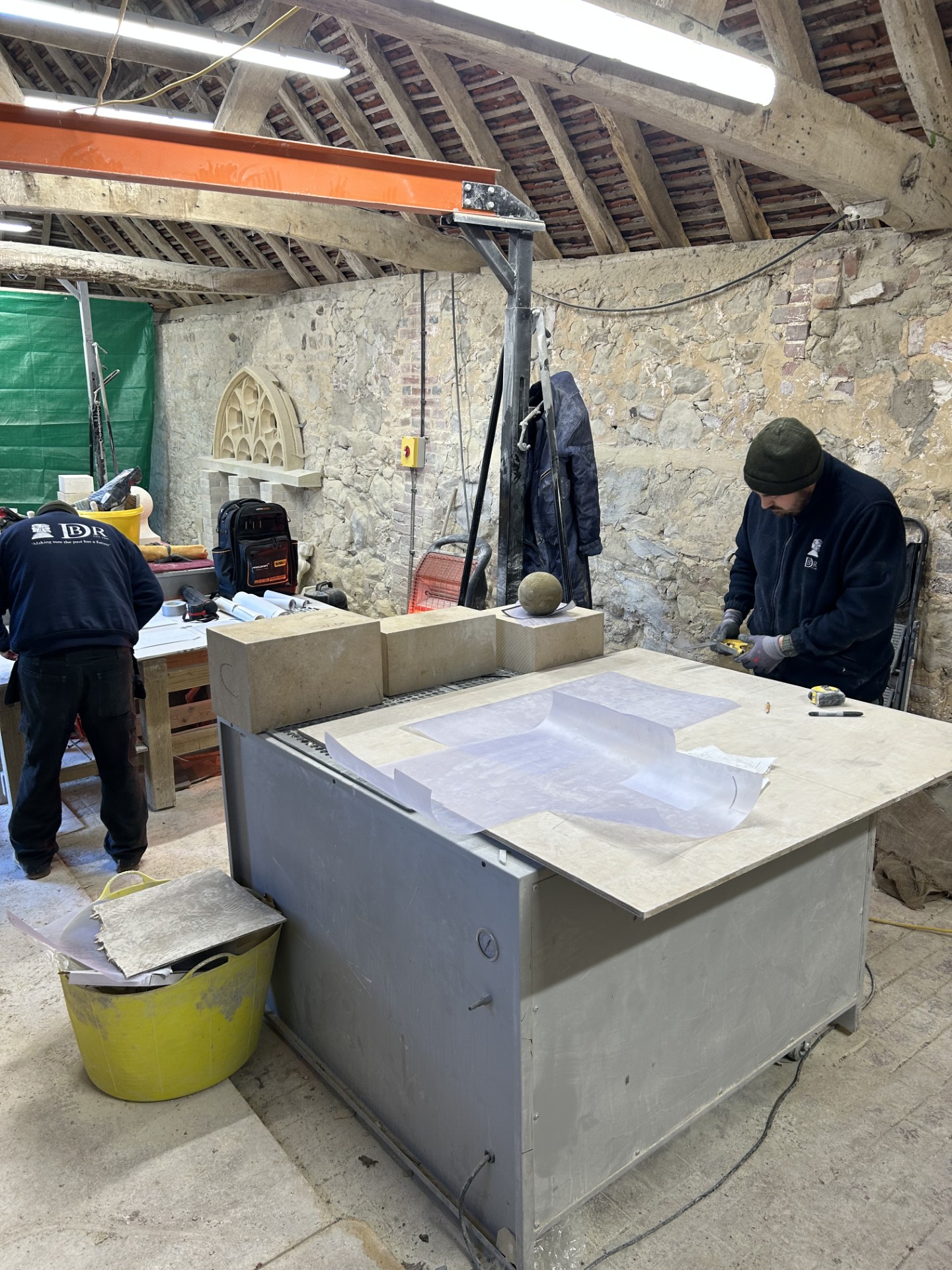
In an industry confronting a deepening skills shortage, the continuity of traditional craft knowledge has become as central to the future of stone conservation as the technical challenges of the work itself. DBR Limited, one of the UK’s foremost historic building conservation specialists, has placed apprenticeships and training at the core of its long-term strategy, recognising that tomorrow’s skilled masons, carvers and conservation technicians must be nurtured today. As part of its broader commitment to social value and craft succession, DBR champions hands-on training, on-site mentoring and structured vocational progression, including formal apprenticeships for every project exceeding a year in duration and a new three-year partnership with the Queen Elizabeth Scholarship Trust (QEST) to support annual craft scholarships.
We spoke to DBR Executive Director Adrian Attwood during the event to find out more about the company’s approach and the significance of modern-day apprenticeships.

SS: Set the scene for us; what is the story behind the skills shortage we are seeing in the stone industry?
AA: Stonemasonry is an ancient craft and industry, yet it is potentially facing extinction. To become a true expert in the craft, a master stonemason requires up to ten years of experience. Yet across the entire United Kingdom, there are only four dedicated diploma Level 2 courses available. For a profession that’s essential to maintaining everything from parish churches to palaces, this training provision is woefully inadequate.
SS: Can you put into context what effects a continued skills shortage like this might have in the near-future?
AA: This skills crisis threatens Britain’s £16bn heritage sector at precisely the moment we have secured unprecedented financial backing. The government’s announcement of 50,000 new youth apprenticeship places represents genuine opportunity. It’s backed by £725m in funding and the removal of the 5% levy for under-25s, combined with £1.5bn in cultural sector investment and £230m for heritage protection. This is most welcome. Yet, money alone cannot repoint medieval walls, conserve ashlar masonry or restore ornamental stonework. These skills require human hands, trained over years through rigorous apprenticeships.
SS: You are coming at this from lived experience, so you must be feeling such effects firsthand?
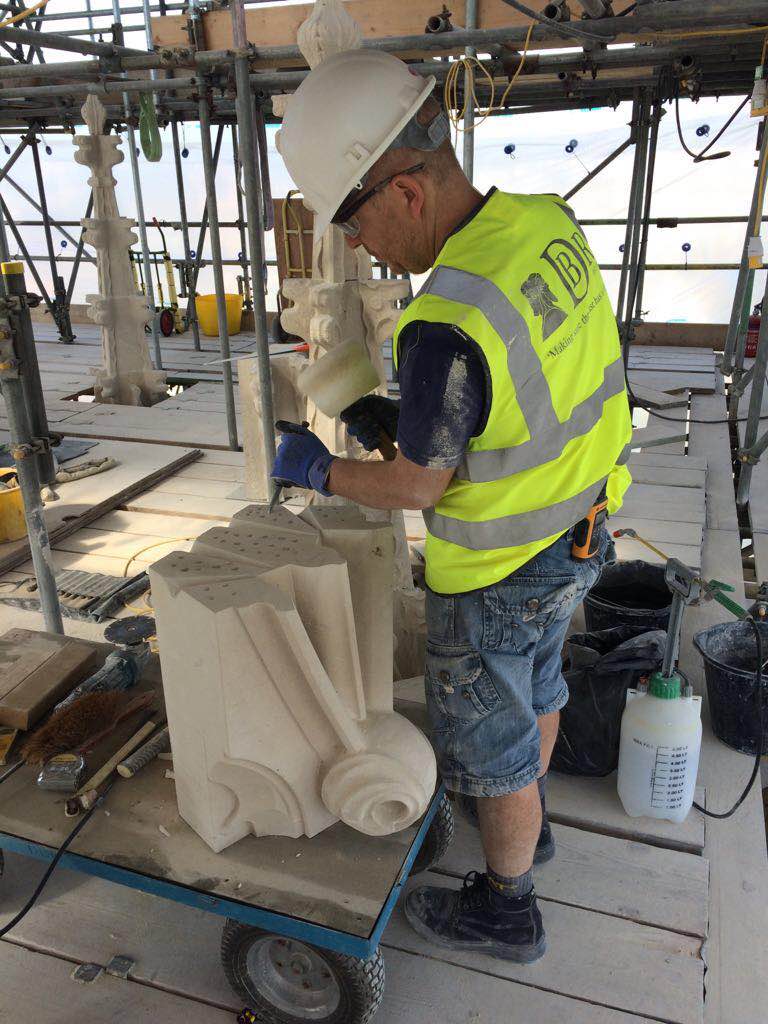
AA: This is a slow-moving crisis. Over the past decade, we have seen a 40% decline in young people starting apprenticeships. At DBR, where we employ scores of skilled specialists working on everything from facade conservation, roof repair & replacement to historic interiors, attracting new talent grows more difficult each year. Our masonry workforce is ageing and soon many are retiring, and with nearly one million young people aged 16 to 24 not in work or learning, the disconnect is painful. Many talented young people have no local route into the profession.
JB: So what are the barriers in cultivating a new, younger workforce of trained, and skilled people? And what can be done to help overcome them?
AA: The barrier is partly cultural. Our education system maintains a bias towards academic routes, leaving vocational careers in stonemasonry, leadwork and decorative plasterwork significantly undervalued. Teachers and careers advisors simply do not have heritage trades on their radar.
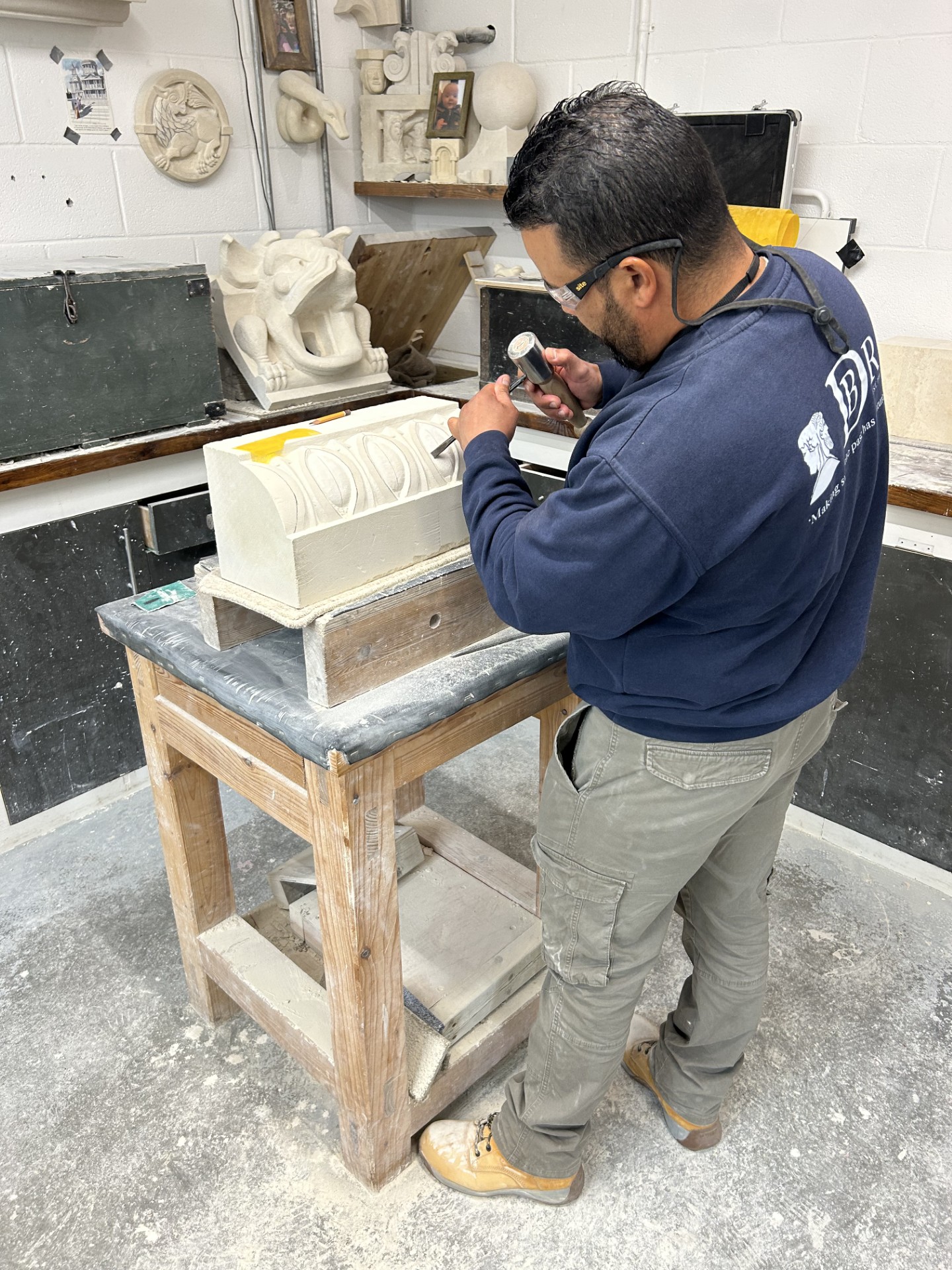
The stone industry must step up now. At DBR, we have invested in our own craft skills centre in the South Downs and offer school taster days. But individual businesses acting alone cannot solve this industry-wide problem. The stone sector needs coordinated action: training providers must expand diploma courses, public sector frameworks must provide a healthy pipeline of work, and traditional masonry crafts must receive equal priority in the apprenticeship framework.
Unless we act as a collective, we risk losing centuries of irreplaceable masonry knowledge. The government has provided increased funding. We now need the heritage industry to invest in the next generation, ensuring the skills that built Britain’s architectural legacy survive into future generations, to protect it.