

News: Tools for Transition

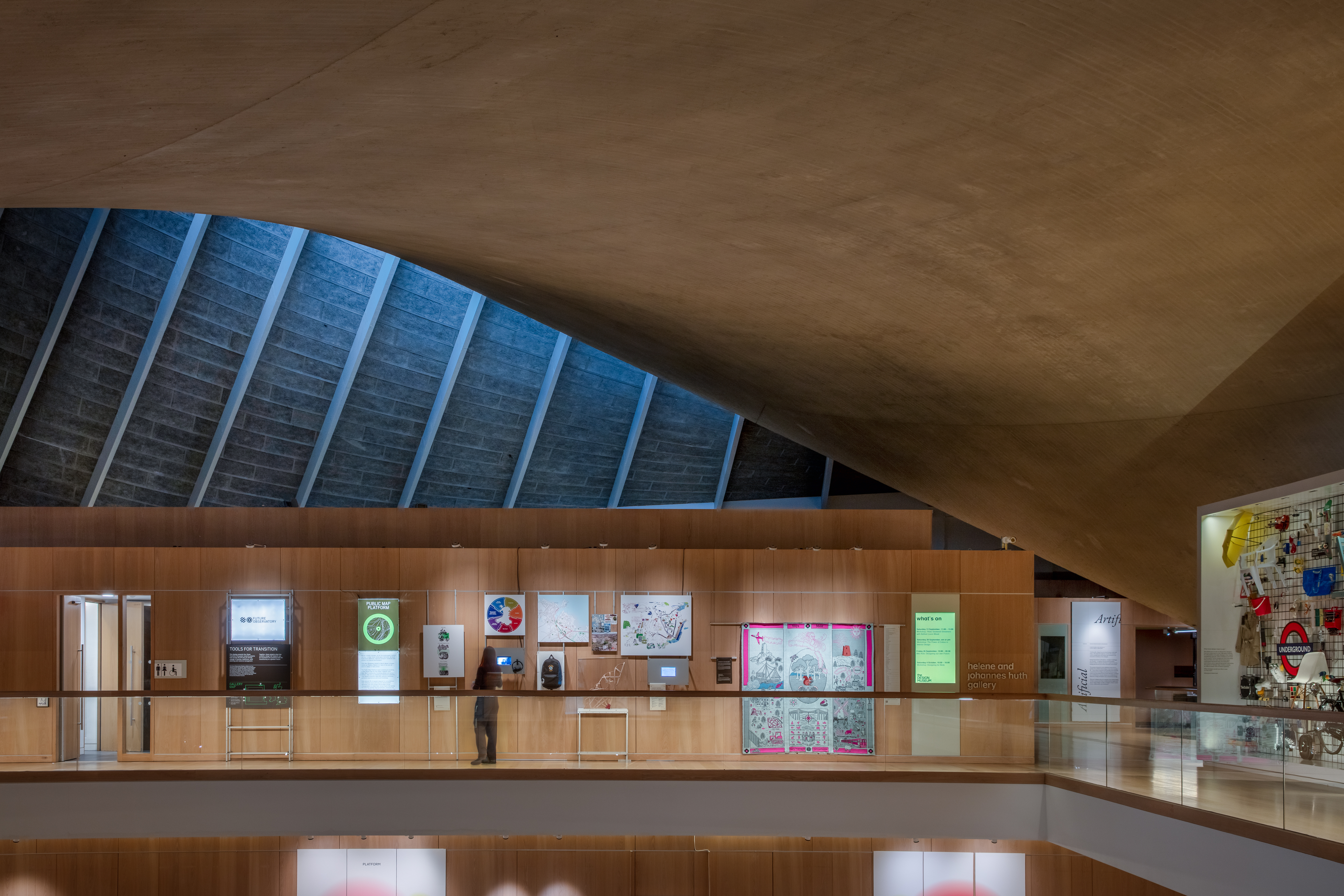
The Design Museum’s new long-term display, Tools for Transition, brings together four major research projects that explore how design, materials and community-led innovation can help the UK transition toward greener ways of living.
Along with the Stone Demonstrator, it’s another initiative initiated by Future Observatory this year that explores ways of construction that are healthier for people and the planet. As Future Observatory Director Justin McGuirk explains, “Future Observatory’s mission is not just to help drive the green transition through design research but to get that research to a broad audience. Tools for Transition brings together the four projects in our flagship Green Transition Ecosystems grants programme.
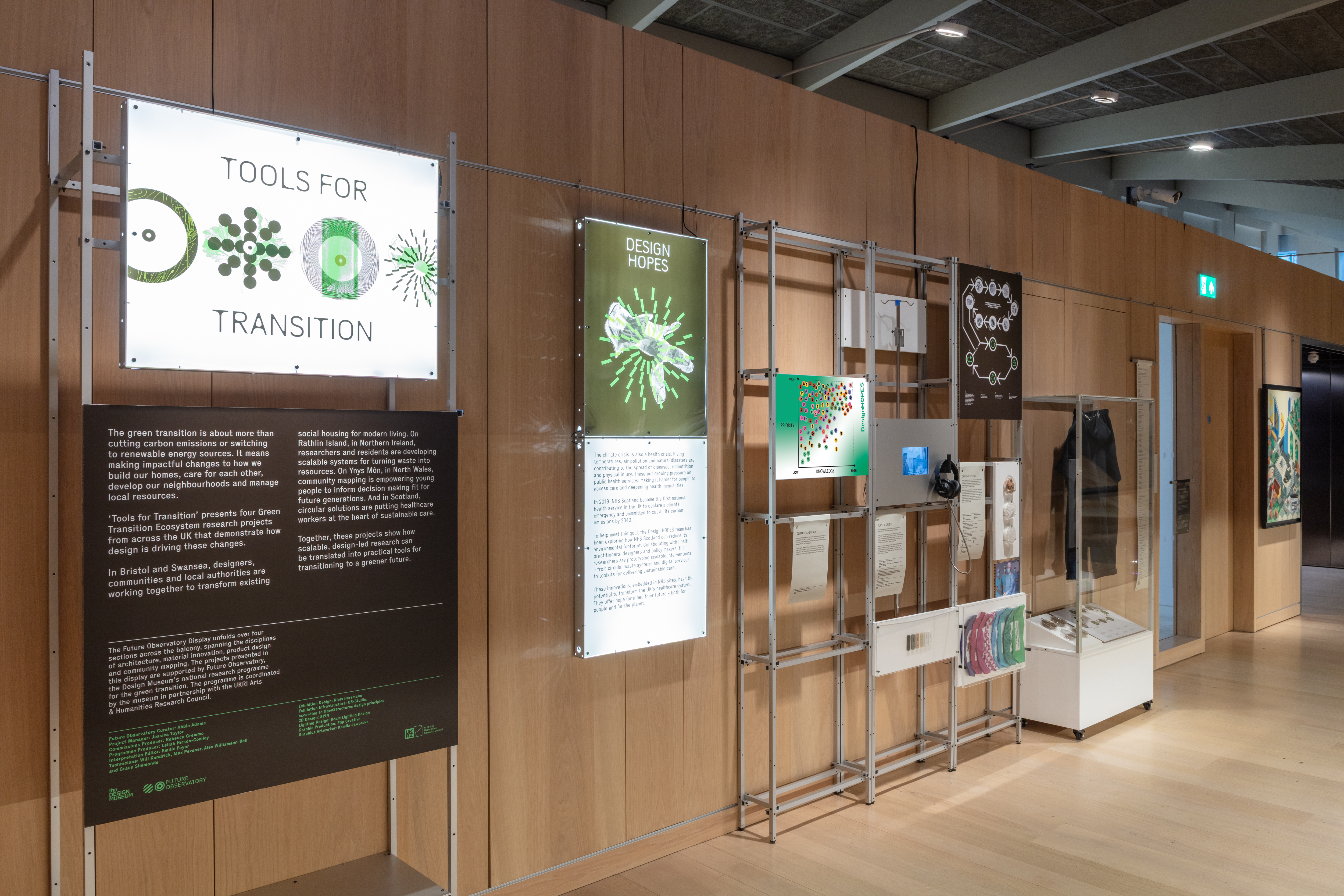
Launched during the London Design Festival with the help of the Arts & Humanities Research Council (AHRC), the exhibition shows how collaborative approaches can reshape healthcare, housing, resource management and climate planning. With material choice and lifecycle thinking becoming central to modern construction, the work on display reflects themes increasingly relevant to the stone sector: circularity, community resilience and the value of regionally rooted material systems.
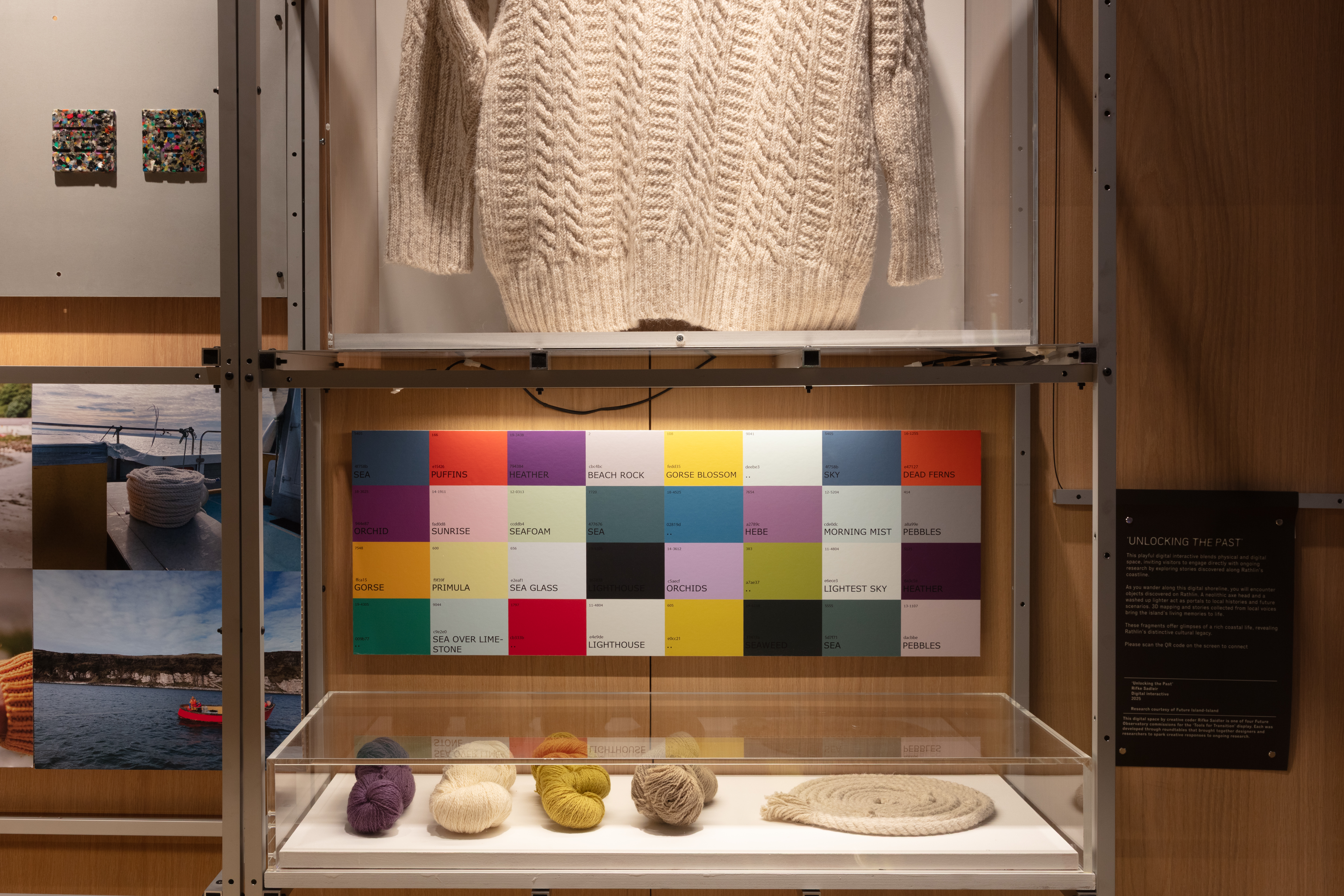
The first project, Design HOPES, focuses on NHS Scotland and its reliance on single-use plastic products. As one of the country’s largest consumers of disposables, the NHS faces significant challenges in reducing emissions tied to material waste. Design HOPES is working with health practitioners and policymakers to map hospital waste streams and identify durable, reusable and bio-based alternatives to items such as PPE. The exhibition features theatre scrubs and caps produced from plant-based fibres like flax and cellulose, showing how renewable materials could replace fossil-derived plastics without compromising the hygiene standards required in clinical settings. A commissioned visualisation by designer Irena Gajic imagines what an NHS estate could look like by the late 2030s, integrated more fully into surrounding communities and shaped by greener, more resource-efficient systems.
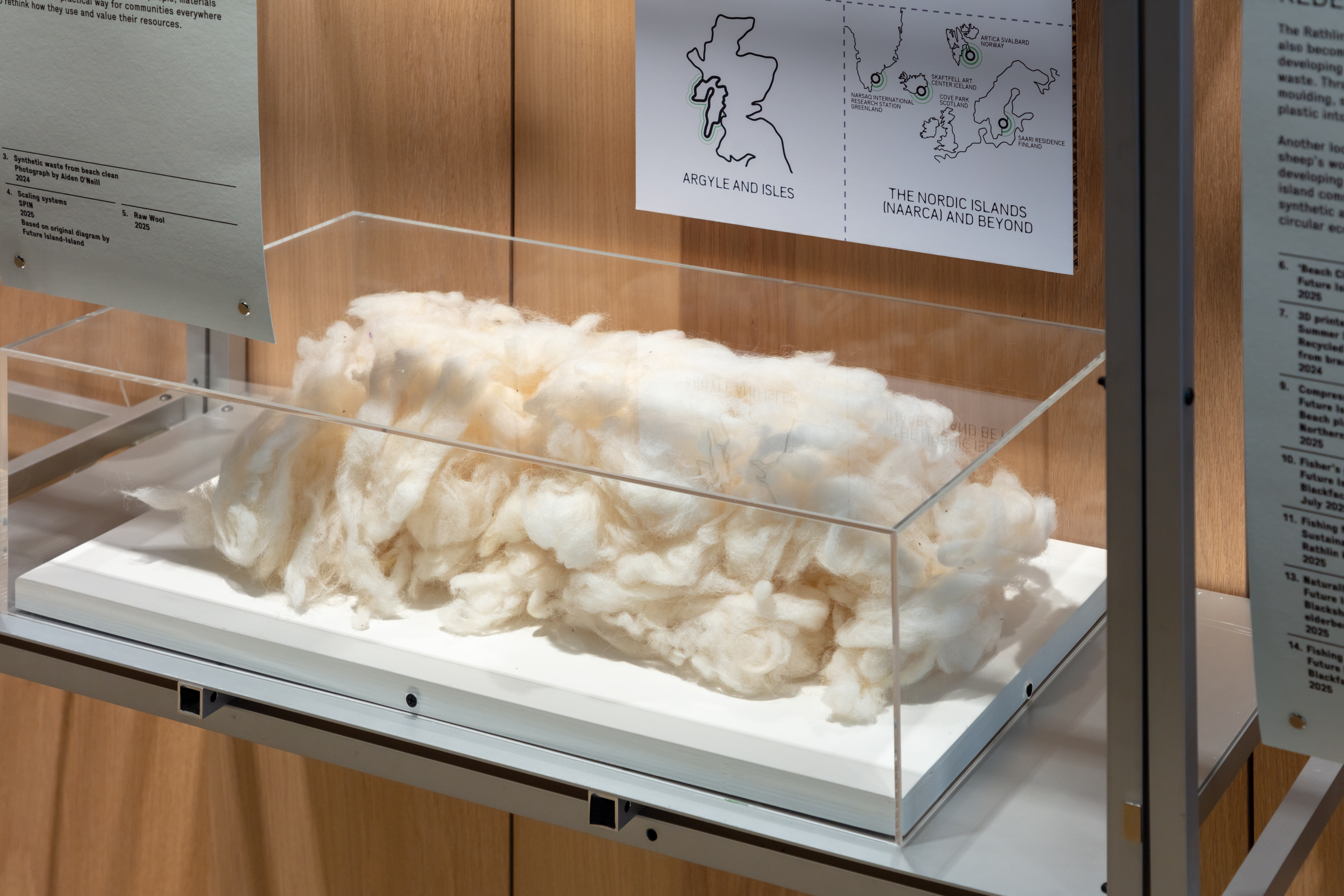
Another strand of the exhibition, Future Island–Island, is rooted in Rathlin Island, Northern Ireland’s only inhabited offshore island. With a small population and a heightened exposure to climate impacts, the island provides a testbed for community-driven resilience. The research supports residents in setting up circular systems to manage waste, resources and local production as part of Rathlin’s goal to achieve carbon neutrality by 2030. Repair cafés, shared waste initiatives and design-led approaches to local materials all play a part in building self-sufficiency. Material innovation is prominent: Rathlin’s sheep’s wool, previously undervalued, is being channelled into the Rathlin Wool Hub, where it becomes a useful raw material for craft and product design. Meanwhile, the Beach Clean 2.0 initiative is transforming marine plastic washed ashore into functional items for the community. In the exhibition, naturally dyed wool sits alongside categorised marine plastic samples, and an interactive installation by Rifke Saidler introduces visitors to Rathlin’s coastline and stories. While highly localised, the work highlights principles of resource circularity, decentralised production and community ownership that could be adopted in other rural or coastal regions.
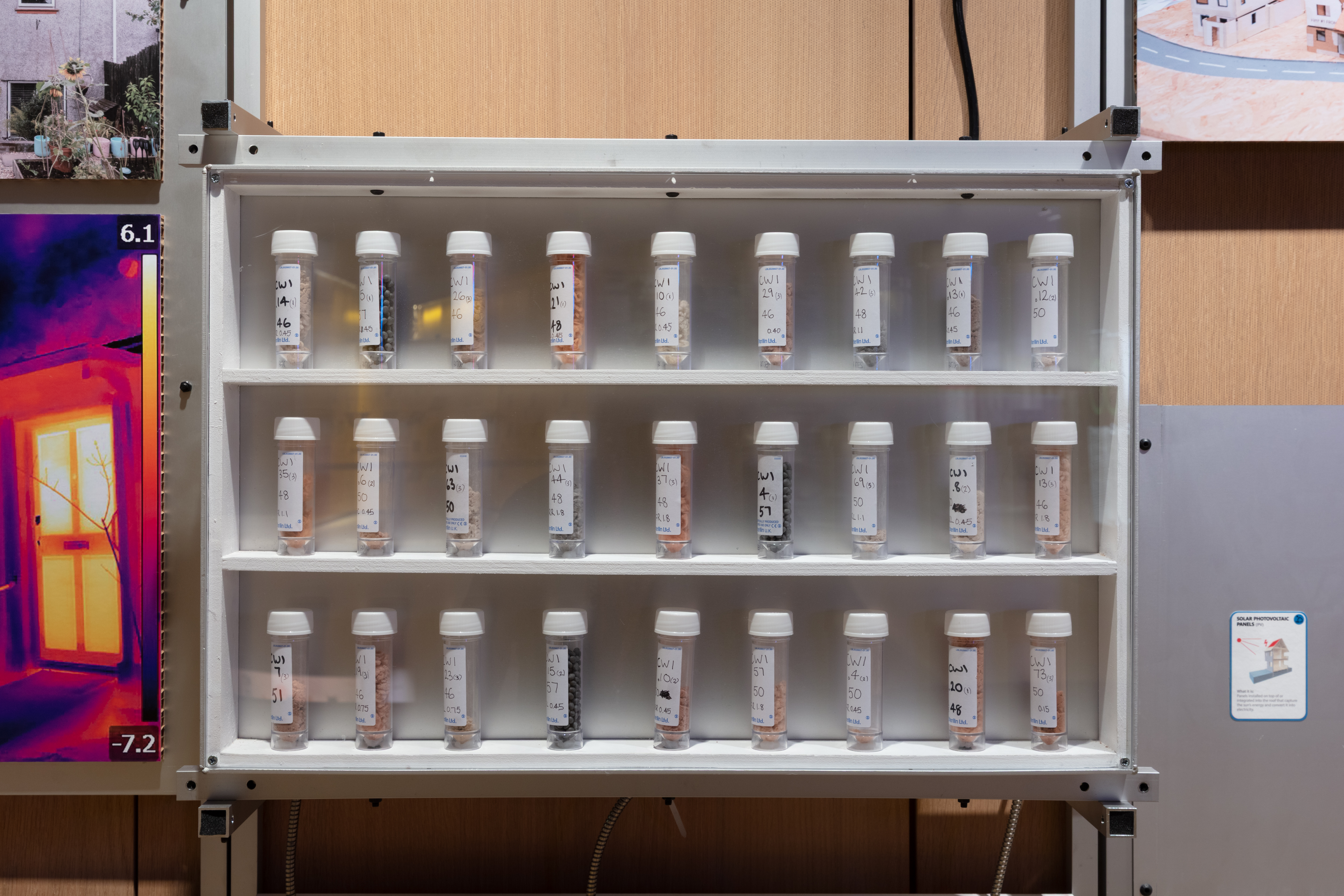
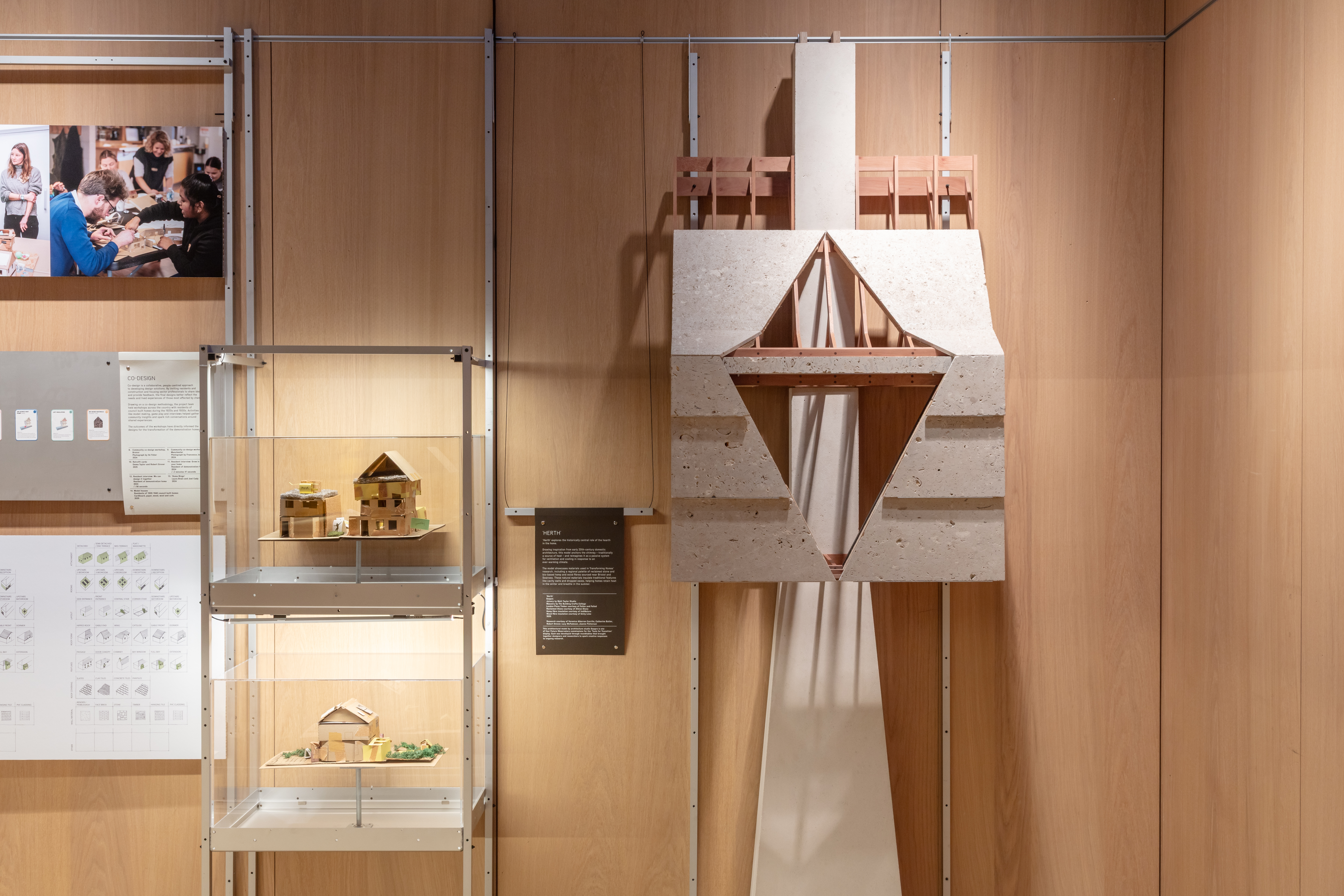
The third project, Transforming Homes, addresses a national challenge: the retrofitting of older homes. Working in Bristol and Swansea, the research explores how council-built houses from the 1920s to 1940s - many affected by damp, poor insulation and outdated layouts - can be redesigned to remain viable for another century. The team collaborates with residents and local authorities to monitor performance indicators such as heat loss and humidity, and to experiment with retrofitting methods grounded in locally available materials. The exhibition includes community-made model houses and a commissioned architectural model by Studio Saqqra, built from reclaimed stone and bio-based materials including hemp and wood fibre. These choices reflect a growing recognition of the value of regionally specific materials and the embodied carbon benefits of reusing existing stock.
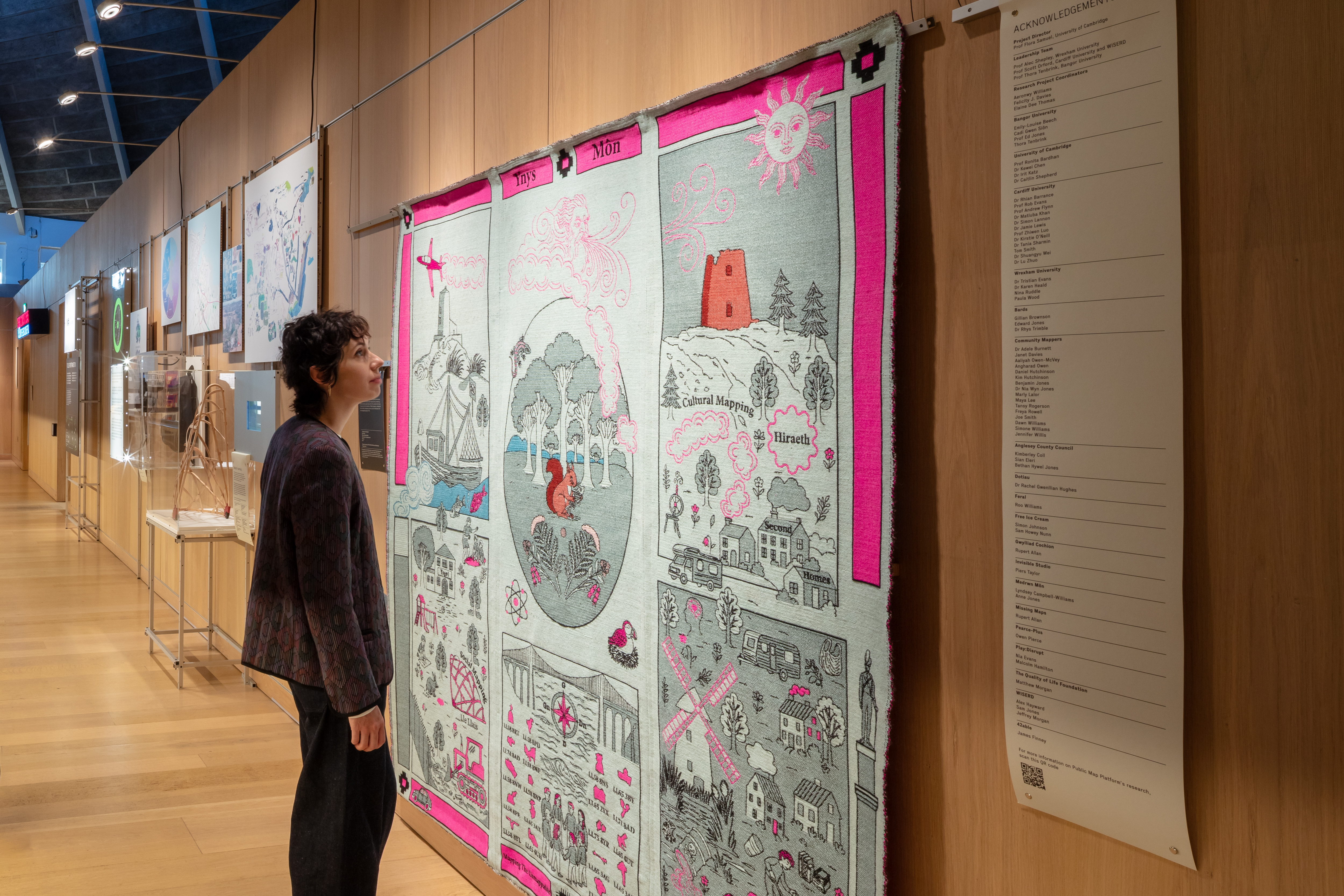
The final project, Public Map Platform, looks at how communities can better understand the environmental changes happening around them. Working with residents of Anglesey in North Wales, the project blends scientific datasets with sensory and cultural memory, integrating stories, sounds, and local knowledge with environmental data to build a more holistic view of the island’s climate risks and future planning needs. The exhibition features community-made zines about Anglesey’s wildlife and landscapes, as well as a handwoven textile artwork by Sahra Hersi that captures everyday experiences of place that are not always visible in maps.
Taken together, the four research strands illustrate how design and material innovation can support communities to navigate both the immediate and long-term challenges of climate transition. The exhibition also underscores a growing need for collaboration between designers, scientists, local authorities, material producers and the public.
Design Museum Director Tim Marlow underlines the exhibitions significance, “Future Observatory is unlike any initiative in any museum in the world. Its work is transformative, and the Design Museum is both energised and inspired to showcase this ongoing design research.” As mentioned, Future Observatory’s flagship Green Transition Ecosystems programme underpins the exhibition, and with AHRC announcing a further £15 million to extend the initiative to 2028, the Design Museum signals a long-term commitment to design-led climate research. As Future Observatory Director Justin McGuirk explains, “Future Observatory’s mission is not just to help drive the green transition through design research but to get that research to a broad audience. Tools for Transition brings together the four projects in our flagship Green Transition Ecosystems grants programme. These are ambitious, multi-partner collaborations tackling systemic issues, and the display makes them brilliantly accessible. We can’t wait to see this work evolve as Future Observatory moves into our second phase.”
Tools for Transition runs on Level 2 of the Design Museum until autumn 2026 and is free to visit.