

Surface Perspectives: Ryan Canning, Architextures

As architecture continues its shift towards digital workflows, materials are increasingly encountered on screen long before they arrive on site. Yet translating the complexity of stone, timber, ceramics and other surfaces into accurate digital resources remains a significant challenge. Glasgow-based platform Architextures was established to bridge that gap, combining a growing library of real-world materials with tools that help architects and designers create more accurate drawings, visualisations and specifications. In this edition of Surface Perspectives, founder Ryan Canning discusses the importance of understanding the stories behind materials, the role of digital tools in specification, and why natural stone still has much to offer contemporary architecture.
What does a typical day look like for you?
I live close to our studio so every morning starts with a 10-minute bike ride which is enjoyable as long as the rain stays off! In the office, we start each day with a stand-up meeting with the development team, where we talk about what we did yesterday and what we're working on today. After that, it is a varied mix of things. Some days I may need to concentrate on the more monotonous admin tasks involved in running the business, while on others I'm back to coding or working on mockups for new features.
We're lucky that much of the work we do is self-directed so we can be flexible around deadlines. That also means in some cases what we do on a daily basis can be quite reactive to other factors, for example if we encounter bugs or user feedback that we think is important to prioritise.
How integral are materials/surfaces to your day-to-day?
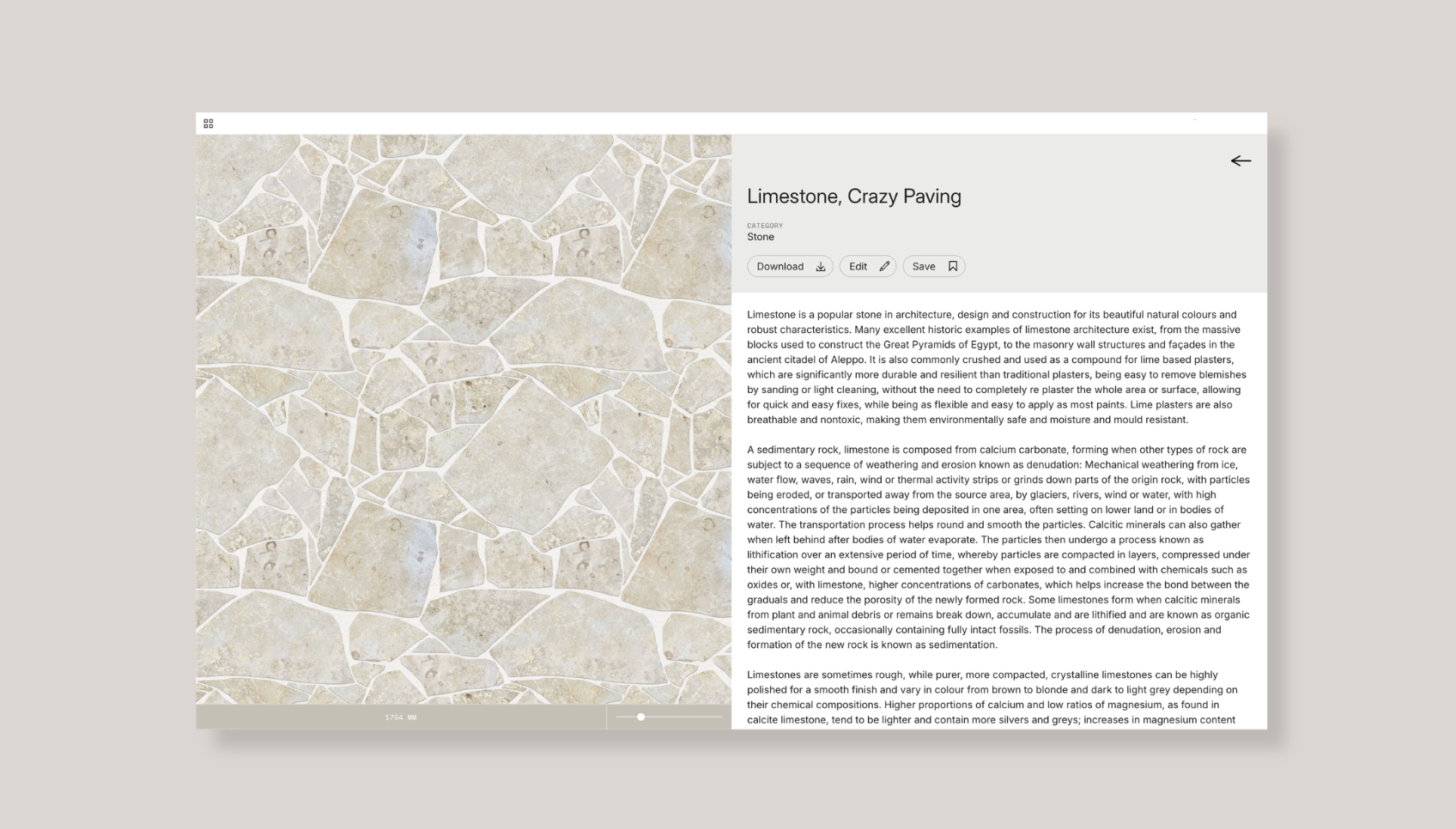
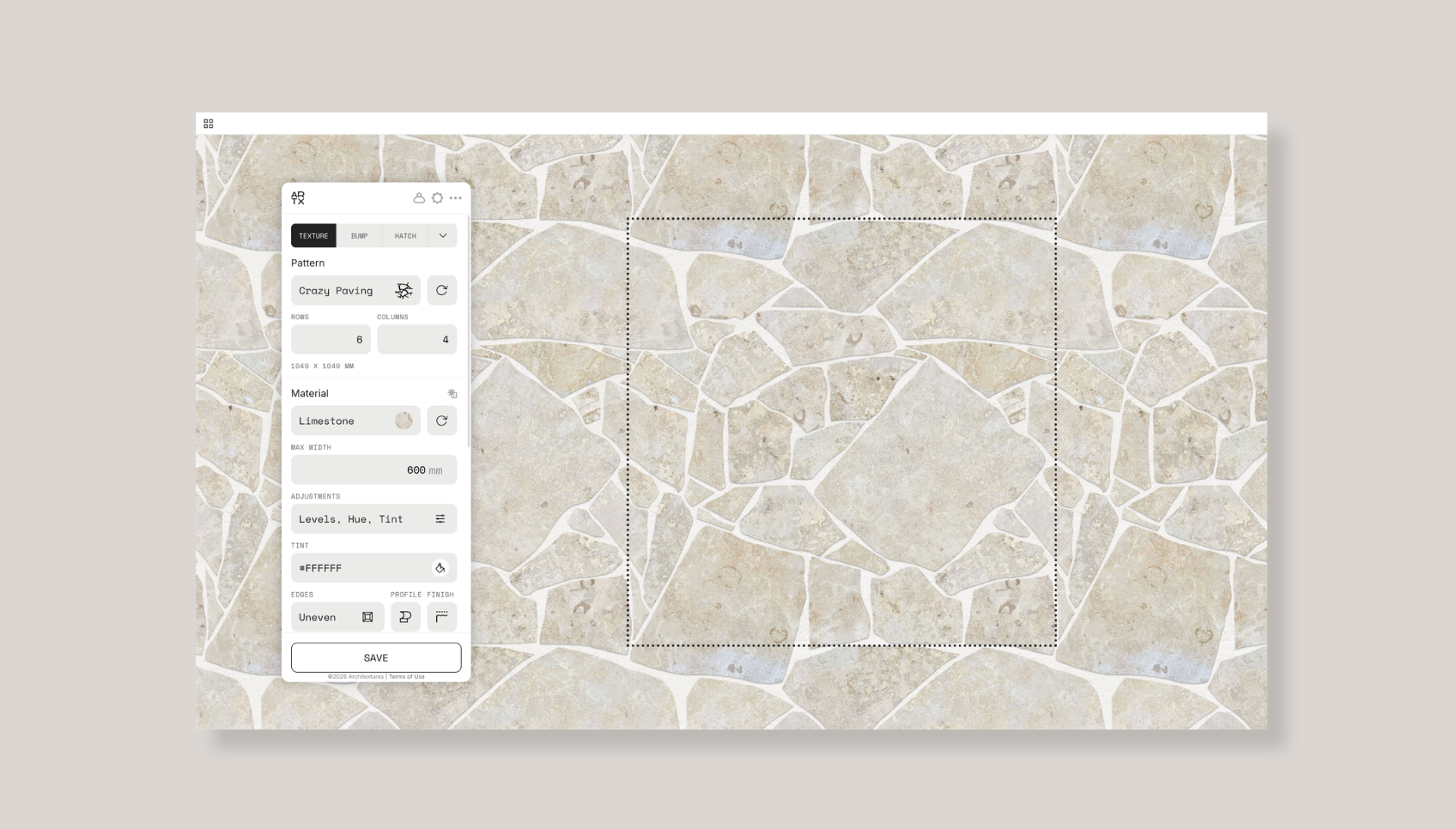
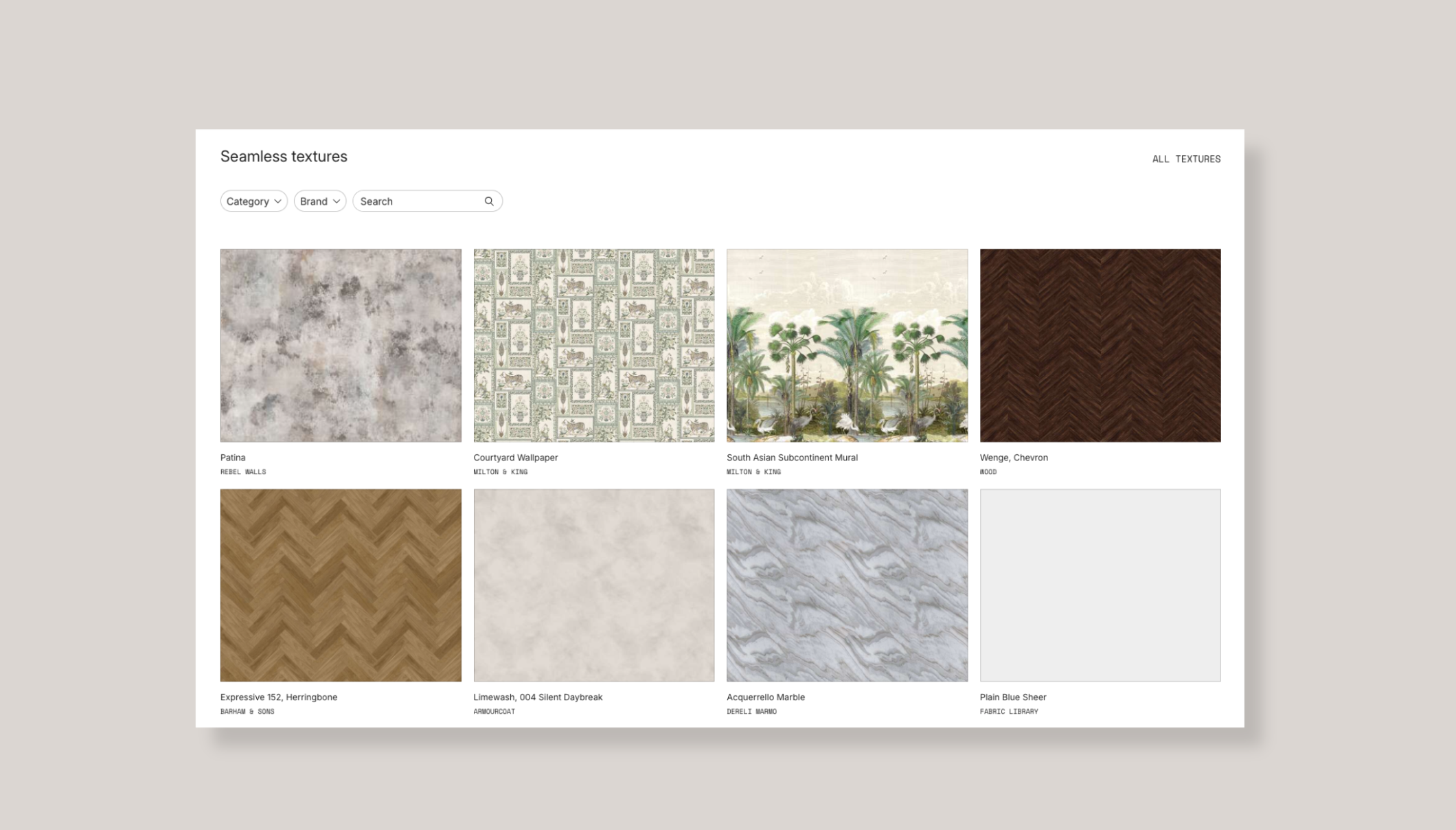
Materials are at the centre of everything we do. When I first started building the site in 2019, the main aim was to build a practical tool to make it quick and easy to customise materials for 3D models and drawings. The secondary goal was to build a well organised library around the editor tool, that communicates detailed visual and technical information about the materials to our users. We now have a wide range of materials on the platform, over 8,000 individual listings, ranging from bland acoustic ceiling tiles to incredible Andesite Porphyry.
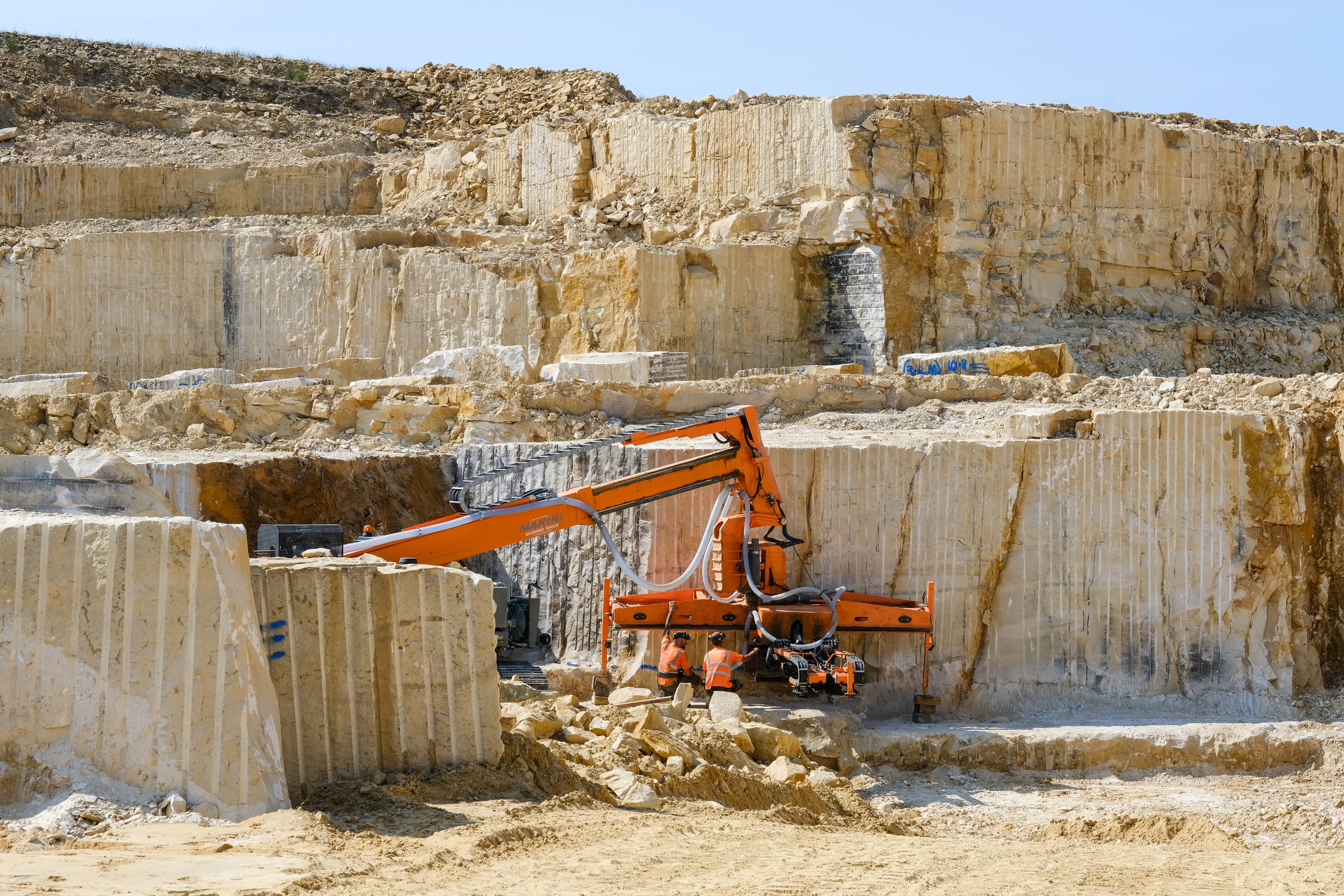
Although our output is digital, the images on the site come from real materials. We spend a lot of time sourcing the materials, sometimes receiving them to our studio and occasionally travelling to quarries, yards or warehouses to take photos on site. It's important for us that we see and understand the real materials behind the images and we think it's an important consideration for our audience too, who work on projects that will eventually be built.
What are the biggest lessons you have taken forward from your original training?
Although I studied architecture and I'm now running a software company, my original training was a very good foundation for what I'm doing now. Much of the teaching in architectural education and practice concentrates on problem-solving, and is also very wide-ranging in skills that are transferable to building a business. In particular, design, marketing and communication.
An important lesson I learned while studying is to spend more time in the early stages of design or development building prototypes than researching and planning potential solutions and trying to extrapolate from that. I find that producing a draft of your idea and iterating on it helps solve designs issues faster and also gives you something tangible to help drive projects forward.
Which project/s are you most proud of being involved with and why?
It has to be Architextures! It started off as a side project and grew gradually to become a fully fledged company with users from all over the world. Since we launched the editor, we've had continuous feedback from architects and designers which really helped me to understand the wider appeal and the opportunity to build something bigger than originally planned. In that same regard, the work we now do with manufacturers to digitise their materials has also been rewarding. Traditionally it has been very difficult to do but can now be done quickly and brings value to both the manufacturers and architects who want to use their materials in their drawings.
What do you feel are the main challenges facing the stone and surfaces industry today?
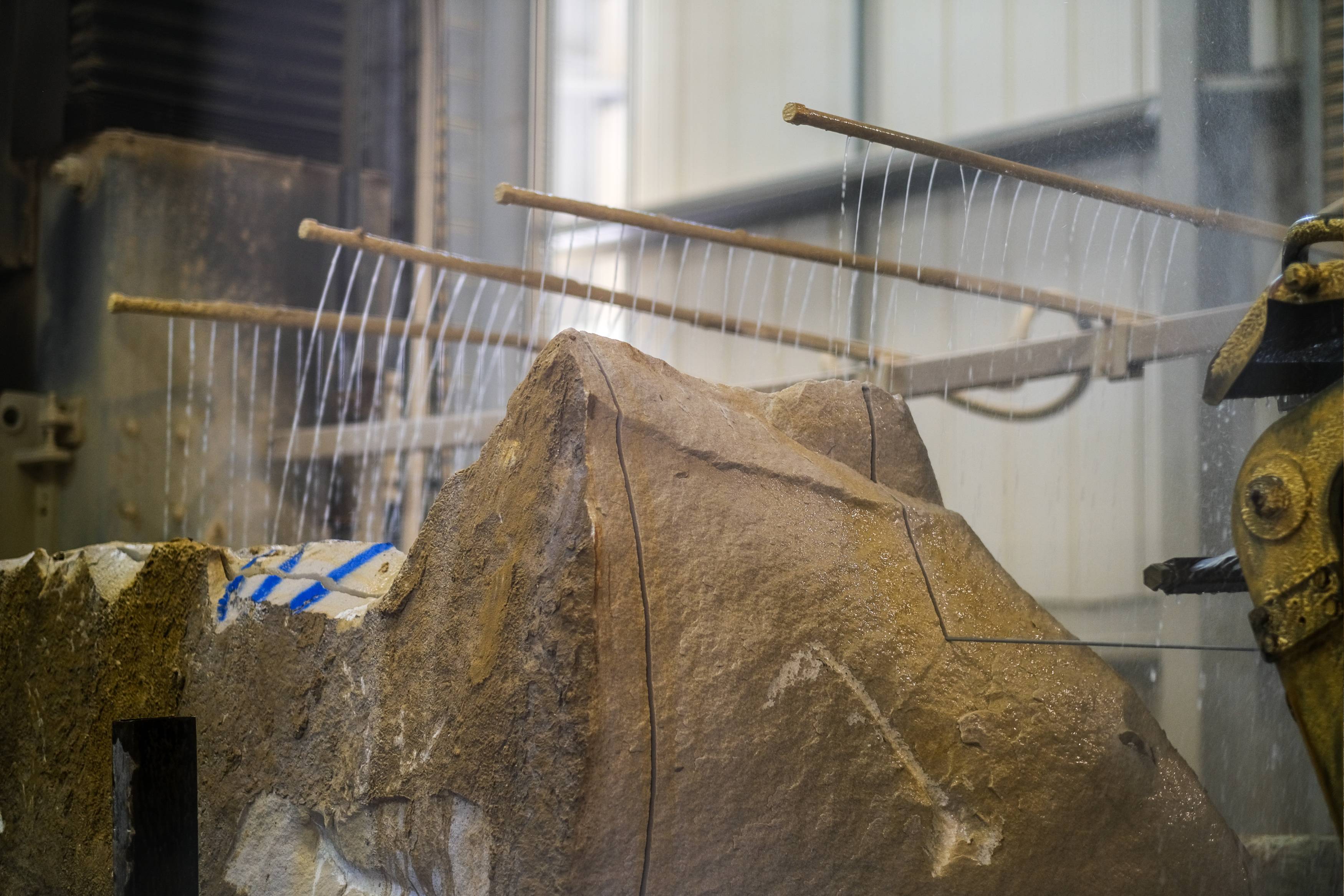
For stone I believe there are a lot of misconceptions around cost, as well as how it can be used structurally due to the fact it has not been widely used in that way for a long period in the UK. For general surfaces and construction materials as a whole, I think there is often a knowledge gap between designers seeing a sample and specifying the material, and understanding the story behind how it has been sourced and manufactured. Understanding that story helps inform the choices designers make and can lead to better outcomes for sustainability and efficiency but also the design itself.
Although we provide information about the materials on our platform, we recognised that there was an opportunity for a richer format where we could have in depth writing with image and video footage to help show how they come to be. This led to the creation of Stories, our online magazine where we write about architecture projects from the point of view of their materiality.
In your opinion, what are the positives of using stone in the built environment?
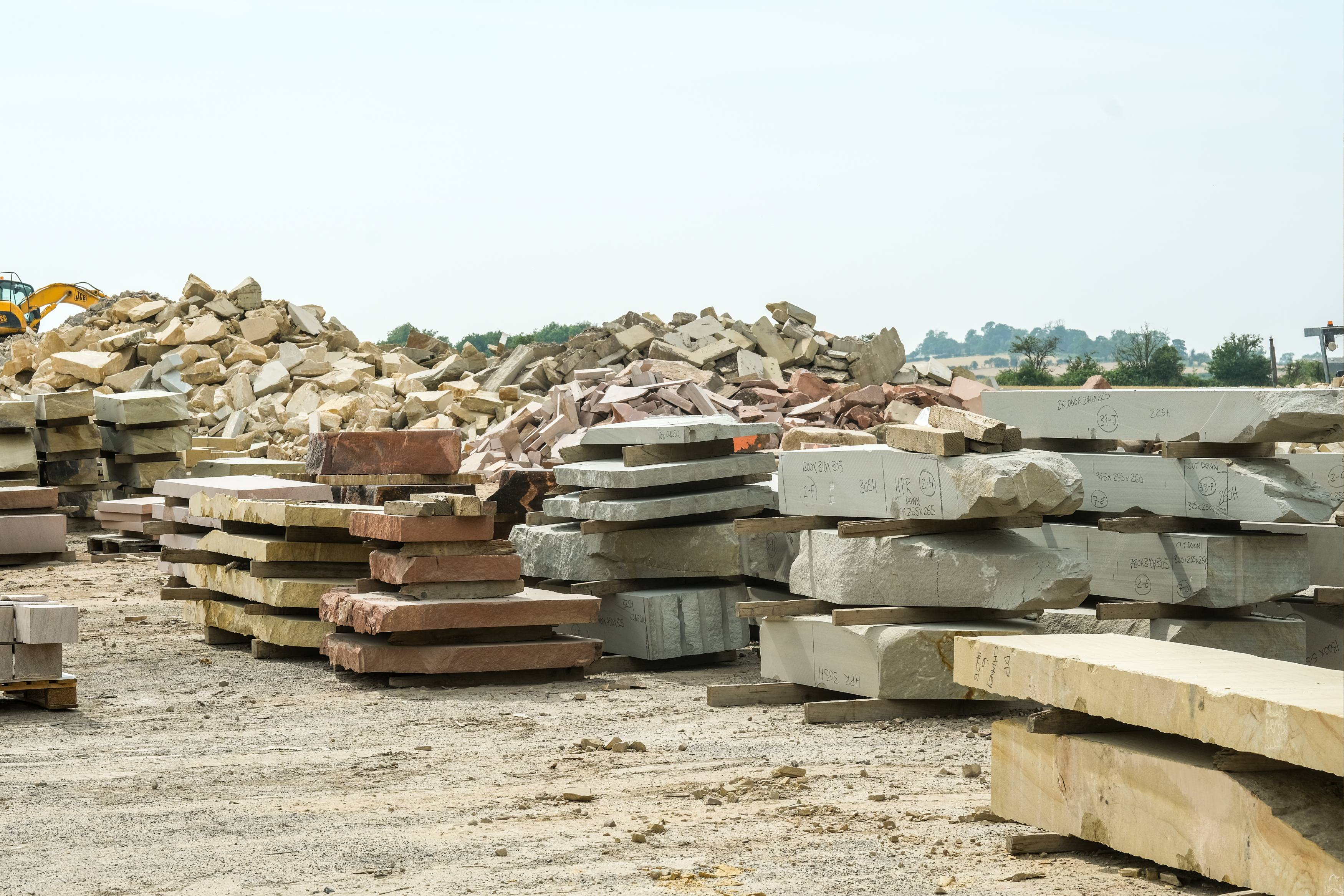
It's a natural material that doesn't require complex manufacturing processes with lots of ingredients. That has knock on effects for the amount of energy required and has benefits for human health when the need for synthetic materials is reduced. When used structurally, it reduces the need for other carbon-intensive materials like steel primary structure as well as support systems for cladding if the stone is also used as the finish. Finally, it looks great!
How does sustainability shape your thinking and decision-making, and how do materials fit into this?
There are three main sustainability considerations for us as a business. The first is how we actually build the software. The internet is now a huge contributor to global emissions and people are becoming more aware of this. We serve 4 million downloads per month so it's important we make the files as efficient as possible. When developing, we spend a lot of time thinking about how we can optimise the page size and reduce the impact for users and their energy use.
Next is the availability of sustainability data on the platform. At present, manufacturers can populate each of their listings with any data they want to provide but there's no requirement for manufacturers to add sustainability data specifically. Our aim is to make sustainability data available for all materials on the site from sources like EPDs or estimates based on the category where those are not provided. The next step is to then allow designers to filter search results based on that data to help make specification decisions.
The final way is how we operate logistically. We promote green forms of transport as much as possible like cycling to work. When we do events abroad, we take the train as much as possible. We've previously travelled by train from our studio in Glasgow to events in the Netherlands and as far as Denmark.