

Surface Spot: Historical architectural fragments inform the present

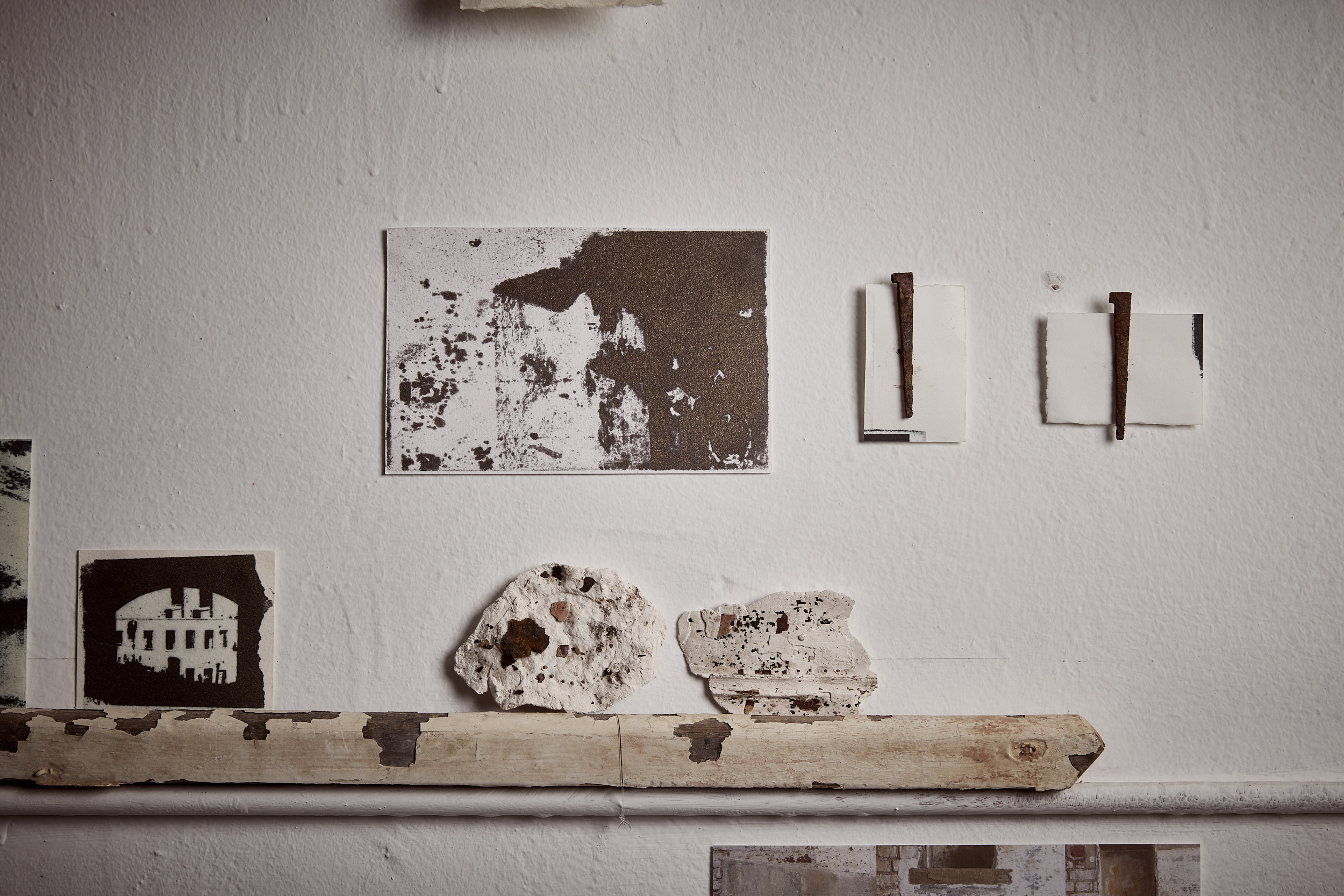
For conservation architect Deniz Beck, the material traces left behind by a historic building can be as significant as the building itself. Her Shape of Memory project takes fragments from Fort Gilkicker in Gosport, Hampshire, and uses them as the starting point for a contemporary lighting piece that retains something of the site’s physical and material history.
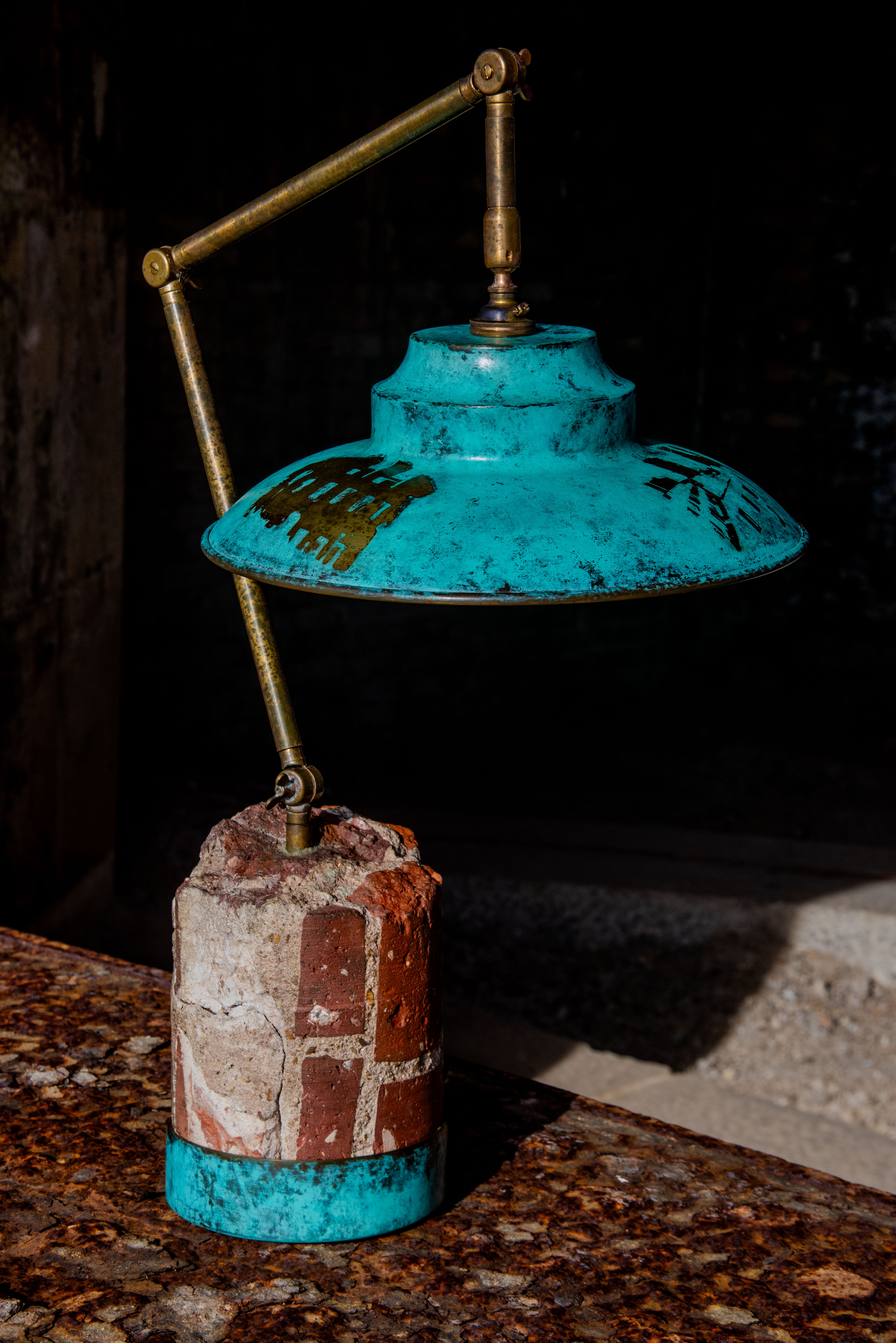
The project grew from Stories You Can Hold, a one-year research and development project exploring how heritage sites, artists and makers can collaborate to create site-specific objects. Beck, working with artists Sally Tyrie and Pippa Charlesworth and metalsmith Craig Palmer of Spin 360, developed Gilkicker Light No.01 from the materials and geometry of the Victorian fort.
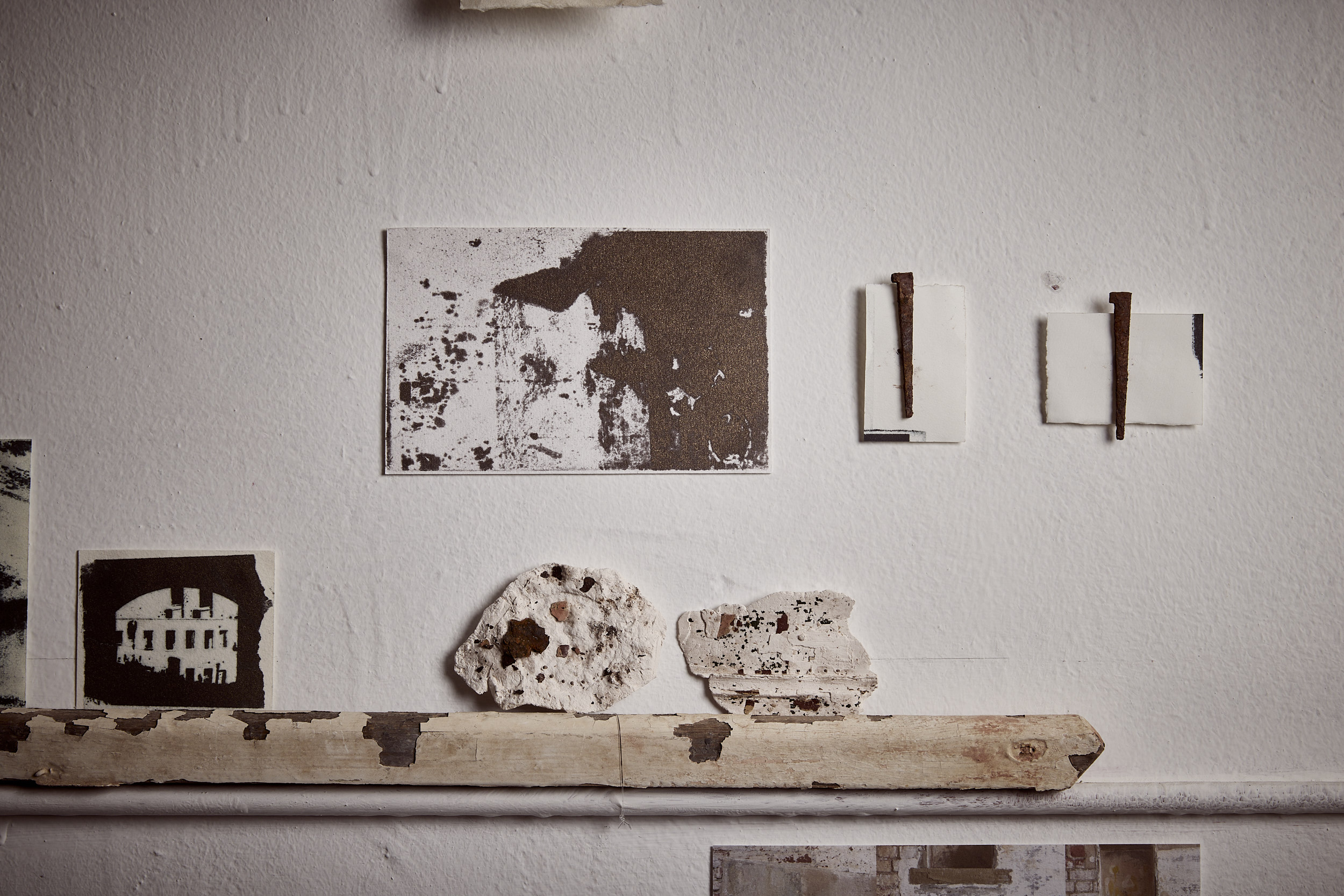
Rather than treating fragments generated through conservation and construction as waste, the team collected stone shavings, handmade iron nails, metal fragments, burnt timber, green paint and other debris. Their value lies partly in what they reveal: evidence of labour, use, decay, repair and loss embedded in the physical fabric of the site.
That approach reflects Beck’s wider conservation practice, which is rooted in close observation of existing buildings and their accumulated marks, alterations and repairs. Her interest is not simply in preserving historic fabric as a fixed object, but in understanding buildings as places shaped by memory, use and reinvention.
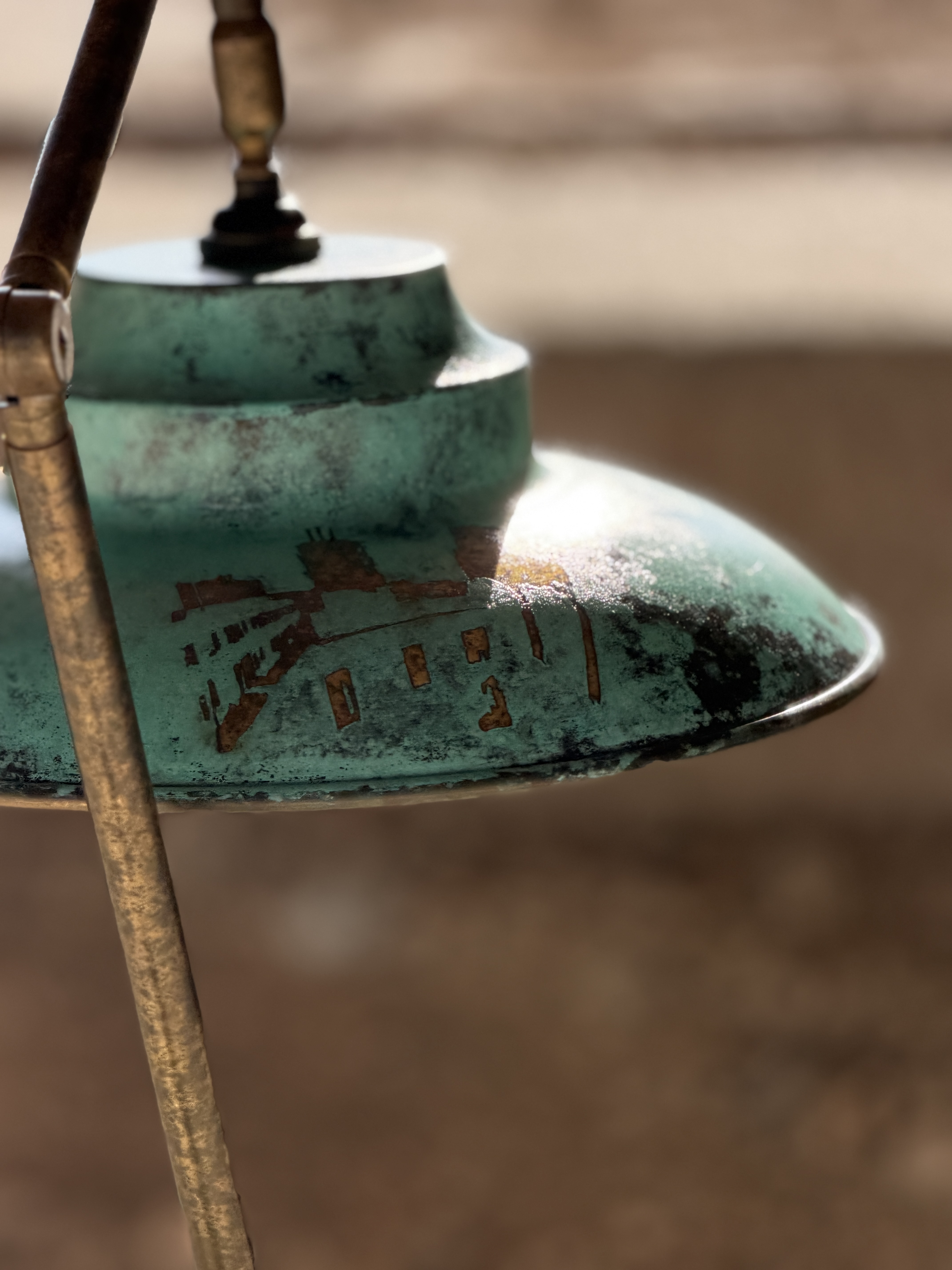
For the light, Beck’s LiDAR scans of Fort Gilkicker provided another form of material record. Their fragmented, incomplete quality became a reference for Tyrie, who developed designs around the fort’s geometry, openings, walls and shifting relationship between light and shadow. The eventual light fitting translates those observations into a functional object rather than attempting to reproduce the building literally.
Palmer developed the prototype through experiments with brass, etching and fire-marking. The finished brass surface is altered and coloured through heat, creating a direct material connection with the burnt timber found at the fort. Heat, accident and transformation therefore become part of the surface rather than simply ideas informing its form.
The resulting object demonstrates how conservation can generate new material possibilities without stripping away the evidence of a building’s past. The fragments are not used decoratively as historic tokens; instead, they inform the design language, material palette and making process.
“I hope it encourages visitors to see materials not simply as physical objects, but as carriers of history, care and possibility,” says Beck.