

Surface Spot: Rezign transforms textile waste into solid surface

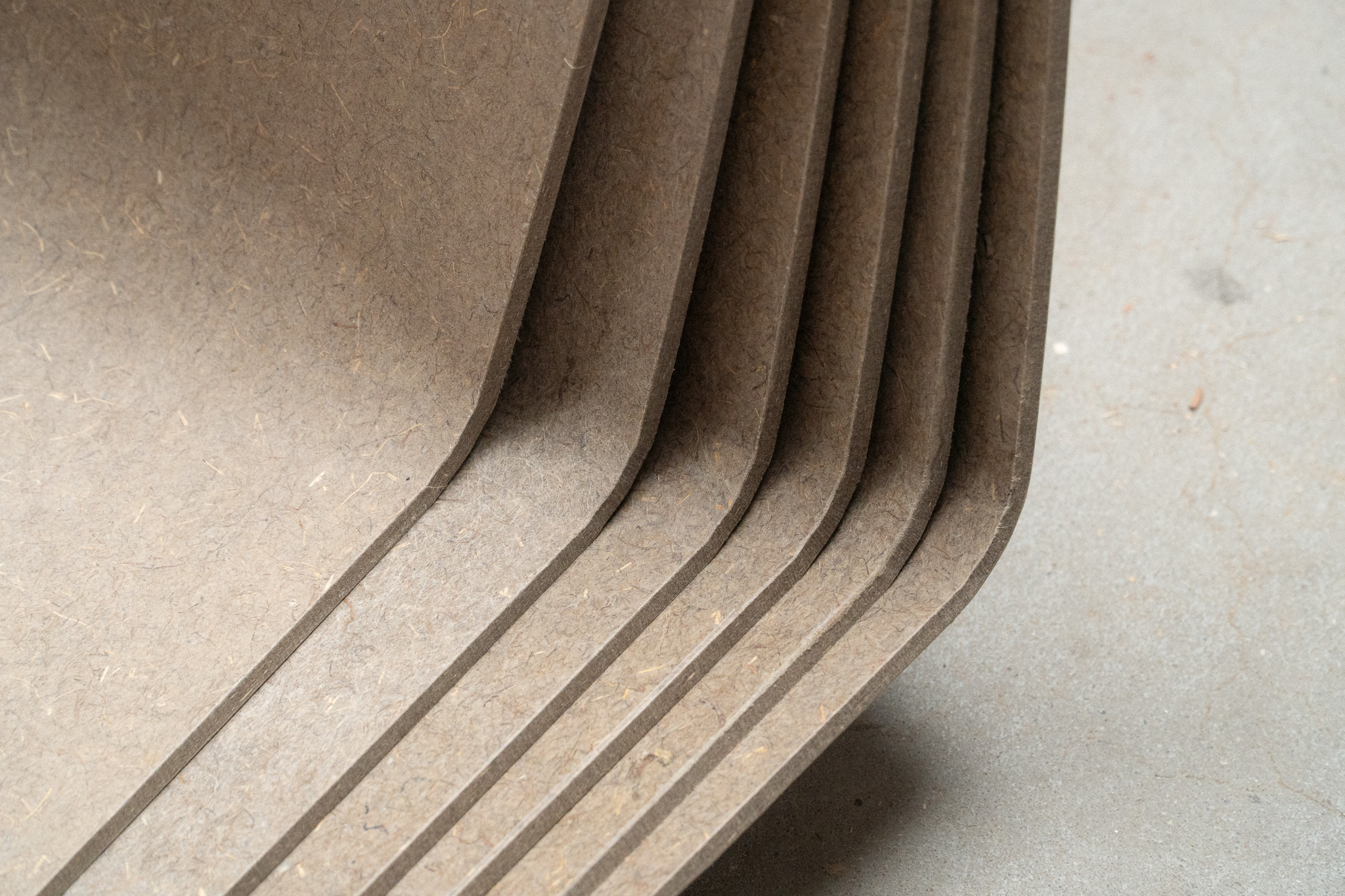
Textile waste is usually associated with recycling streams, but Rezign takes a different approach, treating discarded fibres as a material for architecture and interiors. Developed from the work of Dutch furniture brand Planq, the Rezign range turns post-consumer textiles and biobased fibres into veneers, panels, acoustic products and formed components.
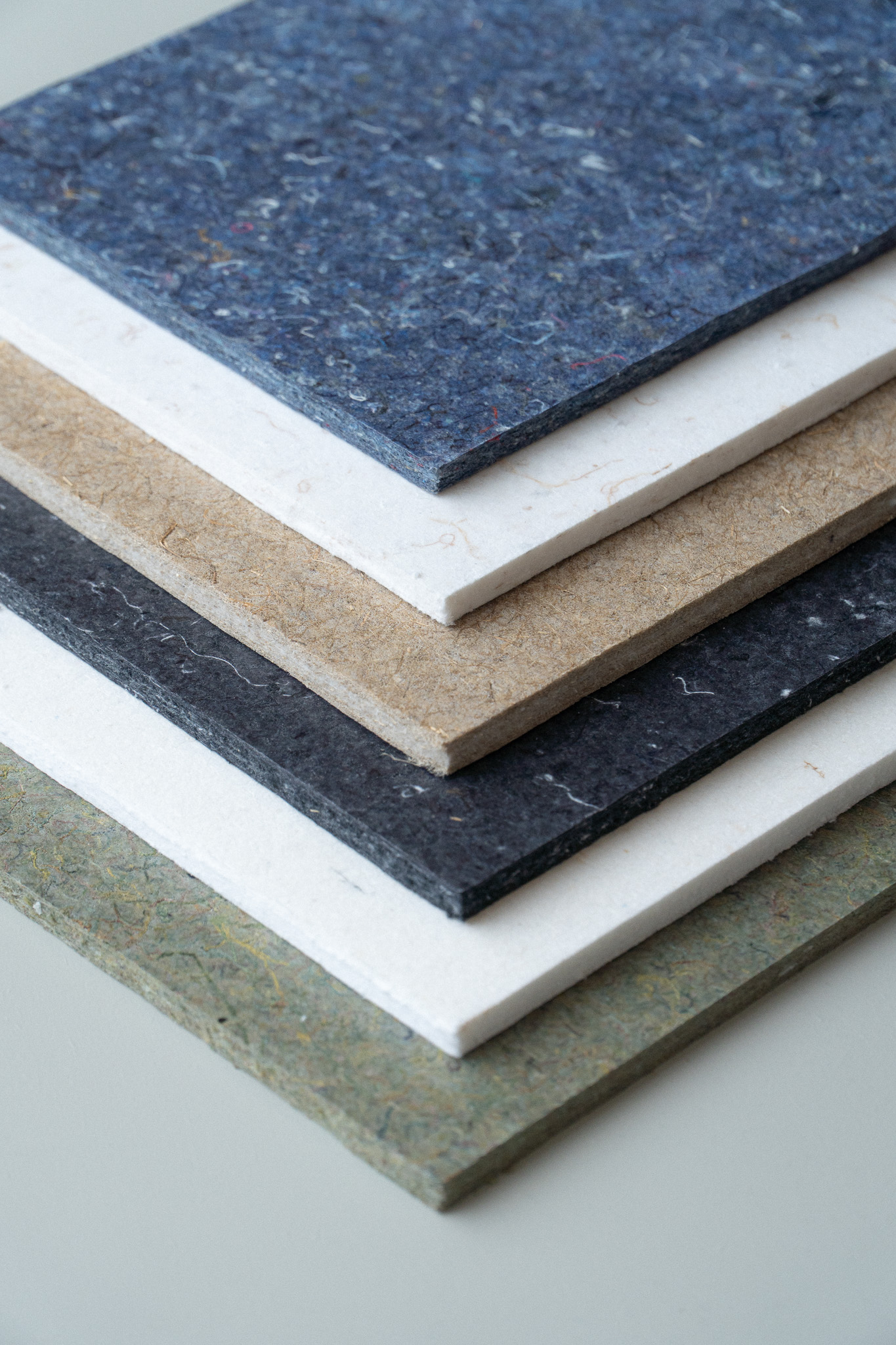
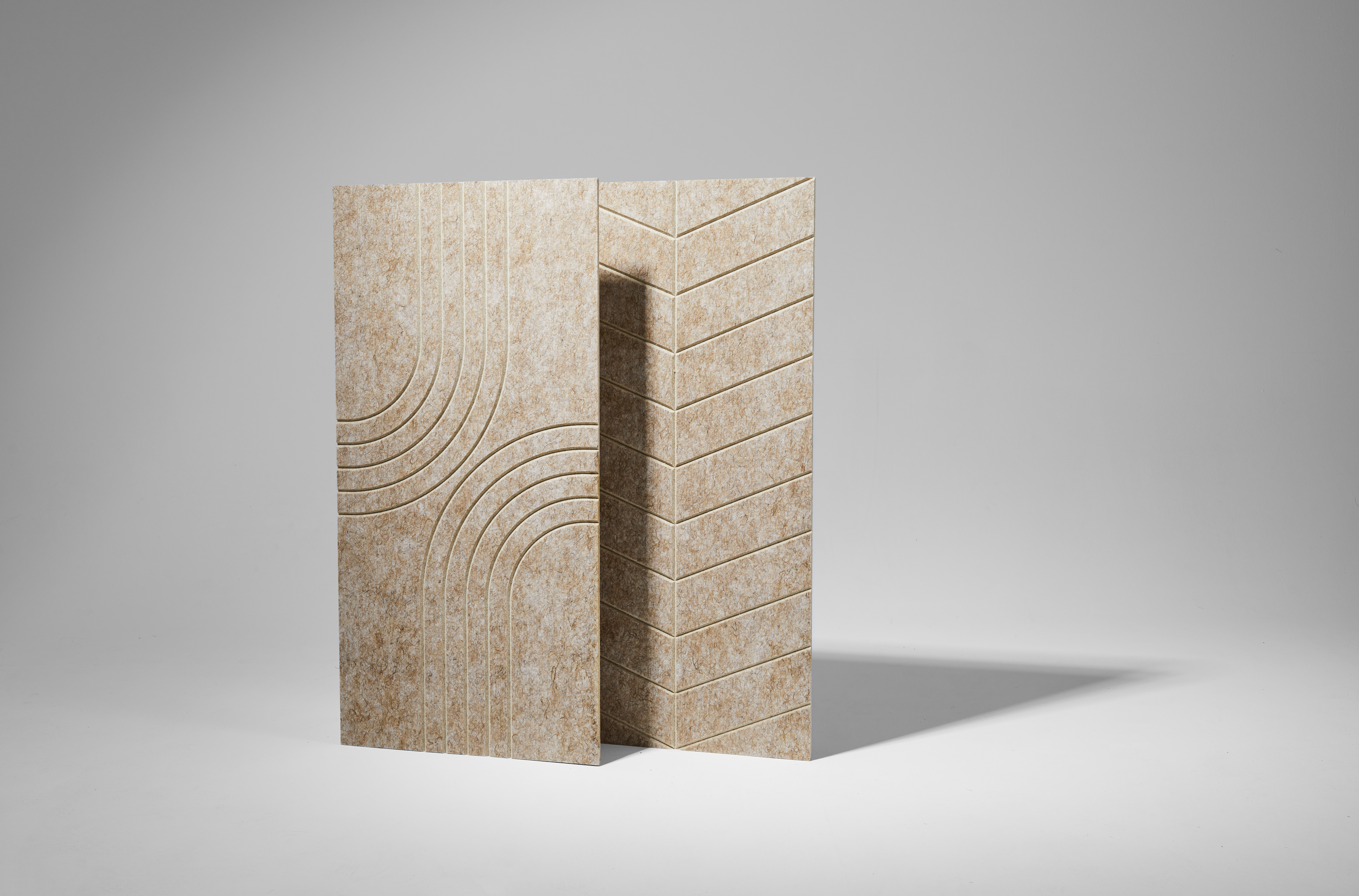
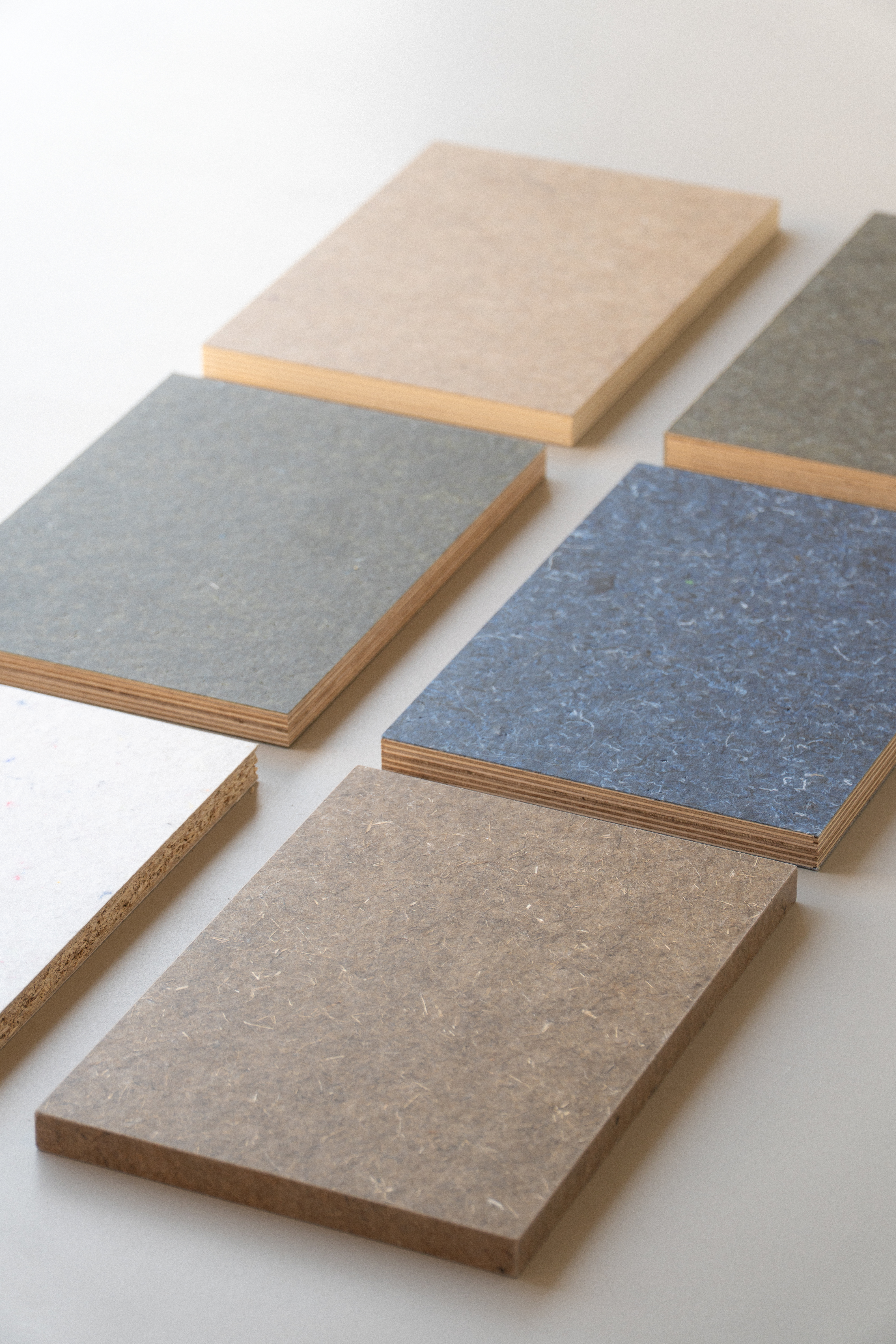
The material has an immediately recognisable quality because its constituent fibres remain visible rather than being disguised behind a uniform finish. Denim, suits, uniforms and white cotton textiles can all become part of the surface, while flax, hemp and jute coffee bags introduce further variations in fibre, colour and texture. Each batch therefore has its own character.
This is an important distinction in a category of recycled materials that can sometimes attempt to imitate conventional finishes. Rezign instead makes the previous life of the material part of its visual language. The company describes its approach as keeping “every fiber” uncoloured and true to its source, allowing the provenance of the waste to remain legible in the finished product.
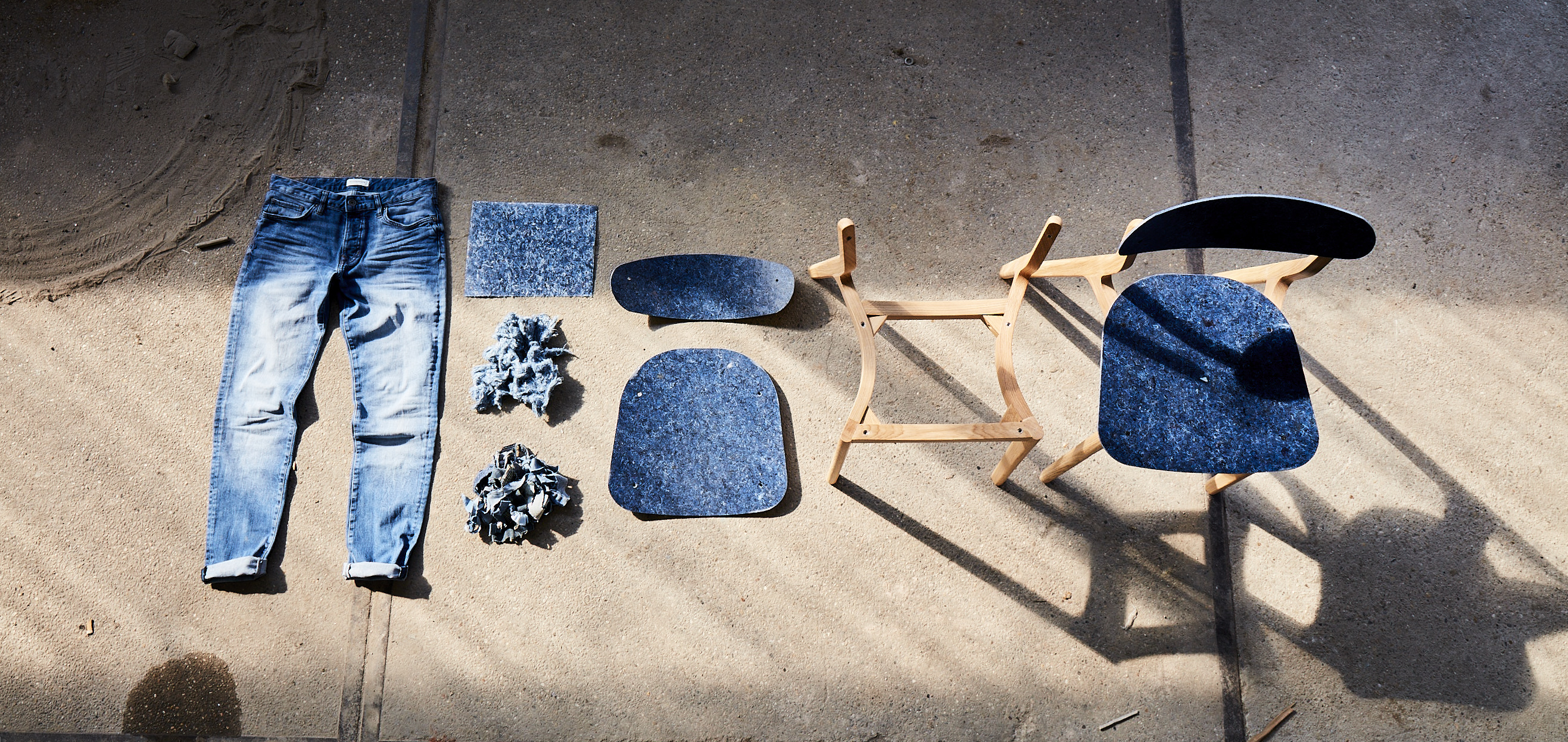
For Rezign Veneer, textile waste is processed into fibres before being carded into felt. The felt is then pressed with a biodegradable binder made from potato or corn starch to form a hard, matte surface. At 0.8mm thick, the veneer can be bonded to a range of carrier panels and used for furniture, cabinetry, doors, wall panels and other interior applications. It is splash-proof rather than water-resistant and is intended for indoor use.
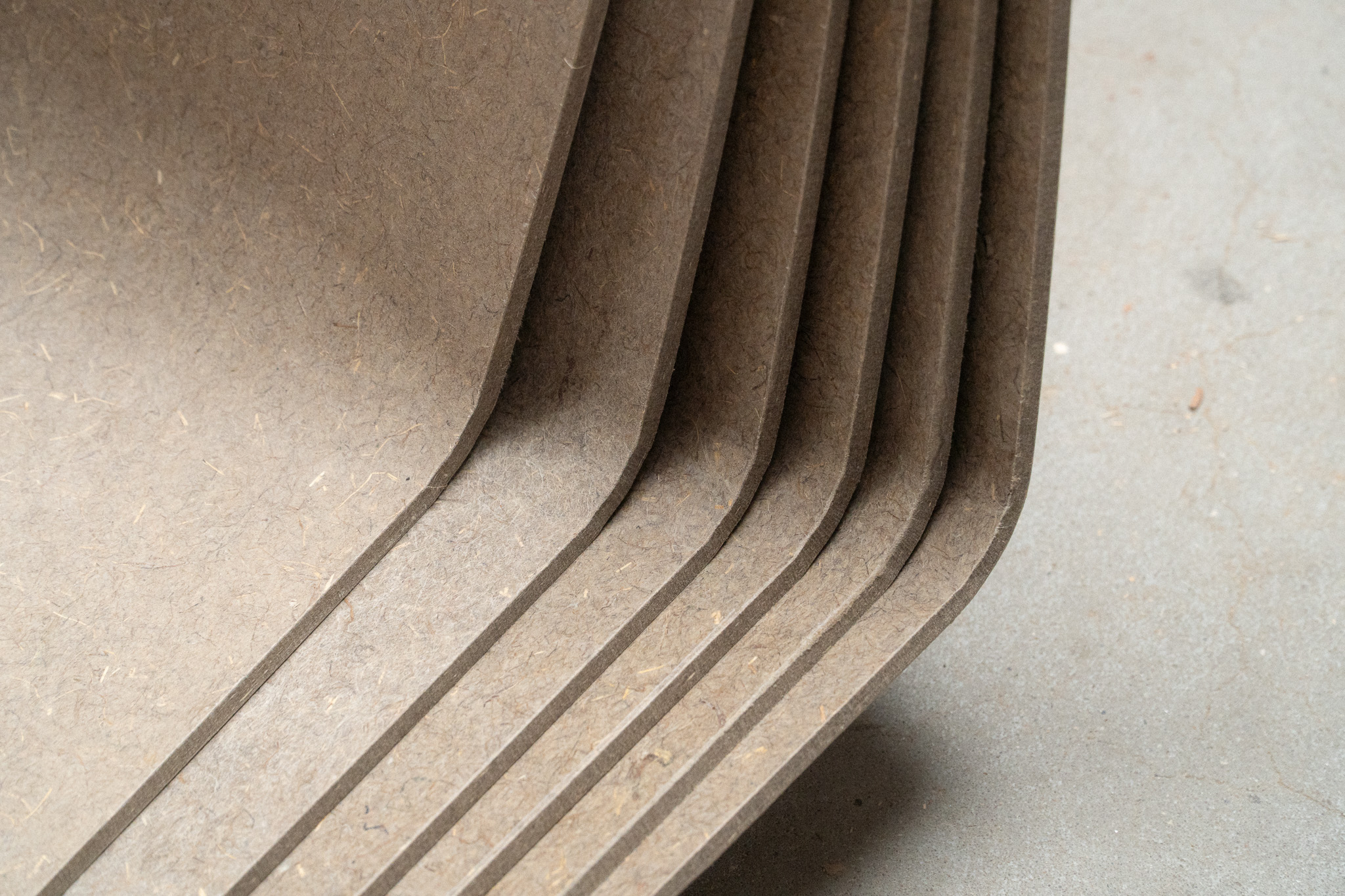
The material can also move beyond flat surfaces. Rezign’s three-dimensional formed parts use heat and pressure to press the recycled composite into moulds, allowing the same material language to be applied to components such as chair parts, hangers and other shaped products.
There is an interesting relationship between the material’s industrial processing and its appearance. Although fibres are shredded, mixed, pressed and engineered into a new surface, they retain enough visual information to make the manufacturing process apparent. The result is closer to a compressed textile landscape than a conventional decorative board.
That visibility also creates opportunities for designers working with colour and identity. Rezign can use a company's own discarded textiles as a feedstock, creating bespoke materials from workwear or other organisational waste. Collaborations with companies including Mango and Telia have explored how existing textile colours can become part of a new material rather than being discarded with the original product.
The approach extends the idea of material specification beyond choosing a finished surface. Rezign’s bespoke process begins with collecting and analysing a client's waste, followed by material development, testing and production. Its developing factory is intended as a research and production environment where textile residuals can be shredded, mixed, pressed and tested locally.
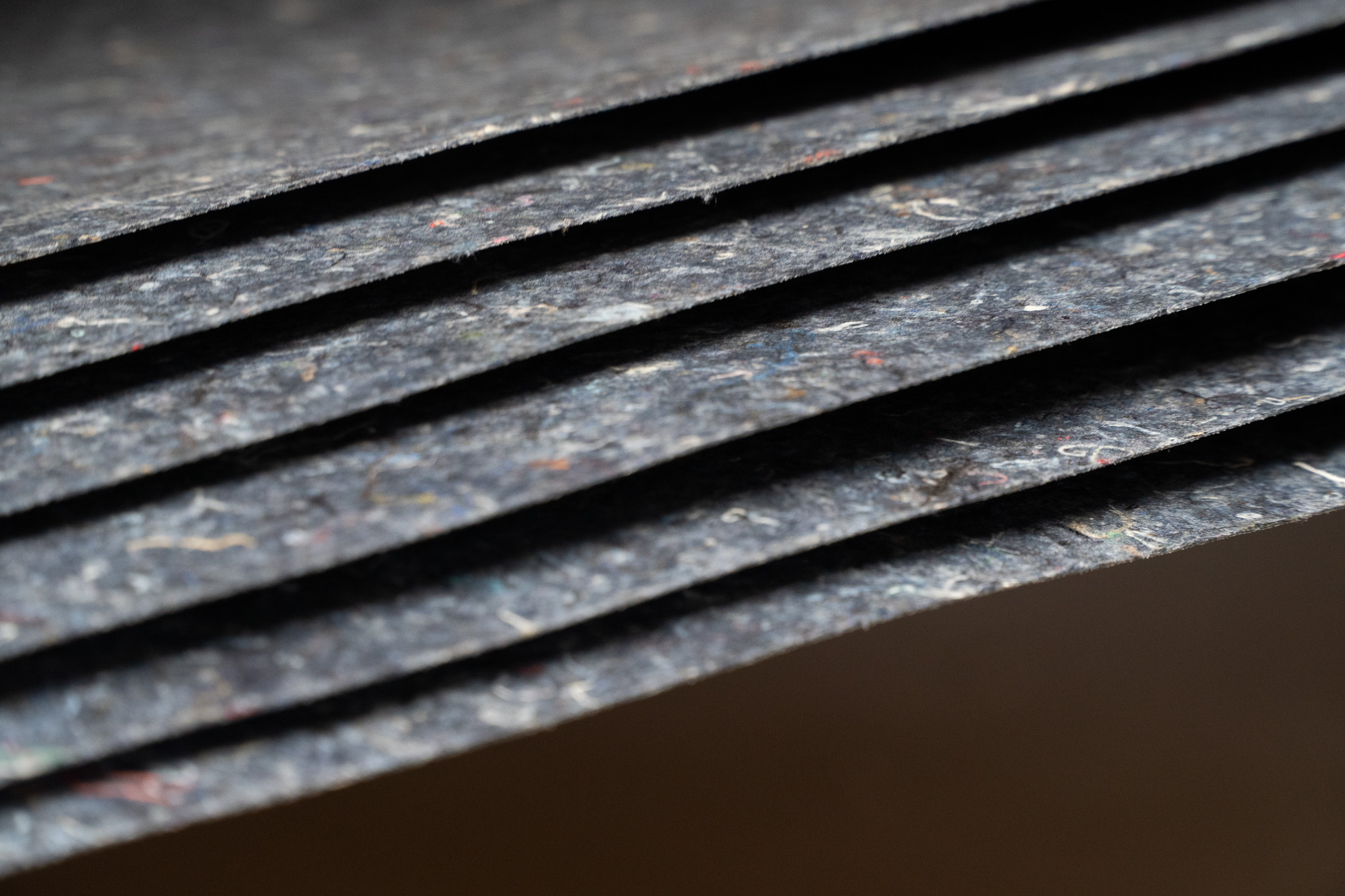
For interior applications, the appeal is therefore twofold: the material offers a distinctive tactile surface, while its visible fibres provide a direct connection to the waste stream from which it came. Rather than making recycled content disappear, Rezign makes it part of the architecture’s surface language.