From the organisers of The Stone & Surfaces Show

  • Log in
  • Home
  • News
  • Jobs
  • Call for Submissions
  • Events
  • Advertise
  • Home
  • News
  • Jobs
  • Call for Submissions
  • Events
  • Advertise
Main Image
dsc00516.jpg

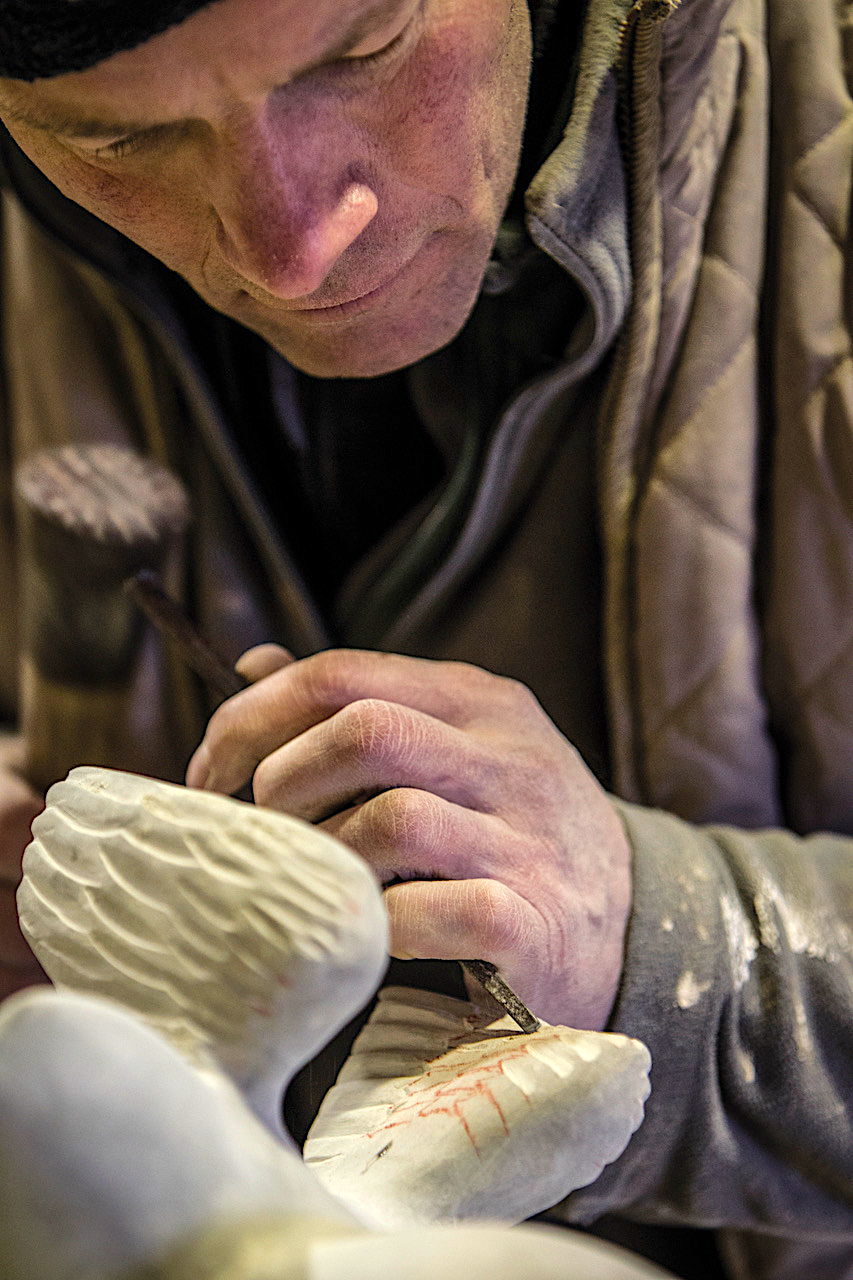
Surface Perspectives: Blair Woodland, Woodland Stonework

2026-01-09


Nestled between the breathtaking north Cornish coast and the rugged Bodmin Moor, Woodland Stonework builds mortared walls, drystone walls, stone cladding for new builds, Cornish hedging, and bespoke commissioned pieces. The man behind the company, Blair Woodland, has a passion for stone craft, which is apparent from the many varied projects in their extensive portfolio. So what makes a traditional craftsperson like Blair tick? 


What does a typical day look like for you?


There’s rarely such a thing as a standard day on site. Larger jobs can stay the same for a while, but because I work across so many areas of stonemasonry, no two projects are ever truly alike. That variety is the beauty of the job. It keeps you thinking, learning, and passionate.


Last winter was spent on a single project. Two large, sweeping Cornish hedges flanking a new driveway. The work involved cutting trenches into compacted farm track, placing heavy slate boulders into the footings, sifting through over 100 tonnes of stone, and shovelling nearly 50 tonnes of soil into the centre of the walls for compaction. This winter couldn’t be more different. I’m now working at a grand Georgian manor house, one of the most picturesque settings I’ve worked in. The project is a bespoke granite and slate sphere for the garden. This will be the centerpiece outside the newly built orangery.  While I love all aspects of stonemasonry, jobs like this are the ones where you really invest yourself fully and really push your craft for perfection.


How integral are materials to your day-to-day?  


Materials are the most integral part of my work. Without stone, and the right stone, I simply don’t exist. Every job revolves around it, and each project demands something different. Stone is never just a material,  it defines the finished work.


Some work involves repair or conservation, where matching existing stonework is essential. That means finding not just the right type of stone, but the right colour, size, and character. People often assume slate is slate or granite is granite, but in Cornwall that couldn’t be further from the truth. I have five slate quarries near where I live, all within a few miles of each other, yet each produces a distinctly different slate.


Because my day-to-day job is laying stone, there’s never a moment when I’m not handling it or thinking about it. Over time, you develop an instinctive understanding of how a stone behaves. Whether it’s soft or hard, how it reacts to a hammer or chisel, whether it needs a gentle touch or a firmer hand. That knowledge becomes second nature. You don’t stop to overthink, your eye reads the wall, your hand selects the stone, and a few taps later, it fits snugly into place. It’s instinct.


What are the biggest lessons you have taken forward from your original training? 


I don’t have any formal training in stonemasonry, and if I’m honest, it was never something I planned to do. I vividly remember telling my parents as a child, “I don’t want to be a builder like Dad,” purely because I didn’t want to get up early for work, which probably explains why I still try to ignore my alarm clock.


I set out to become a fine-dining chef and did exactly that, working as a pastry chef in two high-end restaurants. But around fifteen years ago, I fell out of love with the industry. I ended up doing the very thing I’d sworn I never would, working alongside my dad in building. 


He’s a skilled stonemason and a real lover of the craft, so there were plenty of jobs where I laboured while he worked the stone. That’s where my real education began. Whenever I wasn’t mixing mortar or shifting stone, I was watching, learning, and absorbing. Stonework immediately caught my attention; it was creative, physical, and permanent, something that would stand for generations.


I started trying to anticipate which stones my dad would need next and handed them to him, quietly proud of my choices, even if he never used them. Over time, I was trusted to lay a few stones myself, then whole sections, and eventually an entire wall on my own. From there, the work grew until I found myself responsible for all the stonework on a multi-million-pound new build. After that, the decision was clear. Stonework was what I wanted to do. From then on, I focused solely on the craft. Studying different styles, techniques, and materials wherever I could and learning by doing.


Which project/s are you most proud of being involved with and why?


One of the most meaningful projects I’ve ever worked on was helping my dad rebuild a listed threshing barn.


The brief was uncompromising. The barn had to be rebuilt using traditional materials and methods throughout. That meant constructing two-foot-wide solid stone walls with the original stone, laid in lime putty, just as they would have been two centuries ago. 


Having the opportunity to build something in this way was extraordinary. I’ve worked with lime before, but this was different. We weren’t repairing or adapting an old structure, we were rebuilding a 200-year-old barn from the ground up. 


Projects like that are incredibly rare now, largely because modern materials and methods have replaced traditional building practices. To be trusted with work of that importance and to experience firsthand how buildings were once constructed to last for generations was something special. It’s the kind of job I doubt I’ll ever have the chance to do again, and one that has stayed with me ever since.


What do you feel are the main challenges facing the stone and surfaces industry today?


There is one issue above all others that I believe is doing real damage to my trade. Stonework is being carried out by people with no training, no understanding of the material, and no passion for the craft. It’s driven largely by the demand for work to be done as quickly and cheaply as possible, and in my view, it’s slowly eroding the foundations of stonemasonry.


I see it almost daily; walls built using incorrect techniques, poorly proportioned, structurally unsound, and visually disappointing. More often than not, jobs I price end up going to the cheapest quote. I then drive past once the work is finished and see the result, stonework that simply doesn’t work, either practically or aesthetically. It’s frustrating, especially when there is so much stonework being done, yet so little of it being laid by knowledgeable stonemasons. If this continues, this ancient craft risks being lost altogether, which would be a real shame.


There are also far fewer working quarries now than there once were. Historically, most estates, manor houses, and even farms had their own small quarries, drawing material directly from the land. Today, sourcing stone takes far more care, knowledge, and attention.


In your opinion, what are the positives of using stone in the built environment?  


Using stone in the built environment is deeply important to me. It is about holding on to our heritage. England has been built with stone from the very beginning. Our greatest and most beautiful buildings are made of it, and they stand as proof of what was achieved in architecture and engineering long before modern materials took over. From Bath Abbey and York Minster to Rievaulx Abbey, Hadrian’s Wall, and the Roman Baths, the list is endless. From great cathedrals to simple clapper bridges on the moors, stone runs through the fabric of the country. Stone is England, and England is stone.


While I am not building cathedrals or churches, I believe the work I do as a stonemason still matters. I am proud to play my part in keeping the craft alive. Without passionate stonemasons carrying this tradition forward, we risk ending up in a truly concrete jungle, with the closest substitute for stone being a painted tile made to imitate it.


How does sustainability influence your decision-making?


Because stone is always my primary material, the question of sustainability is fairly straightforward. Stone is the epitome of sustainability; it’s a natural product gifted by the earth. As it does need to be quarried and transported, that impact must be considered, but any human-made material requires far more processing, energy, and resources than stone ever will. For that reason, it remains the best option in my book.


There are, however, key considerations I always take into account when working with it. Location is one of the most important. I aim to source stone as close as possible to where it will be used, which reduces transport distances and ensures the finished work sits naturally within its surroundings. There’s little point in building a wall from dark, heavy slate in an area where the local stone is a lighter brown slate; it simply won’t belong.


The quality of the quarry is equally crucial. Choosing the right source ensures a consistent, reliable material, which reduces waste, unnecessary transport, and the removal of rejected stone. High-quality stone also allows you to produce high-quality work - something that shows not just on the day it’s built, but decades into the future. And if it does fail, it can be repaired using more stone rather than replaced entirely.


limittext
Off
Exclude From Lists
Include
Company Tags
M10
CAPTCHA
SEO Title
Discover what life’s like for a Cornish stonemason
Read more
Main Image
web_-_geocrab_-_external_01_-_c_richard_gaston.jpg

Case Study: Caochan na Creige

2026-01-07


Built almost entirely from locally quarried Lewisian Gneiss, Caochan na Creige rises directly from the rocky outcrop on which it sits, overlooking the Minch towards Skye. Here, stone is not applied as cladding or surface treatment; it is the defining fabric of the building.


The remote, self-built stone house on the Isle of Harris has been designed and built by Edinburgh-based practice Izat Arundell, and was named RIBA House of the Year 2025 just before the festive break. An early Christmas present perhaps, but this project has been a labour of love that’s been years in the making.


The house is the first new-build home on Harris for the practice, and also the private residence of the its founders, Eilidh Izat and Jack Arundell. Alongside their architecture studio, the couple also run the Edinburgh-based holiday let Porteous Studio and Scottish cider company Linn, but this project represents a particularly personal undertaking, and one fraught with obstacles. The house was entirely self-built by Jack Arundell, along with Eilidh’s brother, Alasdair Izat, a furniture maker, and their friend Dan Macaulay, a stonemason. Construction began in January 2022 and took 18 months to complete, during which the team endured nine named storms, working through some of the most challenging conditions the Hebrides can offer.


Placing vernacular stone construction firmly at the centre of contemporary architectural discourse, the project is notable not only for its architectural acclaim but also for the way stone is used as both structure and narrative. The Lewisian Gneiss used for the walls was sourced from a quarry less than five miles from the site, ensuring geological continuity between building and ground. Coupled with the team's tangible connection to the site and the building brings a sense of belonging.


The house’s form is deliberately sculptural, shaped to respond to both the extreme climate and the expansive views. Perched above sea level, it is oriented to capture panoramic vistas while offering shelter from Atlantic winds. This balance of exposure and protection is a recurring theme in island architecture, and one Izat Arundell reinterprets through carefully angled walls and openings. Stonework is robust yet precise, with careful attention paid to coursing, junctions and openings. 


The stone’s varied colour and texture give the elevations a geological depth that changes constantly with Hebridean light and weather. A concrete parapet with exposed Lewisian Gneiss aggregate caps the walls, subtly echoing the masonry below while introducing a crisp contemporary line at roof level. Hardwood windows are deeply set within the stone, reinforcing the thickness and solidity of the walls. The result is a building that feels crafted rather than assembled, reinforcing the idea that contemporary architecture and traditional stone skills are not mutually exclusive.


Inside, the influence of Harris’s vernacular black houses is apparent. Rather than rigid rectilinear rooms, the plan is defined by soft angles that guide movement through the house. Spaces flow into one another while remaining distinct, creating a sequence that feels both intimate and expansive. Black houses aren’t orthogonal, instead shaped by hand, by weather, and by use, and that softness shines through via modern construction methods.


Caochan na Creige offers a powerful reminder of what locally sourced stone, skilled craftsmanship and architectural ambition can achieve together. Its recognition as RIBA House of the Year 2025 not only celebrates Izat Arundell’s work, but also elevates stone construction as a sustainable, expressive and future-facing building method.


Image Credits: Richard Gaston & Jack Arundell


limittext
Off
Exclude From Lists
Include
Company Tags
M10
CAPTCHA
SEO Title
A Stone Home Wins RIBA House of the Year
Read more
Main Image
cst_peters_church_24.jpg

News: Unwrapping 15 Years of Stone Restoration

2026-01-06


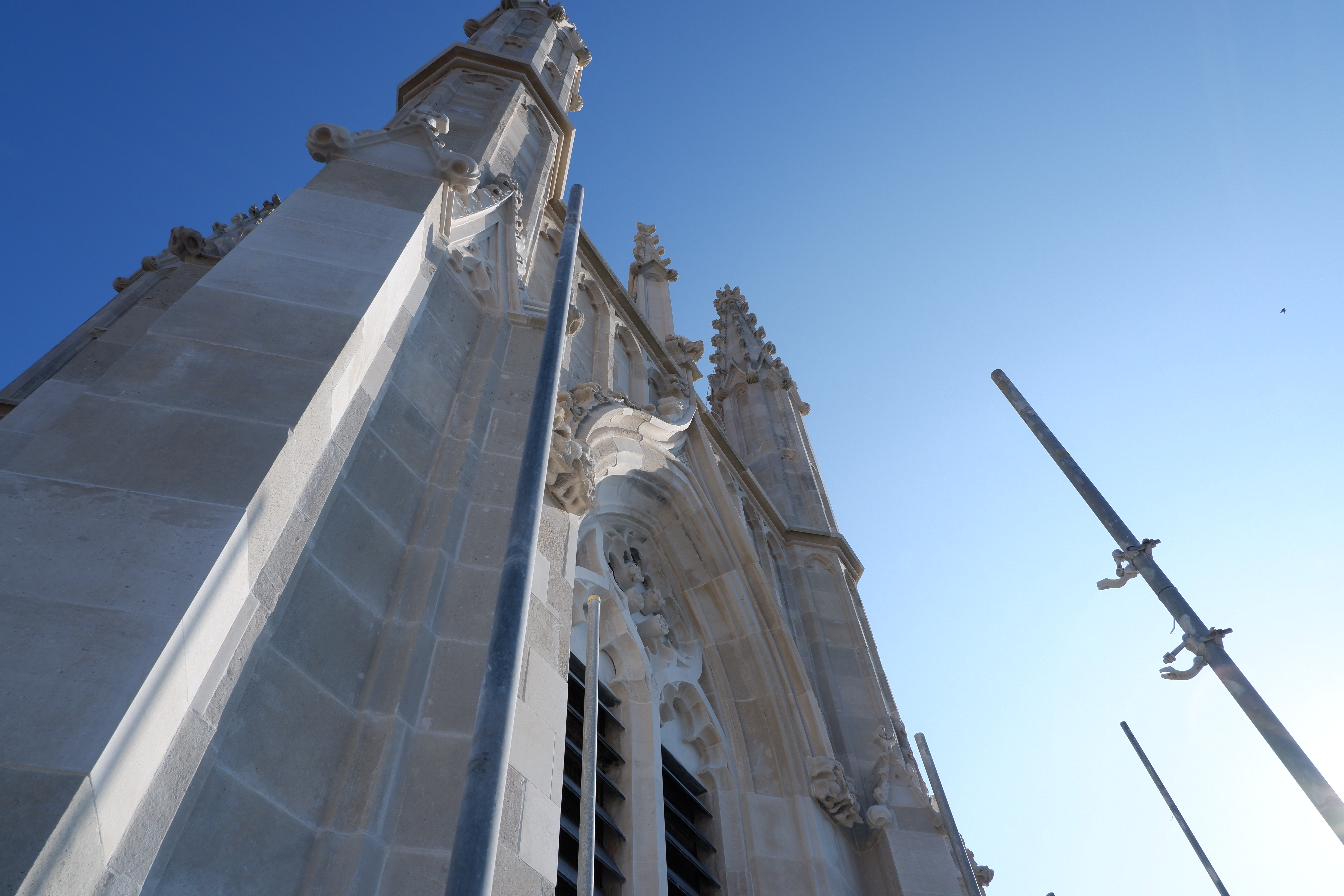
Often described locally as “Brighton’s Cathedral”, St Peter’s Church is one of the city’s most recognisable historic buildings. But as any local will testify, decades of exposure to the harsh coastal environment had left the building in a precarious condition, prompting the need for a comprehensive conservation strategy.


A 15-year programme of conservation work has secured the future of this eminent piece of architecture, following the completion of extensive stone, roof and structural repairs led by DBR (Southern) Ltd.


The Grade II listed church occupies a prominent position in the city, and has long been a focal point for both worship and community life. Originally built after a competition in 1824 to provide a new chapel in the Steine area, St Peter’s became Brighton’s Parish Church in 1873. DBR, a specialist contractor in historic building conservation and a recent recipient of a Royal Warrant from the King, was appointed as Principal Contractor, overseeing and delivering the multi-phased restoration programme.


When work began, the priority was to stabilise the church’s rapidly deteriorating fabric. Extensive stone erosion, failing iron cramps and water ingress from deteriorated roof coverings had combined to create serious structural risks. Its coastal proximity had accelerated corrosion and stone decay, while leaking roofs threatened internal fabric and structural integrity. Addressing these issues was critical not only to preserve the building itself but to ensure the church could continue to operate safely as a public and community space. 


Early phases focused on urgent roof and structural repairs. The aisle roofs and mid-tier tower roofs were replaced in pressed zinc, incorporating modern insulation and new access hatches. Within the building, the nave roof structure was significantly strengthened using specially designed steel plates to ensure it could safely carry required loads.


Attention then turned to the church’s Portland stone façade, which demanded extensive masonry conservation. Cement-based mortars, previously used in repairs and found to be accelerating decay, were carefully removed. The building was then repointed throughout using traditional lime mortar, allowing the stonework to breathe and perform as intended.


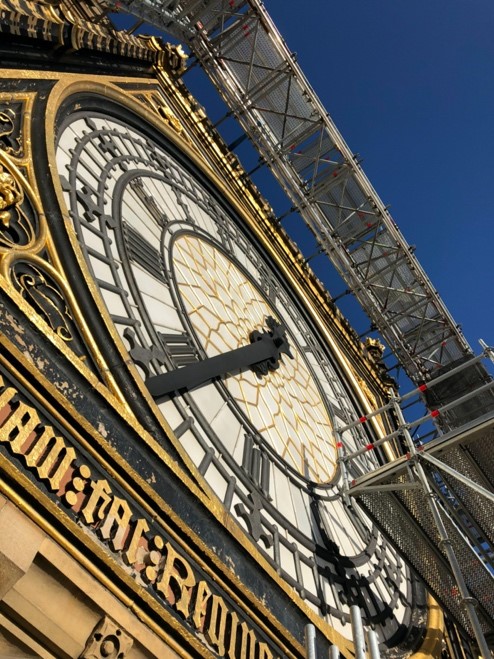
DBR’s masons also repaired numerous fractures, removed heavy accumulations of soot and stone scale, and undertook detailed on-site templating and carving to replace damaged Gothic Revival details. Such work requires a high level of craftsmanship to accurately replicate historic profiles while integrating new stone seamlessly with existing fabric. But with the scaffolding now removed, St Peter’s Church has re-emerged as a restored, elegant presence on Brighton’s streetscape. 


The scale and complexity of the work required a carefully managed programme, phased over 15 years to align with successive rounds of Lottery funding. DBR coordinated and carried out the works using its in-house team of specialist craftspeople, including stonemasons, stone cleaners and metal roofers.


Reflecting on the project, Adrian Attwood ACR, Executive Director and Chairman of DBR, said: “After 15 years of working on St. Peter's Church, it is fantastic to see the scaffold finally coming down. It reveals the incredible hard work and skill of the DBR Southern team and gives this wonderful façade back to my hometown of Brighton. We are honoured to have played our part in securing the future of this remarkable building.”


The conservation works have halted long-term decay, stabilised the structure and reinstated the architectural character of one of the city’s most important historic buildings.


limittext
Off
Exclude From Lists
Include
Company Tags
M10
CAPTCHA
SEO Title
Conserving one of Brighton’s iconic but dilapidated buildings
Read more
Main Image
2.ph_l6a1993_petermolloy.jpg

Interview: Adam Draper, Draper Studio

2026-01-05


As Adam Draper, founder of Draper Studio, points out, all conversations start with a hello. 


As an architect who specialises in residential projects with problematic restrictions, his warm and welcoming approach is well-suited. Having started his career with Groupwork, where he completed his qualification, he has since worked for Stein Architects and then Architecture for London, before setting up his own studio in 2019. Having met him at the recent Stone Collective book launch, I was keen to find out more about the practice, and what homeowners can expect when engaging with the studio.


 JB: I’m intrigued to hear more about your process, not least in how you build close working relationships with your clients, who are generally the direct owners of the property in question.


AD: Clients usually make the first approach by phone. We discuss the project aspirations, their concerns, their budget and what working with an architect looks like - for many this is their first time commission, but sometimes clients come having wished they’d used one before. 


For a fee, I then conduct a design session at the property, to meet and go through some initial ideas, clarify specific legal frameworks and develop each others’ understanding of the project ahead. It’s often helpful for the client to witness live layout and perspective sketches to illustrate our discussion as it builds clarity quickly. This is followed up with formalised sketch layouts of what we discussed and a fee proposal for the services, timescales and next steps.


Image Credit: Peter Molloy

Image Credit: Peter Molloy


JB: Do you find there are commonalities between the types of people who approach you?


AD: The clients who commission Draper Studio’s projects do so because they have a challenging consent or series of spatial configurations to overcome. They have a desire for more than “just” a rear extension and want to pursue something that is architecturally led. Working with an architect who specialises in homes means they feel reassured that their home alterations are being guided through all the challenges, yet insulated from the pitfalls and the outcome. Often, what they and their loved ones like is that they would have been unable to conceive it themselves.


JB: Thankfully, conversations - and actions - around retrofit appear to be on the rise, and I know it’s a priority for the studio. What drives your thinking here, and how receptive are your clients to the idea of restoring rather than removing?


AD: Of all refurbishment work activities, whether reconfiguring, remodelling, extending or refinishing, restoration is something that can strike up much debate. I don’t offer any position, but I approach things with this mindset:

Restoring building components is an easily understood example - it’s the leaky sash window in a conservation area with Article 4 restrictions. 


It has a linear outcome: problem + resolution = cost + time. This is level 1 restoration. But restoration is not slavery to an idea. Neither should restoration be a cost burden - remember, all buildings are costly. Value, its cousin, when seen in its many forms, is scalar here. 


Image Credit: Peter Molloy

Image Credit: Peter Molloy


With this in mind, we begin to move towards Level 2:


At an architectural level, restoration presents a bigger opportunity. Restoration is rarely just about the faithful replication of a cornice that's been overpainted 4 times. Restoration is more about the stitching together of the series of interrelated and sequential elements, spatially. Level 2 asks these questions: How do we work with the building, as opposed to against it? By extension, how do we highlight any special characteristics of the host building in a design that makes it distinct? Can we realise volume as well as area? How do we investigate carefully and put the right strategy in place to mitigate excess or the unnecessary? If we add or remove, does it restore, too? Does the overall cohere? If it does, is that a success?


JB: Hearing this, I imagine there is a lot of push and pull within these conversations, as well as with the physical building itself?


AD: Often by adopting the approach of working with a building, rather than against it, will provide significant cost and value benefits. In terms of Retrofit, when adopting ‘fabric first principles’ such as adding appropriate insulation, this requires an onward conversation with the client’s needs and budget throughout key project milestones. Often, that same overpainted cornice, kept in situ, will restrict the extensive thermal performance upgrades to a wall they might want. There’s balance, and often on a case-by-case basis;, it's always good to have a clear brief from the client on where they want to take remediation works. For instance, if your original plaster is blown, it may be time to consider replacing it with lime plaster and wood fibre insulation, because you’ll likely have to budget for at least one of those trade installs.


Nunhead Cemetery

Image Credit: Richard Oxford


JB: Would you say it’s true that part of your USP comes from your ability to handle potentially problematic concerns, such as listed buildings, planning applications and properties in conservation areas?


AD: Yes, I’ve always enjoyed working on tricky projects where a problem provokes an innovative response. Sometimes, a degree of constraint enables innovation, and if you arrive at an elegant solution whilst doing so, it is always a treat for the clients to spot that too and trust in the design.  


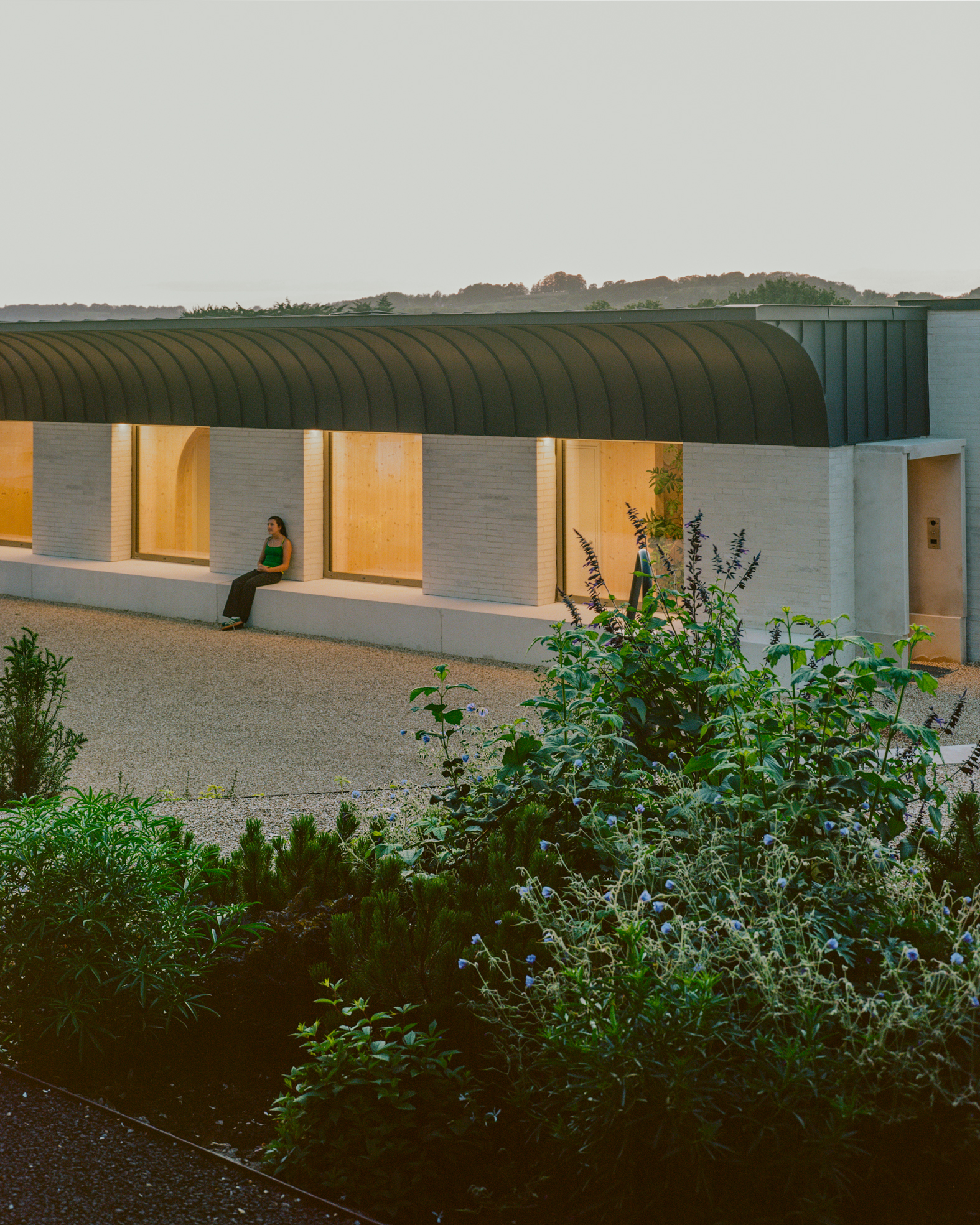
At Nunhead Cemetery house it was a little easier on two fronts to propose an ambitious design. Firstly, although the terraced house fronted onto the Conservation Area, it was actually on it. Secondly, the clients were repeat clients. We’d already worked closely before on their first house nearby. On this site, the rear garden sloped away from the house and across the house in the area of the side return, where they wanted both a ground rear side extension and a courtyard. This made it challenging to create a consistent and generous volume to the rear and side extension when considering the boundary height. By positioning the lowest point of the arch on the boundary at a height acceptable to the planners, the internal volume wanted was achieved without harming the neighbour’s daylight. This same curved corner detail is echoed in the second-floor outrigger roof extension, which allowed more light into the courtyard.


Image Credit: Richard Oxford

Image Credit: Richard Oxford


JB: Those arches really soften the building too, but I can’t even begin to figure out how you got to those beautiful - and functional - proportions!


AD: The arch of the side return was arrived at first, from outrigger flank wall to boundary, and then this diameter was multiplied by the golden ratio to form the arch diameter of the adjacent rear extension, giving proportion and rhythm to the new rear. To shield the glazed doors from the south sun and provide an awning to the rear garden, there were key engineering and roofing challenges. The result was two cantilevered arched awnings that do not touch - making them appear lightweight and elegant.


JB: I’m always intrigued to discover how involved architects are during the construction stages of a project. What is your role during this post-design phase of a project?


AD: Peckham House always had a trusting and ambitious client who understood that getting the best value from an architectural service was for Draper Studio to have oversight of the three core stages:  1. Planning, 2. Technical Design and 3. Construction. On site we’d already anticipated extensive digging of the shared underground drainage, which became the reason for the split-level kitchen and diner. The client was delighted about the 3.4m high ceiling that this created, but retained us to work through options for the 3.6m high sliding rear door even whilst on site. We originally specified and tendered aluminium frame versions as a package, but due to fluctuating costs and finally the frame being deemed too large for them to warranty, we pivoted towards kiln-dried Douglas fir from the timber frame supplier. On this project, architectural fees were time-charged throughout, and this gave the client the flexibility to draw down on their budget as architectural input was required, even throughout the construction phase, where overall it averaged out to fortnightly site visits over a 12-month build.


JB: There is a sensitive approach to materiality in all of your projects, with a particular emphasis on naturally sourced surfaces. Can you tell me a little more about how you create and source your material palettes?


AD: There’s a rational and mannered feel to certain projects, and with other projects, an opportunity for more play. Sometimes there’s a blend, and in both Wandsworth and Hackney house there's both reason and story.


Wandsworth House has a number of practical challenges: clear span 12m x 6m of rear extension flat roof without it looking top-heavy. The roof structure is to appear lightweight and strong enough to support a 1st floor family bathroom pod and allow the sliding doors to sail behind the supporting timber posts that correlate in a grid aligned with the main house openings. The glazing is not flat, but incrementally steps inwards towards the door openings, providing a sheltered space when the door is opened, and harnesses the filigree of timber posts to screen direct daylight and reflect back the passing train noise. There was little other option than to use joinery grade, kiln-dried French oak. A matching rift cut, oak-veneered ply deck performed both the structural warm deck and the internal ceiling finish.


The overall structure was so efficient and lightweight that it meant the whole extension's foundations could sit atop 28 steel piles, saving an estimated 70% of volumetric concrete that otherwise would have been needed to structurally span this extension’s roof in steel.


Image Credit: Peter Molloy

Image Credit: Peter Molloy


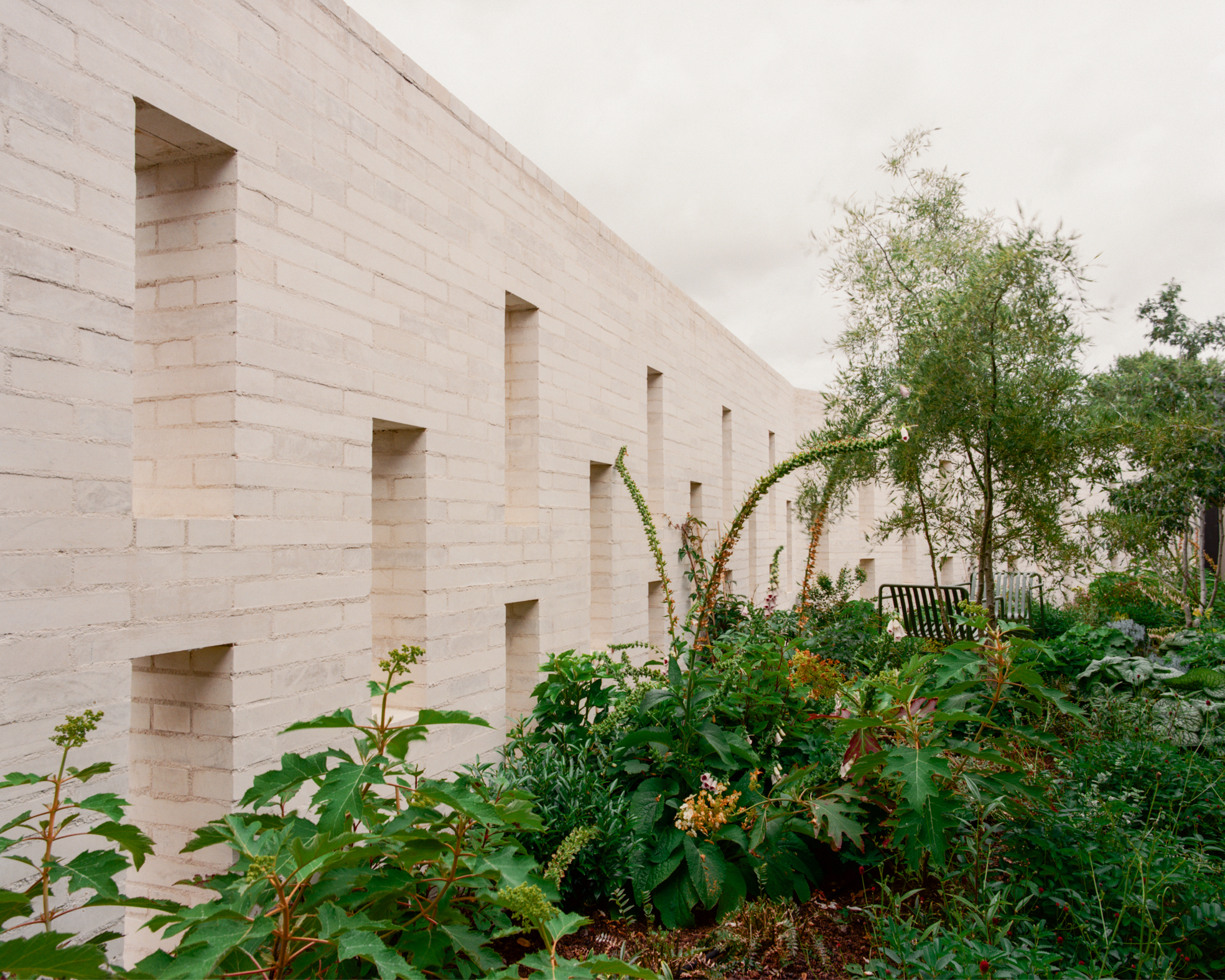
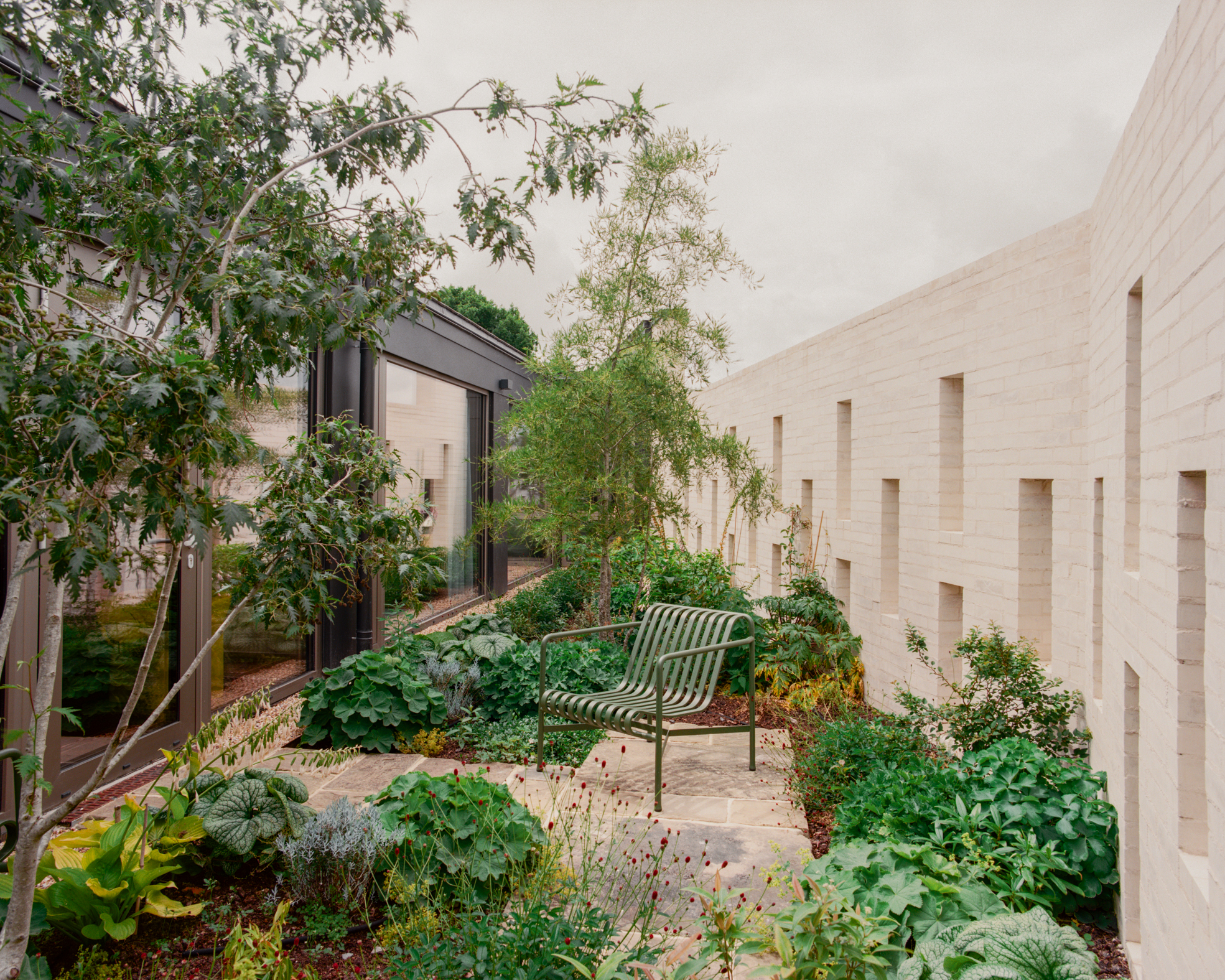
JB: I couldn’t help but notice the stone bricks used on the Hackney project - and they’ve not been laid in the conventional manner.


AD: At Hackney the client wanted an extension that was just as much about extending the garden as it was about extending the house. The brick basketweave pattern was arrived at following a desire for a more playful treatment of the facade, akin to how garden boundary walls are treated - with perforations and single skin patterns. The Client also wanted the new space of a kitchen and dining room to make the communal parts of the house better cohere but also didn’t just want a brick box. 


Image Credit: Peter Molloy

Image Credit: Peter Molloy


Underneath the “rain skin” of brick is a searing yellow render that is picked out by the sun when it tracks onto its south westerly aspect. Its a nod to how a smart jacket can have the discreet flair of a flashy lining. The creation of the basket weave pattern in a single skin requires a degree of precision and tolerance. Add into the mix the mortar is NHL3.5 Lime, we also needed patience as the wall rose up 4 courses per day! It did so however, in this clean and precise manner because the bricks are precision cut. Some of the saw marks and inclusions to the otherwise light yellow limestone are left on show as a further highlight of the maker’s marks - be that the stone cutters or geology.


limittext
Off
Exclude From Lists
Include
Company Tags
M10
CAPTCHA
SEO Title
Conversation With Adam Draper From Draper Studio
Read more
Main Image
herth-24_web_res.jpg

Case Study: Saqqra Rethinks the Chimney Using Stone

2026-01-02


We recently reported on the Design Museum’s Tools for Transition exhibition, which explores how design innovation is helping to move the UK to a greener future. One of the four projects that make up the showing reinterprets one of the most traditional elements of the British home, the chimney, with a fresh approach to applying stone.


Historically a source of heat, Studio Saqqra’s proposal for the chimney, Hearth, reimagines it as a natural ventilation system, marking a symbolic and practical shift from heating to cooling in response to rising global temperatures. Their architectural model draws on materials developed through the Transforming Houses and Homes research programme, which is exploring sustainable retrofit solutions for 1920s council housing across the UK.


Image Credit: James Retief

Image Credit: James Retief


Using a regional material palette, the project combines reclaimed stone with bio-based hemp and wood fibres to demonstrate how traditional and modern materials can work together to improve energy performance. The stone, repurposed from offcuts supplied by Albion Stone, references the architectural character and craftsmanship of early 20th-century housing, while the bio-based insulation materials provide enhanced thermal and moisture regulation.


The primary elements of the model, consisting of chimney, roof and facade, are each sourced from a different bed within the geological strata of the same stone. Deeper beds with more resilient stone are used to fulfil a structural purpose, while beds closer to the top and to recent history in geological time inform the construction of a lightweight roof and skin. The stepped expression of the facade makes use of an overlap detail that references traditional render drop details, translated to stone and at once protecting the fragile edges of this delicate stone.


The reimagined chimney showcases the role of passive stack ventilation, using natural air movement through vertical ducts to improve indoor air quality, working in tandem with insulated cavity walls and eaves to maintain comfortable interior temperatures. Together, these interventions address long-standing issues of damp, mould, and poor energy efficiency common in older housing stock.


Image Credit: James Retief

Image Credit: James Retief


Developed through roundtables and co-design workshops with local residents, researchers, and industry professionals, the Transforming Homes initiative focuses on adapting council-built homes from the 1920s to 1940s, particularly in Bristol and Swansea. With over 1.4 million of these homes still occupied across the UK, the research aims to future-proof existing housing stock for changing climates while maintaining their cultural and architectural integrity.


By grounding the design in local supply chains and material reuse, the project demonstrates how regionally sourced stone and bio-based materials can support both sustainability and heritage goals. It’s hoped that their findings will inform national housing policy and influence best practices in retrofit design, from restoring historic homes to setting standards for more sustainable new builds.


limittext
Off
Exclude From Lists
Include
Company Tags
M10
CAPTCHA
SEO Title
Stone and Bio-Based Materials in Low-Carbon Retrofit Design
Read more
Main Image
imag0016.jpg

Interview: Talking Stone with Liz Laycock

2025-12-31


When it comes to stone, Liz Laycock knows her stuff. With a First degree in Industrial Geology from the University of Exeter’s Camborne School of Mines, and a PhD from the University of Sheffield, Earth Sciences, she has found herself teaching others at Sheffield Hallam University. Operating from the School of Engineering and Built Environment, she shares her knowledge on the BSc for Building Surveying, Construction Project Management, and Quantity Surveying degree courses, as well as some of the Apprenticeship routes.


She caught our attention when launching the schools Stone Library earlier this year, and we were lucky enough to find out more about her work, and to soak up some of her unique insights about the industry. 


JB: Let’s start with some of your recent work at the university, which we shared a few months back as you launched it: The Stone Library. It's a treasure trove of stone donated by brothers Geoff and Scott Engering. But can you tell me a bit more about your plans for it in the future, and how students and others will be able utilise it?


LL: The Stone Library was established with the Architecture and Interior Architecture and Design students in mind, as well as my own students and the cohorts I have direct connections to. It was created to be an accessible and visually attractive installation that showcases some of the very best of British building materials. Each stone sample has a QR code that links to a web page with further information. My overall aim is to link the online content with the BGS database and also to current suppliers (where these exist). Currently, the main links are to the Historic England County and Area guides and their databases. I do feel it is important to look forward as well as back, and encourage future new build use. While the main use of the library will be for our own students, I also hope that it will attract visitors to the university, and I hope it will be of use to external consultants. I really want to demonstrate the variety we have in our indigenous building materials. 


Students look around new builds and see a lot of use of glass, brick, steel, or concrete, and can be a little blind to alternatives. If we are serious about reducing the transport-related carbon content of our built environment, I really can't see why natural building stone doesn't have far more traction in the market.  Stone lends a sense of place and distinction to a building, be that it's using local resources to blend with and complement the existing materials or making a statement building that stands out


JB: Your own research around stone is fascinating, and I’m sure our readers will be intrigued to know more. Can you tell me a bit more about the work you’re doing with frost to split stone?


LL: The splitting of stone into tiles has been done on several different types, but the best example is Collyweston. As I’m sure you are aware, the stone roof tile industry was considered pretty much extinct in the 1990’s, and repair of historic buildings was largely done by recycling tilestones from demolished roofs. Traditionally, the stone was split by allowing the freshly-extracted stone ‘log’, worked over the winter period, to be exposed to sharp frosts while being kept in a damp condition. Operating over a number of years, the work we did at Hallam allowed an artificial frosting cycle to be developed, first used for the re-roofing of Apethorpe Hall, carried out by Messenger construction. Within the development work we did, we showed that the stone tiles split by artificial splitting did not continue to degrade in use. 


Artificially Split Tiles

Artificially Split Tiles


JB: Another great example of stone in action! But what are some of the biggest challenges you feel the industry and, with it, your students face when it comes to working with stone?


LL: I think one of the key problems with getting students to start thinking about using stone is that the industry they're going into is very much enamoured with the idea of measuring overall value solely in terms of simple bottom line costs rather than looking at whole life costing or added value.  When cost becomes a controlling factor, it's so much more tempting for people to revert to simple manufactured products, or if they do stick with stone, they look for cheap and therefore imported ones.  It seems problematic to me to continue to use imported stone that matches our own resources. But at the moment, there seems to be an overall failure to recognise the longevity, durability and flexibility of masonry.  Simply by increasing levels of insulation, it should be possible to meet thermal performance criteria.  The focus on novel forms of lightweight construction, volumetric prefab and other new technologies will almost inevitably become problematic in a decade or two – a recurrent theme in construction.  


JB: The more I talk to people in the industry, the more of a mystery it becomes as to why not more people are choosing to specify and work with stone. Why do you think that is?


LL: There are of course problems - construction trade skills are undersupplied in the current market, which has been a push factor for pre-fabricated components.  In turn, this skill deficit makes use of masonry potentially more expensive and creates a downward spiral.  The main push back is from consumers who appear to have more faith in traditional build – probably because a property represents the single biggest personal investment most people make. I do wonder that people are now very much removed from an understanding of the materials around them and the supply chains that support these. Perhaps this is an aspect that industry needs to take on: educating customers to move towards a much more integrated and national supply basis, where we seek to maintain the flow of money within our economy rather than allowing money to flow out.  This is obviously profitable now – and can certainly be justified for premium materials which do not occur in the UK – but perhaps not so much for the numerous sandstones and limestones that occur here.  


Research at Truro Cathedral

Research at Truro Cathedral


JB: In a world where consumers and specifiers are increasingly on the lookout for materials that offer reduced ecological impact, what do you say to those who question stone’s inherent need for extractive processing?


LL: Public perception is always going to be a problem with any extractive industry. I'm afraid that the UK population may indeed have a slightly NIMBY attitude, but that could be driven by a perception of what a commercial stone quarry would look like based on comparisons to the sizes of commercial aggregates extraction sites.  Local sentiment is easy to sway as visions of convoys of trucks travelling through remote rural villages are painted by those opposing the scheme.  And yes, any industry will have a need to transport goods. Yet at the same time, ironically, the same people will drive past an abandoned quarry and either not notice it or indeed drive to it to visit it because it now forms part of our valued wildlife-rich landscape. It's a shame people can't see that, effectively, stone quarrying is a borrowing of the land.  The quarry is reducing the land level without significantly affecting the environment, and from it,  new and possibly more valuable resources could be the result.  At the end of life, with some careful consideration, the resulting landform could provide space for homes, habitats for wildlife or any combination.  This is effectively using the same land at least twice, winning the materials and then re-using the site.  


Research at Temple of Concord, Auderly End

Research at Temple of Concord, Auderly End


JB: I’m particularly intrigued by the idea of a “vertical quarry” - a new way of thinking that looks at buildings as valuable material resources during and after their lifespan. I’ve heard you talk about pre-planning the volumetrics of stone (and other valuable materials) in a building with a view to being able to reextract them for future usage. Can you tell me a bit more about this approach?


LL: The construction industry is full of talk of BIM, and this technology seems to be gaining maturity at the design and build stage.  The next logical stage is to look at end-of-life recovery and re-use, and this area seems to be where a lot of work is now heading.  Recent developments in image capture, 3D scanning and computer modelling can be used to create a model.  At the moment, research seems to concentrated on the structural frame, but there is no reason why this should not extend to the façade.  For most of human history, we have reused building materials through pragmatism, and so this represents a move forward in strategic planning rather than a novel idea.  With the ability to capture buildings in their pre-demolition stage, it is possible to establish the volume and nature of their components.  Whether facades and internal fixtures are masonry or clad, either could be a potential source of marketable material for the future stone industry.  


It is an absolute travesty for any viable material from a building to be crushed and used as low-grade fill when there is value to be gained by evaluating and curating what has already been extracted and dimensioned – often with considerable time and energy invested. This is what I mean by ‘vertical quarries’. Stone is easily identified, valued and recovered, which, with some limited further processing can be resold. In this way, buildings that are no longer of use can become urban resource repositories to support new builds. At the moment, recycling seems to focus on crushing en masse and re-binding at considerable energy expenditure.  Minimising re-dimensioning reduces re-processing and digital protocols could be used to ensure costs are minimal.  


limittext
Off
Exclude From Lists
Include
Company Tags
M10
CAPTCHA
SEO Title
Lecturer Liz Laycock shares unique insights into the use of stone
Read more
Main Image
jane_fox6.jpg

Surface Spot: Jane Fox

2025-12-30


As we’ve been reporting, One Island – Many Visions, the Portland Sculpture & Quarry Trust’s collaboration with the Royal Society of Sculptors, yielded an array of varied creative explorations inspired by the site.


For Artist Jane Fox that meant cultivating biodegradable “fossils” using probiotic microbial cellulose combined with kelp. Probiotic Fossils – Tiny Builders of the Natural World, takes direct inspiration from Portland’s ancient stromatolite formations - layered rocks created by the salivary secretions of Cyanobacteria. These microscopic organisms sit at the foundation of global life systems, constructing entire ecologies from coral reefs upwards and helping maintain environmental homeostasis. Cyanobacteria are also present in SCOBY (Symbiotic Colonies of Bacteria and Yeasts), which ferments tea and sugar to generate microbial cellulose within a miniature, self-sustaining ecosystem. Like the stromatolites they once built, Fox’s probiotic cellulose grows in successive layers through microbial by-products. 


Her research took a significant step in 2023 when her probiotic microbial cellulose samples were accepted into the Future Materials Bank at the Jan van Eyck Academie in Maastricht, a resource dedicated to non-toxic, next-generation materials for art and design. Classified as a smart bacterial bioplastic that is recyclable, regenerative and remarkably adaptable, Jane is now using the material to investigate the potential for probiotic-rich sculptural surfaces that influence the air we breathe in interior spaces. Her experiments also point towards medical applications, including burn treatment and wound healing, hinting at a future where living materials could shape both architecture and healthcare.


limittext
Off
Exclude From Lists
Include
Company Tags
M10
CAPTCHA
SEO Title
Jane Fox
Read more
Main Image
img_20250905_165605.jpg

Surface Perspectives: Livia Spinolo

2025-12-29


Having covered artist Livia Spinolo’s recent installation Ab Initio as part of the One Island, Many Visions exhibition, a collaborative event between Portland Sculpture & Quarry Trust (PSQT) and artist members of the Royal Society of Sculptors (RSS), we couldn’t resist finding out more about her material-led practice.


What does a typical day look like for you?


I spend most of my days in the studio researching, planning, and working hands-on with materials. A key element of my practice is selecting the right material for each project; for this reason, research also involves visiting the sites where the work will develop. The collaborative dimension of my work is equally important. I dedicate time to engaging with the organisations and art institutions I partner with. Conversations with environmental teams and on-site visits - observing how materials interact with their surroundings - form a significant part of my daily practice.


For Ab Initio, my latest work, the chosen material responded directly to the project’s site-specific and environmental requirements. Portland stone was integral to the landscape and possessed the physical properties necessary to function as a habitat.


How integral are materials to your day-to-day?  


Materials and surfaces qualities are central to my practice. I work closely with stone, clay, Jesmonite, metals, and natural or upcycled found materials. Their physical properties, forms, and surface qualities guide many of my decisions. Much of my communication with collaborators revolves around materials - discussing firing processes with technicians, material strength and structural stability with engineers, stone characteristics with quarries, or ecological considerations with environmental partners. 


For me as an artist, being true to the material is fundamental. I approach every project by considering what the material can naturally offer - its texture, weight, fragility, strength, colour, and behaviour. The artwork usually develops from the material’s inherent characteristics rather than from an imposed artificial aesthetic. I also work with the material’s imperfections and natural variations because they carry memory and authenticity. In this way, the material plays an active role in shaping the final work.


What are the biggest lessons you have taken forward from your original training? 


My training instilled a deep respect for material experimentation and for the process of learning through making. I was encouraged to push boundaries, question assumptions, and let materials lead the way. That mindset continues to define my practice. I also carry forward the importance of critical dialogue and working within a creative community - skills that have become essential in the collaborative, site-responsive projects I pursue today.


Which project/s are you most proud of being involved with and why?


The projects I am most proud of are the Wienerberger Ewhurst Reptile Garden with its five large sculptural habitats made from industrial clay and the dry-stone sculptural habitat Ab Initio located in Portland. These sponsored projects are particularly meaningful to me because they bring together sculpture, ecology, and long-term site stewardship in a way that feels both innovative and crucial. I am also proud of Vertical Undergrowth, commissioned by Surrey Hills Arts for the University of Surrey campus, my first sculptural habitat created from upcycled concrete slabs and turf. These projects exemplify how sculptural forms can serve ecological functions in an environmentally conscious way while maintaining a strong material and aesthetic presence.


What do you feel are the main challenges facing the stone and surfaces industry today?


The greatest challenge is sustainability. Responsible extraction, environmental impact, and ethical labour practices are under growing scrutiny. At the same time, the industry faces competition from cheaper synthetic alternatives, which risks diminishing appreciation for natural materials and the craftsmanship behind them. Balancing demand with environmental responsibility will be key.


In your opinion, what are the positives of using stone in the built environment?  

Stone offers durability, stability, and a naturally low environmental impact when sourced responsibly. It performs well over time, requires little maintenance, and has a visual and tactile quality that connects built structures to landscape and history.


How does sustainability influence your decision-making?

Sustainability underpins my approach from the outset. I consider where materials come from, how they can be reused, and whether a project can support or enhance local ecosystems. Many of my works are designed as habitats, so ecological impact is embedded directly into the material choices and the final form. I aim to create work that sits lightly on the environment while contributing something meaningful to it.


limittext
Off
Exclude From Lists
Include
Company Tags
M10
CAPTCHA
SEO Title
A chat with material inspired artist Livia Spinolo
Read more
Main Image
c.saunders.portlandprep.jpg

Surface Spot: Caroline Saunders

2025-12-23


Caroline Saunders works in stone and wood from her studio on the edge of Dartmoor, and was another participant of Portland Sculpture & Quarry Trust’s One Island - Many Visions exhibition earlier this year.


A Develop Your Creative Practice grant from Arts Council England enabled Saunders to create a new site-specific piece for the event, in partnership with nearby Albion Stone. The installation, Portland Stack, draws on Portland’s quarrying heritage by repurposing discarded stone. The work pays tribute to the quarrymen who once arranged unwanted or flawed blocks into stacks, leaving behind the distinctive labyrinthine structures that thread through Tout Quarry. Saunders echoes this tradition with a family of vertical stone stacks, each with its own stance and personality.


The pieces appear deliberately off-balance, their silhouettes referencing three signature traits of the island: the rolling contours of the landscape, the hand tools once used by Portland’s stone workers, and the windswept trees shaped by the island’s constant exposure. 


The playfulness of the work clearly rubbed off on visitors to the site, who Caroline notes got involved with the work, “I made a few little piles of stone near my work and was so happy when I saw they had multiplied with some even appearing on my sculptures - the best feedback!”


By elevating overlooked quarry waste into poised sculptural forms, Caroline folds Portland’s past into a contemporary conversation, turning remnants of industry into objects of quiet reflection and unexpected joy.


limittext
Off
Exclude From Lists
Include
Company Tags
M10
CAPTCHA
Read more
Main Image
stone_demonstrator_photo_credit_bas_princen_courtesy_of_the_design_museum_and_future_observatory.jpg

Case Study: The Stone Demonstrator

2025-12-22


As promised, we are taking a deep dive into the Stone Demonstrator - one of the most seminal stone-related projects to emerge in recent times. Here, we talk to some of the key players involved in the project to discover how collaboration and proactivity have made a case for structural stone.


The Stone Demonstrator is not a pavilion, a folly or a symbolic gesture. It is a working structure, conceived as a full-scale research tool to test whether load-bearing stone can operate as a credible, low-carbon alternative to steel and reinforced concrete. Commissioned by the Design Museum’s Future Observatory and installed on the Earls Court site in London, the three-storey prototype brings together nearly 20 partners across architecture, engineering, quarrying, stone supply, masonry and academia. Its purpose is straightforward: to show, in built form, that structural stone is not only possible, but practical.


Future Observatory, the Design Museum’s national research programme for the green transition, initiated the project as part of its work on low-carbon housing. As Justin McGuirk, Director of Future Observatory, explains, the ambition was to move beyond theory. “Future Observatory is committed to supporting research into low-carbon construction methods, and the Stone Demonstrator is an ambitious contribution to the field,” he says. “It’s a building as a research tool, a 1:1 scale demonstrator of an ultra-low-carbon structure for the sector to study.”


From the outset, the project was structured around collaboration. Groupwork was appointed as architect, with structural engineering led by Webb Yates, working in collaboration with Arup. The Stonemasonry Company developed and delivered the structural stone system, while Earls Court Development Company (ECDC) provided the site. Quarries, stone suppliers and brick manufacturers were engaged early to ensure that the material reality matched the research ambition. “There were nearly twenty partners in this project,” McGuirk notes. “Architects, engineers, stonemasons, quarries, timber companies, contractors etc. So collaboration was absolutely key.”


At the heart of the Demonstrator is a pre-tensioned stone frame developed and patented by The Stonemasonry Company. The system uses mechanically connected stone elements – beams and columns – assembled with threaded steel bars that are tensioned to place the stone into compression.


“For the last 15 years, the stone masonry company had been pioneering a way to allow for stone to be used as a structure in place of concrete,” says Pierre Bidaud of The Stonemasonry Company. “Through our studies, we have found a distinct system that uses mechanical connections, which means all our beams and columns can mesh very efficiently and with other materials.”


A key objective was to remove the perception that stone construction requires specialist, time-intensive skills. “If you know how to use a spanner, the system can be easily deployed without any special or lengthy training,” Bidaud explains. “The people who built the Stone Demonstrator structure were not stone masons; they were people who ordinarily construct steel or concrete frames.”


Much of the work happens off-site, “because we want a fast deployment, there needs to be a clear cutting sheet and for the stone to be drilled, before the rebar is fitted through the holes,” Bidaud says. “The rebar is then tensioned, which means compression is transferred to the stone, and that’s it.” Following around nine days of workshop preparation, the stone frame was erected on site in approximately six days. “We have patented a very simple process,” Bidaud adds, “and it allows us to put a low-carbon structure in place quickly.”


Material choice was also deliberate. “We have used predominantly granite and limestone, as well as the stone bricks,” he says. “But importantly, it’s been made with discarded material, or material that is deemed to be unusable by the quarry – essentially it’s using all the wonky vegetables.”


While the system is visually legible, its credibility rests on engineering rigour. Webb Yates’ involvement spans nearly two decades of research into structural stone, and the Demonstrator consolidates that work into a single, accessible structure. “It’s intended to demonstrate a viable alternative to everyday building methods ,but at a fraction of the embodied carbon, this structure brings together almost two decades of prototyping and testing,” says Amin Taha, Founder and Chairman of Groupwork. “Its purpose is not to promote stone for sentimental reasons but as an ultra-low-carbon alternative.”


Steve Webb, Board Director of Webb Yates, places the argument in a wider context. “The stone in this frame is produced with a fraction of the energy required to produce the alternative materials,” he says. “Adopting stone as a staple building material would close coal mines and not require their replacement with green alternatives.”


For engineers, the challenge is not only material performance but confidence. “There are definitely challenges to starting with structural stone, but also a lot of interest and ambition across the profession,” says Liam Bryant of Webb Yates. “It isn’t really about the material itself, but the attitude we bring to it.” Bryant acknowledges that the absence of dedicated design codes is often cited as a barrier. “While this is an area for improvement, and there are multiple efforts ongoing, it isn’t a complete block,” he explains. “BS EN 1996 does give some methods that can be adapted for working with stone.” He does however stress that testing is critical: “Physical testing not only gives engineers the data we need, but also helps contractors and clients become more familiar with the material,” adding, “There’s a lot of progress and development in the field, and I’m confident there are plenty of engineers ready to take up the challenge.”


But the figures tell a very planet-positive story. Stone Demonstrator achieves substantial carbon savings: around 90% compared to a steel frame and 75% compared to reinforced concrete. Although only three storeys high, its implications extend much further. “We only built a three-storey prototyp,e but the engineers tell me this system could be used for a 50-storey building,” McGuirk says. Regulatory thresholds remain a consideration. “Anything over 18m high changes the fire regulations, so that is currently the limit,” Bidaud notes. “But a 20x20m, 6-storey building only takes around 100m³ of stone – it’s quite a small sampling from a quarry.”


Future Observatory has already funded the next step. Professor Wendel Sebastian at UCL is developing a design guide informed by sensors embedded in the structure and laboratory testing. “The accompanying design guide being produced by UCL is another key step in the adoption of structural stone,” McGuirk says. The ambition is market transformation. “The idea is that the prototype helps drive adoption and further experimentation,” he adds, “encouraging demand for load-bearing stone, creating a market that begins to provide viable alternatives to steel and concrete – used in conjunction with timber.”


While the design of the structure is fundamental, collaboration has been essential, with a number of stone suppliers playing an important role. Marcus Paine of Hutton Stone explains: “We were directly involved in supplying the UK Stone Bricks for the exterior walls… We donated our Darney Heritage Sandstone Bricks and Albion supplied their Heritage Portland Stone Bricks, which the team then decided to blend on site. For Paine, the Demonstrator is about industry-wide change. “This is not simply about individual companies promoting their products,” he says. “It really is entirely focused on a viable and sustainable route forward for the entire Natural Stone Industry in a lower-carbon built future.” Michael Poultney of Albion Stone agrees. “The stones are off the drawing board and sat on site where nobody can ignore them,” he says. “Visually demonstrating that stone is capable of performing structurally in the real world.”


The location matters. “At the Earls Court Development Company, sustainability is a cornerstone of our vision,” says Peter Runacres, Head of Urban Futures. “We’re proud to host the Stone Demonstrator – a striking prototype that embodies our commitment to sustainable urban development.” As Professor Christopher Smith of UKRI AHRC concludes: “Through the Future Observatory… we are quite literally building the future.”


The Stone Demonstrator does not claim to be the only solution, but it makes a compelling case: that through collaboration, testing and openness, structural stone can move from the margins to the mainstream.


limittext
Off
Exclude From Lists
Include
CAPTCHA
SEO Title
Building the Case for Structural Stone Through Collaboration
Read more

Pagination

  • First page « First
  • Previous page ‹ Previous
  • …
  • Page 6
  • Page 7
  • Page 8
  • Page 9
  • Current page 10
  • Page 11
  • Page 12
  • Page 13
  • Page 14
  • …
  • Next page Next ›
  • Last page Last »
Subscribe to
  • Advertise
  • Contact Us
  • Acceptable Use
  • Copyright Notice
  • Privacy Policy

© Media 10 Ltd. All Rights Reserved