From the organisers of The Stone & Surfaces Show

  • Log in
  • Home
  • News
  • Jobs
  • Call for Submissions
  • Events
  • Advertise
  • Home
  • News
  • Jobs
  • Call for Submissions
  • Events
  • Advertise
Main Image
fractualism_by_giles_miller_studio_cropped.jpeg

Surface Spot: Aluminium Petals Ripple Across Facade

2026-01-29


Giles Miller Studio has added a striking new layer of texture and movement to the streetscape of South San Francisco’s Spur innovation district with Fractalism, a large-scale aluminium installation wrapping the ground-floor corner of IQHQ’s 580 Dubuque development.


Stretching 17m long and rising 4.2m high, the work is composed of 4,634 individually formed aluminium “petals” mounted on a precisely engineered frame. Set against the clean, planar architecture of the 30,000m² life sciences building, the piece introduces a softer, more tactile counterpoint at street level.


Rather than acting as a static façade feature, Fractalism is designed to respond to its busy urban setting. Giles Miller explains: “The piece is positioned next to a busy railway station, so the idea is that it responds to the movement of the commuters, offering a changing visual experience as the light shifts along its textured aluminium surface. The result is a type of undulating welcoming-in of visitors into this exciting new district.”


Materiality is central to that effect. Aluminium was selected for its combination of lightness and strength, its full recyclability, and its anodised finish, which subtly shifts tone as daylight moves across the surface. The petals’ gently varied geometries create a rippling, almost textile-like quality, giving the installation a sense of motion even when viewed from a standstill.


Behind the fluid appearance sits a carefully resolved technical structure. Each petal is individually positioned on an aluminium frame using laser-cut ribs to control orientation and alignment, ensuring a continuous flow across the full length of the mural. The studio worked with fabricator UAP to manufacture almost 5,000 elements, each reinforced with a discreet double cross-detail so they can withstand San Francisco’s coastal winds and the close proximity of daily foot traffic without losing their refined, lightweight character.


For Giles Miller Studio, known for blending digital design with craft-led fabrication, Fractalism continues a body of work that explores how light, form and material can reshape architectural edges into more expressive, people-focused spaces.


limittext
Off
Exclude From Lists
Include
Company Tags
M10
CAPTCHA
SEO Title
Giles Miller Studio’s Fractalism animates IQHQ façade
Read more
Main Image
culena_marble_entrance_hall_after_1.jpeg

News: Athena Stonecare Launches CPD

2026-01-29


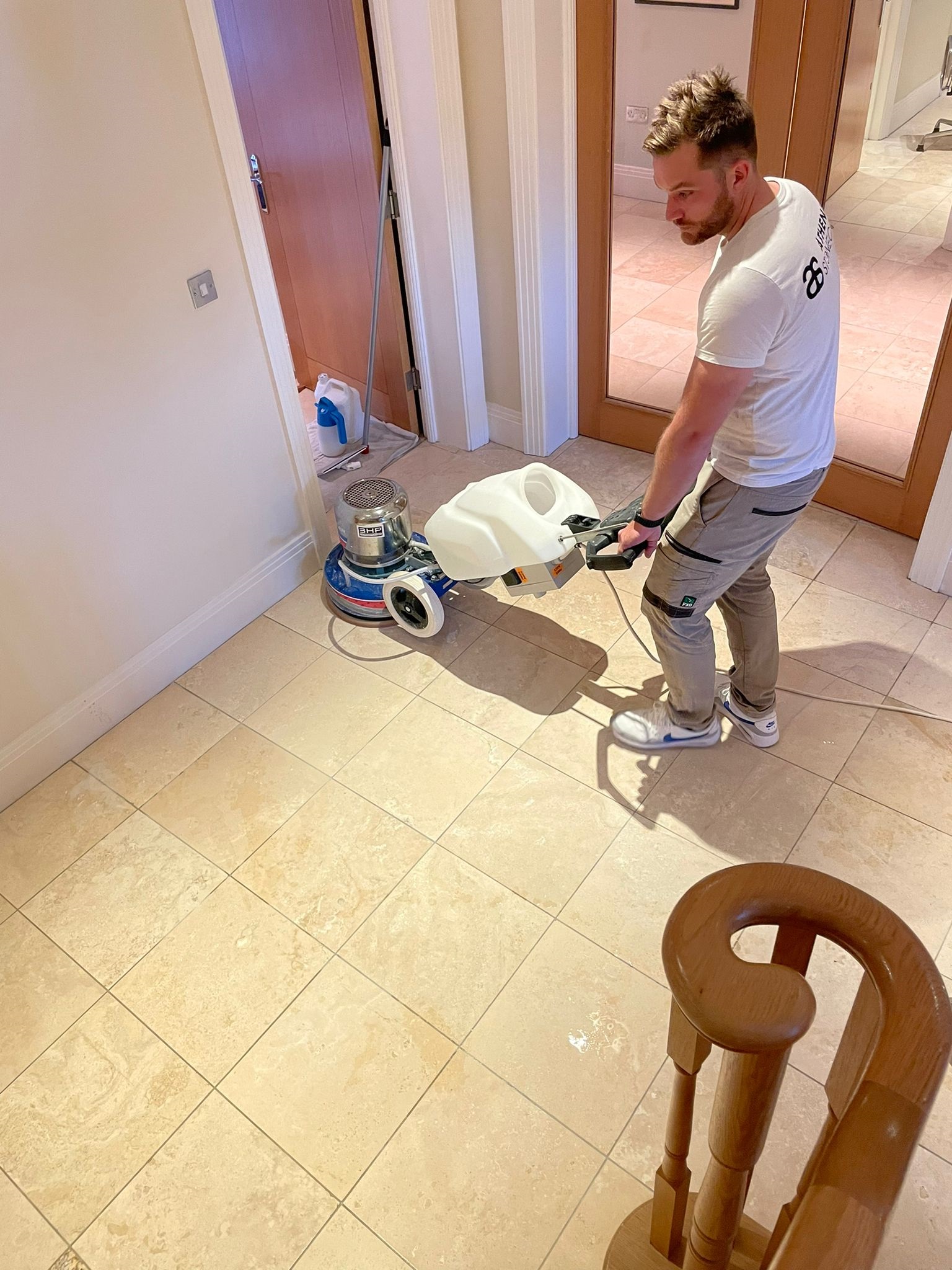
Athena Stonecare has launched a new CPD workshop aimed at demystifying the care and maintenance of natural stone for designers, suppliers and project teams.


The one-hour session, accredited by the Society of British and International Interior Design (SBID), is built around the company’s Athena Aftercare guidance and is designed to give specifiers practical, straightforward advice they can pass on to clients from day one.


Director Becca says the motivation behind the CPD is simple: “Maintaining natural stone doesn’t need to be difficult. In fact, we are so sure that we created a workshop that divulges all of our stone care secrets.”


Athena Stonecare has long focused on making stone easier to live with, without constant reliance on professional restoration. “Every time that we complete a restoration treatment we’re asked the same question: how do I keep it looking like this?” Becca explains. “For many years we have been providing guidance to our own clients on how to clean and maintain their stone surfaces. At the end of a project, each client is sent a QR code that leads to a hidden hub on our website dedicated to aftercare.”


The company believes that much of the damage it is called in to repair could have been avoided with the right information at the outset. “Truthfully, many could have avoided needing professional stone restoration services if they’d had the right guidance at the beginning,” Becca says.


That thinking led to the creation of Athena Aftercare in 2022, a printed and digital guide covering stone care for all types of surfaces, from installation onwards. Now distributed by a number of leading UK stone suppliers and fabricators, the guide has become a reference point for specifiers who want reassurance that their clients can look after stone properly over the long term.


The new CPD brings that content into a live, interactive format. For the first time, Athena Stonecare is delivering Athena Aftercare as a one-hour webinar, described as a “masterclass” in everyday stone care. It is aimed at stone suppliers, interior designers, project managers and anyone involved in specifying or working with natural stone.


Becca says the session is structured to mirror the real decisions designers face: “During the session we outline some key considerations for stone care that should be made before choosing to use stone. We also explore the different types of sealants and protection for stone. We then outline simple steps for stone care that can be shared with clients.”


Cleaning and protection are a particular focus, with the emphasis on prevention rather than cure. “Making sure that stone is correctly cleaned is the key to ensuring that it will stand the test of time,” Becca adds. “A few easy preventative measures can make the biggest difference with natural stone.” The aim, she says, is that by the end of the hour, attendees will feel more confident advising clients and helping them make informed decisions about using stone.


The next Athena Stonecare CPD webinar takes place on 6th February at 12.30pm. 

Places can be booked by emailing info@athenastonecare.co.uk. 

They are also offering bespoke workshops for teams, which can be arranged by contacting Athena Stonecare on 07824 193 339.


limittext
Off
Exclude From Lists
Include
Company Tags
M10
CAPTCHA
SEO Title
Athena Stonecare Launches CPD
Read more
Main Image
mclean-quinlan_studio_winchester_photography-by-jim-stephenson_1_1.jpg

Case Study: McLean Quinlan's Tactile Studio Beneath it's Winchester Office

2026-01-28


McLean Quinlan has created a new studio beneath its Winchester office that is less showroom and more lived-in manifesto for the practice’s design values. The 72m² ground-floor space has been conceived as a place where clients can experience, at first hand, the materials, textures and atmosphere that underpin the studio’s residential work.


For a practice known for its careful curation of warmth, scale and tactile detail, the move is a natural extension of its approach. Founded more than 40 years ago, McLean Quinlan has built a reputation for crafting homes and retreats that rely on natural materials, subtle light and a strong sense of place. The new studio translates those principles into a working environment that demystifies the architectural process by grounding conversations in physical experience.


Accessed either internally from the office above or from the street through a landscaped entrance, the arrival is deliberately domestic in tone. A short stepping-stone path leads to a raised, covered porch with space for a small bistro table and chairs. Brick paving, Millboard composite cladding and timber-framed glazing set a residential note before visitors even step inside.


The interior is organised as a single open volume, with gentle zoning created by joinery and furniture rather than walls. A large kitchen island replaces a conventional reception desk, offering a familiar focal point for informal introductions and refreshments. Beyond it, a substantial oak dining table seating up to 20 anchors the room and doubles as a setting for team meetings, client presentations and evening events.


Materiality is central to the studio’s purpose. Soft clay plaster walls from Clayworks and warm timber finishes moderate the scale of the space, creating an atmosphere that is calm rather than corporate. Timber wall panelling by Solid Floor forms a feature ‘project wall’ where curated palettes and moodboards from current commissions are displayed. Rather than overwhelming clients with endless samples, the display offers proven combinations that reflect the practice’s aesthetic and help guide discussions.


Every element has been chosen to perform a dual role: functioning in daily use while demonstrating the sort of specification clients might encounter in their own projects. The kitchen worktop is by Bulthaup, lighting is supplied by Orluna, and windows and doors are from Josko via S&T. Seating includes chairs by HAY supplied by Holloways of Ludlow, a bench by Konk, and a table by Ennis & Brown. Shelving was made by a local craftsman, reinforcing the studio’s emphasis on provenance and making.


The result is a space that can adapt easily from a quiet retreat for focused work to a convivial venue for dinners and workshops, without losing its underlying sense of intimacy. For senior architect Emily Johnson, the rationale is about removing barriers between idea and reality. “When clients can sit at a table we would specify for their own home, or run a hand along a timber wall that could feature in their project, it demystifies the process,” she says. “They experience the quality and aesthetic firsthand, which makes decisions less intimidating and the entire creative journey more collaborative.”


In that sense, the studio is not simply an accompaniment to the Winchester office but a physical embodiment of McLean Quinlan’s ethos: an environment where craftsmanship, material honesty and careful detailing are not just discussed, but felt.


All images: Jim Stephenson


limittext
Off
Exclude From Lists
Include
Company Tags
M10
CAPTCHA
SEO Title
McLean Quinlan's Tactile Studio Beneath it's Winchester Office
Read more
Main Image
1.jpg

News: Stone Federations Plans for 2026 Unveiled

2026-01-27


Stone Federation has outlined a full programme of activity for 2026, with a year of seminars, trade shows, networking events and training opportunities planned for members.


The organisation is playing a key role in what we hope is a stone renaissance with a growing interest from architects, interior designers, structural engineers and clients. That interest is not only in the aesthetic qualities of natural stone, but also in its sustainable versatility and its potential role in decarbonising the built environment. Stone Federation’s focus for the year ahead is to build on that momentum by pairing inspiration with practical information and education.


A central tenet of that work will be the continued development of the Guide to Structural Stone, an online resource library that has already been accessed by hundreds of architects, engineers and designers. In 2026, several new chapters are due to be added, including content on testing, reuse and spolia. The guide is intended to provide a growing knowledge base to support the use of natural stone as a mainstream construction material.


Education around structural stone will also be supported by the fourth edition of The Stone Symposium, which is set to bring together leading voices on stone’s sustainability story and further develop the conversation around its structural use.


Alongside this, Stone Federation will continue to grow its sector groups and forums, including the Interiors & Surface Materials Focus Group, Landscape Forum, Stone Heritage Forum and Quarry Forum. These groups are open to all Stone Federation members and are designed to give companies a direct role in shaping the direction and activity of the Federation within their sector.


Training will also be delivered through the Stone Academy, which is planning a range of courses for 2026. These will run from the Industry New Starters course through to specialist training in stone for interiors. All courses are exclusive to Stone Federation members.


The Women in Natural Stone Group (WINS) will also be expanding its programme, building on the success of recent years with a series of networking and education events for women in the industry. These will be hosted across the UK, with details available via the group’s mailing list.


The year will culminate in December with the 2026 Natural Stone Awards. The event is expected to bring together architects, interior designers, clients, local authorities and developers to celebrate outstanding projects from the natural stone sector. Entry for the Awards is now open and will close on Friday 20 March 2026. 


limittext
Off
Exclude From Lists
Include
Company Tags
M10
CAPTCHA
SEO Title
Stone Federations Plans for 2026 Unveiled
Read more
Main Image
caroline_place_c_tim_soar_1.jpg

News: The New Stone Age

2026-01-26


Stone continues to be put back at the centre of contemporary construction in a new exhibition opening at the University of Toronto in January. The New Stone Age: Towards an Ethical Architecture is curated by UK practices Groupwork, Webb Yates and The Stonemasonry Company – three names familiar to Stone Specialist readers for their role in reviving load-bearing stone.


Caroline Place Image Credit: Tim Soar 


Hosted by the John H. Daniels Faculty of Architecture, Landscape and Design, the exhibition brings together three large-scale stone-and-timber installations, built projects by international practices, and historical research to make the case for stone as a modern, low-carbon structural material. 


Finchley Road Image Credit: Groupwork


The team frames the exhibition as a response to the 20th-century turn toward concrete and steel. A century after Le Corbusier’s Towards a New Architecture helped normalise the “free plan” enabled by reinforced concrete, the same material logic now underpins most buildings worldwide, from houses to high-rises. With construction responsible for about 40% of global carbon emissions and global building stock set to double over the next 50 years, the exhibition argues that this default approach is no longer defensible.


Stone, they contend, offers a practical alternative.  As we’ve reported, when quarried, processed and used efficiently, structural stone can carry a fraction of the embodied carbon of reinforced concrete or steel, while also lending itself to prefabrication and rapid assembly. Seen together, the installations and case studies show how contemporary engineering and traditional material can meet in credible, buildable systems.


15 Clerkenwell Close Image Credit: Tim Soar


That argument will be familiar to Stone Specialist readers who have followed recent coverage of all three collaborators. Groupwork’s research-led projects, including its carbon-conscious use of stone in housing and civic buildings, have been profiled for their blend of architectural ambition and material restraint. Webb Yates has featured for its pioneering structural work with post-tensioned stone and stone–timber hybrids. And SMC’s evolution from complex stone staircases into full structural systems,  including the reuse of surplus stone,  has been charted as part of a broader shift back to natural materials.


Stone Demonstrator Image Credit: Bas Princen 


Indeed, the exhibition also connects with the themes explored with the Stone Demonstrator, where the trio has collaborated with various other professional practices on a full-scale structural stone pavilion. That project provided a tangible proof of concept for low-carbon stone construction; The New Stone Age extends that thinking into an academic and international context.


Stone Demonstrator Image Credit: Bas Princen 


Alongside the installations, visitors will encounter film, photography and archival material tracing stone’s long history as a loadbearing material and its re-emergence through digital design, modern quarrying and advanced engineering. The exhibition also acknowledges collaborators including German stone producer Bamberger Natursteinwerk Hermann Graser, PICCO Engineering, and the Aesthetic City film collective. 


Bamberger Natursteinwerk Image Credit: Hermann Graser


The New Stone Age is an invitation to treat stone not as a nostalgic finish, but as a serious, scalable alternative to high-carbon structural systems, and places that conversation firmly on an international stage.


The exhibition takes place between  23 January 2026 and 3 April, in the University’s Architecture + Design Gallery at 1 Spadina Crescent.


limittext
Off
Exclude From Lists
Include
Company Tags
M10
CAPTCHA
SEO Title
The New Stone Age Exhibition in Toronto
Read more
Main Image
karlite_family_-_pim_top.jpg

Profile: Plasticiet Turns Plastic into Design-Led Surfaces

2026-01-22


Since its beginnings in 2016, Plasticiet has carved out a unique position in the world of material innovation by transforming what many see as waste into something of lasting design value. Founded in the Netherlands by designers Marten van Middelkoop and Joost Dingemans, the studio started life as an experimental inquiry into the potential of discarded plastics. From melting shampoo bottles on a balcony to full-scale recycled panels in a Delft workshop, the duo have been guided by a belief that sustainability must be desirable, not just symbolic.


Image Credit: Jos Kottman


Today, the company produces a range of 100% recycled solid surface materials that echo the sensorial appeal of natural stone and terrazzo but are sourced entirely from post‑production and post‑consumer plastics. Two key material families define this output: Karlite and Mother of Pearl. Each is crafted by hand in the studio’s Dutch workshop, where waste plastics are carefully sorted, melted and remade into sheets and bespoke elements.


Karlite. Image Credit: Pim Top


Karlite is Plasticiet’s industrially inspired range, designed as a recycled alternative to resin and other solid surface boards. Combining reclaimed plastics such as polycarbonate with finely chosen mineral pigments to create durable, semi‑translucent panels, the range takes a step away from looking like a recycled material. Its palette, which includes Chalk, Glacial, Jade and Sienna, evoke materials more commonly associated with marble or minerals, yet these boards are born of reuse and crafted to last.


Mother of Peral. Image Credit: Pim Top


Mother of Pearl, on the other hand, is an artisanal material shaped by hand, where the transformation of discarded polycarbonate into a pearl‑like surface echoes age‑old crafting techniques. During production, the plastic is repeatedly stretched and folded while warm, introducing tiny air bubbles that scatter light and lend the surface its characteristic iridescence and depth.


Bershka by OMA


Both materials share a commitment to circularity as a given, not a goal. Every Plasticiet board is not only made from recycled plastic but is itself fully recyclable at the end of its life, ensuring that the material can re‑enter the loop rather than becoming waste. This emphasis on responsible sourcing, permanence and reversibility sets Plasticiet apart in a landscape where many recycled products are valued more for their sustainability credentials than their performance or longevity.


Jill Sanders. Image Credit: Paul Riddle


Beyond its material collections, Plasticiet’s workshop produces custom surfaces and objects that extend the conversation between material, craft and context. The team works closely with architects, interior designers and brands to tailor colours, translucencies and patterns for specific projects, and has completed installations for clients from Bershka and Jil Sander to boutique retail environments and bespoke furniture commissions. Their work demonstrates that recycled materials can perform at a level equal to, or beyond, traditional options — whether clad walls and counters, interior display systems or freestanding design pieces.


Karlite. Image Credit: Pim Top


Materially, Plasticiet surfaces behave much like conventional solid surfaces: they are non‑porous, machinable with standard tools, and suited to interior applications, including kitchens, bathrooms and high‑use retail environments. The materials can be cut, drilled, sanded and finished in ways familiar to designers and fabricators, making them both flexible and practical from specification through installation.


What makes Plasticiet particularly compelling to designers and specifiers is not just its recycled content but the story embedded in its surfaces. The visible fragments, variations and veining speak to the material’s origin while elevating it beyond mere waste repurposing. This aesthetic richness, combined with durability and adaptability,  positions Plasticiet as a material for the future, one that helps shift the industry’s understanding of plastic from problem to resource.


limittext
Off
Exclude From Lists
Include
Company Tags
M10
CAPTCHA
SEO Title
Plasticiet Turns Recycled Plastic into Design-Led Surface Materials
Read more
Main Image
artwork_image_the_long_answers_of_water_light_and_rock_2026_marian_drew_video_installation_still._courtesy_of_the_artist.png

News: Stone-Focused Exhibition at No.1 Poultry

2026-01-21


Hypha Studios and art and architecture platform recessed.space have announced a new exhibition for early 2026 that puts stone, time and endurance firmly in the frame.


Hypha Studios

Hypha Studios


What Lasts Doesn’t Always Hold Shape forms part of Hypha Studios’ year-long programme at James Stirling’s landmark No.1 Poultry, which will presents a series of select shows engaging with architecture and the built environment in collaboration with recessed.space. 


Jobe Burns

Jobe Burns


At the heart of the project is the building itself and, in particular, the physical and symbolic life of the stone that wraps its distinctive façade. Curated by Taylor Hall and Rebecca Jak, the exhibition is set to bring together work by Marian Drew, Levent Ozruh and Jobe Burns.


Levent Ozruh

Levent Ozruh


Jak and Hall’s co-curatorial practice draws on their shared backgrounds in art and architectural culture and is rooted in reciprocity and knowledge-sharing across disciplines. They approach materiality as an act of empathy, viewing “the climate crisis through a cultural lens, and understand time as a tangible accumulation that settles within things, places and spaces.” 


The three artists will be responding directly to No.1 Poultry, a site built and rebuilt over nearly two millennia. The work will create a dialogue across these layered histories, using stone not simply as a material of endurance but as a witness to deep time and a register of “human fragility, intervention, ideology and cultural projection”. In this framing, stone’s capacity to endure is not treated as something guaranteed by the material alone, but as something sustained through ongoing negotiation, care and use.


What Lasts Doesn’t Always Hold Shape
Hypha Gallery 2, No.1 Poultry, London EC2R 8EN
29 January – 4 March 2026
Thurs–Sun, 1–6pm (and by appointment)
Private view: Thursday 29 January, 6–9pm

Reserve a free spot at the PV here!


Alongside the exhibition, the team are running a public program event, which will include Unpicking Architecture: the misuse and reuse of stone with The Stone Collective, a talk sponsored by the Stone & Surfaces Show. 

Get your ticket for the event here.


limittext
Off
Exclude From Lists
Include
Company Tags
M10
CAPTCHA
SEO Title
Stone and Endurance Explored in Hypha’s 2026 Show
Read more
Main Image
chinnery-_one_island_many_visions_2025.jpg

Surface Spot: Carving Conversations in Stone

2026-01-20


Since 2019, artist and academic Clair Chinnery has been making regular pilgrimages to the Isle of Portland to carve stone, working with the support of Hannah Sofaer and Paul Crabtree at the Portland Sculpture and Quarry Trust. For Chinnery, these trips are more than residencies; they are a return to an artistic moment she once sidestepped.


Back in 1990, as a 19-year-old first-year Fine Art undergraduate on a university field trip, she stood on Portland and refused to pick up a chisel, choosing instead to make assemblages from found materials at Church Ope Cove. Nearly three decades later, she returned to “make up for the lost carving opportunity”, and in doing so has developed a sculptural practice rooted in place, material and reflection. The fruits of this labour come in the form of beautiful, curved forms that she places under the title Conversations in Stone.


Working directly at the source of the stone has become central to how her forms emerge. Rather than imposing a fixed design, Chinnery allows the experience of carving Portland stone in situ to shape the outcome. She frames her approach as auto-ethnographic, using her own encounters with the island, its landscape and its industry as a lens through which to determine form.


Repeated visits to Portland have deepened her relationship with the material. Over time she has become fluent with traditional carving tools and processes, while also absorbing the wider context of the island: its quarrying heritage, fragile ecology and contemporary role in global mineral extraction. That layered understanding feeds directly into her making, giving the sculptures a quiet conceptual weight that goes beyond surface form.


These pieces are a reminder of how deeply material, place and process can intertwine – carved at the quarry face, informed by geology and industry, and shaped by a long-deferred artistic impulse.


limittext
Off
Exclude From Lists
Include
Company Tags
M10
CAPTCHA
SEO Title
Clair Chinnery’s Conversations in Stone on the Isle of Portland
Read more
Main Image
tmp_e2f2bf83-237e-4503-ac7d-573f8a15bc01.jpeg

News: Futurebuild and UK Construction Week Unite in 2026

2026-01-19


Futurebuild and UK Construction Week London are to join forces in 2026 in a move that will reshape the UK’s exhibition landscape and, organisers say, better mirror the way the construction industry actually works.


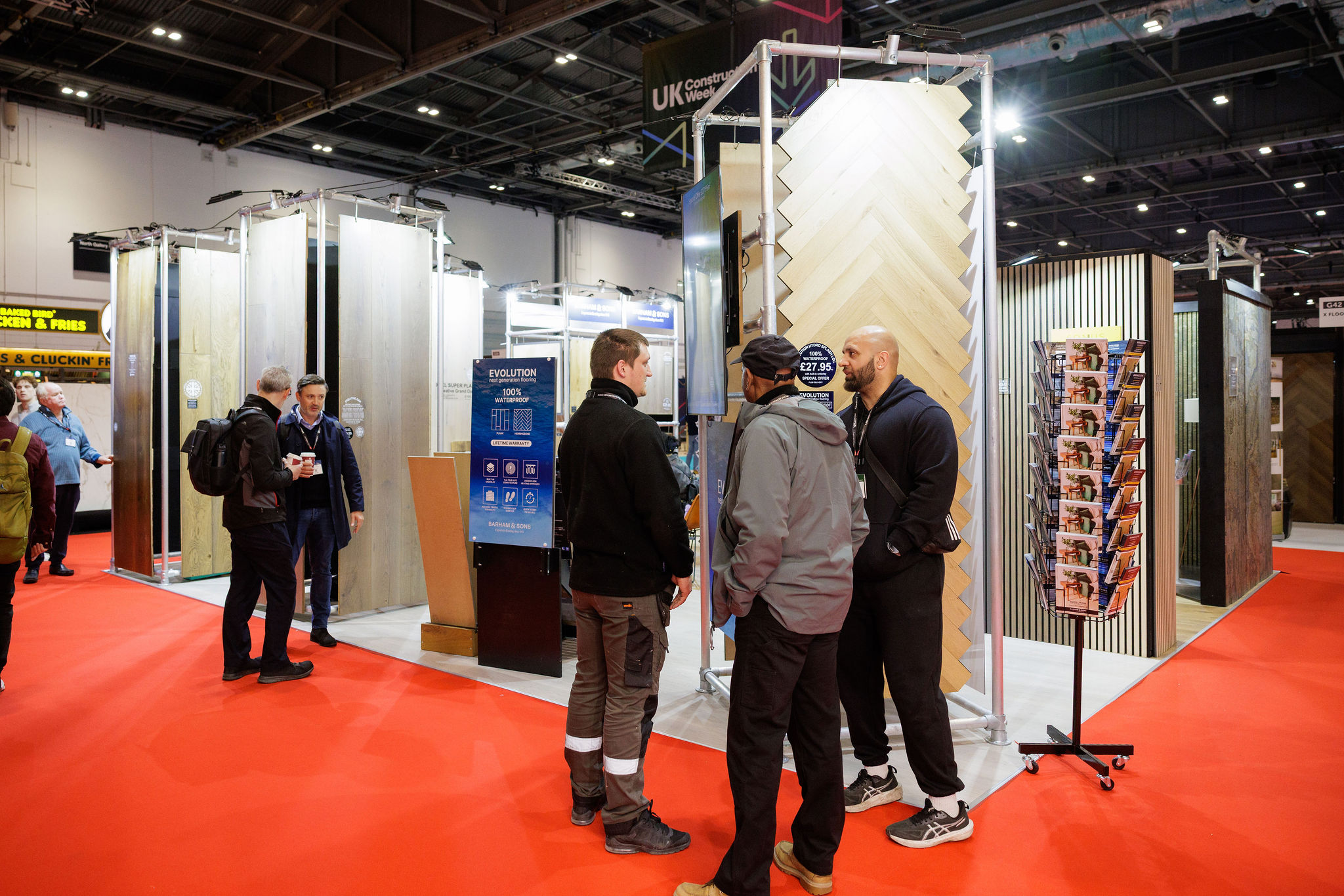
From 12–14 May 2026, the two shows will be co-located at Excel London, creating a new national platform for the built environment. Between them, they will bring together an audience of around 25,000 professionals, more than 600 exhibitors and some 700 speakers across 14 stages, making it the largest and most wide-ranging construction event in the UK calendar.


The ambition is scale, but not at the expense of identity. Both brands will keep their own curations, communities and content, while benefiting from the footfall and cross-pollination that comes with being under one roof. As Martin Hurn, Event Director at Futurebuild, puts it: “This is about creating one connected platform that reflects how the industry actually works – from vision to specification to delivery.”


Futurebuild will continue to anchor the sustainability, Net Zero and innovation agenda, with its CPD-accredited programme and its established audience of architects, designers, local authorities and developers. Low-carbon construction, circular materials and large-scale retrofit remain central, supported by The National Retrofit Conference, which has become a key forum for policymakers, housing providers and Net Zero leaders.


Alongside it, UK Construction Week London will stay focused on the practical realities of delivery. Its hands-on, solutions-led format brings contractors, housebuilders, trades and engineers into contact with the tools, systems and skills they need on site, backed up by live demonstrations, immersive features and CPD content rooted in real-world build challenges.


Hurn says the collaboration is about extending influence beyond theory and into practice. “Futurebuild will continue to lead on sustainability and long-term systems thinking, and collaborating with UK Construction Week London enables us to extend that influence into the practical, on-site world, turning ideas into real impact across the supply chain.”


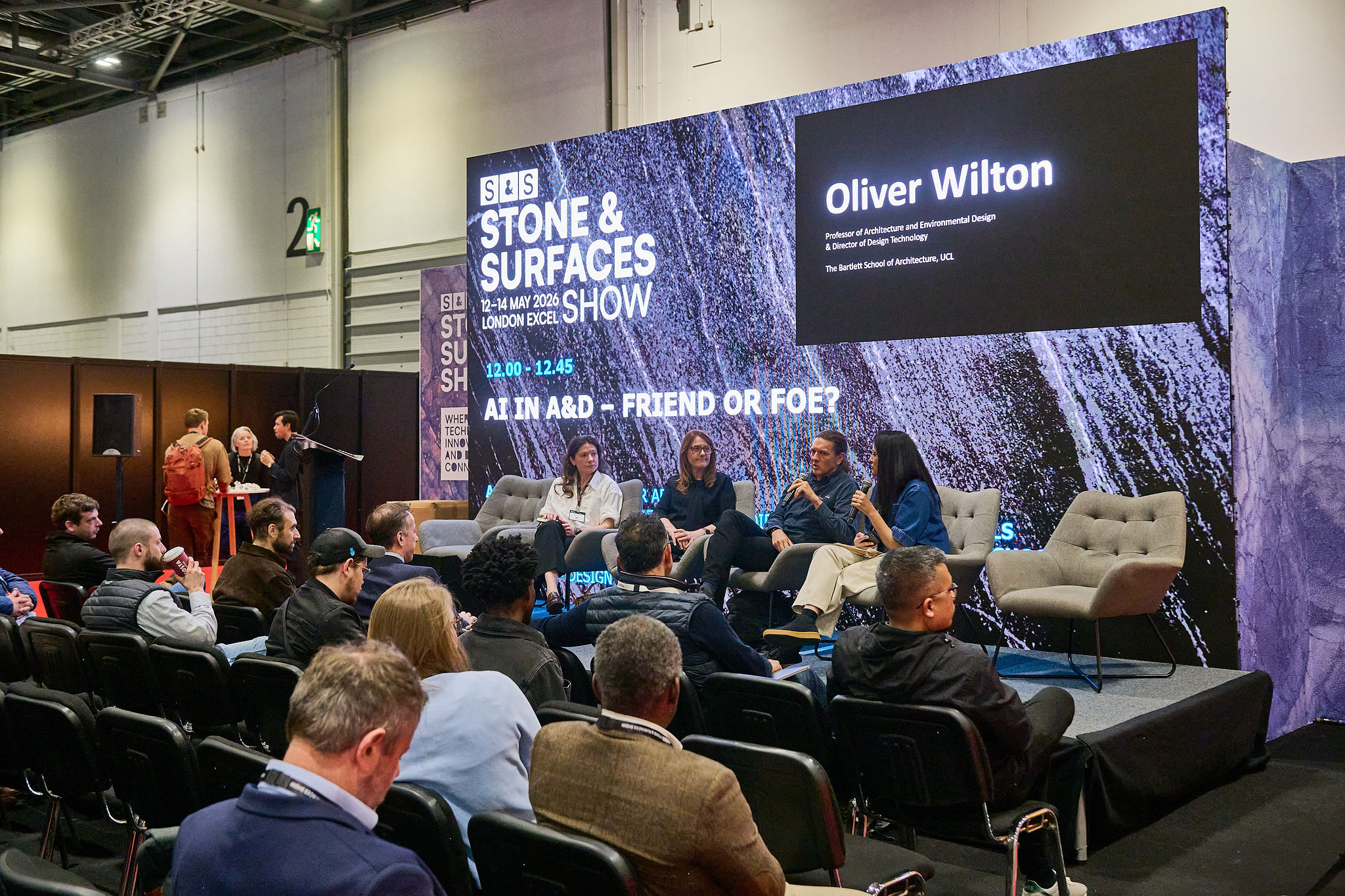
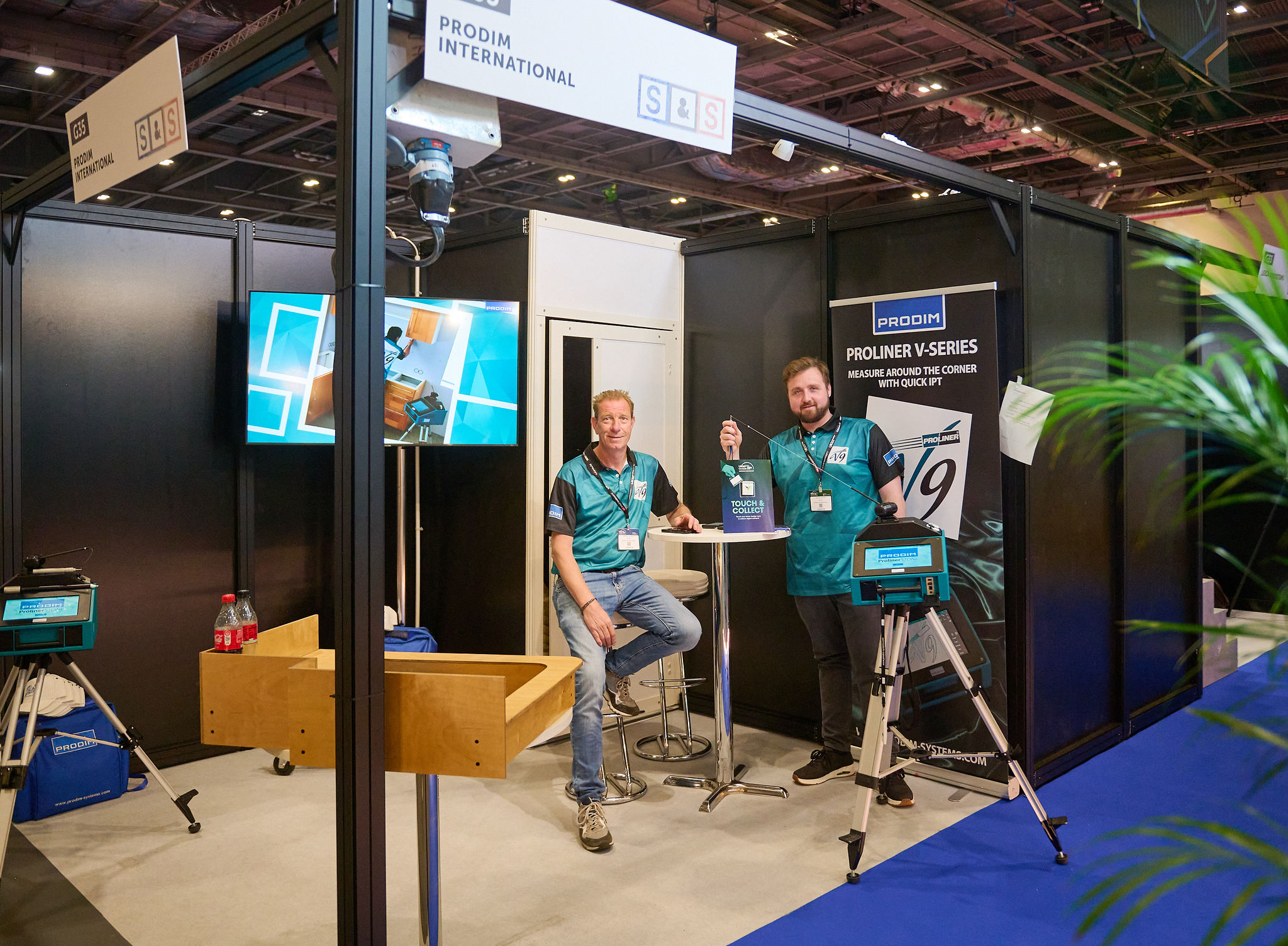
For those in the materials and finishes world, there is a particularly strong hook. As we’ve reported, the Stone & Surfaces Show will also take place at Excel London alongside the two major shows, bringing a dedicated focus on natural stone, surfaces, finishes and materials. Its inclusion strengthens the event’s interiors and materials offer and opens up fresh opportunities for crossover between design, specification and installation – a sweet spot for anyone working with stone.


Sam Patel, Divisional Director at UK Construction Week London, sees that breadth as a strategic win. “UK Construction Week London has always championed scale, experience and solutions that matter to those delivering projects on the ground,” he says. “Collaborating with Futurebuild and The Stone & Surfaces Show unlocks new depth and strategic value, creating a destination that is richer, more relevant and more valuable to every part of the built environment.”


The timing is no accident. The industry is under pressure to decarbonise, modernise skills and meet increasingly ambitious Net Zero targets, and organisers say the co-location responds directly to calls for greater cohesion and clearer leadership. By combining Futurebuild’s sustainability leadership and systems-level thinking, UK Construction Week London’s delivery focus and The Stone & Surfaces Show’s specialist materials expertise, the new format promises a genuinely 360-degree experience – from big-picture vision through to specification, materials choice and on-site implementation.


For exhibitors, the commercial case is just as strong. Bringing specifiers, consultants and sustainability leaders into the same space as contractors, housebuilders and engineers creates a step change in opportunity. The benefits including: expanded reach and cross-sector visibility, longer dwell time, more connected visitor journeys and stronger alignment between specification, materials and delivery. There is also a clear focus on fast-growth markets such as retrofit, digital construction, offsite and sustainable materials.


“This is where the future of the built environment connects,” says Patel – a neat summary of what could become the industry’s most important annual meeting point.


limittext
Off
Exclude From Lists
Include
Company Tags
M10
CAPTCHA
SEO Title
Futurebuild and UK Construction Week Unite in 2026
Read more
Main Image
the_chancery_rosewood.jpg

Surface Perspectives: Tamsin Pickeral, Szerelmey

2026-01-19


Szerelmey is a historic UK specialist contractor specialising in stonework, restoration, conservation and new-build façade projects. Founded in 1855, the company comes with a time-served seal of approval, which is reflected in the numerous projects on display across the country. The team combines traditional craftsmanship with in-house design and delivery capabilities across complex architectural commissions, of which Operations Director Tamsin Pickeral plays a vital role.


What does a typical day look like for you?


Our offices are based in Vauxhall, London, and I come into the office three days a week. On those days, everything starts very early, with my alarm going off at 04:10! I sort my clothes out the night before to save a bit of time, chug a coffee, and start the day with some Radio 5 Live. I generally doze on the train and am at my desk by 08:00 with a pint of coffee. My days often involve meetings with clients, which I really enjoy, and also lots of internal team meetings. On any given day, I might be involved in project meetings, following up on sales leads and managing our compliance team, presenting CPDs, or talking at seminars on sustainability and material reuse. I can also be found visiting sites, management meetings, generating PR material, on a project photoshoot, running our CRM software or sitting in on Health and Safety meetings. I try to go for a very slow jog (more of a shuffle) at lunchtime to get some fresh air. 


My working from home days are a little less chaotic – to start with, I can have a lie-in to 06:15! Then I take my elderly greyhound for a walk before settling down with coffee and “getting stuff done”. I like to get all my work admin, planning and writing done at home, where it is nice and quiet and free from distractions…other than the dog.


How integral are materials/surfaces to your day-to-day? 


Materials are completely integral to my every day and are one of many reasons why I love doing what I do! Szerelmey is an interesting company because we have two distinct sides to the business – new build, which incorporates a lot of complex design works and a diverse range of materials, and restoration, which covers all types of restoration, remodelling, refurbishment, dismantling and rebuilding facades. We cover pretty much everything and everything, and it’s all material-focused. My role in terms of sales and marketing sees me delving around in our stone sample drawers on pretty much a daily basis, receiving samples from suppliers, sitting in on supplier presentations and talking to clients about potential materials. These can range from stone, brick, terracotta and faience, to mosaic, glazed basalt, glazed brick and stone brick – the list goes on. I find the range of materials we work with genuinely fascinating and get very excited (over excited) on occasion talking about them. The tactile nature of the materials really appeals to me, and nothing more so than being able to reuse or repurpose a material from one project to another, or even within the same project. One area of materials that I am really passionate about is faience. Faience is glazed terracotta and affords virtually limitless artistic potential. I spend quite a lot of time delivering CPDs on the use of faience in modern buildings and trying to convince architects to use it!


What are the biggest lessons you have taken forward from your original training? 


This is an interesting one for me because I fell into this industry by happy accident! My academic training was in History of Art and Architecture, which is entirely unhelpful for any career other than working in the arts, although I thoroughly enjoyed it. In hindsight, I think it did teach me how to look at buildings in a subjective and analytical way, which has helped me with my current role.  It also instilled an absolute passion in me for “good” architecture and for the significance of historic construction and materials. I spent twenty-odd years working as a freelance professional writer, mostly non-fiction books, websites and marketing material. This taught me resilience and how to sell, and it was through this work that I landed a contract writing a few pieces for Szerelmey. One thing led to another and all of sudden I was a full time employee with a job title. It has made me realise that it doesn’t matter where you start in your career; providing you are dedicated and prepared to put the work in, you will eventually get to where you want to be. I am also very lucky that the culture at Szerelmey allowed me to develop and learn – there is no better education than being surrounded by brilliant people, and I find I am still learning every day. I would say to anyone starting out in the industry or even thinking about it, just go for it. 


Which project/s are you most proud of being involved with and why?


This is a tough one because we are lucky enough to be involved with such amazing projects. One that definitely makes the cut is Battersea Power Station. Our Restoration team did all of the internal restoration work which also included a lot of structural steel works and making new openings etc. I was involved in this one very early on, which is often the case. I remember several site visits before any of the works began when the building was literally a derelict shell with no roof in parts. To see it now, and what the restoration of this hugely iconic building has done to regenerate the whole area is really quite extraordinary – I still have to pinch myself when I see it, and am so proud of not just our team but everyone who was involved in bringing this back to life, not least the developers with deep pockets behind it. 


Another of my favourite projects is a small faience-clad house called A House for Essex, designed by Fat Architecture and Grayson Perry. The building is quite extraordinary, somewhere between a Russian jewel box and Hansel and Gretal. The design tells the life story of an average girl from Essexbut in technical terms, the project was fairly complicated and completely clad in hand-produced and highly detailed faience units. The elliptical-shaped chimney, which is 2.5m tall, was particularly difficult to manufacture and install. One of the highlights of the project for me was taking Grayson to visit Darwen Terracotta for the day and the very lively conversations we had!


What do you feel are the main challenges facing the stone and surfaces industry today?


I would prefer to start with a positive. Due to the increasing emphasis on sustainability and carbon reduction, there are real opportunities for the industry at the moment, both in the use of locally sourced new stone and the reuse of existing materials. The reuse agenda is really interesting as it is making people think differently about how to do things and I believe we will continue to see massive steps forward in this respect, which is fantastic. That said, there are challenges, with economic uncertainty being key. Developers are understandably extremely cautious, and combined with a backlog caused by Gateway 2 problems, has led to significant delays in projects moving forward. Getting into contract is taking longer and longer and there are pressures to continually value-engineer elements. Another challenge that has become increasingly evident since Brexit is finding quality employees. I could go on, but I think it is important to remember that our industry is very resilient and there are exciting times ahead.


In your opinion, what are the positives of using stone in the built environment? 


Stone lasts pretty much forever, as evidenced by the volume of historic stone buildings and monuments, so if there is a genuine move towards sustainability, then a material with the longevity of stone must surely be the answer. A consideration is how we build. Modern building methods typically involve fixing slimmed down stone pieces to either steel or concrete, both of which have a significant carbon footprint. Traditionally, the stone was the structure! It is not feasible to build like this across the board today, but there are certainly strong cases for the use of structural and/or post-tensioned stone for some projects to reduce steel and concrete, as well as significantly reducing build time and cost. I am a huge supporter of using local materials where possible, too. There are tons of quarries of beautiful stone in the UK that have closed down, which is really sad. It would be great to see some government funding going into these, and the stone being used on local housing projects. Stone bricks in particular - they’re just like a clay brick but without the processing (firing), making them a fantastic low carbon alternative. 


How does sustainability shape your thinking and decision-making, and how do materials fit into this?


Sustainability is very much at the front and centre of every project I am involved with now, which is fantastic. However, there is still a huge amount of “greenwashing” going on; box ticking, misguided views on what is sustainable and what is not, confusion over EPDs (what do they actually mean and how to read them when they all appear to be set out differently) and cost. The most sustainable option for a project might not always be the cheapest, so it entirely depends on the client or developer, and to what extent they are prepared to build or refurbish in a sustainable manner. I really look forward to sustainability being genuinely embedded at the core of all building projects. We are not quite there yet, but I do think the industry is definitely moving in the right direction!


limittext
Off
Exclude From Lists
Include
Company Tags
M10
CAPTCHA
SEO Title
Tamsin Pickeral on Stone, Sustainability and Operations at Szerelmey
Read more

Pagination

  • First page « First
  • Previous page ‹ Previous
  • …
  • Page 8
  • Page 9
  • Page 10
  • Page 11
  • Current page 12
  • Page 13
  • Page 14
  • Page 15
  • Page 16
  • …
  • Next page Next ›
  • Last page Last »
Subscribe to
  • Advertise
  • Contact Us
  • Acceptable Use
  • Copyright Notice
  • Privacy Policy

© Media 10 Ltd. All Rights Reserved